Porte Tam Quan
Cette porte emblématique à trois arches est plus qu'une simple entrée ; c'est le témoignage de l'ambition audacieuse d'une ville.
L'histoire complète se débloque dans le tour
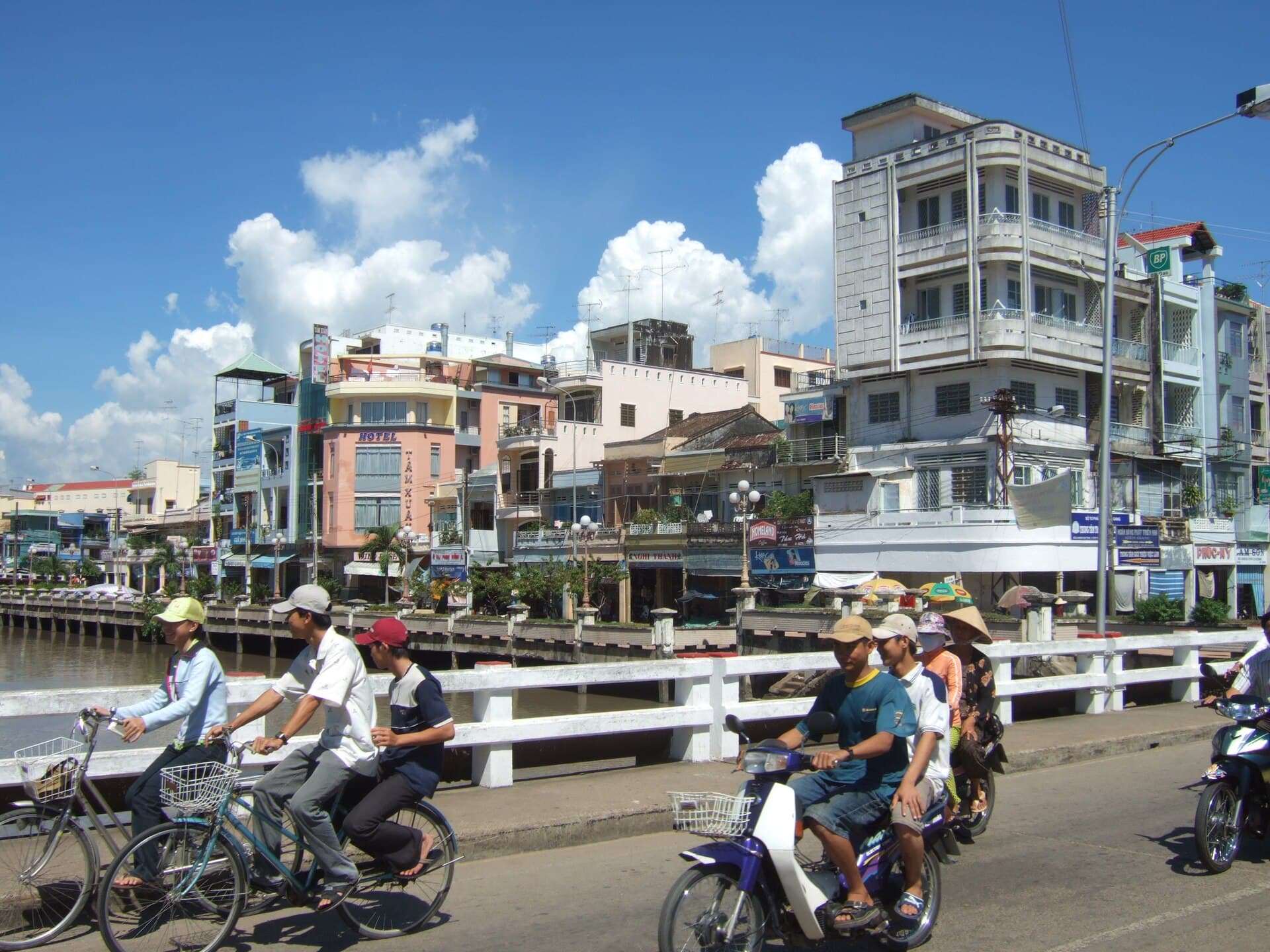 Daniel Berthold / CC BY-SA 4.0, via Wikimedia Commons
Visite audio autoguidée de Rạch Giá — parcours GPS à pied, lecture hors ligne, narration en 32 langues.
“Là où le Mékong rencontre le Golfe, et l'histoire s'écoule à travers des terres gagnées sur la mer.”
Pas les cartes postales. Les histoires que même les habitants ignorent — soufflées à l'oreille, là où elles se sont passées.
Cette porte emblématique à trois arches est plus qu'une simple entrée ; c'est le témoignage de l'ambition audacieuse d'une ville.
À l'intérieur de ce temple, dédié à un héros national, vous trouverez plus qu'un simple autel ; vous découvrirez un héritage de compassion.
Arrivez au port assez tôt, et vous pourriez assister à un spectacle éphémère que de nombreux voyageurs négligent.
Découvrez tous les secrets de Rạch Giá
Chaque adresse, chaque révélation en entier — dans ton oreille, là où elle s'est passée.
Tu choisis tes lieux. Tu marches. La voix te révèle ce que les autres ignorent.

Votre visite audioguidée de Rạch Giá vous attend — choisissez vos lieux, votre langue, et lancez-vous dès votre arrivée.
AcheterLume intègre un guide en réalité augmentée. Levez votre téléphone : sa caméra montre la rue devant vous, avec une flèche lumineuse posée sur l'image réelle qui pointe toujours vers votre prochain arrêt — aucune carte à déchiffrer, aucun mauvais virage. Comme tout dans Lume, ça fonctionne entièrement hors-ligne.
Rạch Giá, une zone urbaine côtière du sud du Vietnam, fonctionne comme un centre économique et culturel vital au sein du delta du Mékong. Située à environ 250 kilomètres au sud-ouest de Hô Chi Minh-Ville, c'est une ville portuaire animée sur le golfe de Thaïlande, reconnue pour son mélange distinctif de vie fluviale traditionnelle et de développement urbain contemporain. Bien que souvent considérée comme un point de départ pour des îles populaires comme Phu Quoc et Nam Du, Rạch Giá elle-même offre une gamme d'expériences, de l'exploration de temples historiques à la dégustation de fruits de mer frais le long de son front de mer animé.
Le caractère particulier de la ville est façonné par son héritage varié, avec des influences des communautés khmère, chinoise et vietnamienne évidentes dans son architecture, ses coutumes et sa cuisine. Rạch Giá est également remarquable pour ses projets de poldérisation, qui ont étendu la ville vers la mer, créant de nouveaux quartiers résidentiels et parcs. Cette expansion dynamique, combinée à son attrait authentique et à son hospitalité chaleureuse, fait de Rạch Giá une destination incontournable pour les voyageurs désireux de mieux comprendre la région du delta du Mékong.
La zone englobant l'actuelle Rạch Giá faisait à l'origine partie du territoire cambodgien, connue en khmer sous le nom de Kramuon Sa, une étendue plate et marécageuse avec les premières colonies khmères. En 1715, au milieu des conflits entre les forces khmères et siamoises et de l'expansion vietnamienne vers le sud, la zone passa sous la protection des seigneurs Nguyễn de Huế, marquant le début de l'influence administrative vietnamienne. La colonie contemporaine commença à se développer comme un poste de traite à la fin des années 1700 sous Nguyễn Ánh, qui devint plus tard l'Empereur Gia Long.
Rạch Giá émergea comme une colonie considérable au 18ème siècle lors de l'expansion de la dynastie Nguyễn dans le delta du Mékong. Dès ses premières années, la ville fut définie par sa diversité culturelle, avec des communautés vietnamiennes, khmères et chinoises coexistant et contribuant à son environnement particulier. Cette synthèse culturelle se reflète dans l'architecture traditionnelle de la ville, qui comprend des pagodes khmères, des maisons communales vietnamiennes (dinh) et des temples chinois.
Au 19ème siècle, Rạch Giá fit partie de l'Indochine française, une période qui laissa sa marque sur l'architecture et la structure administrative de la ville. L'économie de la ville a toujours été étroitement liée à la mer et à l'agriculture, initialement reconnue pour le commerce du miel, de la cire d'abeille et des plumes d'oiseaux exotiques. Après le drainage des marais, elle se transforma en un centre important pour la transformation et l'exportation du riz, ainsi que pour la pêche, qui restent des secteurs clés aujourd'hui.
Une étape importante dans l'histoire moderne de Rạch Giá fut l'octroi officiel du statut de ville provinciale en 2005. Plus récemment, le 1er juillet 2025, Rạch Giá a été désignée comme le siège administratif de la nouvelle province d'An Giang, suite à la fusion des anciennes provinces de Kiên Giang et d'An Giang. Cette consolidation fait partie de l'initiative plus large du Vietnam visant à rationaliser la gouvernance et à améliorer le développement régional. Aujourd'hui, Rạch Giá est une ville en développement dynamique, reconnue non seulement comme un centre économique mais aussi comme un point de départ pour des voyages vers l'île de Phu Quoc.
Commencez votre exploration au Temple Nguyen Trung Truc, dédié à un chef de la résistance du 19e siècle. Ce site vénéré, avec son architecture ancienne et son festival animé au 8e mois lunaire, attire de nombreux visiteurs. À proximité, la Pagode Tam Bao (Temple Sắc Tứ Tam Bảo), un temple bouddhiste séculaire, offre une évasion paisible avec ses portes ornées, ses toits rouges et ses jardins bien entretenus. Un autre site religieux important est la Pagode Phat Lon, une pagode bouddhiste Theravada cambodgienne établie au 19e siècle, remarquable pour ses figures de 'Grand Bouddha'.
La Porte Tam Quan, avec ses trois arches douces et ses toits à deux niveaux, est un emblème symbolique de la ville de Rạch Giá. Pour un aperçu du passé de la région, visitez le Musée de Kien Giang, abrité dans un bâtiment de l'époque coloniale française qui présente un mélange d'architecture orientale et occidentale et des expositions sur l'histoire locale et les artefacts. Promenez-vous le long du Port de Rạch Giá pour découvrir l'activité animée du front de mer et admirer de vastes vues sur l'océan, surtout au lever ou au coucher du soleil. Le Parc de la Plage de Rạch Giá offre un endroit côtier rafraîchissant avec une promenade bordée de palmiers, idéale pour une promenade relaxante. Ne manquez pas le Marché de Nuit de Rạch Giá pour les spécialités locales et une atmosphère animée.
Rạch Giá connaît un climat de mousson tropicale avec des températures constamment chaudes tout au long de l'année. La meilleure période pour visiter est pendant la saison sèche, qui s'étend généralement de novembre à avril. Pendant ces mois, vous pouvez vous attendre à un ciel clair, moins de pluie et des températures confortables allant de 23°C à 34°C, ce qui est idéal pour les activités de plein air et l'exploration de la ville. La saison des pluies dure généralement de mai à octobre, septembre étant le mois le plus humide. Bien qu'il fasse encore chaud, cette période apporte des précipitations considérables et des conditions humides.
La monnaie officielle à Rạch Giá est le Dong vietnamien (VND). Bien que certains grands établissements puissent accepter les cartes de crédit, l'argent liquide est généralement préféré, surtout sur les marchés locaux et les stands de nourriture de rue. Les distributeurs automatiques sont largement disponibles, mais il est conseillé d'avoir des petites coupures pour les achats quotidiens. Pour le transport en ville, les motos sont une option courante et flexible, avec des locations disponibles pour 100 000 à 150 000 VND par jour. Les taxis et un réseau de bus bien établi sont également disponibles. Rạch Giá est généralement une ville sûre pour les touristes, mais des précautions standard, comme garder un œil sur vos affaires dans les zones bondées comme le port de ferry, sont toujours recommandées. Lors de la visite des temples, une tenue respectueuse (manches longues et vêtements modestes) est appropriée.
Rạch Giá en coréen, en chinois ou en hébreu — et dans 29 autres langues, chaque étape narrée par une voix native. La plus large gamme de langues de tous les audioguides autoguidés.
Disponible en :