Caorle's bell tower, a slender sentinel, not only leans with the passage of centuries, but its current bells possess a surprising, wartime origin.
Caorle
Self-guided audio walking tour of Caorle — GPS route, offline playback, story-driven narration in 32 languages.
“Where the Adriatic breezes carry the scent of ancient fishing ways and Venetian grace.”
Caorle, as no one tells it.
Not the postcards. The stories even locals don't know — whispered in your ear, right where they happened.
The statue of the Madonna in Caorle's seaside sanctuary defied logical movement, yielding only to specific hands.
The bright facades of Caorle's historic core were not merely for beauty; they served a practical purpose for the village's former inhabitants.
Discover every secret of Caorle
Every address, every reveal in full — in your ear, right where it happened.
You pick your stops. You walk. The voice reveals what the others miss.
How long do you have in Caorle?
Your self-guided audio tour of Caorle is ready — pick your landmarks, choose your language, and start the moment you arrive.
BuyThe story of Caorle
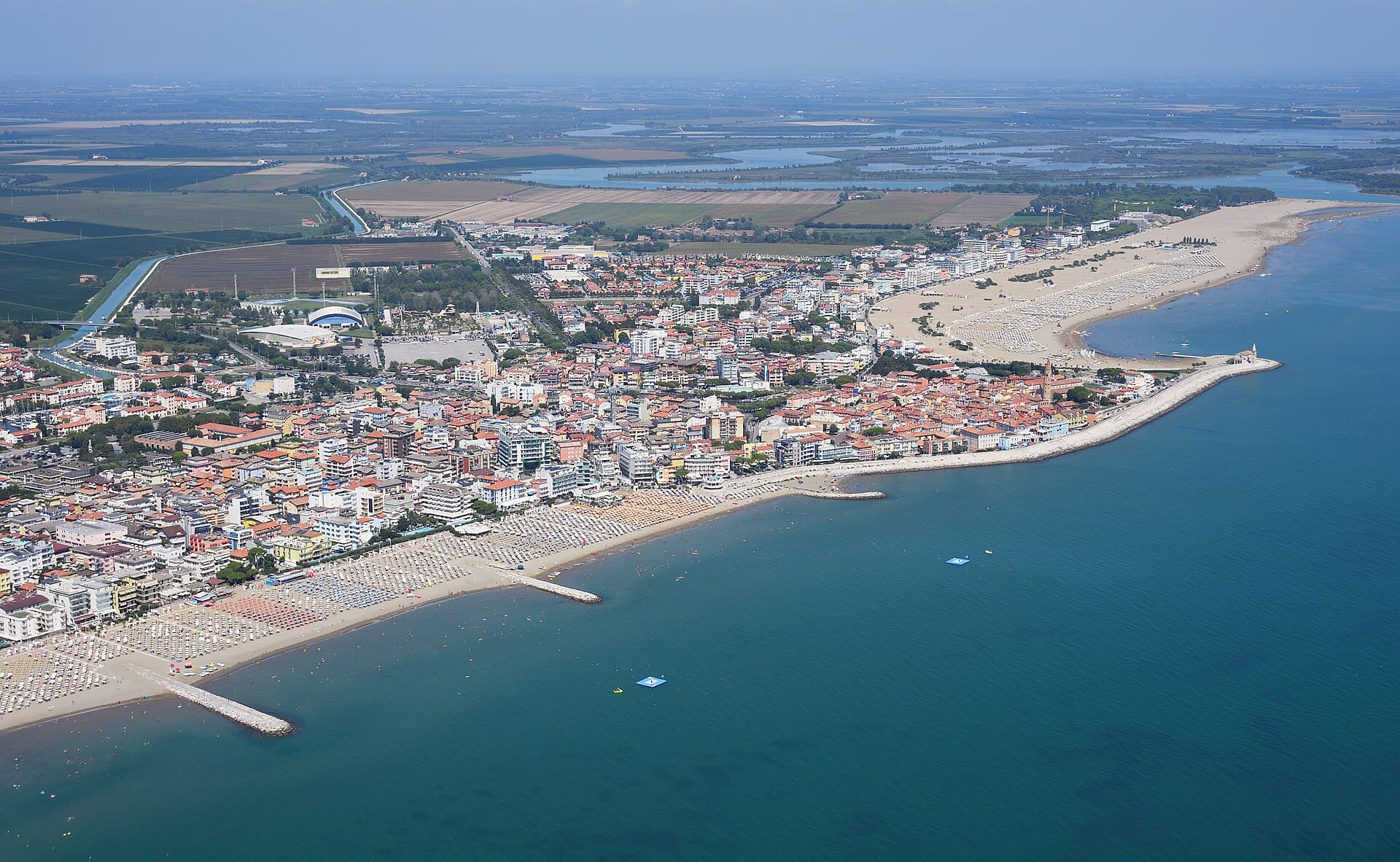
Caorle, a captivating coastal town on the Adriatic Sea, invites with its particular blend of ancient fishing traditions and the allure of Venice. Situated northeast of Venice, this picturesque destination offers a delightful escape with its colorful historic center, expansive sandy beaches, and a deep cultural narrative woven through centuries.
Stroll through narrow, cobbled passages and discover pastel-colored houses reminiscent of a quieter Burano, where the scent of the sea mingles with the aroma of fresh espresso. Caorle is more than just a seaside resort; it is a living tableau where daily life still harmonizes with the rhythms of the sea, offering a genuine glimpse into Italy's maritime soul. From its iconic leaning bell tower to the serene lagoon, Caorle beckons you to uncover its many secrets and experience an unforgettable Italian adventure.
From Roman Port to Venetian Outpost
Caorle's story stretches back to prehistoric times, with evidence of settlements from the late Bronze Age (17th-6th century BC) found in the immediate hinterland near San Gaetano. However, its significant development began in the 1st century BC when the Romans established it as a crucial port, known as Caprulae or Portus Reatinum. This port served as a vital transit point for trade, connecting to inland Roman cities like Concordia Sagittaria and Opitergium (modern-day Oderzo) via the Lemene River. Archaeological findings, such as the sacrificial Ara Licovia and a remarkably intact Roman ship with amphorae discovered off the coast, confirm its Roman origins and importance.
With the fall of the Roman Empire and the subsequent barbarian incursions in the 5th century AD, Caorle gained further prominence as a refuge for mainland populations seeking safety in the lagoon islands. This migration led to a notable increase in population and the establishment of local self-government. By the 6th century, Caorle became an episcopal seat, a status it maintained for over a millennium, becoming one of the nine important cities of the Republic of Venice. Its close ties with Venice were evident in its architecture, with many Istrian flagstones composing monuments, and its ancient structure featuring bridges and canals, earning it the moniker 'little Venice'. Caorle contributed significantly to Venice's development, even providing galleys and sailors during the war against the Turks in 1570.
However, Caorle's golden age waned due to various incursions, including those from Friuli and Genoa, between the 12th and 15th centuries, and later suffered under French and Austrian dominations. The bishopric was suppressed by a Napoleonic decree in 1807, and its territory was annexed to the Patriarchate of Venice in 1818. From the mid-19th to mid-20th centuries, Caorle saw a resurgence, initially through agriculture and then, after the two World Wars, with the rise of seaside tourism. Today, it remains a popular tourist destination, yet it has carefully preserved its authentic fishing village character, history, and traditions.
Begin your exploration in Caorle's Centro Storico, a captivating labyrinth of narrow alleys and brightly colored houses that echo the spirit of Venice. The town's most iconic landmark is the Cathedral of Santo Stefano, an 11th-century Romanesque basilica with a distinctive cylindrical bell tower that leans gently. You can even ascend the bell tower for sweeping views of the town and the Adriatic. Just a short stroll along the scenic promenade, past the unique Scogliera Viva (Living Reef) with its carved rocks, you will find the Sanctuary of the Madonna dell'Angelo, a picturesque church at the sea's edge.
For a deeper immersion into local culture, visit the Municipal Fish Market to observe the lively afternoon 'ear auction' of fresh seafood. Explore the serene Caorle Lagoon, a protected area where you can spot diverse flora and fauna and discover the traditional casoni, ancient fishermen's huts crafted from reeds and wood. The lagoon is also an excellent place for boat excursions. Caorle offers 18 kilometers of Blue Flag beaches, including Levante and Ponente, perfect for relaxation and water activities. Do not overlook the nearby Vallevecchia Nature Oasis for birdwatching and peaceful walks.
The ideal time to visit Caorle for warm, sunny weather and beach activities is from May to September. July and August are the warmest months, with average daily highs around 29°C (84°F), making them perfect for swimming, but also the most frequented. For a more tranquil experience with pleasant weather, consider visiting in May, June, or September. Spring and autumn offer comfortable transitional seasons with mild temperatures, while winters are cool and damp, with average highs around 9°C (48°F) in January.
Caorle is easily accessible, located approximately 70 km northeast of Venice. You can arrive by car, or by taking a train to Portogruaro and then a local bus. During summer, a motorboat service from Caorle's Fishing Harbor can even transport you directly to St. Mark's Square in Venice. The town provides a wide array of accommodation options, including hotels, tourist villages, holiday homes, and campsites. The historic center is pedestrian-friendly, ideal for walking. For those interested in fishing, a Veneto Region fishing license is required, and for inland waters within the municipality, a specific permit from the Caorle Local Police is also necessary. The local currency is the Euro. Cash is often preferred for smaller transactions, and for some attractions like the Bell Tower, only cash is accepted.
- What is Caorle known for?
- Caorle is known for its colorful historic center, its leaning cylindrical bell tower, traditional fishing 'casoni' in the lagoon, and its beautiful sandy beaches. It is also recognized for its unique 'Scogliera Viva' (Living Reef) where artists carve sculptures into the rocks along the promenade.
- Is Caorle good for families?
- Yes, Caorle is considered a family-friendly destination. It offers clean, sandy beaches with shallow waters, ideal for children. There are also family-oriented attractions like Aquafollie Water Park and Luna Park Adriatico.
- How far is Caorle from Venice?
- Caorle is approximately 60-70 kilometers (about 37-43 miles) northeast of Venice. The drive takes about an hour.
- What are 'casoni'?
- 'Casoni' are traditional, V-shaped fishermen's huts crafted from reeds and wood, historically found in the Caorle Lagoon. They represent an ancient way of life and are a unique cultural sight.
- Can I climb Caorle's bell tower?
- Yes, you can ascend the cylindrical bell tower of the Caorle Cathedral. It offers panoramic views of the historic center and the Adriatic Sea. There is an entrance fee, which is typically cash-only.
- What is the Scogliera Viva?
- The Scogliera Viva, or 'Living Reef,' is an open-air art gallery along Caorle's seafront promenade. International sculptors carve artworks directly into the large rocks that form the breakwater, with new pieces added every two years.