Chaleur Bay
The name of the bay suggests its character, but the reason for its agreeable temperatures extends beyond mere chance.
Full story unlocks in the tour
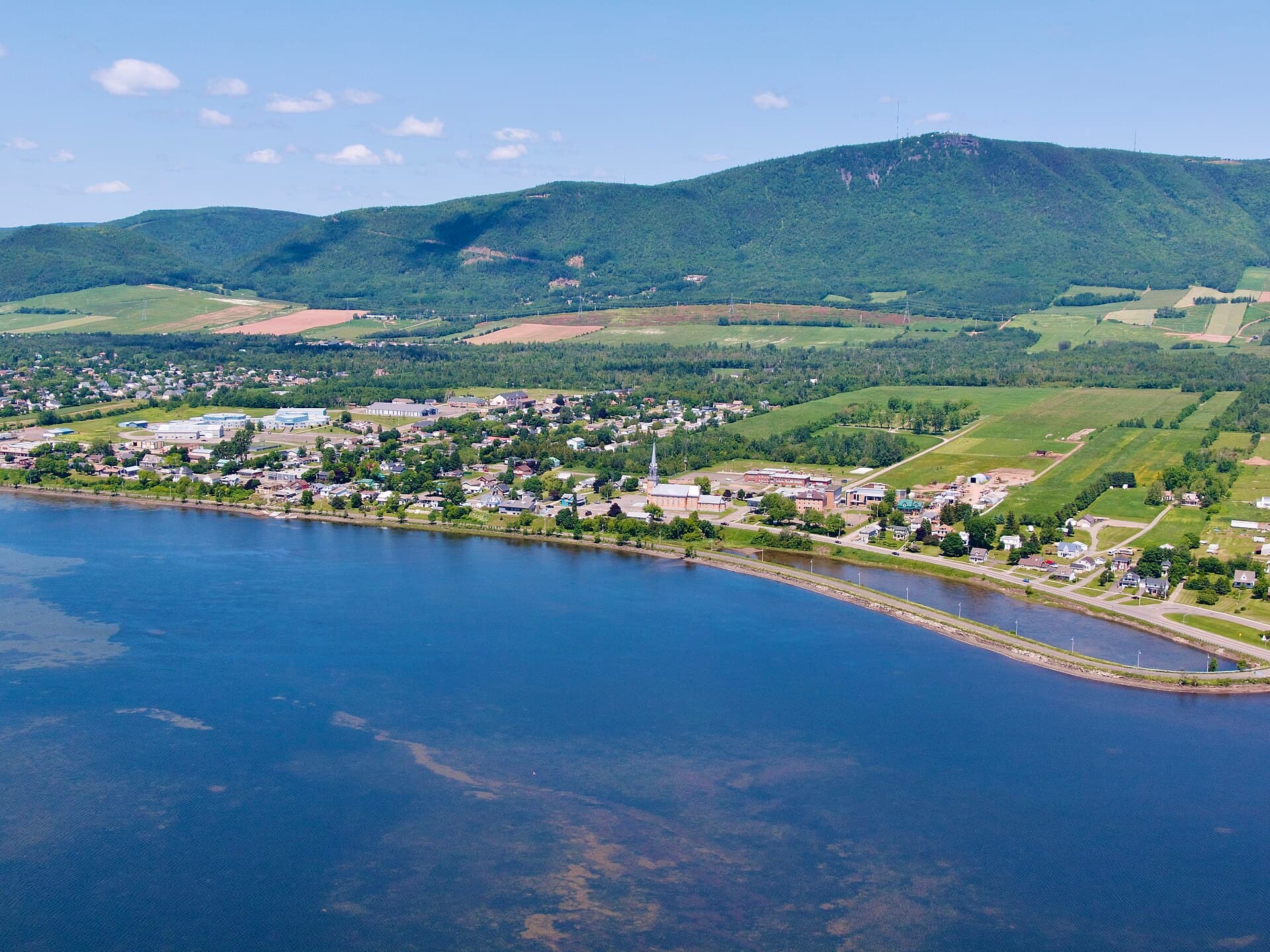 Hayden Soloviev / CC BY 4.0, via Wikimedia Commons
Self-guided audio walking tour of Carleton-sur-Mer — GPS route, offline playback, story-driven narration in 32 languages.
“Where mountains embrace the sea, and the water hums with ancient warmth.”
Not the postcards. The stories even locals don't know — whispered in your ear, right where they happened.
The name of the bay suggests its character, but the reason for its agreeable temperatures extends beyond mere chance.
The lighthouse standing sentinel at Pointe Tracadigash is not the original, and its present form narrates a tale of community dedication.
At the pinnacle of Mont Saint-Joseph, 555 meters above sea level, one encounters an unexpected fragment of European architecture.
Discover every secret of Carleton-sur-Mer
Every address, every reveal in full — in your ear, right where it happened.
You pick your stops. You walk. The voice reveals what the others miss.


Your self-guided audio tour of Carleton-sur-Mer is ready — pick your landmarks, choose your language, and start the moment you arrive.
BuyLume has a built-in augmented-reality guide. Hold your phone up and its camera shows the street ahead of you, with a glowing arrow laid over the real view that always points to your next stop — no map to puzzle over, no wrong turns. Like everything in Lume, it works fully offline.
Carleton-sur-Mer, a scenic town on the southern coast of Quebec's Gaspé Peninsula, presents a singular fusion of coastal allure and mountain majesty. Situated along Route 132, beside the celebrated Chaleur Bay, it is the fifth largest town on the south shore of the Gaspésie region. This resort community, with a population just exceeding 4,000, is a place where grand mountains meet the sea, forging distinct landscapes and a gentle microclimate.
Known for its warm bay waters, which are ideal for swimming, Carleton-sur-Mer has been a preferred location for travelers since the late 19th century. Its inviting atmosphere and varied offerings, from sandy shores to mountain pathways, make it a compelling stop for those exploring the Gaspé Peninsula.
The territory now recognized as Carleton-sur-Mer was originally named Tracadigash by the Mi'kmaq people, a designation that translates to "the place where herons gather." This indigenous name accurately portrayed the marshy lagoons, abundant with birdlife. French explorer Jacques Cartier was the first European to visit the bay on July 9, 1534, giving it the name "Baye des Chaleurs" due to its agreeable warmth.
The first enduring European settlement in Tracadigash was established around 1756 by seven Acadian families. These families were among those compelled to depart their homes in Nova Scotia during the Great Upheaval of 1755. Charles Dugas and Benjamin LeBlanc were among the initial founders. In 1772, Abbé Joseph-Mathurin Bourg, the first Acadian priest, arrived and conducted the first census of Tracadigash in 1777, documenting 177 inhabitants with family names such as Allard, Arseneau, Boudreau, Dugas, and LeBlanc.
In 1787, American Loyalists also settled in Tracadigash. To honor General Guy Carleton, the Governor General of Canada, the parish's name was altered from Saint-Joseph de Tracadièche to Saint-Joseph de Carleton. This marked a transformation in the region's cultural and political landscape.
Historically, Carleton's economy relied on farming, fishing, and forest products, supported by a deep-water wharf that enabled large international ships to load lumber. Tourism also played a role from the outset, with individuals drawn to the beaches and warm waters. The late 19th century observed Carleton become a favored travel destination for Quebec's affluent bourgeoisie, leading to the construction of elegant summer villas and an economic surge with the arrival of the railway.
The current municipality of Carleton-sur-Mer was officially formed on October 4, 2000, through the amalgamation of the town of Carleton and the parish municipality of Saint-Omer. Initially named Carleton–Saint-Omer, it was renamed Carleton-sur-Mer in 2005. Today, visitor engagement continues to be a significant aspect of the economy, with a well-developed infrastructure and a focus on outdoor pursuits, local cuisine, and cultural experiences.
Carleton-sur-Mer presents a variety of attractions that underscore its natural splendor and cultural legacy. A recommended visit is Mont Saint-Joseph, ascending 555 meters (1,821 feet) above sea level. One can hike, bike, or drive to its summit for sweeping views of Chaleur Bay and the coastline. At the peak, one discovers a Breton-style oratory chapel, constructed in 1935, adorned with mosaics and stained glass.
For coastal experiences, the Parc des Horizons and the town beach are central. Here, one can stroll along a wooden boardwalk, savor the salt air, or enjoy a picnic with bay views. The beach is recognized for its exceptionally warm waters, making it one of the few locations in Quebec where ocean swimming is genuinely comfortable. Pointe Tracadigash is another picturesque spot, ideal for observing sunsets and occasional storytelling evenings. The Tracadigash Point Lighthouse, a replica of the 1911 original, stands here as a local emblem.
The town also includes a 6-km cycling path, an 18-hole golf course, and a lively wharf utilized for sport fishing and as a gathering point for artists and locals. For art enthusiasts, the Galerie d'Art Edith Jolicoeur offers exhibits. The Quai des arts functions as a cultural nexus, hosting performances, exhibitions, and summer events.
The ideal time to visit Carleton-sur-Mer for warm-weather activities is from early July to late August. During these months, the average daily high temperature surpasses 17°C (63°F), with July being the warmest month, averaging 23.8°C (73°F) during the day. The bay waters are at their warmest, making swimming pleasurable. August also offers clear skies, on average 57% of the time. While precipitation is distributed throughout the year, July records the most wet days, so an umbrella or raincoat can be helpful.
Carleton-sur-Mer is accessible via Route 132, a scenic road that encircles the Gaspé Peninsula. If traveling by air, Charlo Airport (YCL) is approximately 16 kilometers (10 miles) from the city center. Renting a car is a practical choice for exploring the region, with an average daily cost of around $57 CAD. The town itself is amenable to walking, and a 6-km cycling path provides an alternative for local transit.
Accommodation options include hotels such as Manoir Belle Plage and Motel L'Abri. For dining, Carleton-sur-Mer presents a surprisingly diverse culinary landscape, with French, Italian, Japanese, and Moroccan cuisine, alongside local products from a microbrewery, chocolate shop, and bakery. The local specialty is Gaspé lobster, frequently served simply boiled with melted butter.
Carleton-sur-Mer in Korean, in Chinese or in Hebrew — and 29 more languages, every stop narrated by a native voice. The widest language range of any self-guided audio tour.
Available in: