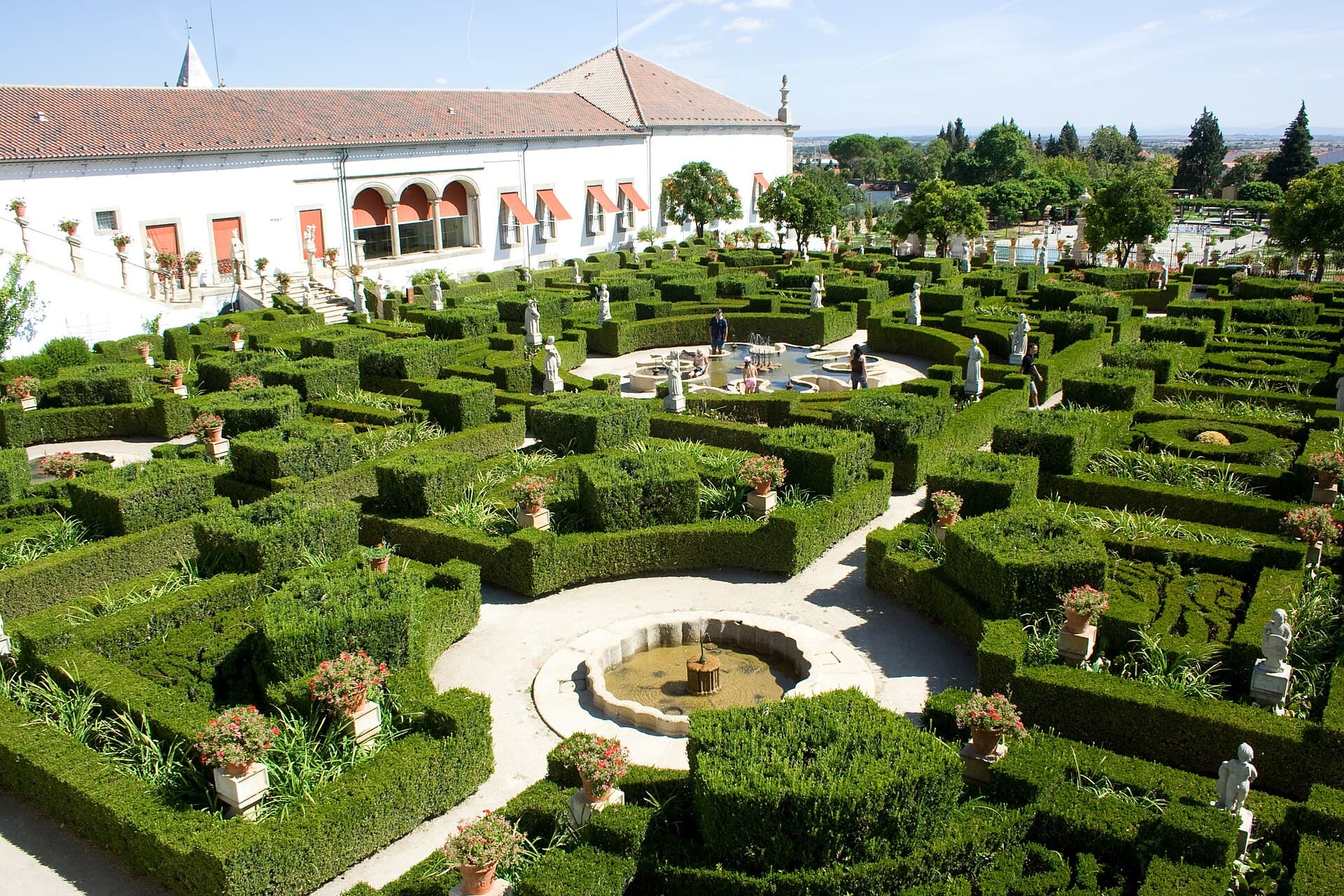
Castelo Branco, PortugalBennekikkek / CC BY 3.0, via Wikimedia Commons
PT

Castelo Branco

Self-guided audio walking tour of Castelo Branco — GPS route, offline playback, story-driven narration in 32 languages.

Where ancient stones whisper Templar secrets and Baroque gardens bloom with royal intrigue.

The secrets of Castelo Branco

Castelo Branco, as no one tells it.

Not the postcards. The stories even locals don't know — whispered in your ear, right where they happened.

3 secrets below. Many more wait inside the tour.
Bishop's Palace Gardens (Jardim do Paço Episcopal)

Look closely at the statues of the Portuguese kings in the Bishop's Palace Gardens, and you'll notice something peculiar about three of them.

Full story unlocks in the tour
Rua D'Ega and Rua da Misericórdia

Wander the narrow streets of Castelo Branco's old town, particularly around Rua D'Ega, and you might spot faint symbols etched into the stone, remnants of a community that once thrived here.

Full story unlocks in the tour
Interpretation Centre of the Embroideries of Castelo Branco (Domus Municipalis)

The exquisite Castelo Branco embroideries, famous for their intricate silk designs, hold a romantic secret about their original purpose.

Full story unlocks in the tour
The full tour

Discover every secret of Castelo Branco

Every address, every reveal in full — in your ear, right where it happened.

Get the key to Castelo Branco

You pick your stops. You walk. The voice reveals what the others miss.

Choose your time

How long do you have in Castelo Branco?

Your self-guided audio tour of Castelo Branco is ready — pick your landmarks, choose your language, and start the moment you arrive.

Buy
About Castelo Branco

The story of Castelo Branco

Castelo Branco, a city in central Portugal, offers a captivating blend of historical depth and authentic Portuguese character. Located near the Spanish border, it serves as the capital of its district and maintains a relaxed pace of life, distinct from the bustling coastal cities. The city's name, meaning 'White Castle,' is a direct nod to its medieval fortress, a testament to its strategic importance throughout history.

Visitors to Castelo Branco will discover a well-preserved old town, where narrow, winding streets ascend to the castle ruins, offering expansive views of the surrounding countryside. The city is perhaps most recognized for its exquisite Baroque Bishop's Palace Gardens, a verdant masterpiece filled with symbolic statues and intricate designs. Beyond its historical landmarks, Castelo Branco also serves as a center for traditional crafts, particularly its distinctive hand-embroidered linen.

With a population of around 50,000, Castelo Branco provides a comfortable, small-city experience while offering easy access to natural areas like the Serra da Estrela mountains and charming historical villages in the wider region. It's a destination that invites exploration, revealing layers of history, culture, and local identity at every turn.

History

## From Roman Outpost to Templar Stronghold Castelo Branco's origins stretch back to Roman times, with settlers establishing 'Albi Castrum' on the slopes of the Cardosa hill. However, much of its early history before 1182 remains largely undocumented.

### The Knights Templar and the City's Birth The city's definitive foundation and name are closely tied to the Knights Templar. In 1165, King Afonso I of Portugal recaptured the territory from Moorish rule and granted it to the Templar Order. The name 'Castel-Branco' first appeared in 1213, and Pope Innocent III confirmed it as Castelo Branco in 1215. The Templars were instrumental in building the castle and its surrounding walls between 1214 and 1230, transforming it into a crucial defensive outpost during the Christian Reconquista. The castle was a vital part of the Tagus River's defensive line, strategically positioned to oversee the border with Spain.

### Medieval Growth and Royal Charters During the reign of King Dinis, the city's border defenses were reinforced. In 1510, King Manuel I granted Castelo Branco a new charter, leading to significant growth in both its population and urban area. This period saw the construction of many 15th-century houses, adorned with decorated doors and windows, reflecting the prosperity of its traders.

### A Flourishing Jewish Community and Marrano Center Historically, Castelo Branco hosted a significant Jewish community dating back to at least the 14th century. Following the expulsion of Jews from Spain in 1492 and the forced conversions in Portugal in 1496-97, Castelo Branco became an important center for Marranos – Jews who publicly converted to Christianity but secretly continued to practice Judaism. This practice persisted for centuries, with many descendants openly returning to Judaism in the 1920s. Traces of this heritage can still be found in the old Jewish Quarter.

### Episcopal Seat and Baroque Splendor In 1771, Castelo Branco achieved city status and became a bishopric. This era brought about the construction of the lavish Bishop's Palace and its renowned Baroque gardens, commissioned by Bishop João de Mendonça in the early 18th century. These gardens, with their intricate statuary and water features, became a symbol of the city's urbanity and importance. Although the diocese was suppressed in 1881, the former St. Michael's Church became the city's co-cathedral.

### Modern Developments and Enduring Traditions Throughout the centuries, Castelo Branco faced wars, invasions, and political changes, yet it maintained its distinct identity. The city developed a strong textile sector, a tradition that continues today, most notably with its famous hand-embroidered linen. In the 20th century, Castelo Branco continued to evolve, becoming the capital of its district in 1959 and embracing modern developments while preserving its cultural heritage.

What to see

Begin your exploration at the Jardim do Paço Episcopal (Bishop's Palace Gardens), an extraordinary example of Baroque landscaping. Wander among the meticulously sculpted hedges, five lakes, and the famous 'Staircase of Kings,' where statues of Portuguese monarchs stand in chronological order, with a subtle historical detail regarding the Spanish kings.

Adjacent to the gardens, the Francisco Tavares Proença Júnior Museum, housed in the former Bishop's Palace, showcases a diverse collection, including the renowned Castelo Branco embroideries. Here, you can admire the intricate silk-on-linen designs that are a true symbol of the region's craftsmanship.

Ascend to the Castelo de Castelo Branco (Templar Castle), a medieval fortress built by the Knights Templar. While largely in ruins, the remaining walls, a defensive tower, and the Church of Santa Maria do Castelo offer commanding views of the city and its surroundings.

Explore the historical city center, particularly around Praça Camões (Old Square), where you'll find medieval traces and 16th-century houses with decorated doorways. Don't miss the Sé de Castelo Branco (Cathedral of Castelo Branco), originally the Church of São Miguel, rebuilt in Renaissance style.

For art enthusiasts, the Cargaleiro Museum is dedicated to Manuel Cargaleiro, a local genius of painting and ceramics, displaying his works in both an 18th-century manor and a modern building.

Delve into the city's Jewish heritage by walking through the former Jewish Quarter between Rua D'Ega and Rua da Misericórdia, where subtle symbols hint at a profound past.

In warmer months, consider a visit to the Piscina Praia de Castelo Branco, a river beach swimming complex, offering a refreshing escape.

When to visit

The best times to visit Castelo Branco are spring (mid-April to mid-June) and autumn (mid-September to early October). During these periods, temperatures are comfortable, ranging from 20-26°C, and there are fewer tourists. Summers (June to mid-September) are hot and sunny, with temperatures often reaching 38-40°C, making it ideal for hot-weather activities like swimming. Winters (December to February) are mild with cool nights, though cold periods with lows of 7-8°C can occur.

Practical

Castelo Branco is easily accessible by highway or train, approximately two hours from Lisbon Airport. While the city center is very walkable, a car is recommended if you plan to explore the surrounding historical villages like Monsanto or Idanha-a-Velha. Public transport within the city is available, but many attractions are within walking distance.

Accommodation options range from centrally located hotels to more rural quintas. The cost of living in Castelo Branco is relatively lower than in larger Portuguese cities. It's advisable to carry some cash, as some smaller establishments may not accept card payments. For dining, explore local eateries for authentic and reasonably priced Portuguese food, and be sure to try regional specialties like Queijo de Castelo Branco cheese and 'Papas de Carolo' dessert.

Good to know
What is Castelo Branco known for?
Castelo Branco is most known for its Baroque Bishop's Palace Gardens, its medieval Templar Castle, and its unique hand-embroidered linen quilts. It is also recognized for its deep history, including a significant Jewish heritage.
How long should I spend in Castelo Branco?
While the main points of interest in Castelo Branco can be visited in one day, it's recommended to spend at least 2-3 days to explore the city thoroughly and take day trips to nearby historical villages and natural parks.
Is Castelo Branco a good base for exploring the region?
Yes, Castelo Branco is an excellent base for exploring the Beira Baixa region. It offers easy access to the International Tagus Natural Park, Serra da Estrela mountains, and historical villages like Monsanto and Idanha-a-Velha.
What local crafts can I find in Castelo Branco?
The most renowned local craft is the Castelo Branco embroidery, known for its intricate silk designs on linen. You can learn more about its history and creation at the Interpretation Centre of the Embroideries.
Are there any unique local dishes to try?
Yes, Castelo Branco is known for its regional cheeses, particularly Queijo de Castelo Branco. You should also try 'Papas de Carolo,' a sweet cornmeal dessert flavored with lemon zest and cinnamon.
What are some of the main festivals in Castelo Branco?
Castelo Branco hosts several festivals, including Festas de Nossa Senhora de Mércoles, Semana Santa (Holy Week) with its processions, and the Festas das Flores (Flower Festival) in spring. The Feira de São João in June is also a popular annual fair.
On the map
Castelo Branco
€9.90
No booking · activate anytime · 12h to walk it
Load on Wi-Fi, then walk offline — no roaming abroad
Get the key to Castelo Branco