Iglesia San Francisco
This UNESCO World Heritage site is a riot of color, but its exterior design conceals a surprising structural choice.
Full story unlocks in the tour
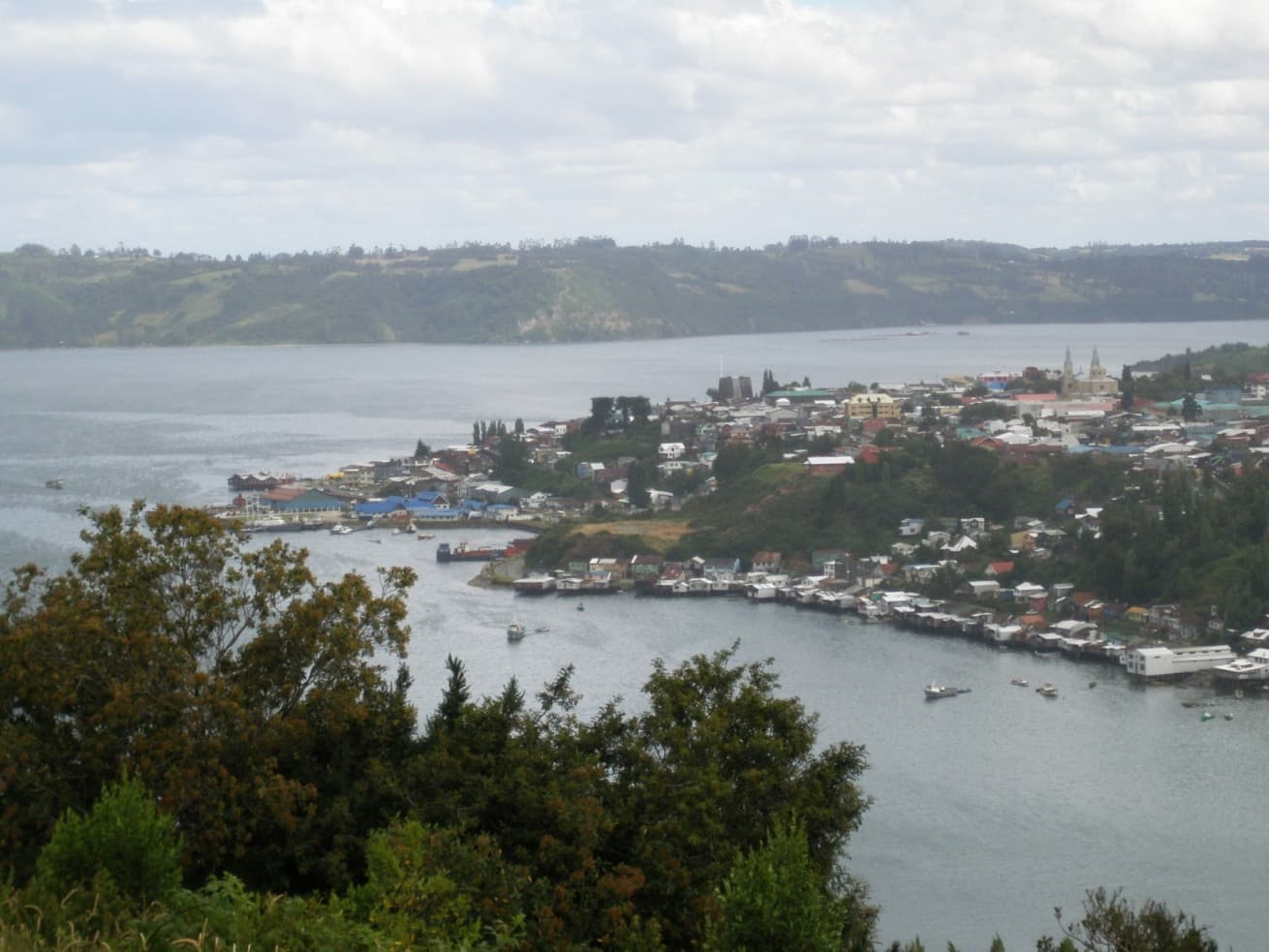 Joanna (JCardinal18) from Washington, DC, USA / CC BY 2.0, via Wikimedia Commons
Self-guided audio walking tour of Castro — GPS route, offline playback, story-driven narration in 32 languages.
“Where colorful palafitos meet ancient myths, Castro is the beating heart of Chiloé.”
Not the postcards. The stories even locals don't know — whispered in your ear, right where they happened.
This UNESCO World Heritage site is a riot of color, but its exterior design conceals a surprising structural choice.
Castro's iconic stilt houses are a photographer's delight, but locals once held a different view of these waterside dwellings.
Castro is one of Chile's oldest continuously inhabited cities, yet its early years were scarred by repeated destruction.
Discover every secret of Castro
Every address, every reveal in full — in your ear, right where it happened.
You pick your stops. You walk. The voice reveals what the others miss.


Your self-guided audio tour of Castro is ready — pick your landmarks, choose your language, and start the moment you arrive.
BuyLume has a built-in augmented-reality guide. Hold your phone up and its camera shows the street ahead of you, with a glowing arrow laid over the real view that always points to your next stop — no map to puzzle over, no wrong turns. Like everything in Lume, it works fully offline.
Castro, the capital of Chiloé Province, presents a captivating blend of unique architecture, enduring narratives, and island culture. Situated on the eastern coast of the Isla Grande de Chiloé, the city is known for its distinctive palafitos—colorful wooden houses constructed on stilts over the water—which create a striking waterfront landscape. Beyond these characteristic dwellings, Castro serves as the cultural and commercial core of the Chiloé Archipelago, offering a fascinating window into island life.
The city's allure extends to its lively markets, where traditional crafts and local cuisine flourish, and its impressive Iglesia San Francisco, a UNESCO World Heritage site recognized for its striking appearance. Castro's position also makes it an excellent starting point for exploring the wider island, with its national parks, smaller fishing villages, and other historic wooden churches. Despite its status as a significant urban center, Castro maintains a relaxed rhythm, inviting visitors to immerse themselves in its distinctive atmosphere and uncover the enduring customs and mythical folklore of the Chilote people.
Castro holds the distinction of being Chile's third-oldest city in continuous existence, established on February 12, 1567, by Martín Ruiz de Gamboa. He was tasked by the temporary governor of Chile, Rodrigo de Quiroga, to found a city on the Chiloé Archipelago and subjugate the indigenous Cuncos people. From its founding until 1767, Castro served as the administrative center of Chiloé Island.
The city's early history was marked by repeated challenges. In 1594, Castro had approximately 8,000 inhabitants, mostly farmers. However, it was repeatedly looted by Dutch pirates through the mid-17th century. The original church, named after Saint James (Santiago), was built in 1567 for the evangelization of the local people, but it burned down and was rebuilt multiple times before its complete destruction in 1771. A Jesuit chapel, built in 1608, then served as the parish after the order's expulsion, eventually being occupied by Franciscans.
In 1767, during the Bourbon Reforms aimed at modernizing the Spanish Empire, Chiloé was separated from mainland Chile. The most recent Iglesia San Francisco, a prominent landmark today, was constructed between 1910 and 1912, replacing a predecessor that had burned down in 1902. This impressive structure, designed by Italian architect Eduardo Provasoli and built by Chilote carpenters, combines Neo-Gothic and classical designs with local building traditions, using native woods like alerce, cypress, and coigüe. Beyond fires and pirate raids, Castro also faced natural disasters, including a devastating earthquake and tidal wave in 1960 that engulfed the city. Despite these setbacks, Castro has always demonstrated remarkable resilience, rebuilding and evolving into the thriving capital it is today, an important center for Chile's salmon industry.
Begin your exploration at the Plaza de Armas, the central square, home to the striking Iglesia San Francisco. This UNESCO World Heritage site is a brilliant yellow, adorned with mauve and violet details, and features an impressive varnished-wood interior. From the plaza, head towards the waterfront to discover Castro's iconic palafitos, colorful wooden houses built on stilts over the water. Good viewpoints for these include the Gamboa Viewpoint and the areas along the Gamboa River and at the end of San Martín.
For local crafts and mementos, visit the Feria Artesanal Lillo by the port, known for its woolen goods, woven baskets, and wooden figures. The Feria Campesina Yumbel is a bustling market for fresh produce, household goods, and fish. Delve into the island's past at the Museo Regional de Castro on the main square, which showcases displays on the indigenous Huilliche inhabitants and the city's history. For contemporary art, the Museo de Arte Moderno de Chiloé (MAM) is located in the Parque Municipal. Don't miss the unique Plazuela del Tren, a small plaza by the waterfront featuring an unusual collection of old trains.
The most agreeable time to visit Castro for warm-weather activities is from late December to late February, which is the Southern Hemisphere summer. During this period, average daytime temperatures range from 13–15°C (55–59°F), with maximums reaching up to 19°C (66°F), making it pleasant for walking. However, be prepared for rain, as even the driest summer months still see 8–11 days of precipitation. Local festivals, including the significant Festival Costumbrista Chilote, often take place in January and February, offering a lively cultural experience. For penguin spotting in nearby areas, November through March is ideal. The shoulder seasons of October to November and March to April also offer pleasant weather with fewer crowds.
The local currency in Castro is the Chilean Peso (CLP). While larger establishments may accept credit cards, cash is often preferred, especially in smaller shops and markets. ATMs are available, primarily around the Plaza de Armas, so it's advisable to withdraw cash before venturing into more rural areas. Castro is generally considered a safe destination for visitors, though it's always wise to be aware of your belongings in crowded areas. Public transport is available and generally safe during the day; for night travel, consider using 'radio taxis'.
To reach Castro, many travelers fly into El Tepual Airport (PMC) in Puerto Montt, about 128 km away, and then take a bus or rental car, which includes a scenic ferry ride across the Chacao Channel. Castro also has its own airport, Mocopulli (MHC), with daily flights to Santiago. Once in Castro, the city center is walkable, and local buses (micros) and collective taxis are available for getting around. Packing a waterproof jacket and comfortable, non-slip walking shoes is recommended year-round due to the region's temperate maritime climate and frequent rainfall.
Castro in Korean, in Chinese or in Hebrew — and 29 more languages, every stop narrated by a native voice. The widest language range of any self-guided audio tour.
Available in: