Ponte de Trajano
El puente romano de Chaves ha permanecido en pie durante casi 2.000 años, pero fíjate bien en sus columnas centrales. Guardan un secreto sobre quién lo construyó realmente.
La historia completa se desbloquea en el tour
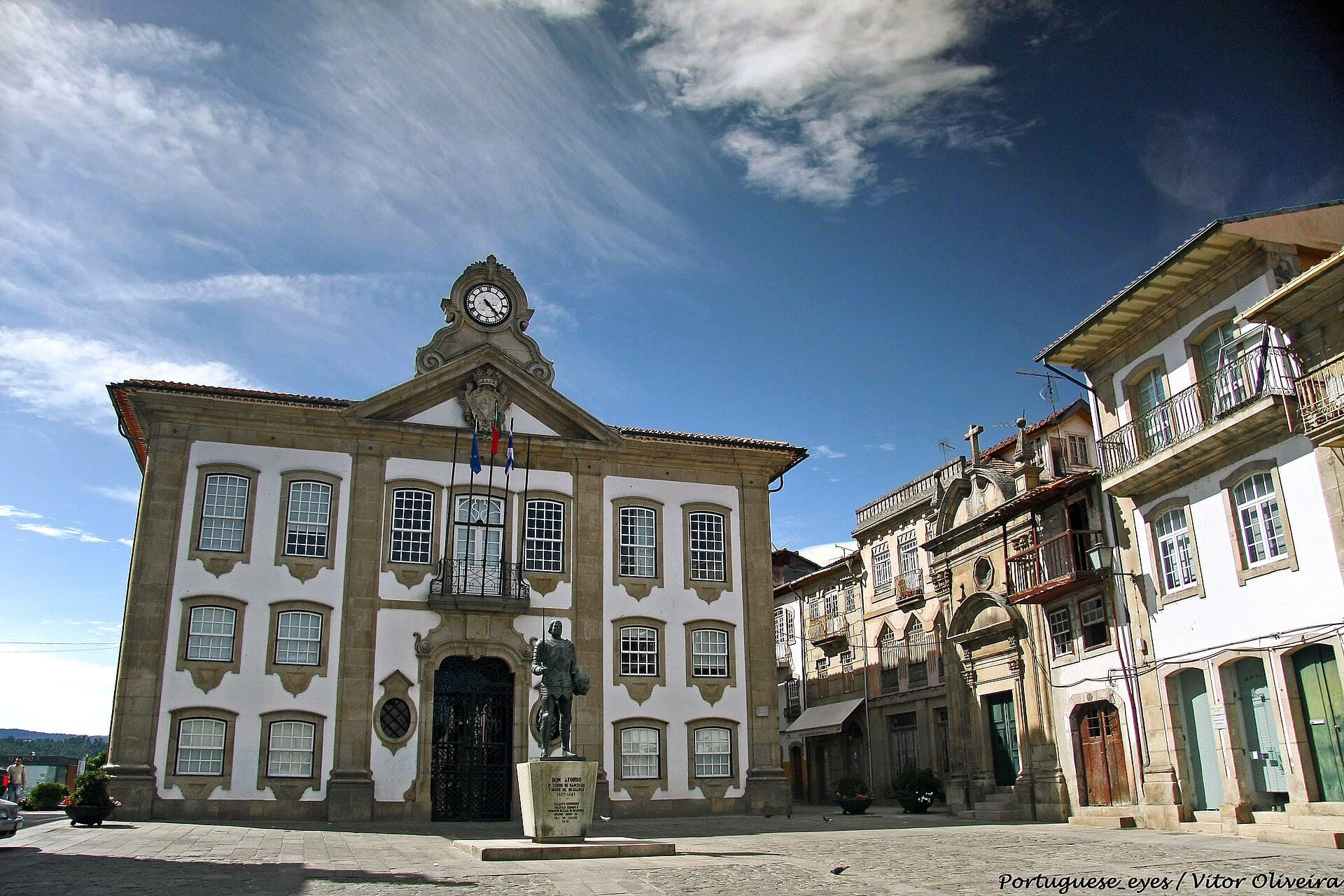 Vitor Oliveira from Torres Vedras, PORTUGAL / CC BY-SA 2.0, via Wikimedia Commons
Tour de audio autoguiado de Chaves — ruta GPS a pie, reproducción offline, narración en 32 idiomas.
“Donde las aguas termales romanas se encuentran con fortalezas medievales y un pastel guarda un secreto de 75 años.”
No las postales. Las historias que ni los locales conocen — al oído, justo donde ocurrieron.
El puente romano de Chaves ha permanecido en pie durante casi 2.000 años, pero fíjate bien en sus columnas centrales. Guardan un secreto sobre quién lo construyó realmente.
La imponente torre del homenaje del Castillo de Chaves ha sido testigo de siglos de conflicto, pero también esconde una característica sorprendente dentro de sus formidables muros.
Bajo la moderna ciudad de Chaves yace un antiguo secreto romano, uno que fue redescubierto por accidente en el siglo XXI.
Descubre todos los secretos de Chaves
Cada dirección, cada revelación al completo — a tu oído, justo donde ocurrió.
Eliges tus paradas. Caminas. La voz te revela lo que los demás ignoran.

Tu tour de audioguía por Chaves te espera — elige tus lugares, tu idioma y empieza al llegar.
ComprarLume incluye una guía de realidad aumentada. Levanta el móvil y su cámara muestra la calle que tienes delante, con una flecha luminosa sobre la imagen real que siempre apunta a tu próxima parada — sin mapas que descifrar, sin giros equivocados. Como todo en Lume, funciona completamente sin conexión.
Chaves, una ciudad en la región de Trás-os-Montes, al norte de Portugal, se encuentra a solo 10 kilómetros de la frontera española. Esta histórica ciudad fronteriza, con orígenes que se remontan al Paleolítico, es una cautivadora mezcla de patrimonio romano, fortificaciones medievales y una floreciente cultura de spa. Su nombre, que significa "llaves" en portugués, refleja su importancia estratégica de larga data como puerta de entrada entre Portugal y España.
La ciudad es célebre por sus manantiales termales, algunos de los más calientes de Europa, que atrajeron a los romanos a establecer el asentamiento de Aquae Flaviae en el siglo I d.C. Más allá de sus aguas curativas, Chaves ofrece una rica variedad de lugares de interés, desde el notablemente conservado puente romano hasta una torre del homenaje medieval y encantadoras calles adoquinadas.
La historia de Chaves se remonta a tiempos prehistóricos, con evidencia arqueológica de actividad humana en el Paleolítico. La región experimentó un asentamiento humano continuo, con restos protohistóricos y de la cultura castreña encontrados en el valle del Alto Tâmega. La llegada de las legiones romanas en el siglo III a.C. marcó un punto de inflexión significativo. Reconociendo la ubicación estratégica y los distintivos manantiales termales, los romanos establecieron aquí un asentamiento, inicialmente llamado Aquae Flaviae, en honor al emperador Tito Flavio Vespasiano, quien le otorgó el estatus de municipio en el 79 d.C.
Los romanos dejaron una marca indeleble en Chaves, construyendo muros protectores, explotando minas locales y, lo más notable, construyendo el Ponte de Trajano sobre el río Tâmega. Este puente, completado en el 104 d.C., formaba parte de una importante calzada romana que conectaba Braga con Astorga en España. Las termas, con aguas que alcanzaban los 73°C (163°F), eran un punto de encuentro social y un centro terapéutico vital.
Después del dominio romano, Chaves experimentó sucesivos períodos de dominio por los suevos, visigodos y moros. La ciudad fue reconquistada por Alfonso I de Asturias en el 773 d.C., luego volvió a caer bajo control moro a principios del siglo X, antes de ser definitivamente rescatada por Alfonso III de León en el siglo XI. Durante la Reconquista Cristiana, el rey Dinis ordenó la construcción de la formidable torre del homenaje del castillo y las murallas defensivas que aún definen el casco antiguo de la ciudad. Chaves pasó a formar parte oficialmente de Portugal alrededor de 1160.
En el siglo XVII, durante las Guerras de Restauración portuguesas, se construyeron más fortificaciones como los Fuertes de São Francisco y São Neutel. La ciudad también desempeñó un papel en las invasiones napoleónicas del siglo XIX, donde las tropas francesas sufrieron su primera derrota en suelo portugués en Chaves. Chaves fue elevada oficialmente a la categoría de ciudad el 12 de marzo de 1929.
Chaves ocupa un lugar especial en la historia portuguesa como cuna de la Casa de Bragança. Esta influyente dinastía, que llegaría a gobernar Portugal y Brasil hasta el siglo XX, comenzó cuando el Condestable Nuno Álvares Pereira otorgó la ciudad y su castillo a su yerno, Afonso, el hijo ilegítimo del rey João I, quien se convirtió en el 1er Duque de Bragança.
Si bien los manantiales termales eran conocidos y utilizados por los romanos, sus propiedades científicas no se comprendieron completamente hasta mucho más tarde. En 1726, Francisco da Fonseca Henriques, médico del rey João V, mencionó las Termas de Chaves en el primer libro sobre aguas minerales y medicinales portuguesas. Sin embargo, no fue hasta 1856 cuando se destacaron sus propiedades únicas bicarbonatadas, ricas en sodio, minerales e hidrogenadas. La moderna industria del spa en Chaves continúa esta antigua tradición, ofreciendo diversos tratamientos terapéuticos.
Comienza tu exploración en el Ponte de Trajano, el icónico puente romano que ha cruzado el río Tâmega durante casi dos milenios. Observa los dos miliarios romanos originales en su centro, testimonios de sus antiguos orígenes. Desde allí, pasea por el casco antiguo histórico, con sus calles estrechas y atractivas y casas tradicionales de granito.
Ascende al Castelo de Chaves, una fortaleza medieval dominada por su torre del homenaje del siglo XIV. Sube a la cima para disfrutar de amplias vistas de la ciudad, el río y el paisaje circundante de Trás-os-Montes. Dentro de la torre del homenaje, un pequeño museo militar exhibe armaduras, armas y mapas. Junto al castillo se encuentra la Praça de Camões, una encantadora plaza central sin edificios modernos, que ofrece una visión del ambiente histórico de Chaves.
Adéntrate en el pasado romano de la ciudad en el Museu das Termas Romanas de Chaves, donde pasarelas de vidrio te permiten ver los restos excavados de los baños terapéuticos romanos más grandes de la Península Ibérica. Para probar la cultura local, visita la Fonte do Tabolado, donde puedes probar el agua termal caliente directamente de la fuente, una tradición local. No te pierdas la Igreja Matriz de Santa Maria Maior, una iglesia del siglo XII con una fachada románica. El Museu de Arte Contemporânea Nadir Afonso, un edificio moderno diseñado por Álvaro Siza Vieira, ofrece un contraste con su colección de obras del pintor portugués Nadir Afonso.
Considera un paseo por el Alameda do Tabolado, el paseo fluvial, o explora las Poldras de Chaves, antiguos pasos de piedra a través del río Tâmega. Para aquellos interesados en la historia militar de la región, el Forte de São Neutel del siglo XVII y el Forte de São Francisco convertido (ahora un hotel) también merecen una visita.
Chaves experimenta un clima mediterráneo con influencias continentales, lo que significa veranos calurosos e inviernos más frescos. Las mejores épocas para visitar son primavera (marzo a mayo) y otoño (septiembre a noviembre), cuando las temperaturas son suaves, los cielos están despejados y hay menos multitudes. Las temperaturas máximas promedio en primavera oscilan entre 17°C (63°F) y 24°C (75°F). Principios de otoño es igualmente agradable, con temperaturas en septiembre promediando 26°C (79°F) y octubre en los 20-23°C (alrededor de 70-75°F). Los veranos (junio a agosto) son calurosos y secos, con julio y agosto promediando 30°C (86°F) y mínimas lluvias, ideales para actividades de clima cálido y animadas fiestas callejeras. Los inviernos (diciembre a febrero) son suaves pero húmedos, con máximas diurnas alrededor de 11-13°C (52-55°F), ofreciendo una experiencia más tranquila y condiciones perfectas para disfrutar de los baños termales.
Chaves es una ciudad compacta, lo que la hace muy transitable a pie, especialmente dentro del centro histórico. Se recomiendan zapatos cómodos debido a las atractivas calles. Si bien no es posible conducir dentro del centro histórico, hay aparcamientos disponibles en las afueras del casco antiguo, lo que facilita el acceso al centro. Un coche es beneficioso para explorar la región más amplia de Trás-os-Montes, incluyendo el Valle del Duero o el Parque Nacional de Peneda-Gerês. Los taxis locales son confiables y asequibles para distancias más cortas o regresos nocturnos. Los autobuses de larga distancia conectan Chaves con las principales ciudades como Oporto y Lisboa, aunque los horarios pueden ser limitados. La estación de tren más cercana está en Vila Real.
El costo de vida en Chaves es notablemente más bajo que en las ciudades costeras de Portugal. Una comida en un restaurante local suele costar entre 8 y 12 €, y un café con un pastel de nata alrededor de 2 €. Los servicios públicos para un apartamento oscilan entre 80 y 120 € mensuales. Los productos frescos de los mercados locales también son muy asequibles.
Chaves en coreano, en chino o en hebreo — y 29 idiomas más, cada parada narrada por una voz nativa. La mayor variedad de idiomas de cualquier audioguía autoguiada.
Disponible en: