Within Valença's formidable walls, a stone pillar rises, seemingly out of place. It's a silent marker of an ancient journey, not just for soldiers, but for emperors.
Krzysztof Golik / CC BY-SA 4.0, via Wikimedia CommonsValença
Self-guided audio walking tour of Valença — GPS route, offline playback, story-driven narration in 32 languages.
“Where ancient walls stand sentinel, and a river gracefully divides two lands.”
Valença, as no one tells it.
Not the postcards. The stories even locals don't know — whispered in your ear, right where they happened.
Step inside this seemingly unassuming church, and you will discover a piece of religious art so rare, it is the only one of its kind to have survived a turbulent period in Portuguese history.
The city's official emblem is not just an attractive design; it is a symbolic map of Valença's very essence, revealing its past, its position, and its enduring vigilance.
Discover every secret of Valença
Every address, every reveal in full — in your ear, right where it happened.
You pick your stops. You walk. The voice reveals what the others miss.
How long do you have in Valença?
Your self-guided audio tour of Valença is ready — pick your landmarks, choose your language, and start the moment you arrive.
BuyThe story of Valença
Valença, often referred to as Valença do Minho, is a historic walled city in northern Portugal, situated on the left bank of the Minho River. Its strategic location, directly opposite the Spanish town of Tui, has shaped its identity for centuries, making it a crucial frontier post. The city is dominated by its impressive star-shaped fortress, a masterpiece of military architecture that encloses a charming old town of narrow, winding streets.
Today, Valença offers a unique blend of historical intrigue and engaging cross-border culture. While its formidable walls once repelled invaders, they now welcome a steady stream of visitors, particularly from Spain, drawn by its commercial offerings and historical allure. The city serves as a living testament to centuries of defense, trade, and cultural exchange, making it an essential stop for anyone exploring northern Portugal and the Minho region.
Beyond the well-trodden paths of its main shopping streets, Valença reveals quieter squares, ancient churches, and wide-ranging views of the Minho River and the Galician countryside. It is a place where the echoes of Roman legions and medieval battles mingle with the everyday rhythm of Portuguese life, inviting you to uncover its many layers.
## From Roman Crossroads to Frontier Fortress Valença's story stretches back to Roman times, when two ancient highways intersected in the region: the Via IV of the Antonine Itinerary XIX, primarily for military use, and the per loca maritima (Itinerary XX), a commercial route. A Roman milestone from the 1st century AD, still preserved within the town's defensive walls, marks the 42nd mile of the road connecting Braga to Tui. This ancient marker, ordered by Emperor Claudius, underscores the area's early strategic importance.
In the 12th century, King Sancho I fortified the settlement, initially naming it 'Contrasta,' a name meaning 'a settlement facing another,' in clear reference to its position opposite Tui in Spain. By the 13th century, King Afonso III renamed it Valença. For centuries, Valença's fortress was vital to Portugal's defense and sovereignty against its Spanish neighbor.
## The Evolution of a Star-Shaped Stronghold The earliest fortifications date back to the 13th century, but the impressive star-shaped bulwark system seen today was largely constructed during the 17th and 18th centuries. This extensive defensive complex, considered one of Europe's most significant military fortifications, spans approximately 5 kilometers of walled perimeter and is divided into two main polygons: the older Magistral and the Coroada, separated by a moat. Its design was influenced by military engineers like Miguel de l'Escole and Manuel Pinto de Vilalobos, and it played a decisive role in the Portuguese Restoration Wars, successfully resisting numerous sieges by Spanish and French forces, including a brief occupation by Napoleon's troops in 1807.
## A Bridge to the Future The enduring connection, and occasional tension, between Valença and Tui is perhaps best symbolized by the International Bridge. Built between 1879 and 1886, this bi-functional road and railway bridge over the Minho River was inspired by the works of Gustave Eiffel. Today, the bridge facilitates not invasions, but a peaceful exchange of tourists and shoppers, and serves as a key crossing point for pilgrims on the Camino de Santiago.
The undisputed highlight of Valença is its magnificent Fortaleza, a sprawling star-shaped fortress that encapsulates the entire historic center. Walk along its approximately 5 kilometers of walls to appreciate the intricate military architecture, including 12 bastions, 5 ravelins, and 34 watchtowers. From the ramparts, you will be treated to wide-ranging views of the Minho River and the Spanish town of Tui across the water.
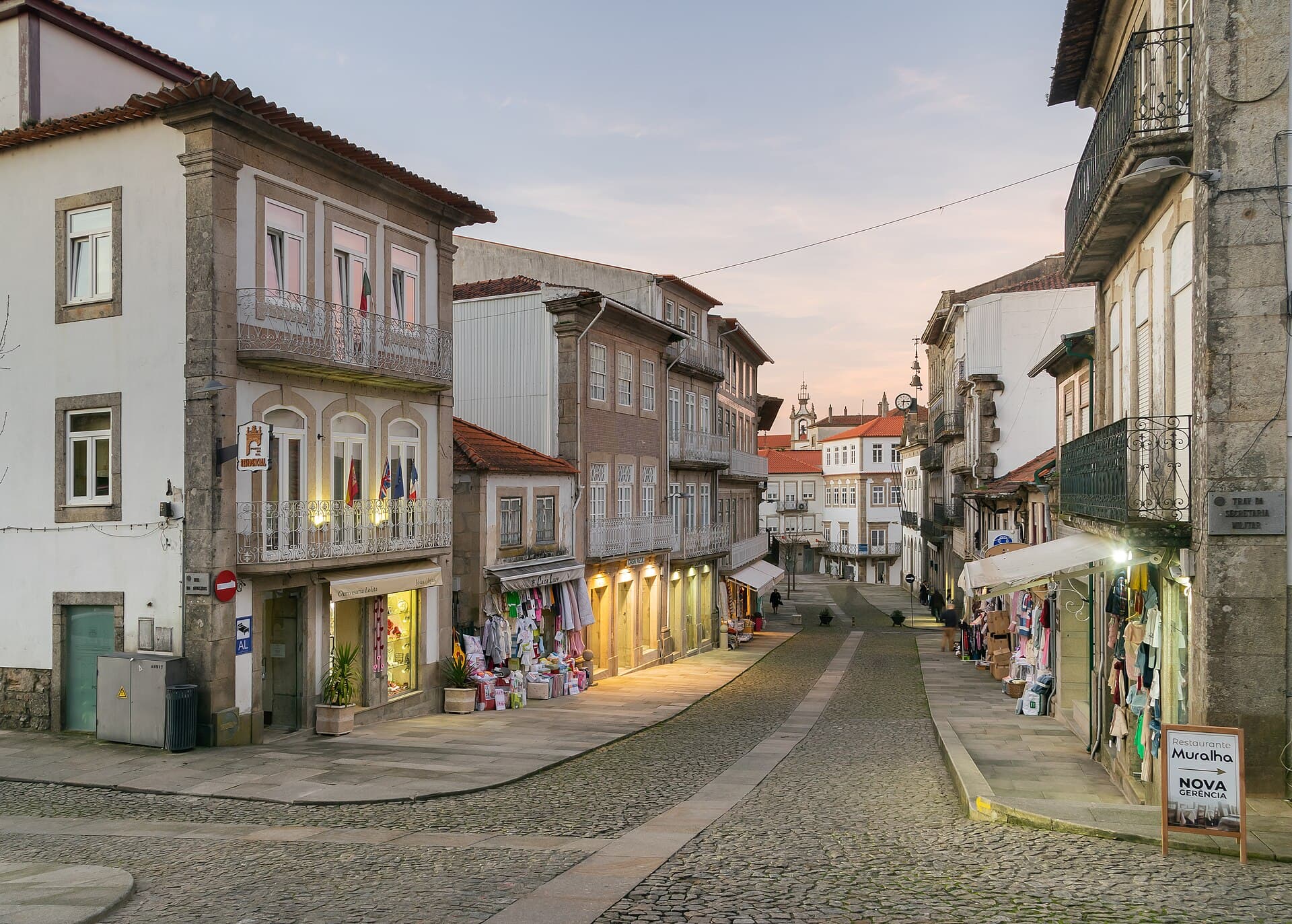
Inside the fortress, the historic center is a labyrinth of narrow, winding streets lined with traditional Portuguese houses. Explore the numerous shops selling textiles, linens, and local crafts, for which Valença is renowned. Do not miss the historic 'Button Shop' for a unique souvenir.
Religious sites within the walls include the Igreja de Santo Estêvão (Church of Saint Stephen), a 13th-century Romanesque church rebuilt in Neoclassical style, notable for its rare painting of the Virgin Mary breastfeeding the Christ Child. The Igreja de Santa Maria dos Anjos (Church of Saint Mary of Angels), also from the 13th century, showcases a blend of Romanesque and Baroque styles. In front of the 18th-century Baroque Chapel of Bom Jesus, you will find a statue of Saint Theotonius, the first Portuguese saint and patron of the region.
For a tangible link to Valença's deep past, seek out the Roman Milestone within the fortress walls, a silent testament to its ancient origins.
Beyond the fortress, consider a walk or drive across the International Bridge to Tui, Spain, to experience the unique cross-border atmosphere and admire the Valença fortress from a different perspective.
The best times to visit Valença are during spring (April to June) and early autumn (September to October). During these months, the weather is mild, and the crowds are generally smaller, making it ideal for exploring the fortress walls and riverfront. Summer (June to mid-September) is also popular for warm-weather activities, but temperatures can be higher, and more tourists are present. Winters are cooler and wetter but still offer a good amount of sunshine, providing a quieter experience for exploring the city's historical sites.
Valença is easily accessible by various modes of transport. If traveling by car, take the A3 motorway from Porto or Braga. Be aware that driving and parking within the narrow ancient archways of the fortress can be challenging; consider parking outside the walls and walking in. Regular trains connect Valença to Porto Campanhã, Viana do Castelo, and even Vigo in Spain. Several bus companies also operate services to Valença from various locations within Portugal.
Within the fortress, the historic center is best explored on foot. Allow at least three hours to see the main sights, or a full day if you plan to walk the entire perimeter of the battlements and enjoy a leisurely lunch. While Valença can be visited as a day trip, staying overnight within the fortress walls offers a more peaceful and atmospheric experience, particularly in the quieter mornings and evenings after the day-trippers depart. The cost of living in Valença is generally lower than in Portugal's major cities, making dining out and local purchases quite affordable.
- What is Valença best known for?
- Valença is best known for its impressive star-shaped fortress, the Fortaleza de Valença, which is one of the most significant military fortifications in Europe and a candidate for UNESCO World Heritage status.
- Can you walk across the bridge to Spain?
- Yes, you can walk across the International Bridge over the Minho River to the Spanish town of Tui. This bridge is a popular route for pilgrims on the Camino de Santiago.
- What kind of shopping can I do in Valença?
- Valença is famous for its textile and linen shops, offering a wide variety of high-quality products. You can also find traditional handicrafts and local delicacies within the fortress walls.
- Is Valença a good starting point for the Camino de Santiago?
- Yes, Valença is a very popular starting point for pilgrims walking the Portuguese Way of St. James (Camino Portugués), as it allows them to cover the necessary distance to receive the Compostela certificate.
- What is the history of the fortress?
- The fortress dates back to the 13th century, with its current star-shaped design largely developed in the 17th and 18th centuries. It played a crucial role in defending Portugal's northern border from Spanish and French invasions.
- Are there good views from the fortress?
- Yes, the fortress offers spectacular wide-ranging views of the Minho River, the surrounding countryside, and the Spanish town of Tui. The Baluarte do Carmo bastion is particularly recommended for sunset views.