Mateus Palace
The bottle is familiar, but the narrative behind its celebrated image remains less known.
Full story unlocks in the tour
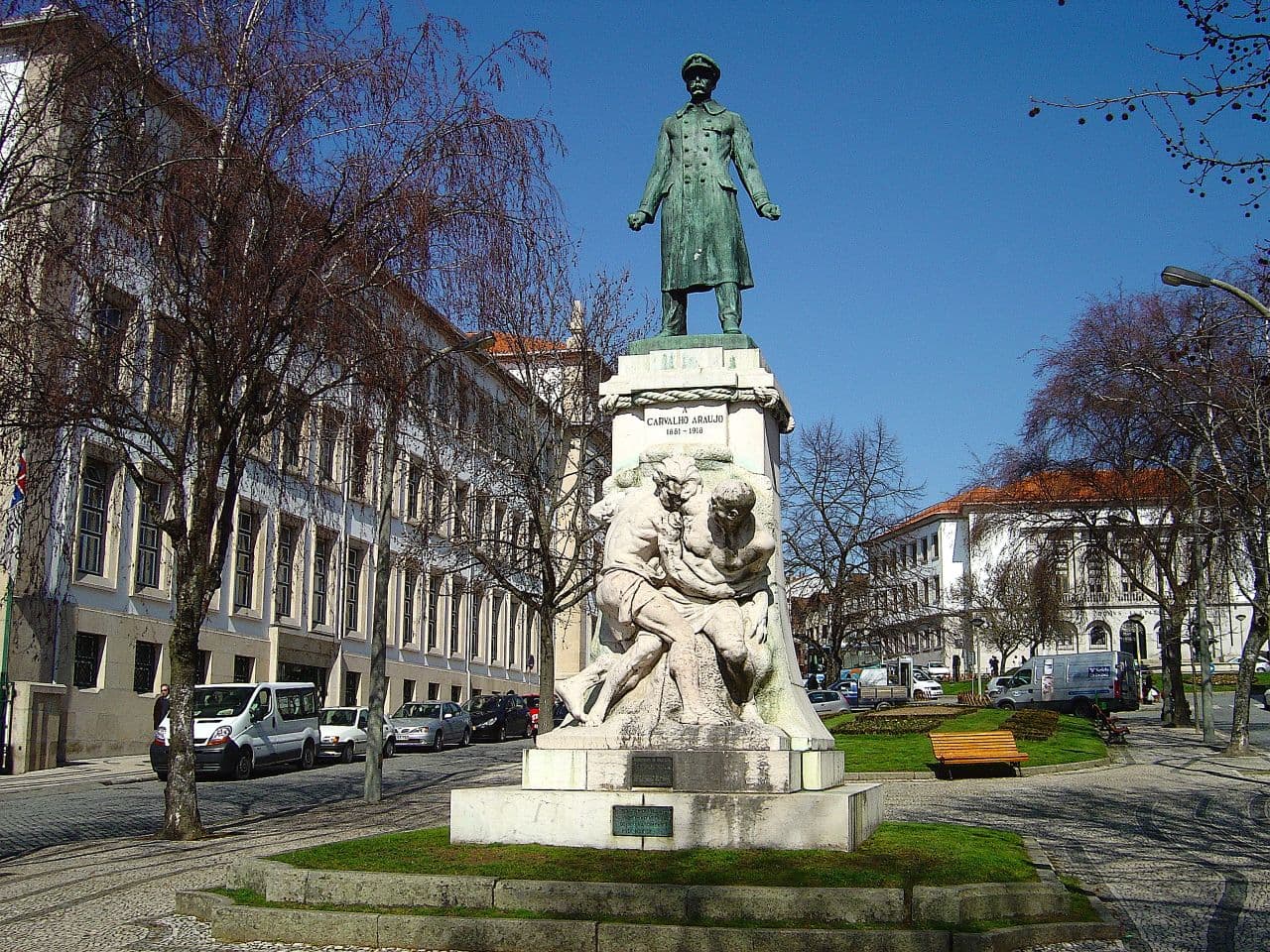 Vitor Oliveira from Torres Vedras, PORTUGAL / CC BY-SA 2.0, via Wikimedia Commons
Self-guided audio walking tour of Vila Real — GPS route, offline playback, story-driven narration in 32 languages.
“Where noble lineage meets untamed landscapes and unforeseen revelations.”
Not the postcards. The stories even locals don't know — whispered in your ear, right where they happened.
The bottle is familiar, but the narrative behind its celebrated image remains less known.
Observe the older residences closely; a singular emblem appears. It is more than a family device; it recounts a medieval saga of courage.
An unassuming dwelling in the urban core connects to one of Portugal's eminent maritime explorers.
Discover every secret of Vila Real
Every address, every reveal in full — in your ear, right where it happened.
You pick your stops. You walk. The voice reveals what the others miss.

Your self-guided audio tour of Vila Real is ready — pick your landmarks, choose your language, and start the moment you arrive.
BuyLume has a built-in augmented-reality guide. Hold your phone up and its camera shows the street ahead of you, with a glowing arrow laid over the real view that always points to your next stop — no map to puzzle over, no wrong turns. Like everything in Lume, it works fully offline.
Vila Real, the capital of its namesake district, is an engaging city in northern Portugal. Positioned on an elevated plateau where the Corgo and Cabril rivers converge, it presents a compelling synthesis of aristocratic legacy, dramatic natural scenery, and a surprisingly dynamic contemporary spirit. Often overshadowed by its more celebrated coastal counterparts, Vila Real delivers an authentic Portuguese encounter without the clamor of crowds.
Established in 1289 by King Dinis, Vila Real literally translates to 'Royal City,' a testament to its historical importance as a favored abode for royalty and nobility. This heritage is still apparent in the elegant manor houses, adorned with family coats of arms, that line its venerable thoroughfares. Beyond its architectural allure, the city serves as a gateway to the rugged grandeur of the Alvão Natural Park and the imposing Serra do Marão mountains, while also offering proximity to the celebrated Douro Valley wine region.
The official chronicles of Vila Real commenced in 1289 when King Dinis I granted the settlement its initial charter, or foral. This royal initiative sought to reinforce the Crown's authority in the Trás-os-Montes region and foster settlement, leading to the city's designation, meaning 'Royal Town'. Its strategic situation on an elevated promontory at the confluence of the Corgo and Cabril rivers provided natural defenses and access to water, while its position on trade routes connecting the coast to the interior propelled its early growth.
From its inception, Vila Real drew numerous noble families, eager to reside near royal representatives. This significant concentration of aristocracy, particularly during the 17th and 18th centuries, bestowed upon the city the unofficial title of the 'Court of Trás-os-Montes' and the 'City of Coats of Arms,' owing to the profusion of stone crests gracing the façades of its many mansions. The city's architectural zenith during this period is characterized by the Baroque style, frequently employing local granite, which imparts a monumental and somewhat austere aesthetic typical of northern Portugal.
Key historical developments include King Manuel I granting a 'New Charter' in 1515, updating residents' rights and tax privileges. The mid-18th century witnessed the commencement of construction on the renowned Mateus Palace, a Baroque masterpiece that would bring worldwide recognition to the city's environs. In 1895, Vila Real achieved a milestone as the first city in Portugal to have electricity, and the first to generate hydroelectric power from 1894 to 1926 at the Biel Power Plant. Despite its long royal lineage, Vila Real remained a town until the 19th century, when population expansion led to its designation as the capital of the Vila Real District. It officially attained city status under the Portuguese Republic in 1925. The establishment of the University of Trás-os-Montes and Alto Douro (UTAD) in 1986 further invigorated the city, introducing a youthful dynamism and encouraging cultural and scientific advancement.
Begin your exploration of Vila Real along Avenida Carvalho Araújo, the city's principal thoroughfare, recently renewed for pedestrian access. Here, you will encounter the 19th-century town hall, various shops, and dining establishments. At the southern extremity of the avenue stands the Vila Real Cathedral (Sé de Vila Real), a Gothic Dominican convent church from the 15th century, which became a cathedral in 1922. Nearby, on a side street, is the city's pillory (Pelourinho), erected in 1515. Be sure to observe the Casa de Diogo Cão, traditionally linked to the celebrated navigator's birthplace.
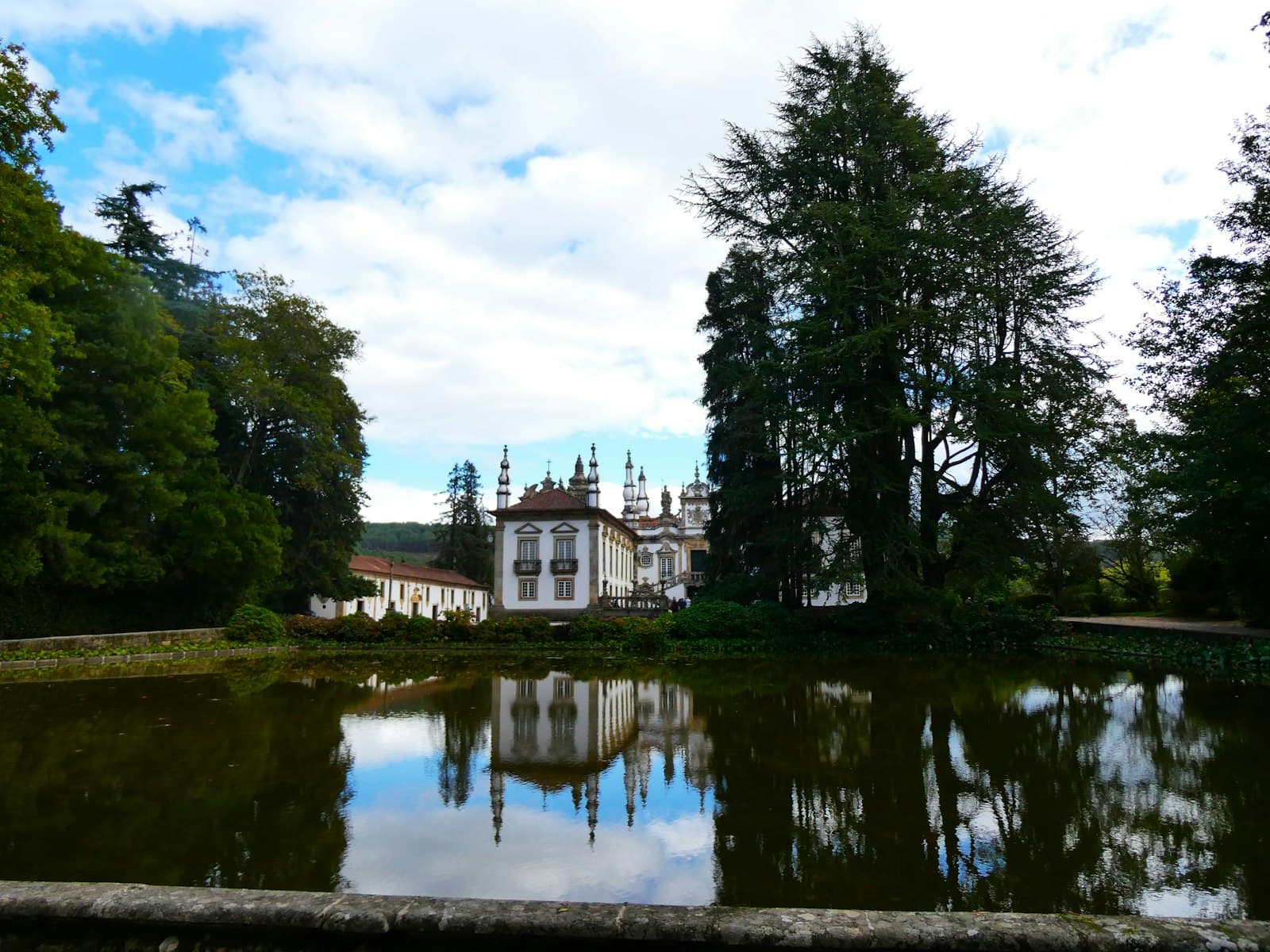
Just a brief journey from the urban core lies the iconic Mateus Palace, a magnificent 18th-century Baroque manor house acclaimed for its splendid architecture, intricate woodwork, antique collection, and meticulously tended gardens. It is a truly evocative location, even appearing on the labels of Mateus Rosé wine bottles. For a different kind of splendor, venture to the Parque Natural do Alvão, a dramatic protected area northwest of Vila Real. This mountainous expanse offers striking landscapes, cascades like Fisgas de Ermelo, and walking paths amidst diverse flora and fauna. Within the city, the Capela Nova (Church of the Clerics) is a notable Baroque church with a fanciful façade attributed to Nicolau Nasoni and an interior featuring graceful tile panels. For a deeper immersion into local chronicles, the complimentary Museu da Vila Velha, housed in a restored 18th-century edifice, presents archaeological, sacred art, and ethnographic collections.
The most agreeable times to visit Vila Real are during the spring (mid-May to mid-June) and autumn (mid-September to early October). During these transitional seasons, the weather is mild and pleasant, ideal for exploring the city and its natural environs. Summers (mid-June to mid-September) are warm and arid, with average daily highs around 27-28°C, though temperatures can occasionally reach 36-38°C. Winters (December to February) are cooler and wetter, with average lows around 2-4°C and occasional snowfall. Consider avoiding July and August if you prefer fewer visitors at popular sites like Casa de Mateus.
Vila Real is accessible via Porto Airport (OPO), approximately 79-100 km distant, with a travel time of about 1 hour and 15 minutes by automobile. Car rental is highly advisable for exploring the broader Vila Real District and its natural attractions, as public transportation may not be as convenient for reaching all locations. For those without a vehicle, taxis or private transfers from Porto Airport typically range between 90 and 130 euros. Bus service offers a practical and economical means to reach Vila Real, particularly from Porto, with comfortable coaches covering the distance in about 1.5 hours. Direct train service to Vila Real is not available, but one can take a train to Porto and then continue by bus.
Once in Vila Real, the urban core is compact and best traversed on foot. For excursions to attractions beyond the city, such as Mateus Palace, you can utilize the local 'Urbanos' bus network or reasonably priced taxis. The official currency is the Euro, and while bank cards are widely accepted, it is prudent to carry some cash for smaller cafes or souvenir vendors. The climate is continental, so pack layers, comfortable walking shoes for the uneven streets, and be prepared for potential rain in cooler months.
Vila Real in Korean, in Chinese or in Hebrew — and 29 more languages, every stop narrated by a native voice. The widest language range of any self-guided audio tour.
Available in: