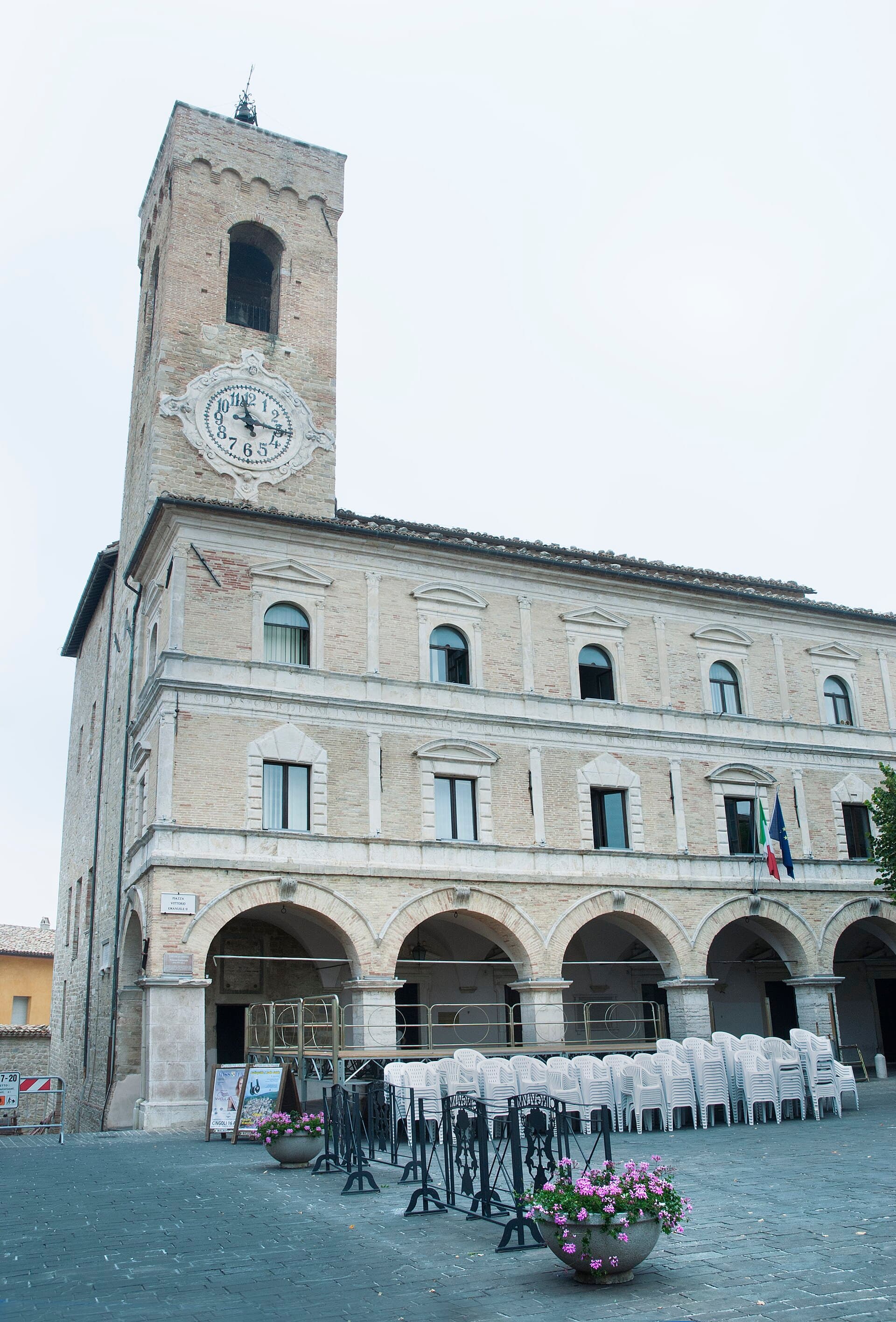
Palazzo Comunale
The town hall safeguards a secret from a time when public safety took precedence over displays of lineage.
Full story unlocks in the tour
 Moongateclimber / CC BY-SA 3.0, via Wikimedia Commons
Self-guided audio walking tour of Cingoli — GPS route, offline playback, story-driven narration in 32 languages.
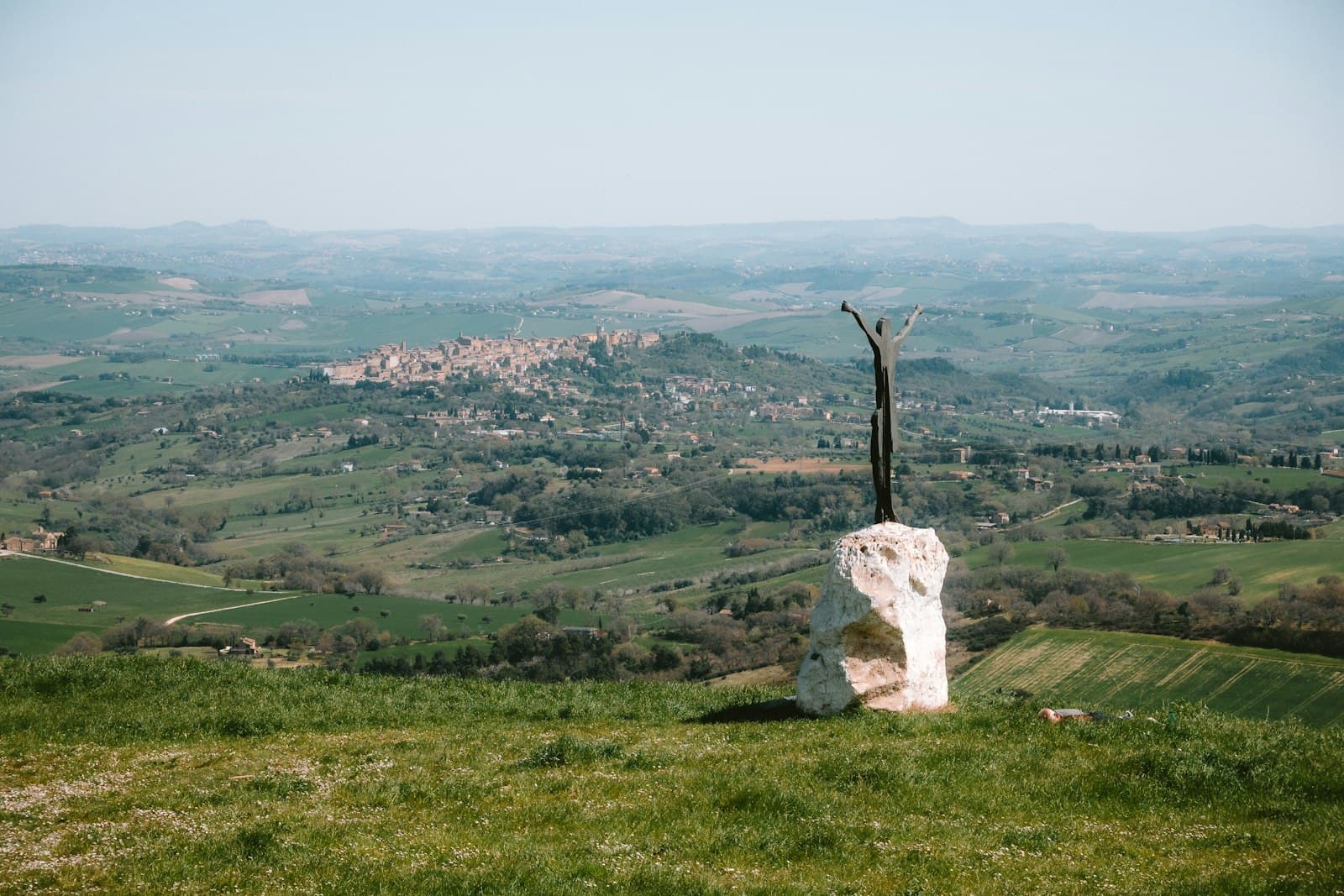
“Cingoli surveys the Marche region from its elevated position, a sweeping vista that has earned it the name 'The Balcony of the Marche.'”
Not the postcards. The stories even locals don't know — whispered in your ear, right where they happened.
The town hall safeguards a secret from a time when public safety took precedence over displays of lineage.
Beyond its civic duties, Cingoli's town hall once hosted a different kind of public gathering.
The current cathedral rises from older foundations, with a fragment of its predecessor still visible.
Discover every secret of Cingoli
Every address, every reveal in full — in your ear, right where it happened.
You pick your stops. You walk. The voice reveals what the others miss.

Your self-guided audio tour of Cingoli is ready — pick your landmarks, choose your language, and start the moment you arrive.
BuyLume has a built-in augmented-reality guide. Hold your phone up and its camera shows the street ahead of you, with a glowing arrow laid over the real view that always points to your next stop — no map to puzzle over, no wrong turns. Like everything in Lume, it works fully offline.
Rising from Mount Circe at an elevation of 631 meters, Cingoli is a captivating hilltop town in Italy's Marche region, celebrated for its expansive panoramic views. Often referred to as the "Balcony of the Marche," its elevated position offers a sweeping vista that stretches from the Sibillini Mountains to the Adriatic coast, and on clear days, even beyond to the Croatian coastline. This appealing borgo, or village, is recognized as one of Italy's most beautiful, inviting visitors to wander through its well-preserved medieval thoroughfares and absorb a timeless atmosphere.
Cingoli's allure extends beyond its visual splendor, encompassing a rich layering of history, art, and authentic Italian life. The town's compact historic center is a maze of stone-paved alleys, ancient buildings, and elegant palazzi that open onto inviting squares. Here, you can encounter significant artworks, explore archaeological findings, and experience the unhurried rhythm of a community deeply connected to its heritage and the striking natural landscape that surrounds it.
The origins of Cingoli extend into antiquity, predating its medieval fortifications. The area was first settled by the Picenes, an ancient Italic people. The town of Cingulum was formally established and fortified in 63 BC by Titus Labienus, a lieutenant of Julius Caesar, who personally funded its construction. Under Roman rule, Cingoli held the important status of a municipium, signifying its self-governing rights and importance within the Roman Empire. The town also played a role in the Roman civil wars, underscoring its strategic significance.
After the Roman era, Cingoli continued to evolve, with its earliest documented ecclesiastical presence dating back to the 6th century, under the leadership of Bishop Sant'Esuperanzio, who would later become the town's patron saint. By the 13th century, Cingoli had established itself as a significant medieval center, with structures like the Palazzo Comunale, or Town Hall, dating back to this period. The town's enduring medieval layout, characterized by its ancient gates, narrow passages, and noble palaces, still reflects this past.
Cingoli also holds a notable connection to papal history. It was the birthplace of Francesco Saverio Castiglioni in 1761, who would later ascend to the papacy as Pope Pius VIII in 1829. His short pontificate lasted only 20 months, ending with his death in 1830, a period that even sparked speculation of a possible homicide. In his honor, the scenic Porta Pia was erected in 1835. The Cingoli Cathedral, dedicated to the Assumption of the Virgin Mary, was also rebuilt in the 18th century, partly in honor of Pope Pius VIII, who was a benefactor. This layered historical narrative, from its Roman beginnings to its medieval and papal connections, makes Cingoli a place where every stone seems to recount stories of centuries past.
Begin your exploration in the heart of Cingoli, Piazza Vittorio Emanuele II, a lively square bordered by elegant palazzi and the dignified Cattedrale di Santa Maria Assunta. The cathedral, a Baroque structure, contains marble altars, refined frescoes, and a monument to Pope Pius VIII. Opposite the cathedral stands the Palazzo Comunale, the town hall, which dates back to the 13th century and now hosts the State Archaeological Museum on its ground floor, displaying artifacts from the Palaeolithic to the Neolithic periods, as well as medieval inscriptions.
A short walk along Corso Garibaldi, the main street, leads to the Palazzo Castiglioni, the ancestral home of Pope Pius VIII, now a house-museum preserving family history. Continue to the Pinacoteca Comunale 'D. Stefanucci,' where you can admire medieval paintings, including Lorenzo Lotto's Madonna del Rosario (1539), a defining work of art for the town. Do not overlook the Collegiate Church of Sant'Esuperanzio, a striking Gothic church just beyond the city walls, known for its Romanesque-Gothic facade.
For the town's most celebrated feature, proceed to the Belvedere di Cingoli, the panoramic terrace on the ancient castle walls. From here, you will understand why Cingoli is called the 'Balcony of the Marche,' with views extending across the Macerata hills, the Sibillini Mountains, and the Adriatic Sea. Beyond the town center, Lago di Cingoli (also known as Lago di Castreccioni) offers a tranquil retreat for nature enthusiasts, with opportunities for walking, water sports, and enjoying the surrounding wooded hills.
The most favorable times to visit Cingoli are generally in spring and early autumn, specifically from April to October. During these months, the weather is pleasant for exploring the historic center and enjoying panoramic walks. Late spring (May and June) and early autumn (September and October) offer comfortable temperatures and fewer crowds. Summer (July and August) is also a lively period, with festivals and open-air events, though it can be warmer with average highs around 29-30°C (84-86°F). For those seeking cooler temperatures and a more relaxed experience, the quieter months from December to March offer fewer visitors.
Cingoli is situated in the Province of Macerata and is most conveniently reached by car, offering the freedom to explore the surrounding countryside. While Cingoli does not have a train station, the nearest one is in Jesi, approximately 30 minutes away by car. Ancona Falconara Airport is the closest airport, about 40-50 minutes away by car. The town itself is easily walkable, with its compact historic center inviting leisurely strolls through stone-paved alleys. A good itinerary length for Cingoli is one to two days to see the main highlights, with an extended stay of three to four days allowing for deeper exploration of the lake area and local cuisine. Public transportation within the town is limited, so comfortable walking shoes are recommended. Descriptions of exhibits in the State Archaeological Museum are primarily in Italian.
Cingoli in Korean, in Chinese or in Hebrew — and 29 more languages, every stop narrated by a native voice. The widest language range of any self-guided audio tour.
Available in: