El Túnel Bucaione
Debajo de Civita, un misterioso pasaje insinúa un mundo antiguo mucho más grande.
La historia completa se desbloquea en el tour
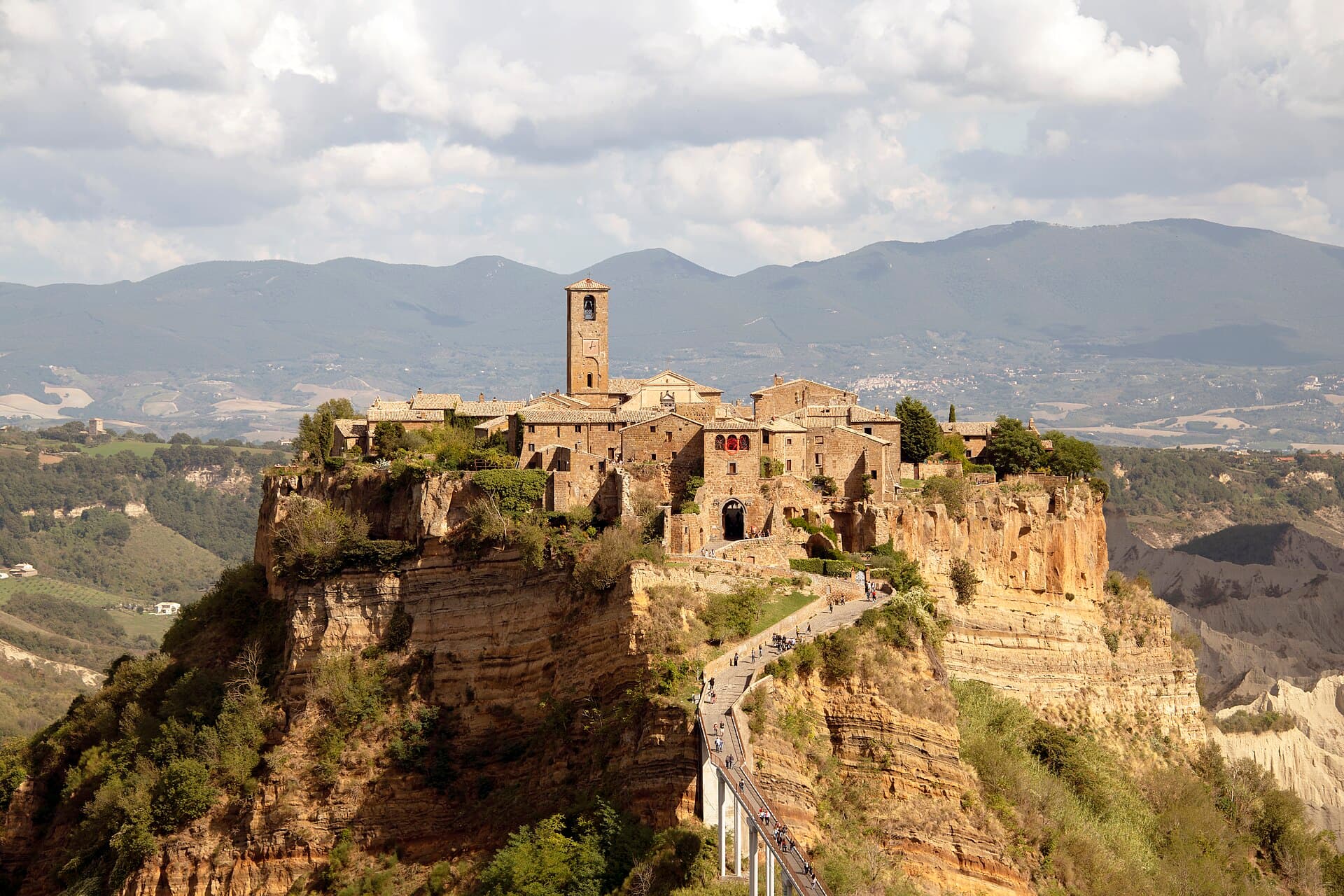 Orlando Paride / CC BY-SA 4.0, via Wikimedia Commons
Tour de audio autoguiado de Civita — ruta GPS a pie, reproducción offline, narración en 32 idiomas.
“Un pueblo suspendido en el tiempo, aferrándose a la vida en un acantilado que se desmorona.”
No las postales. Las historias que ni los locales conocen — al oído, justo donde ocurrieron.
Debajo de Civita, un misterioso pasaje insinúa un mundo antiguo mucho más grande.
Uno de los pensadores medievales más influyentes de Italia nació aquí, pero su hogar hace mucho que desapareció.
La ciudad más grande de Bagnoregio, conectada a Civita, tiene un nombre arraigado en una cura real.
Descubre todos los secretos de Civita
Cada dirección, cada revelación al completo — a tu oído, justo donde ocurrió.
Eliges tus paradas. Caminas. La voz te revela lo que los demás ignoran.


Tu tour de audioguía por Civita te espera — elige tus lugares, tu idioma y empieza al llegar.
ComprarLume incluye una guía de realidad aumentada. Levanta el móvil y su cámara muestra la calle que tienes delante, con una flecha luminosa sobre la imagen real que siempre apunta a tu próxima parada — sin mapas que descifrar, sin giros equivocados. Como todo en Lume, funciona completamente sin conexión.
Civita di Bagnoregio, a menudo llamada 'La Ciudad Moribunda' (La città che muore), es un pueblo hipnotizante en el centro de Italia, situado precariamente sobre una meseta volcánica. Su dramático aislamiento, accesible solo por un largo puente peatonal, lo convierte en un destino verdaderamente único. Este antiguo asentamiento, fundado por los etruscos hace más de 2.500 años, se siente suspendido en el tiempo, ofreciendo a los visitantes una profunda sensación de historia y una conexión íntima con un paisaje que lucha constantemente contra las fuerzas de la naturaleza.
A medida que atraviesas el puente, las vistas del Valle dei Calanchi circundante, un sorprendente valle de cárcavas de arcilla, revelan los procesos geológicos que han moldeado el destino de Civita. El pueblo en sí es un laberinto de edificios medievales de piedra, callejones estrechos y plazas íntimas, adornadas con delicadas flores y plantas trepadoras. Es un lugar donde cada rincón parece guardar una historia, invitándote a deambular y simplemente estar, en lugar de apresurarte a través de una lista de atracciones.
La frágil existencia de Civita es su característica más definitoria. La erosión continua de la roca volcánica blanda significa que, lenta pero seguramente, el pueblo se está encogiendo. Esta precariedad, sin embargo, solo ha aumentado su atractivo, atrayendo a visitantes de todo el mundo ansiosos por experimentar su belleza etérea antes de que sucumba por completo a la implacable marcha del tiempo geológico.
## De Fortaleza Etrusca a 'Ciudad Moribunda' La historia de Civita di Bagnoregio se remonta a más de 2.500 años, comenzando con los etruscos que fundaron el asentamiento alrededor del 500 a.C. Eligieron estratégicamente esta ubicación elevada por sus ventajas defensivas y sus vistas dominantes sobre el valle del río Tíber. Los etruscos trazaron la ciudad con un sistema de calles ortogonal, un plan aún evidente en el trazado medieval actual, y la desarrollaron hasta convertirla en un floreciente centro comercial. Aún quedan rastros de su presencia, incluido el túnel Bucaione y evidencia de tumbas de cámara excavadas en los acantilados.
Tras el dominio etrusco, Civita cayó bajo el dominio romano alrededor del 265 a.C. Los romanos continuaron el trabajo etrusco de drenaje de agua de lluvia y contención de arroyos, reconociendo la importancia de gestionar el paisaje inestable. Después de la caída del Imperio Romano de Occidente, el área experimentó sucesivas dominaciones por visigodos, godos, bizantinos y lombardos. Fue durante el período lombardo cuando el asentamiento cercano, ahora Bagnoregio, obtuvo su nombre 'Balneum Regis' (baño del rey), vinculado al rey Desiderio.
La Edad Media vio crecer a Civita, convirtiéndose en una comuna libre alrededor del año 1100. Esta era trajo prosperidad y vio la construcción de muchos de los edificios medievales visibles hoy en día, incluida la estructura original de la Iglesia de San Donato. La ciudad probablemente era una ciudad amurallada con numerosas torres, aunque muchas han sucumbido a terremotos y erosión. El siglo XVI marcó un período de riqueza renacentista, con familias nobles construyendo impresionantes palazzi a lo largo de la calle principal.
Sin embargo, la precaria existencia de Civita se hizo patente con una serie de terremotos catastróficos, particularmente uno importante el 10 de junio de 1695. Este evento causó daños significativos, provocó deslizamientos de tierra masivos y separó físicamente a Civita de su suburbio más grande, Bagnoregio, con la formación de un nuevo y amplio acantilado. El terremoto inició un éxodo masivo, lo que llevó a un constante declive de la población e importancia. El obispo y el gobierno municipal se reubicaron en Bagnoregio, y Civita pasó a ser conocida como 'La città che muore' – 'La Ciudad Moribunda' – debido a la acelerada erosión de su base de toba volcánica.
En el siglo XIX, el aislamiento de Civita se profundizó a medida que la erosión se intensificaba. El asentamiento original se volvió cada vez más frágil, con cada vez más acantilados erosionándose, llevándose consigo edificios. A pesar de los esfuerzos continuos para preservarla, Civita di Bagnoregio permanece en la lista de los 100 Sitios Más Amenazados. Hoy en día, su historia, ubicación y arquitectura únicas la han transformado en una importante atracción turística, con una pequeña población permanente que vive entre miles de visitantes diarios.
Tu visita a Civita di Bagnoregio comienza mucho antes de que pongas un pie en el pueblo. Desde el mirador de Belvedere en Bagnoregio, tendrás tu primera vista panorámica de Civita dramáticamente situada en su colina aislada, una vista verdaderamente icónica, especialmente al amanecer o al atardecer.
La única forma de entrar en Civita es cruzando el largo puente peatonal de hormigón armado. Este paseo ofrece amplias vistas del Valle dei Calanchi y prepara el escenario para entrar en un mundo suspendido en el tiempo.
Al entrar, pasarás por Porta Santa Maria (también conocida como Porta Cava), la única de las cinco puertas originales de Civita que queda. Este antiguo arco de piedra, adornado con leones que simbolizan la victoria, te lleva al corazón del pueblo.
La plaza principal, Piazza San Donato, es el centro activo de Civita. Aquí encontrarás la Iglesia de San Donato, una iglesia románica con un campanario, que una vez sirvió como catedral. En su interior, podrás admirar un crucifijo de madera de la escuela de Donatello y frescos al estilo de Perugino.
Pasea por las estrechas calles empedradas, donde cada giro revela encantadores edificios medievales de piedra, balcones llenos de flores y jardines íntimos. No te pierdas el Palazzo Alemanni, un edificio medieval que ahora alberga el Museo Geológico y de Deslizamientos de Tierra, que ofrece información sobre las fuerzas naturales que dan forma a Civita. También puedes explorar la pequeña cárcel del pueblo, excavada directamente en la roca.
Busca el Bucaione, un profundo túnel etrusco que atraviesa la parte más baja del pueblo, ofreciendo un vistazo al antiguo pasado de Civita y acceso al valle de abajo.
Las épocas más agradables para visitar Civita di Bagnoregio son primavera y otoño, cuando el clima es templado y el Valle dei Calanchi circundante es particularmente hermoso. Durante estas estaciones, las multitudes también son más manejables. El verano, especialmente julio y agosto, experimenta un aumento significativo de turistas y puede ser bastante caluroso. Si visitas en verano, intenta llegar temprano por la mañana (entre las 8 y las 9 de la mañana) o más tarde por la noche (después de las 7 de la tarde) para evitar el calor y las mayores aglomeraciones. El invierno ofrece una experiencia más tranquila y pacífica, aunque las temperaturas son frías y ventosas.
Civita di Bagnoregio es un pueblo solo para peatones. Si llegas en coche, deberás aparcar en Bagnoregio, la ciudad más grande conectada por el puente peatonal. Hay aparcamientos de pago disponibles en la base del puente peatonal. Un autobús lanzadera puede llevarte más cerca de la entrada del puente, o puedes caminar, aunque el camino es cuesta arriba y puede ser empinado.
Para entrar en Civita, hay una tarifa, normalmente 3 € entre semana y 5 € los fines de semana y días festivos. Esta tarifa contribuye a la preservación y el mantenimiento del pueblo. La entrada es gratuita para niños menores de 6 años, personas con discapacidad y huéspedes que se alojen en alojamientos dentro de Civita. Puedes comprar las entradas en el punto de información justo a las afueras de Civita.
Usa zapatos cómodos y resistentes para caminar, ya que las calles empedradas del pueblo son irregulares. Lleva agua, especialmente en los meses más cálidos, y considera un sombrero. Aunque hay restaurantes, bares y tiendas de artesanía dentro de Civita, no es un lugar para una lista detallada de atracciones; más bien, es una experiencia de inmersión.
Civita en coreano, en chino o en hebreo — y 29 idiomas más, cada parada narrada por una voz nativa. La mayor variedad de idiomas de cualquier audioguía autoguiada.
Disponible en: