The Cattolica di Stilo
This small Byzantine church, a treasure from the 9th century, holds a secret in its very name, hinting at its profound role in a monastic tradition.
Full story unlocks in the tour
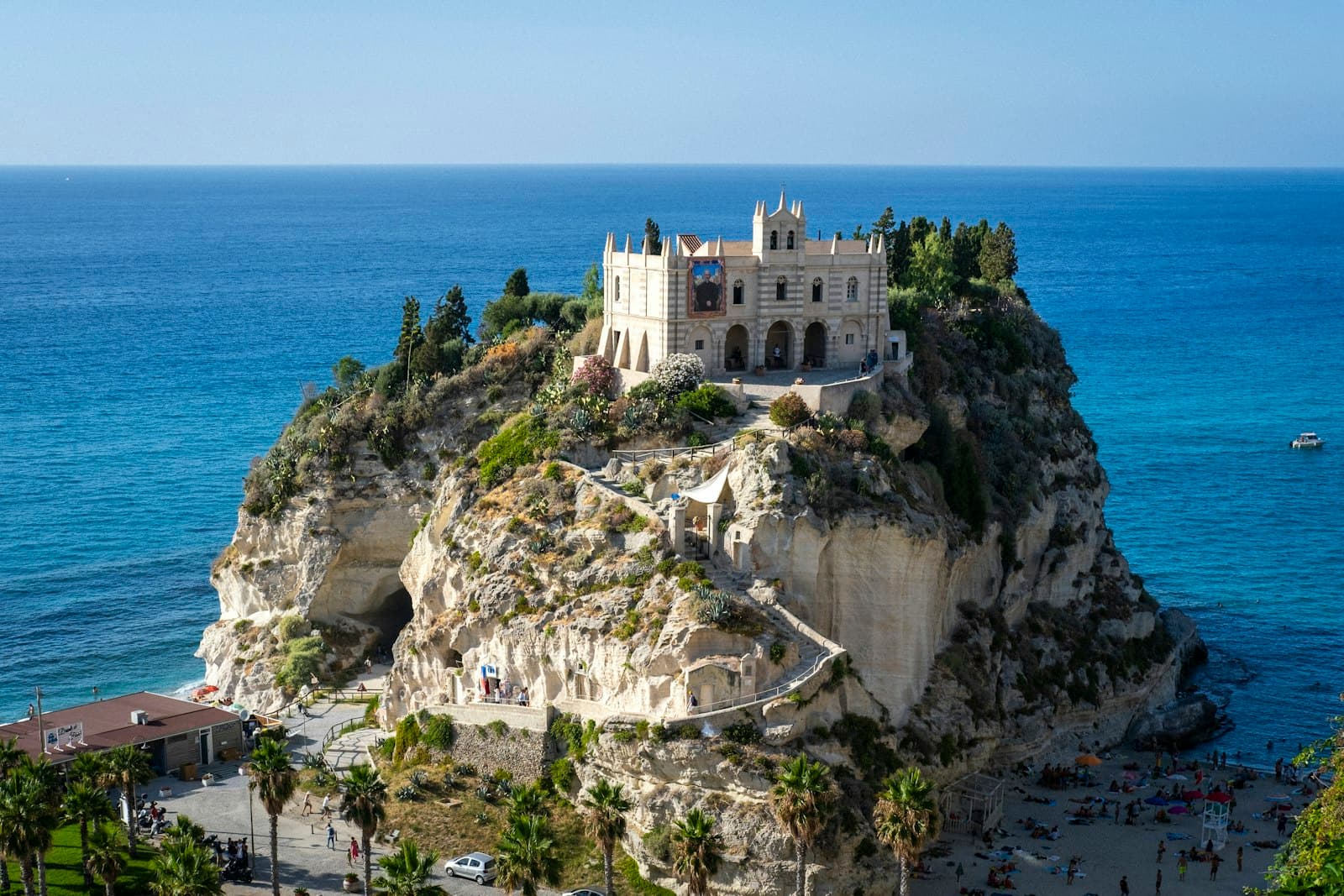 Photo: Krzysztof Maksimiuk / Unsplash
Self-guided audio walking tour of Stilo — GPS route, offline playback, story-driven narration in 32 languages.
“Where Byzantine echoes meet a philosopher's rebellious spirit.”
Not the postcards. The stories even locals don't know — whispered in your ear, right where they happened.
This small Byzantine church, a treasure from the 9th century, holds a secret in its very name, hinting at its profound role in a monastic tradition.
Above Stilo, the remains of a Norman castle recount a chilling story of a drummer boy who vanished into its secret passages.
Examine the Duomo's facade closely, and you'll find peculiar fragments embedded in its ancient stones, hinting at a much older past.
Discover every secret of Stilo
Every address, every reveal in full — in your ear, right where it happened.
You pick your stops. You walk. The voice reveals what the others miss.

Your self-guided audio tour of Stilo is ready — pick your landmarks, choose your language, and start the moment you arrive.
BuyLume has a built-in augmented-reality guide. Hold your phone up and its camera shows the street ahead of you, with a glowing arrow laid over the real view that always points to your next stop — no map to puzzle over, no wrong turns. Like everything in Lume, it works fully offline.
Situated on the eastern slope of Mount Consolino, overlooking the Ionian Sea, Stilo is a captivating village in Calabria, often celebrated as one of Italy's most beautiful. Its tiered layout of stone palaces, narrow alleys, and small squares speaks volumes of its enduring past. From its ancient Greek origins to its prominence as a Byzantine center and later a Norman stronghold, Stilo offers a journey through millennia of human endeavor.
The town is a living museum, where every stone and archway seems to tell a story. Visitors are drawn to its iconic Byzantine church, La Cattolica, and the commanding remains of its Norman castle, both offering expansive views of the Stilaro Valley and the sparkling Ionian coast. Stilo is also known as the birthplace of the influential philosopher Tommaso Campanella, whose legacy is woven into the fabric of the village.
Beyond its architectural marvels, Stilo invites you to embrace the unhurried pace of Southern Italian life. Wander through its historic center, enjoy a gelato in the piazza, and soak in the warmth of the locals. The surrounding Stilaro Valley, with its lush forests and proximity to sandy beaches, offers a diverse landscape for exploration, from ancient hermit caves to the serene Ionian coastline.
## From Greek Colony to Byzantine Stronghold Stilo's deep roots trace back to the destruction of the ancient Greek colony of Kaulon (or Caulonia) in the 4th century BC, when its inhabitants sought refuge inland. During Roman rule, the settlement may have been known as Consilinum. By the 6th century, Calabria became part of the Byzantine Eastern Empire, and Stilo emerged as a significant center, attracting Basilian monks and hermits who found solace and built their retreats in the caves of Mount Consolino.
## The Byzantine Golden Age and the Cattolica In the 10th century, Stilo flourished as the leading Byzantine center in southern Calabria. This period saw the construction of its most iconic monument, La Cattolica, a small Byzantine church built entirely of brick with a square plan, three apses, and five distinctive cylindrical domes. It served as a spiritual beacon and a reference point for the Basilian hermits, a testament to the region's strong Orthodox tradition.
## Norman Conquest and Medieval Development Stilo's loyalty to the Byzantines was so strong that it fiercely resisted the Norman Conquest. Despite this, the Normans eventually established their presence, with Count Roger I of Sicily building an imposing castle on the summit of Mount Consolino in the 11th century. This fortress held significant strategic importance, offering control over the territory and a vantage point against Saracen attacks from the sea. The town itself was fortified with walls, towers, and defensive structures, some of which are still visible today.
## The Renaissance and Campanella's Legacy The medieval layout of Stilo, with its stone palaces and winding streets, largely remains. The town continued to grow, with churches like the Duomo, founded in the 14th century, and the Baroque Church of San Giovanni Theresti adding to its architectural character. The Renaissance brought forth Stilo's most famous son, Tommaso Campanella, a philosopher and Dominican friar born in 1568. His utopian treatise, 'The City of the Sun,' and his rebellious spirit against Spanish rule left an indelible mark on the town's identity.
## Industrial Heritage and Modern Recognition Beyond its religious and philosophical heritage, the Stilaro Valley was also a hub of industrial activity. From the 15th century, iron and silver mines were active in the Mount Consolino area, leading to the establishment of the cutting-edge 'La Ferdinandea' ironworking complex in the 19th century. Today, Stilo is recognized as one of the 'Most Beautiful Villages in Italy,' a testament to its preserved historical, cultural, and natural beauty.
Begin your exploration at the iconic Cattolica di Stilo, a small 9th-century Byzantine church renowned for its distinctive five domes and ancient frescoes. Situated on a hillside, it offers sweeping views of the Stilaro Valley and the Ionian Sea.
Ascend to the Norman Castle remains atop Mount Consolino for an even grander panorama. While mostly ruins, the castle's strategic position and surviving walls hint at its former power. You can reach it via a steep footpath from La Cattolica or a longer, less-steep path from the cemetery.
Wander through Stilo's historic center, a labyrinth of narrow, stone-paved streets, stone palaces, and small piazzas. Discover the Duomo, or Cathedral, a medieval foundation with a striking Gothic portal and intriguing Roman and Byzantine fragments embedded in its facade.
Seek out the Fountain of the Dolphins (Fontana dei Delfini), an Arab-Moorish influenced fountain with its distinctive intertwined dolphin motif. Visit the Church of San Domenico, adjacent to the remains of the Dominican convent of Santa Maria of Jesus, where philosopher Tommaso Campanella lived and wrote. His monument stands in Piazza Carnovale.
Explore the rock church of the Divine Shepherdess (Chiesa della Divina Pastorella), housed within one of the caves where Basilian monks once lived. For those interested in the region's industrial past, the Ecomuseum in nearby Pazzano offers insights into mining, forestry, and metallurgy.
The best times to visit Stilo are during the spring (May to June) and early autumn (September to October). During these months, the weather is pleasantly warm and sunny, ideal for exploring the historic center and hiking to the castle. While July and August offer hot weather perfect for beach activities on the nearby Ionian coast, temperatures in Stilo itself can be high. If you prefer cooler temperatures and fewer crowds, consider a visit in late spring or early autumn.
Stilo is best reached by car, as there is no railway station directly in the town. It is approximately 15 kilometers inland from Monasterace on the Ionian coast. If you're flying into Calabria, the nearest airports are Reggio Calabria and Lamezia Terme, both offering car rental options.
Parking within the old town's narrow streets is limited; it's advisable to use the designated parking areas outside the center and explore Stilo on foot. A half-day visit is sufficient to see the main attractions like La Cattolica, the castle remains, and the historic center. However, if you wish to explore the surrounding Stilaro Valley or nearby coastal towns, an overnight stay in one of the family-run bed-and-breakfasts or small boutique hotels is recommended. Stilo offers local restaurants and coffee bars for your convenience.
Stilo in Korean, in Chinese or in Hebrew — and 29 more languages, every stop narrated by a native voice. The widest language range of any self-guided audio tour.
Available in: