Palazzo del Balzo
Dicen que un guardián morisco esconde un tesoro en este gran palacio, revelándolo solo una vez cada siglo.
La historia completa se desbloquea en el tour
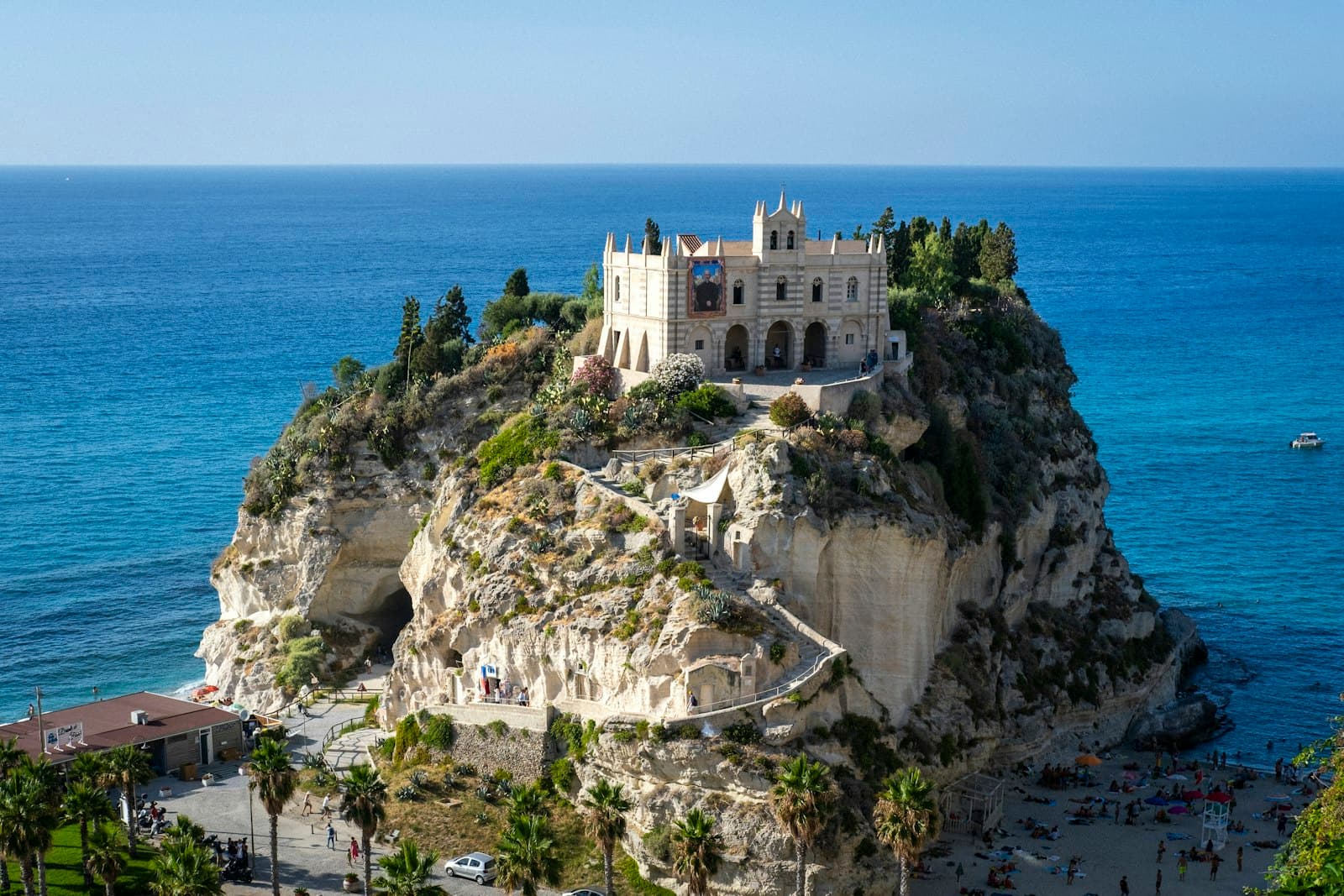 Photo: Krzysztof Maksimiuk / Unsplash
Tour de audio autoguiado de Gerace — ruta GPS a pie, reproducción offline, narración en 32 idiomas.
“Donde antiguas leyendas susurran a través de la piedra normanda.”
No las postales. Las historias que ni los locales conocen — al oído, justo donde ocurrieron.
Dicen que un guardián morisco esconde un tesoro en este gran palacio, revelándolo solo una vez cada siglo.
Una piedra colosal, supuestamente lanzada por la propia Madonna, marca una victoria divina sobre el Diablo.
El nombre 'Gerace' no es solo un nombre; es un agradecimiento centenario a un salvador alado.
Descubre todos los secretos de Gerace
Cada dirección, cada revelación al completo — a tu oído, justo donde ocurrió.
Eliges tus paradas. Caminas. La voz te revela lo que los demás ignoran.
Tu tour de audioguía por Gerace te espera — elige tus lugares, tu idioma y empieza al llegar.
ComprarLume incluye una guía de realidad aumentada. Levanta el móvil y su cámara muestra la calle que tienes delante, con una flecha luminosa sobre la imagen real que siempre apunta a tu próxima parada — sin mapas que descifrar, sin giros equivocados. Como todo en Lume, funciona completamente sin conexión.
Dramáticamente situada sobre una formación rocosa vertical de 500 metros, Gerace es una cautivadora ciudad medieval en la cima de una colina en Calabria, al sur de Italia. Su posición estratégica ofrece vistas panorámicas del mar Jónico y la llanura circundante de Locride, un paisaje salpicado de olivares y cítricos. Reconocida como uno de los 'Pueblos Más Bonitos' de Italia y galardonada con la Bandera Naranja por el Touring Club Italiano, Gerace es un testimonio vivo de siglos de historia, donde cada piedra parece contar una historia.
Adentrarse en Gerace es como entrar en un museo al aire libre. Su centro histórico, notablemente conservado, es un laberinto de calles empedradas, callejones estrechos y encantadoras plazas, en gran parte inalteradas durante siglos. El carácter único del pueblo, una mezcla de influencias bizantinas, normandas y aragonesas, es evidente en su arquitectura, desde la grandiosa Catedral hasta las ruinas de su antiguo castillo. A menudo llamada la 'Florencia del Sur', Gerace ofrece una auténtica experiencia calabresa, libre de las multitudes habituales, invitando a una exploración pausada de su rico tejido cultural.
## La guía de un halcón y raíces antiguas La historia de Gerace no comienza con grandes pronunciamientos, sino con una leyenda de supervivencia. En el año 915 d.C., los habitantes de la colonia griega de Locri Epizefiri, huyendo de las incesantes incursiones sarracenas a lo largo de la costa, buscaron refugio tierra adentro. La leyenda dice que un gavilán, 'hierax' en griego, los guio al acantilado inexpugnable donde ahora se alza Gerace, dando a la ciudad su nombre perdurable. Sin embargo, los hallazgos arqueológicos indican que la zona estuvo habitada mucho antes, desde el Neolítico, con rastros de presencia sícula y, más tarde, una guarnición militar romana.
## Baluarte bizantino y poder normando Tras la reconquista bizantina de Italia en el siglo VI, Gerace, entonces conocida como 'Aghia Kuriaké' o Santa Ciriaca, se convirtió en un centro administrativo, militar y religioso crucial. Su importancia estratégica llevó a repetidos ataques y saqueos por parte de los árabes, quienes conquistaron brevemente la ciudad a finales del siglo X antes de que regresara al control bizantino. Los bizantinos fortificaron sus asentamientos con fuertes fortalezas, y se presume que el Castillo de Gerace data de este período. La conquista normanda en 1059 marcó un punto de inflexión significativo. Gerace se convirtió en un principado bajo los normandos, con el castillo sirviendo como símbolo de su poder. La gran Catedral de Santa María Assunta, una obra maestra de la arquitectura bizantino-normanda, fue consagrada en 1045, reflejando las ambiciones religiosas y arquitectónicas de la época.
## Terremotos, feudos y unificación La historia de Gerace siguió siendo moldeada por diversas dominaciones. Durante las Vísperas Sicilianas a finales del siglo XIII, el almirante aragonés Roger de Lauria ocupó Gerace, convirtiéndola en su feudo antes de que se convirtiera en una 'Ciudad Real'. Más tarde se convirtió en un condado y un principado, pasando por las manos de poderosas familias como los Caracciolo, Gonzalo de Córdoba y los Grimaldi. El siglo XVII trajo devastadores eventos sísmicos, dañando gravemente antiguas estructuras bizantinas y normandas, incluido el castillo. La familia Grimaldi mantuvo el feudo hasta principios del siglo XIX. Después de una breve dominación francesa, Gerace fue conquistada por los Borbones del Reino de las Dos Sicilias, quienes gobernaron hasta la unificación de Italia en 1861. En 1847, el distrito de Gerace fue escenario de una rebelión, que finalmente fue reprimida por las tropas reales. Hoy en día, Gerace se erige como un pueblo medieval bellamente conservado, un testimonio de su pasado estratificado y resistente.
El encanto de Gerace reside en su núcleo medieval notablemente conservado, que invita a los visitantes a pasear por sus antiguas calles y descubrir sus tesoros arquitectónicos. La Catedral de Santa María Assunta es un punto focal, el edificio religioso más grande de Calabria y un excelente ejemplo de arquitectura bizantino-normanda. Su interior, con una nave y dos pasillos separados por 13 columnas reutilizadas de antiguos templos locrios, es grandioso e históricamente significativo. No se pierda la atmosférica cripta debajo del presbiterio.
Explore las ruinas del Castillo Normando, situado en el punto más alto de la ciudad. Aunque en gran parte en ruinas debido a siglos de terremotos, ofrece amplias vistas panorámicas sobre la llanura de Locride y la costa jónica, una vista verdaderamente gratificante. La Iglesia de San Francisco de Asís, construida a mediados del siglo XIII, es notable por su estilo gótico y su precioso altar barroco.
Pasee por la Piazza del Tocco, considerada el corazón de Gerace, donde varias calles convergen y palacios nobles como Casa Migliaccio, Casa Furci y la casa del Barón Macrì dominan la plaza. La Porta del Sole, una puerta barroca de la ciudad, ofrece una vista única y es un lugar popular, especialmente al amanecer cuando los rayos del sol brillan a través de sus arcos. Para una inmersión más profunda en el pasado de la ciudad, visite el Museo Cívico, que alberga artefactos que abarcan la historia milenaria de Gerace desde el período Neolítico hasta la Edad Media.
La mejor época para visitar Gerace es durante los meses de primavera (mayo, junio) y otoño (septiembre, octubre). Durante estos períodos, el clima es agradable con temperaturas confortables, ideal para explorar a pie el centro histórico de la ciudad. El verano, particularmente julio y agosto, también ofrece buen clima, aunque puede ser más cálido. A finales de julio es especialmente animado, ya que Gerace acoge 'Il Borgo Incantato' (El Pueblo Encantado), un festival internacional de arte callejero que transforma el centro histórico con músicos, malabaristas y artistas, acompañado de degustaciones locales.
Gerace se explora mejor a pie, ya que su centro histórico es compacto y muchas atracciones están muy cerca. Aunque es accesible en coche, tenga en cuenta las zonas de tráfico restringido por las tardes (normalmente de 17:00 a 01:00), lo que hace que los autobuses lanzadera o los taxis sean una buena opción para llegar al centro histórico durante esas horas. El aeropuerto principal más cercano es el Aeropuerto de Reggio Calabria (REG). Desde allí, puede alquilar un coche o tomar transporte público. La estación de tren más cercana está en Locri, a unos 10 kilómetros de distancia en la línea de la costa jónica, con servicios limitados de autobús local o taxis disponibles para el viaje a Gerace. Se recomienda encarecidamente llevar calzado cómodo para caminar por las encantadoras, sinuosas y a menudo empinadas calles. No olvide probar el helado y la granita locales, especialmente en la Piazza del Tocco.
Gerace en coreano, en chino o en hebreo — y 29 idiomas más, cada parada narrada por una voz nativa. La mayor variedad de idiomas de cualquier audioguía autoguiada.
Disponible en: