The Coaticook Gorge Suspension Bridge
You may know it as the longest pedestrian suspension bridge in North America, but its true character emerges after dark.
Full story unlocks in the tour
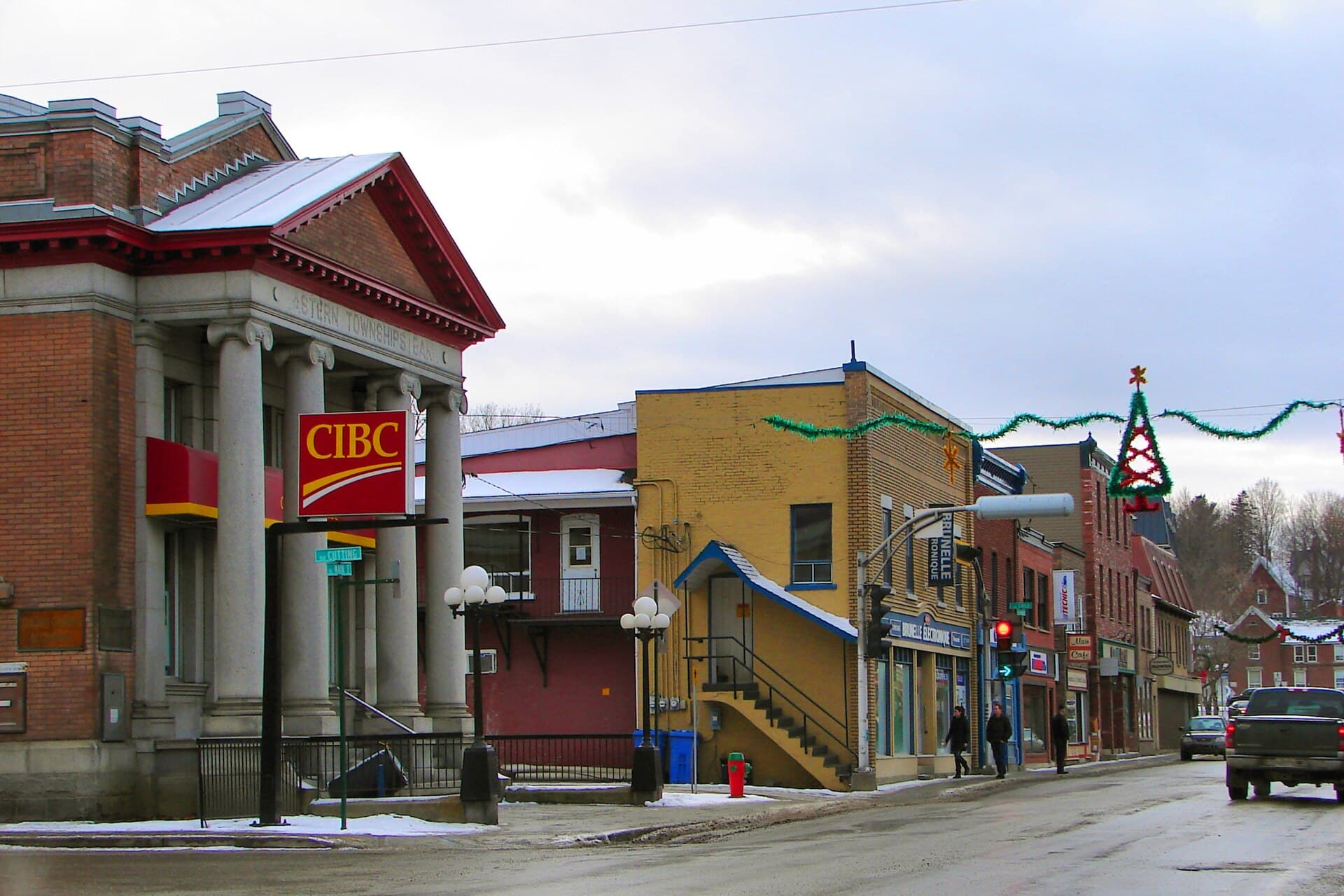 P199 / CC BY-SA 3.0, via Wikimedia Commons
Self-guided audio walking tour of Coaticook — GPS route, offline playback, story-driven narration in 32 languages.
“Where the Coaticook River carves a path through time and pines, revealing stories in light and ice cream.”
Not the postcards. The stories even locals don't know — whispered in your ear, right where they happened.
You may know it as the longest pedestrian suspension bridge in North America, but its true character emerges after dark.
Coaticook is celebrated for its ice cream, a local staple since 1940, yet the dairy’s influence on the region extends far beyond sweet confections.
The gorge itself is a natural marvel, sculpted by a river over millennia, but the river’s artistry is far from complete.
Discover every secret of Coaticook
Every address, every reveal in full — in your ear, right where it happened.
You pick your stops. You walk. The voice reveals what the others miss.
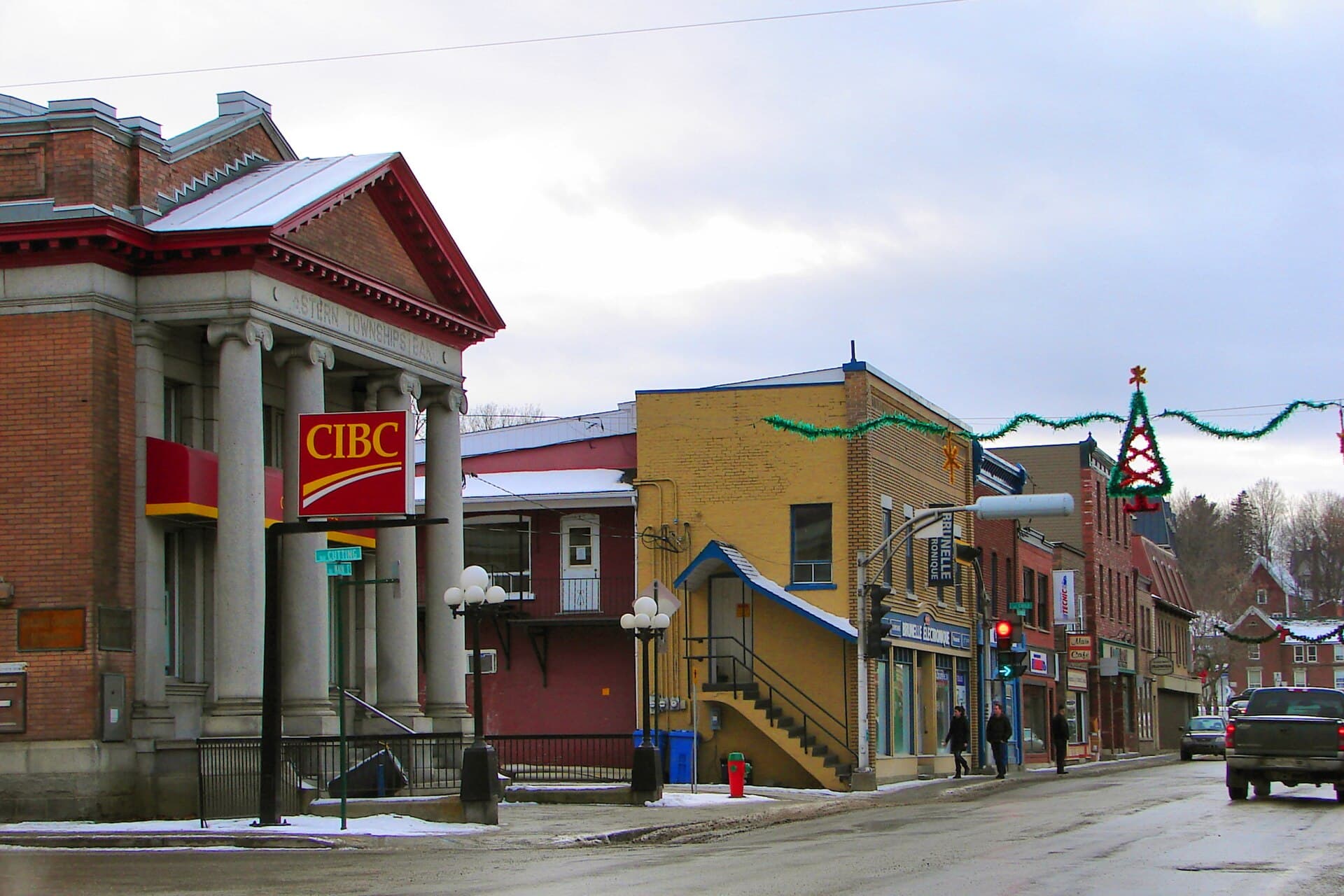
Your self-guided audio tour of Coaticook is ready — pick your landmarks, choose your language, and start the moment you arrive.
BuyLume has a built-in augmented-reality guide. Hold your phone up and its camera shows the street ahead of you, with a glowing arrow laid over the real view that always points to your next stop — no map to puzzle over, no wrong turns. Like everything in Lume, it works fully offline.
Coaticook, a town in southeastern Quebec, Canada, is known for its striking natural landscapes and lively community. Its name, from the Abenaki term 'koatikeku,' means 'where the river is bordered by white pines,' a nod to the Coaticook River that gracefully winds through the area. With a population of around 8,867 as of 2021, Coaticook serves as the seat of the Coaticook Regional County Municipality and shares its southern boundary with the Canada–United States border.
Beyond its scenic setting of hills and valleys, Coaticook has cultivated a diverse economy rooted in agriculture, particularly its thriving dairy industry, and a growing tourism sector. The town offers a gateway to outdoor adventures and cultural experiences, from exploring the dramatic Coaticook Gorge to indulging in its celebrated local ice cream. It is a place where natural beauty, entrepreneurial spirit, and community pride converge, offering a unique glimpse into Quebec's Eastern Townships.
The story of Coaticook begins long before European settlement, with the Abenaki people inhabiting the Eastern Townships region from approximately 1600 to 1775. They utilized the Coaticook River for travel and resources, bestowing upon the area its enduring name, 'koatikeku,' meaning 'where the river is bordered by white pines.'
European settlement in the Coaticook area, primarily by British Loyalists and Americans from New England, commenced in the 1820s and 1830s. Richard Baldwin Sr. is credited as the town's founder, constructing a house in 1830 on the land where the city hall now stands. Marcus Child, a notable politician, settled in 1840, establishing the first post office and formally naming it Coaticook.
The mid-19th century marked a significant turning point with the construction of the St. Lawrence and Atlantic Railroad through Coaticook in the early 1850s. This railway connection, which Coaticook secured over neighboring Stanstead, spurred industrial and commercial development. Industries such as textiles and hydroelectricity flourished, attracting a substantial influx of French-Canadian workers and profoundly altering the town's demographic and cultural fabric. Coaticook was officially incorporated as a municipality in 1864.
Coaticook experienced its industrial growth around 1925. However, the town demonstrated a remarkable ability to reinvent itself, shifting its focus towards tourism and agriculture in the 1970s. This strategic pivot has shaped its modern identity. In 1998, the municipalities of Barnston Township and Barford Township merged into Coaticook, significantly expanding its land area and incorporating communities like Baldwin's Mills and Barnston. Today, Coaticook is celebrated for its natural attractions like the Parc de la Gorge de Coaticook and Foresta Lumina, alongside its strong agricultural roots, particularly its dairy production.
Coaticook offers a blend of natural spectacle and charming local experiences. The Parc de la Gorge de Coaticook is the town's centerpiece, home to the Coaticook Gorge, a 50-meter-deep canyon carved by glacial activity. Spanning this impressive chasm is the Coaticook Gorge Suspension Bridge, North America's longest pedestrian suspension bridge, at 169 meters (554 feet) long and 50 meters (160 feet) high. The park features extensive hiking and mountain biking trails, a covered bridge built in 1887, and a replica of a round barn.
After dusk, the park transforms with Foresta Lumina, an immersive multimedia night walk designed by Moment Factory. This 2.6 km (1.6 mi) trail uses lighting, mapped media, and an original soundtrack to tell a story inspired by local legends, drawing over 145,000 visitors in its second year alone.
Beyond the gorge, visit the Laiterie de Coaticook for its famous ice cream and dairy products. Explore Mont Pinacle in the Baldwin area for scenic views and outdoor activities. The Musée Beaulne, housed in the 1912 Château Norton, specializes in period costumes and antique textiles. For a taste of local craft beverages, stop by the Microbrasserie Coaticook or Microbrasserie Hop Station, both located in the old train station.
For warm-weather activities, the best time to visit Coaticook is from late June to late August, when average daily temperatures are pleasant. July is typically the warmest month, with an average high of 74°F (23°C). To witness the spectacular autumn foliage, the fall season is highly recommended. While the warmer months offer prime conditions for outdoor adventures like hiking and exploring Foresta Lumina, winter also provides opportunities for snowshoeing and cross-country skiing in the Parc de la Gorge de Coaticook.
Coaticook, with a population of approximately 8,867, is located in the Estrie region of Quebec, about 45 km south of Sherbrooke and roughly 20 km from the U.S. border. The town offers a range of services and amenities, including a 24-hour emergency hospital, a family practice clinic, and various financial institutions. Accommodation options include hotels, motels, bed and breakfasts, and campgrounds, notably at the Parc de la Gorge de Coaticook, which also offers ready-to-camp options. Public transit and a community volunteer center are also available. The town is accessible by road, and its location makes it a convenient base for exploring the wider Eastern Townships region.
Coaticook in Korean, in Chinese or in Hebrew — and 29 more languages, every stop narrated by a native voice. The widest language range of any self-guided audio tour.
Available in: