Église Saint-Carad'heuc
Observez la façade de l'église paroissiale de Donzy et vous découvrirez une inscription inattendue qui en dit long sur un désaccord local.
L'histoire complète se débloque dans le tour
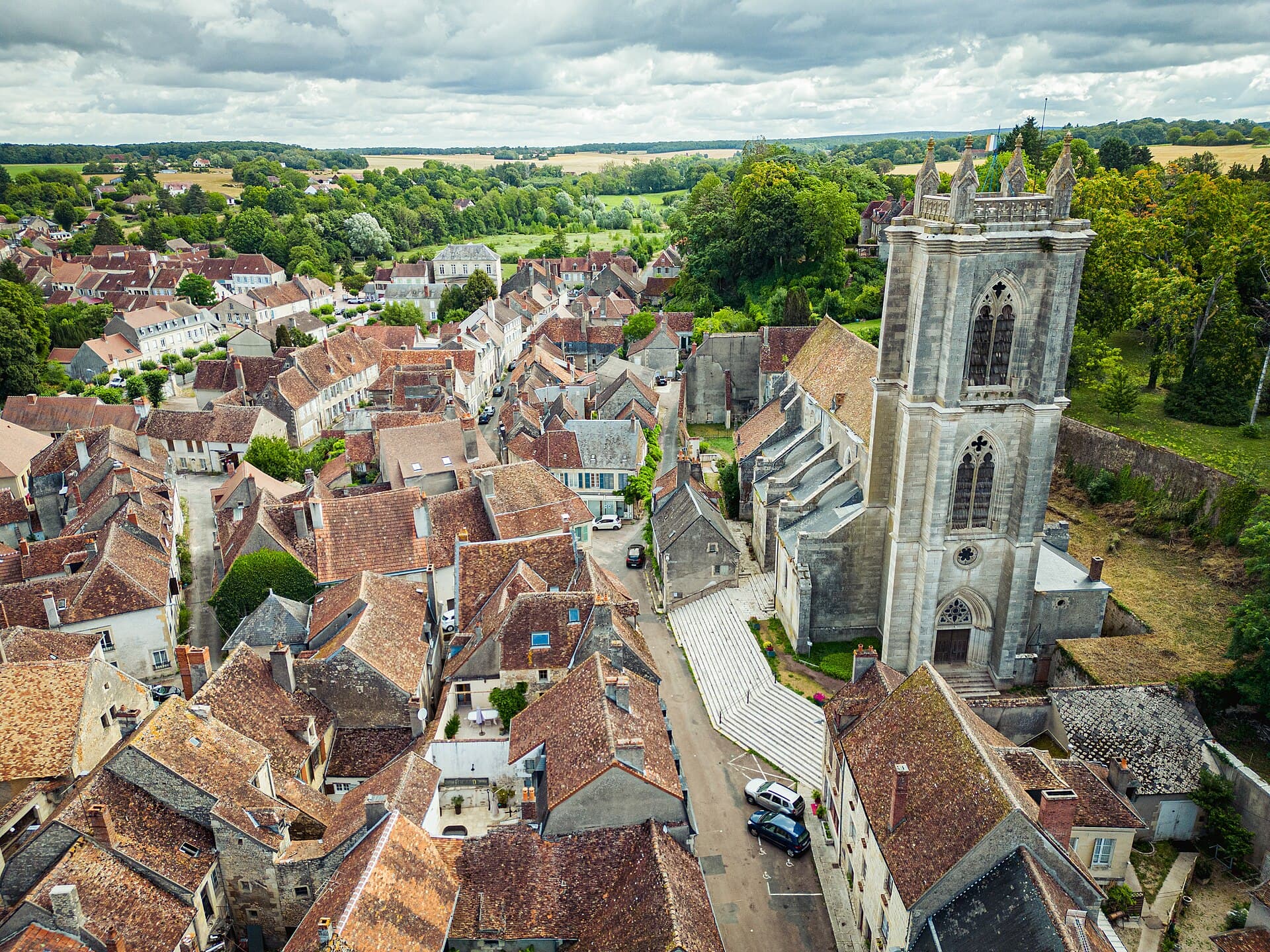 Eole / CC BY-SA 4.0, via Wikimedia Commons
Visite audio autoguidée de Donzy — parcours GPS à pied, lecture hors ligne, narration en 32 langues.
“Là où les moulins anciens tournent et les échos médiévaux persistent le long du Nohain.”
Pas les cartes postales. Les histoires que même les habitants ignorent — soufflées à l'oreille, là où elles se sont passées.
Observez la façade de l'église paroissiale de Donzy et vous découvrirez une inscription inattendue qui en dit long sur un désaccord local.
Malgré son nom, la 'Grande Rue' de Donzy est tout sauf grande en taille, mais elle fut autrefois le cœur animé du village.
Une ancienne auberge de Donzy aurait accueilli un roi de France, bien que les récits historiques offrent une légère variante à l'histoire.
Découvrez tous les secrets de Donzy
Chaque adresse, chaque révélation en entier — dans ton oreille, là où elle s'est passée.
Tu choisis tes lieux. Tu marches. La voix te révèle ce que les autres ignorent.


Votre visite audioguidée de Donzy vous attend — choisissez vos lieux, votre langue, et lancez-vous dès votre arrivée.
AcheterLume intègre un guide en réalité augmentée. Levez votre téléphone : sa caméra montre la rue devant vous, avec une flèche lumineuse posée sur l'image réelle qui pointe toujours vers votre prochain arrêt — aucune carte à déchiffrer, aucun mauvais virage. Comme tout dans Lume, ça fonctionne entièrement hors-ligne.
Donzy, commune du département de la Nièvre en France centrale, offre un voyage à travers le temps au milieu d'un paysage façonné par l'eau et une histoire durable. Surnommée la 'Petite Venise' en raison de ses nombreux cours d'eau, dont le Talvanne et le Nohain, l'hydrographie abondante de Donzy alimentait autrefois une florissante industrie meunière. Aujourd'hui, ce village attrayant, d'environ 1 525 habitants, équilibre son caractère rural avec un patrimoine historique et naturel soigneusement préservé.
Située en région Bourgogne-Franche-Comté, à environ 50 kilomètres au nord de Nevers, Donzy est une destination pour ceux qui recherchent des expériences françaises authentiques loin des lieux plus commercialisés. Son passé médiéval, façonné par de puissants barons liés aux Ducs de Bourgogne, est toujours évident dans son vieux centre-ville, où des monuments historiques côtoient des maisons médiévales. L'engagement de Donzy envers la préservation de son environnement est également manifeste, avec des initiatives comme un sentier sur pilotis en zone humide favorisant la biodiversité et un 'couloir vert' le long d'une ancienne voie ferrée offrant des promenades éducatives à travers le paysage vallonné.
## Du peuplement gallo-romain au pouvoir baronnial L'activité humaine à Donzy remonte à l'âge du fer, avec des preuves d'enceintes circulaires. Le hameau du Pré, centré autour d'une villa gallo-romaine, marque le premier peuplement enregistré de la région. Le village est mentionné pour la première fois dans les registres écrits entre le Ve et le VIe siècle sous le nom de 'Domiciacus'. En 596, Donzy était reconnue comme l'une des trente principales paroisses du diocèse d'Auxerre.
Donzy a pris de l'importance au Moyen Âge en tant que capitale d'une puissante baronnie, devenant l'un des fiefs les plus importants de Bourgogne-Franche-Comté. Les barons de Donzy, notamment Hervé IV, ont joué un rôle crucial dans le développement de la région. Hervé IV, devenu comte de Nevers par mariage en 1200, a également participé à la Cinquième Croisade et à la Croisade des Albigeois. Il était connu pour avoir développé la région du Nivernais, fondé une abbaye chartreuse et reconstruit des châteaux. La baronnie fut finalement unie au comté de Nevers en 1199 et le resta jusqu'à la Révolution française.
Tout au long de son histoire, Donzy a connu des périodes de prospérité et de conflit. La ville a prospéré en tant que centre commercial et artisanal, notamment dans les activités de forge et de meunerie, atteignant une population de 4 000 habitants au milieu du XIXe siècle. Cependant, les guerres de Religion ont causé des dommages, et la guerre de Cent Ans a vu la destruction et la reconstruction du château. Donzy détient également une distinction unique dans l'histoire politique française moderne, ayant reflété le modèle de vote national à chaque élection depuis 1981.
Commencez votre exploration au cœur médiéval de Donzy, où des rues étroites serpentent devant des monuments historiques et des maisons à colombages. Les vestiges du château de Donzy comprennent une tour ronde, l'ancien donjon et une aile résidentielle du XIVe siècle. Deux remarquables maisons à colombages du XVe siècle, l'ancienne demeure de la famille Frappier et une ancienne auberge, offrent un aperçu du passé de la ville.
L'identité de Donzy est profondément liée à ses cours d'eau et à son patrimoine meunier. Le moulin de Maupertuis, un bâtiment du XVe siècle avec sa grande roue et ses mécanismes toujours en état de marche, a été transformé en écomusée dédié à la meunerie. Un autre moulin actif, le moulin à huile de l'Île, produit des huiles de noix et de noisette depuis 150 ans en utilisant des meules de pierre traditionnelles alimentées par une turbine hydraulique. Vous pouvez également découvrir l'ancienne abbaye de l'Épeau et les églises de Saint-Carad'heuc et de Saint-Martin-du-Pré.
Pour une évasion naturelle, suivez le 'couloir vert' le long de l'ancienne voie ferrée, qui offre un sentier éducatif à travers le paysage vallonné de Donzy. Un sentier sur pilotis en zone humide met davantage en valeur la biodiversité locale. Donzy compte également de nombreux cours d'eau et lavoirs du XIXe siècle, reflétant sa désignation de 'Petite Venise'.
La meilleure période pour visiter Donzy pour les activités par temps chaud s'étend de mi-juin à début septembre. Durant ces mois, la température maximale quotidienne moyenne est supérieure à 21°C (70°F), juillet étant le mois le plus chaud, avec une moyenne de 24°C (76°F). Le ciel est le plus clair en juillet, et les conditions humides sont rares tout au long de l'année. Bien que la pluie tombe toute l'année, mai connaît les précipitations les plus élevées et août compte le moins de jours humides. La saison plus fraîche, avec des maximales quotidiennes moyennes inférieures à 9°C (49°F), s'étend de mi-novembre à début mars.
Donzy est située dans le département de la Nièvre, en région Bourgogne-Franche-Comté, en France. La ville la plus proche avec une gare est Cosne-Cours-sur-Loire, qui bénéficie d'une desserte quotidienne depuis la ligne Paris-Nevers. Donzy elle-même compte environ 1 525 habitants. Lors de votre séjour à Donzy, n'oubliez pas que de nombreuses expériences découlent d'une observation patiente et d'une adaptation aux coutumes locales. La ville organise un marché tous les samedis matin sur la Place Gambetta, présentant des produits locaux de Bourgogne et du Val de Loire. Pour les événements locaux, consultez l'agenda municipal, qui répertorie souvent des expositions, des concerts et des festivals traditionnels comme la Fête de la Ruralité, généralement organisée fin août.
Donzy en coréen, en chinois ou en hébreu — et dans 29 autres langues, chaque étape narrée par une voix native. La plus large gamme de langues de tous les audioguides autoguidés.
Disponible en :