Gasthof Roter Hirsch (Red Deer Inn)
In the midst of the Thirty Years' War, a fallen king's body found a temporary, solemn resting place in Eilenburg.
Full story unlocks in the tour
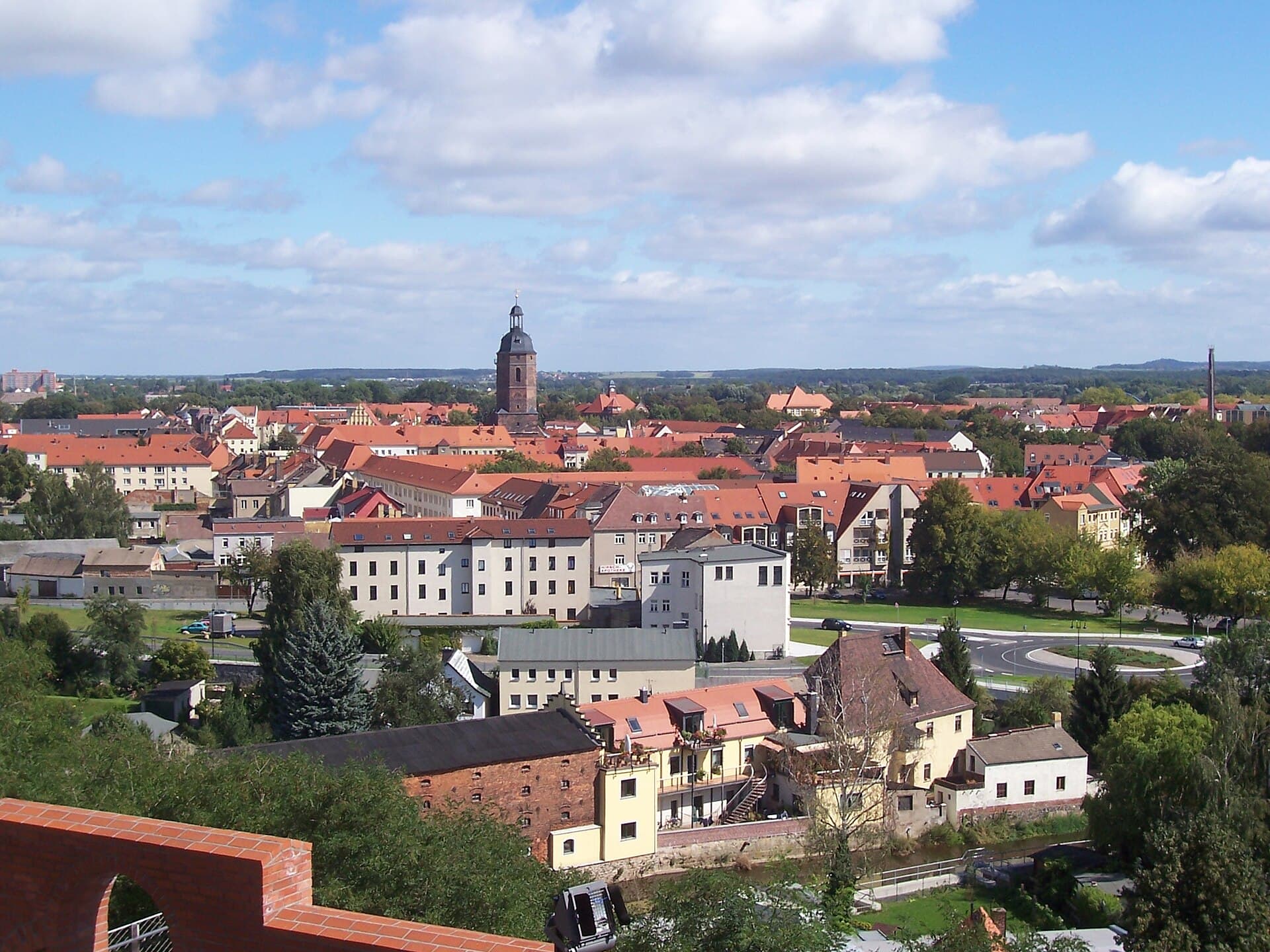
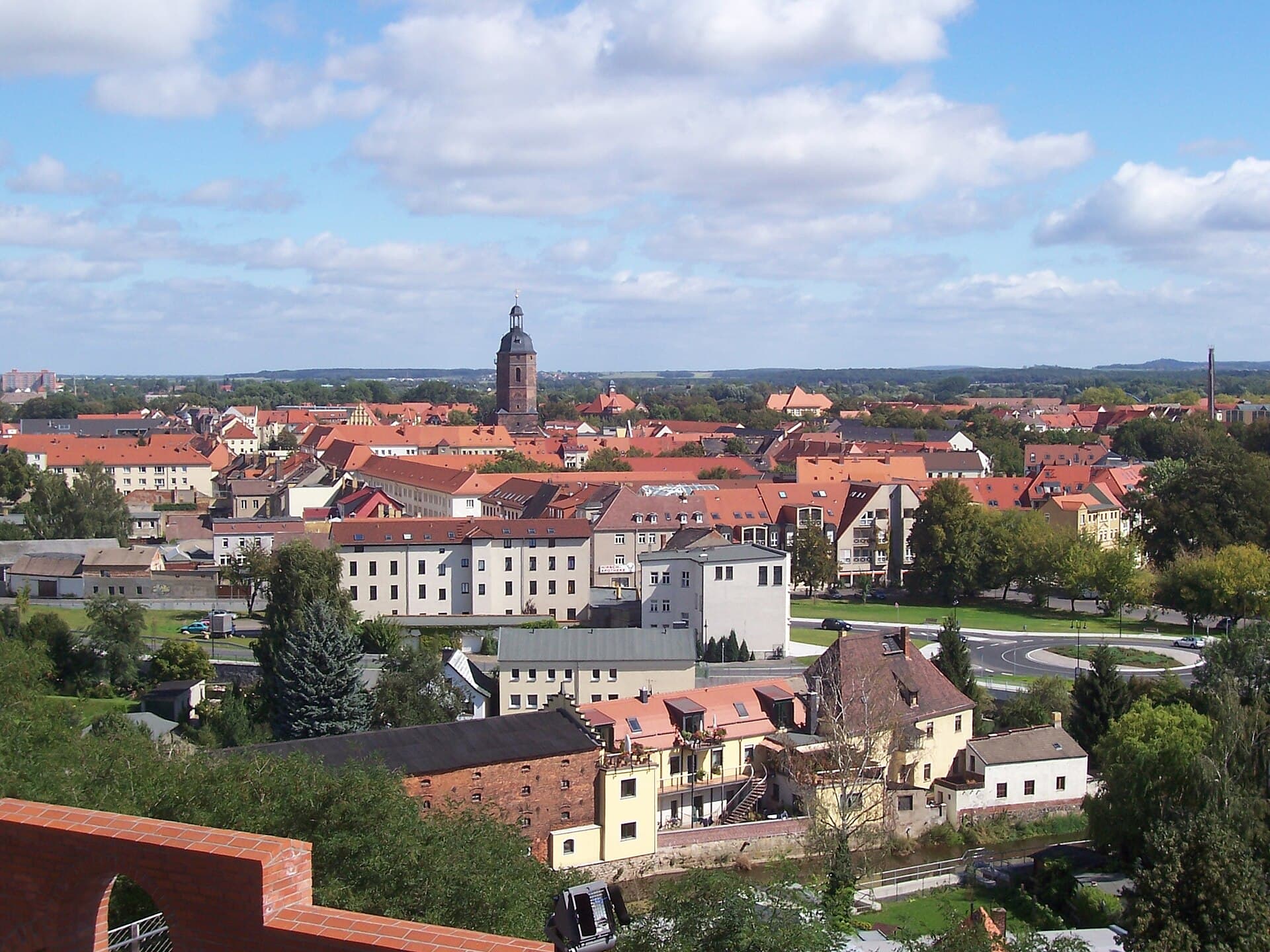 Joeb07 / CC BY-SA 3.0, via Wikimedia Commons
Self-guided audio walking tour of Eilenburg — GPS route, offline playback, story-driven narration in 32 languages.
“Eilenburg: Where ancient legends and industrial whispers echo along the Mulde.”
Not the postcards. The stories even locals don't know — whispered in your ear, right where they happened.
In the midst of the Thirty Years' War, a fallen king's body found a temporary, solemn resting place in Eilenburg.
The very ground beneath Eilenburg's historic castle is said to hold a secret connection to a beloved German fairy tale.
Eilenburg was once a key player in an industry that might surprise you, given its tranquil modern setting.
Discover every secret of Eilenburg
Every address, every reveal in full — in your ear, right where it happened.
You pick your stops. You walk. The voice reveals what the others miss.
Your self-guided audio tour of Eilenburg is ready — pick your landmarks, choose your language, and start the moment you arrive.
BuyLume has a built-in augmented-reality guide. Hold your phone up and its camera shows the street ahead of you, with a glowing arrow laid over the real view that always points to your next stop — no map to puzzle over, no wrong turns. Like everything in Lume, it works fully offline.
Eilenburg, a town in Saxony, Germany, lies approximately 20 kilometers northeast of Leipzig, along the banks of the Mulde River. Its story stretches back over a thousand years, claiming its place as one of Saxony's 'original cities.' The town's name itself, possibly derived from Slavic origins, means 'town with clay deposits' or 'island,' hinting at its historical setting.
Today, Eilenburg offers a blend of historical intrigue and natural beauty. Visitors can explore ancient castle ruins, wander through extensive medieval cellar systems, and enjoy the scenic Mulde River landscape. The town's enduring spirit is evident in its rebuilt center, a testament to its resilience after significant destruction during World War II. Eilenburg serves as an ideal starting point for nature lovers, hikers, and cyclists looking to explore the Düben Heath wildlife park and the wider Leipzig region.
## From Slavic Settlement to Saxon Cradle Eilenburg's story begins with its castle, first documented on July 29, 961, by Otto I as 'civitas Ilburg.' The name, with its Slavic roots, suggests an early settlement in an area rich with clay deposits. By the 11th century, a thriving community of tradespeople had emerged around the castle, laying the foundation for the modern town. The unbroken rule of the Wettin dynasty, starting with the Counts of Ilburg in the 11th century, extended until 1918, marking one of the longest continuous dynastic rules in European history over a single territory.
## Reformation and Wars The 16th century saw Eilenburg become a significant center for the Protestant Reformation. Martin Luther himself visited the town seven times, famously dubbing it a 'blessed lard pit' for its prosperity. However, this period of flourishing was soon overshadowed by the Thirty Years' War (1618–1648), which brought catastrophic economic effects and direct military involvement. The town experienced further hardship during the Seven Years' War and the Napoleonic Wars, with Napoleon himself reviewing his Saxon troops in eastern Eilenburg before the Battle of Leipzig in 1813.
## Industrial Boom and Modern Challenges Following Napoleon's defeat and Eilenburg's incorporation into Prussia, the town underwent significant industrialization. The establishment of numerous textile factories transformed Eilenburg into a major center for Prussian textile production, attracting Saxon industrialists seeking duty-free access to the Prussian market. This industrial growth led to a rapid population increase and the rise of a strong labor movement. The German Celluloid Factory, founded in 1887, was a cornerstone of the local economy for over a century.
The 20th century brought immense challenges. Eilenburg suffered heavily during both World Wars. On April 17, 1945, just weeks before the end of World War II, the town was almost completely destroyed by heavy artillery fire during a three-day battle, with 90 percent of the town center and 65 percent of all buildings annihilated. Eilenburg was one of the most damaged cities in Germany. The town center was rebuilt in the 1950s. More recently, Eilenburg faced severe flooding from the Mulde River in 2002, incurring damages of €135 million. Extensive flood protection measures were subsequently implemented, making Eilenburg the first city in Saxony to be fully protected against future floods by 2008.
Begin your exploration at the Eilenburg Castle ruins, offering wide-ranging views of the Leipzig lowlands and the Düben Heath. While here, venture into Eilenburg's unique underground cellar system on a guided tour, a fascinating remnant of the Middle Ages. Don't miss the Sorbenturm (Sorbian Tower), one of Saxony's oldest brick buildings, and the nearby 'Hundertstüfchen' (Hundred Steps).
In the town center, admire the St. Nicolai Church, a prominent Gothic structure with unique cross vaulting. The Stadtmuseum Eilenburg, housed in the historic 'Zum Roten Hirsch' inn, provides deeper insights into local history. For a unique perspective, consider a boat trip along the Mulde River's branch, the Mühlgraben, to appreciate the town's architecture and natural surroundings.
Families will enjoy Tierpark Eilenburg, a charming zoo featuring native and exotic animals. The Whispering and Sphere Park and the fourteen 'Camera Historica' peep towers offer engaging strolls through the town. For outdoor enthusiasts, the Mulde Cycle Path passes through Eilenburg, offering picturesque routes and the impressive Bobritzer Damm.
The best time to visit Eilenburg for warm-weather activities and general outdoor tourism is from mid-June to early September, with a peak in the first week of August. During these months, temperatures are pleasant, averaging between 13.1°C and 23.9°C (55°F to 75°F), with clearer skies. July is typically the warmest month, with average highs around 24.8°C (75°F). While rainfall is highest in July, it's generally spread across the summer months. For fewer crowds and good value, the shoulder seasons of April, May, September, and October are also recommended, offering pleasant weather with fewer tourists.
Eilenburg is located in the district of Nordsachsen in Saxony, approximately 20 km northeast of Leipzig. The town is easily accessible by train, with Eilenburg Station and Eilenburg Ost Station serving the area. If arriving by air, Leipzig/Halle Airport (LEJ) is the nearest major airport, situated about 27.2 km (16.9 miles) from the city center.
Within Eilenburg, the historic Old Town is a popular area for visitors, offering a mix of medieval architecture and modern conveniences. The town is well-suited for exploring on foot or by bicycle, with scenic routes like the Mulde Cycle Path. Accommodation options include vacation rentals and apartments, providing a comfortable base for exploring the town and its surroundings. For those with a car, Eilenburg is a good starting point for day trips to nearby attractions in the Leipzig region.
Eilenburg in Korean, in Chinese or in Hebrew — and 29 more languages, every stop narrated by a native voice. The widest language range of any self-guided audio tour.
Available in: