L'entrée du tombeau d'Ukit Kan Le'k Tok'
La gueule béante au cœur de l'Acropole est plus qu'un élément décoratif ; c'est un portail symbolique.
L'histoire complète se débloque dans le tour
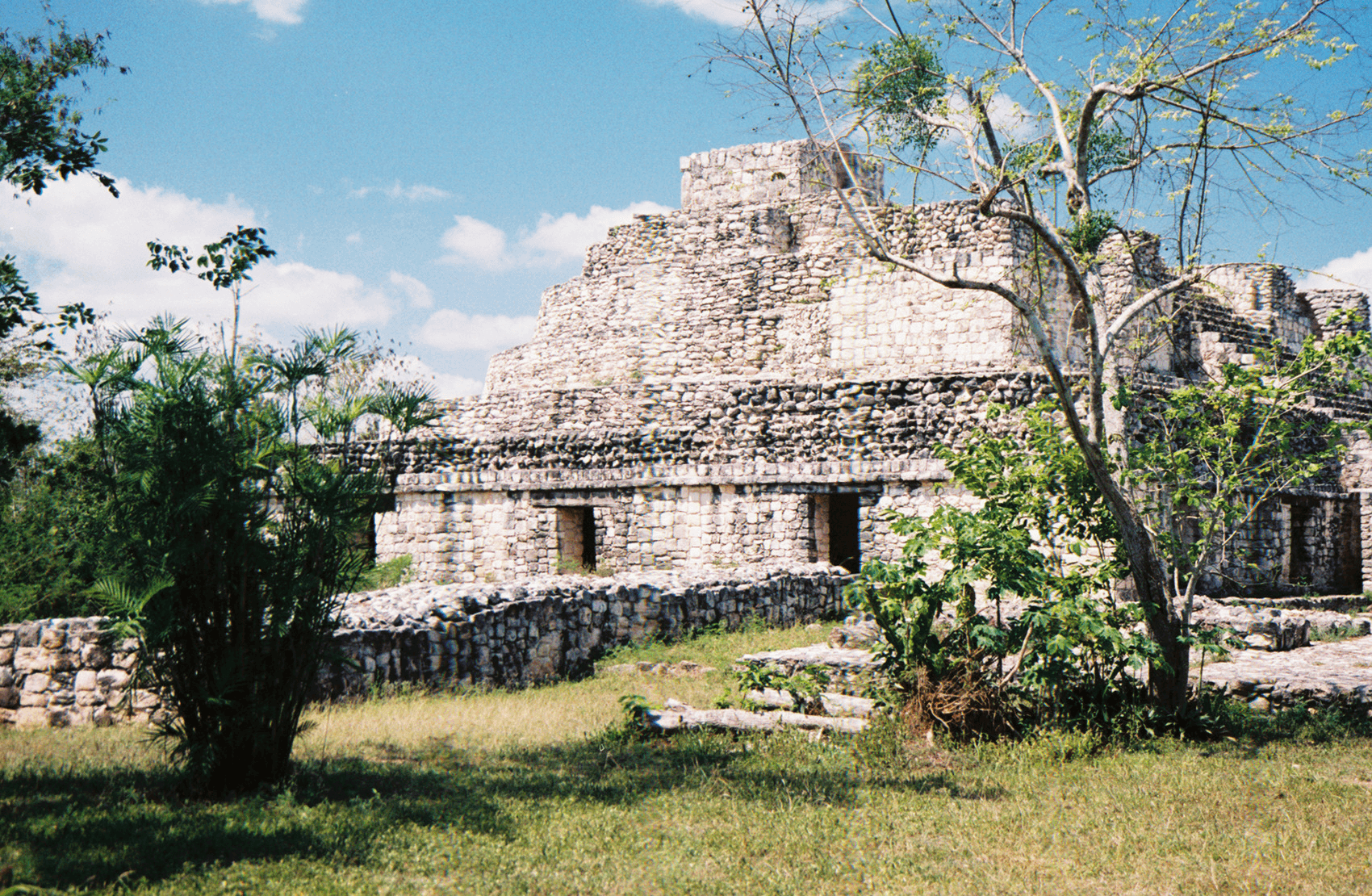 Photo by Dorothy Beals and Sarah Martin Original uploader was Elijahmeeks at en.wikipedia / CC BY-SA 3.0, via Wikimedia Commons
Visite audio autoguidée de Ek Balam — parcours GPS à pied, lecture hors ligne, narration en 32 langues.
“Gravissez l'Acropole, touchez le stuc ancien et apercevez l'inframonde dans la Cité du Jaguar Noir.”
Pas les cartes postales. Les histoires que même les habitants ignorent — soufflées à l'oreille, là où elles se sont passées.
La gueule béante au cœur de l'Acropole est plus qu'un élément décoratif ; c'est un portail symbolique.
Le roi inhumé dans l'Acropole possédait un attribut physique distinctif, étonnamment honoré dans sa représentation artistique.
Parmi les offrandes opulentes dans le tombeau du roi, un objet particulier suggère une fascinante pratique ancestrale.
Découvrez tous les secrets de Ek Balam
Chaque adresse, chaque révélation en entier — dans ton oreille, là où elle s'est passée.
Tu choisis tes lieux. Tu marches. La voix te révèle ce que les autres ignorent.


Lume intègre un guide en réalité augmentée. Levez votre téléphone : sa caméra montre la rue devant vous, avec une flèche lumineuse posée sur l'image réelle qui pointe toujours vers votre prochain arrêt — aucune carte à déchiffrer, aucun mauvais virage. Comme tout dans Lume, ça fonctionne entièrement hors-ligne.
Ek Balam, signifiant 'Jaguar Noir' ou 'Étoile Jaguar' en maya yucatèque, est une ancienne cité qui a prospéré dans la péninsule du Yucatán entre 300 et 900 de notre ère. Bien que peut-être moins largement reconnue que Chichén Itzá, Ek Balam offre une expérience intimiste et enrichissante unique, permettant aux visiteurs de gravir ses impressionnantes structures et d'acquérir une compréhension tangible de son passé.
Cette capitale autrefois puissante du royaume de Talol abritait, à son apogée, une population estimée entre 12 000 et 18 000 habitants. Son cœur cérémoniel, protégé par des murs défensifs, révèle un plan urbain sophistiqué. Les récentes fouilles du site et les efforts de restauration en cours de l'Institut National d'Anthropologie et d'Histoire (INAH) du Mexique continuent de révéler de nouvelles connaissances sur cette extraordinaire civilisation maya.
## L'Ascension d'un Royaume Jaguar L'histoire d'Ek Balam s'étend de la période préclassique moyenne (700-300 av. J.-C.) jusqu'à la période classique terminale (900-1100 ap. J.-C.), restant habitée jusqu'à l'arrivée des Espagnols. La ville a atteint son apogée pendant la période classique tardive, en particulier entre 770 et 896 de notre ère. Au cours de cette période, elle a servi de capitale au puissant royaume de Talol, percevant des tributs des communautés de l'est du Yucatán.
## Ukit Kan Le'k Tok' : Le Grand Souverain Une grande partie de ce que nous comprenons d'Ek Balam provient du règne de son premier et plus influent roi, Ukit Kan Le'k Tok', qui est monté sur le trône en 770 de notre ère et a gouverné pendant environ 30 ans. Il a supervisé la construction de nombreuses structures importantes, y compris la monumentale Acropole. La découverte de son tombeau à l'intérieur de l'Acropole, avec sa façade en stuc remarquablement conservée et ses offrandes opulentes, a fourni des informations inestimables sur les dirigeants de la ville et leurs croyances.
## Une Ville Soutenue par Son Peuple À mesure que l'influence de Chichén Itzá s'étendait, Ek Balam a progressivement décliné et a été largement abandonnée. Néanmoins, les Mayas eux-mêmes ont joué un rôle crucial dans la sauvegarde de certaines de ses caractéristiques les plus exquises. Ils ont intentionnellement enterré des parties de l'Acropole, y compris ses sculptures en stuc élaborées et ses inscriptions hiéroglyphiques, les protégeant efficacement des ravages du temps et des intempéries. Cet acte délibéré de préservation a offert aux archéologues un aperçu unique de ce à quoi de nombreux autres sites mayas auraient pu ressembler à leur apogée.
## Redécouverte et Restauration Après des siècles d'être engloutie par la jungle, Ek Balam a été visitée par l'explorateur français Désiré Charnay en 1886. Cependant, ce n'est qu'un siècle plus tard, en 1986, que des efforts d'exploration et de restauration approfondis de l'INAH ont officiellement commencé, menant à son ouverture au public. Aujourd'hui, les travaux archéologiques en cours continuent de révéler les nombreux secrets encore détenus par cette fascinante cité antique.
Ek Balam offre une exploration compacte mais approfondie d'une ancienne cité maya. La caractéristique centrale est l'Acropole, une structure colossale de plus de 30 mètres de haut que les visiteurs peuvent encore gravir. De son sommet, des vues imprenables sur la jungle environnante et d'autres structures se déploient. Sur l'Acropole, vous rencontrerez la façade en stuc remarquablement préservée, y compris la formidable bouche du 'Monstre de la Terre' qui marque l'entrée du tombeau du roi Ukit Kan Le'k Tok'. Cherchez les 'figures ailées' uniques qui ornent cette façade, une expression artistique rare dans le monde maya.
Au-delà de l'Acropole, explorez le Jeu de Balle, où les anciens Mayas pratiquaient leur jeu rituel. Découvrez Las Gemelas (Les Jumelles), deux temples identiques construits sur une seule plateforme, chacun orné de masques en stuc. Traversez l'impressionnante Arche d'Entrée, qui marquait autrefois une porte le long d'un sacbe (route blanche) reliant Ek Balam à d'autres villes mayas. Le site présente également des stèles, des monuments en pierre sculptée et des murs défensifs qui protégeaient autrefois le cœur de la ville.
À une courte distance des ruines se trouve le Cenote X'Canche, un magnifique cénote à ciel ouvert où vous pourrez vous rafraîchir en nageant après avoir exploré le site archéologique. Il offre des possibilités de tyrolienne et de rappel moyennant des frais supplémentaires.
La période idéale pour visiter Ek Balam est pendant la saison sèche, de novembre à avril, lorsque les températures sont légèrement plus fraîches et les précipitations minimales. Plus précisément, de fin octobre à mi-décembre, et de février à mars, sont recommandés pour éviter les foules les plus importantes. Il est fortement conseillé d'arriver tôt le matin, dès l'ouverture du site à 8h, pour éviter la chaleur de midi et découvrir les ruines avec moins de visiteurs. La billetterie ferme à 16h, et le site lui-même à 17h.
Ek Balam est situé à environ 30 kilomètres au nord de Valladolid, ce qui en fait une excursion d'une journée accessible depuis des villes voisines comme Mérida, Cancún ou Playa del Carmen. Vous pouvez vous rendre sur le site en voiture de location, en taxi ou en colectivo (mini-van partagé) depuis Valladolid. Le droit d'entrée pour les visiteurs étrangers est de 709 MXN (à partir de 2026), ce qui comprend à la fois les frais de l'INAH et une taxe d'État. Il est important de se rappeler que les billets sont payables en espèces uniquement, et il n'y a pas de distributeur automatique de billets sur place, alors prévoyez en conséquence.
Portez des chaussures confortables avec une bonne adhérence, car les marches de l'Acropole sont raides, bien que des cordes soient en place pour aider les grimpeurs. Apportez beaucoup d'eau, de la crème solaire et un chapeau, car l'ombre sur le site est rare. Des guides locaux, certifiés par l'INAH, sont disponibles à l'entrée à la location, généralement autour de 800 MXN pour un guide parlant anglais. Prévoyez 1,5 à 3 heures pour explorer les ruines, selon votre rythme et votre intérêt, avec une ou deux heures supplémentaires si vous prévoyez de visiter le Cenote X'Canche.
Ek Balam en coréen, en chinois ou en hébreu — et dans 29 autres langues, chaque étape narrée par une voix native. La plus large gamme de langues de tous les audioguides autoguidés.
Disponible en :