Carrara Castle walls
The imposing medieval walls that define Este's skyline hold a secret about their original height.
Full story unlocks in the tour
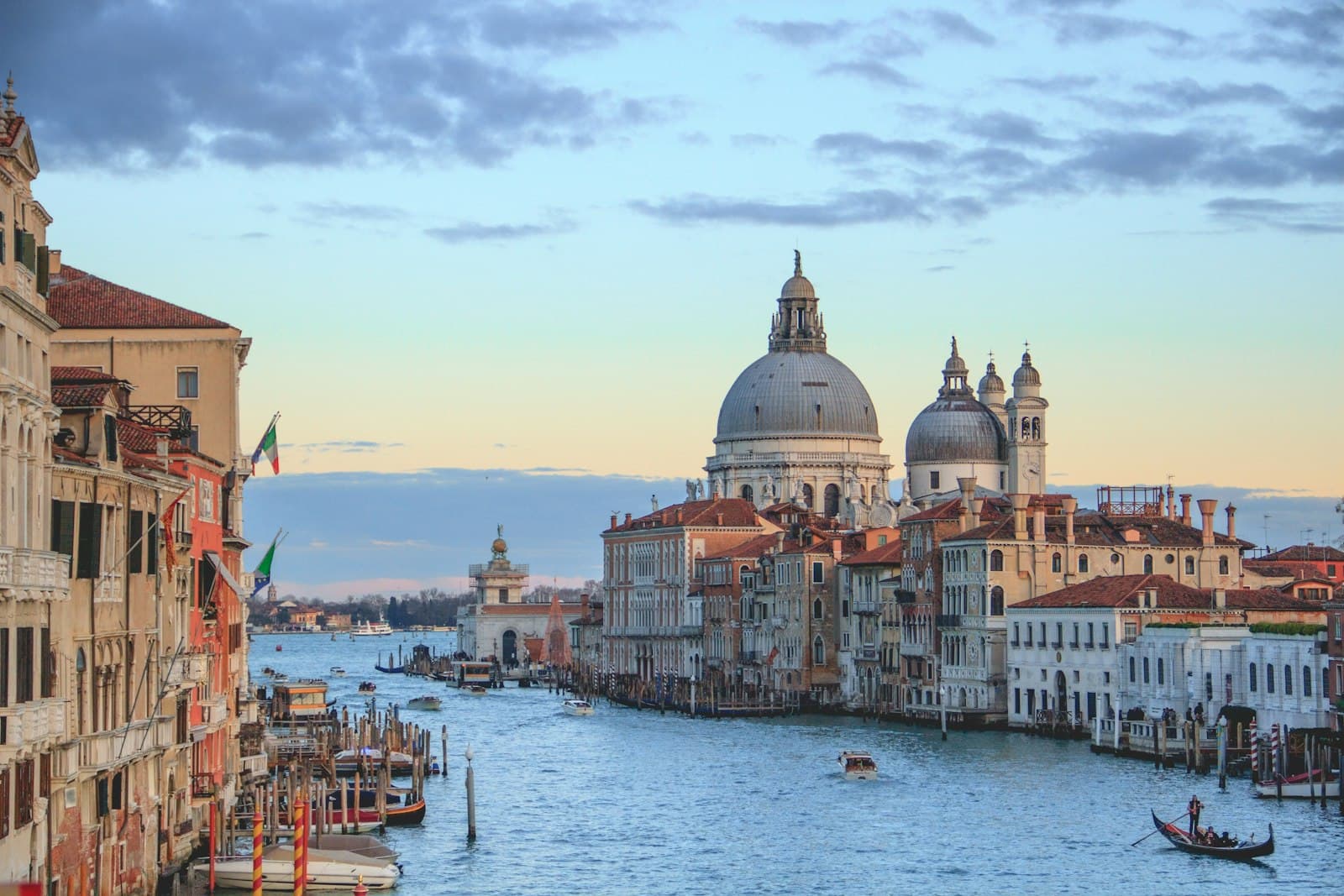 Photo: Henrique Ferreira / Unsplash
Self-guided audio walking tour of Este — GPS route, offline playback, story-driven narration in 32 languages.
“Where ancient roots meet Venetian elegance, beneath the gaze of the Euganean Hills.”
Not the postcards. The stories even locals don't know — whispered in your ear, right where they happened.
The imposing medieval walls that define Este's skyline hold a secret about their original height.
Beyond its Baroque beauty and guided tours, one villa in Este holds a romantic, unrequited secret within its grounds.
Among the museum's prized artifacts, a particular bronze object from 600 B.C. tells a story of ancient aristocratic life and metalworking prowess.
Discover every secret of Este
Every address, every reveal in full — in your ear, right where it happened.
You pick your stops. You walk. The voice reveals what the others miss.


Your self-guided audio tour of Este is ready — pick your landmarks, choose your language, and start the moment you arrive.
BuyLume has a built-in augmented-reality guide. Hold your phone up and its camera shows the street ahead of you, with a glowing arrow laid over the real view that always points to your next stop — no map to puzzle over, no wrong turns. Like everything in Lume, it works fully offline.
Este, a captivating walled town at the foot of the volcanic Euganean Hills in Italy's Veneto region, offers a journey through millennia of history. This destination, less frequented than its more famous neighbors like Venice and Padua, provides an authentic Italian experience where ancient roots intertwine with Venetian elegance. Its imposing medieval walls, tranquil public gardens, and a historic center invite visitors to uncover layers of culture and art.
From its origins as a significant center of the Atestine culture to its pivotal role as the ancestral home of the powerful House of Este dynasty, the town has left an indelible mark on European history. Este's picturesque landscapes, archaeological heritage, and a relaxed pace of life make it an ideal escape for those seeking genuine encounters and a deeper connection to Italy's past.
## From Ancient Ateste to the House of Este Este's story begins long before Roman times, as the principal seat of the Veneti people. Known as Ateste in antiquity, it was the heart of the 'Este culture,' a proto-historic civilization that flourished from the late Bronze Age (around the 10th/9th century BC) until the Roman period. This culture was known for its advanced metalworking, particularly the creation of elaborately decorated bronze situlae, like the famous Benvenuti Situla, now a centerpiece of the National Atestino Museum.
Around 200 BC, Este peacefully became part of the Roman Empire, gaining the status of a Roman colony. Its strategic location on the Adige River (then called Athesis, from which the town derives its name) contributed to its early prosperity. However, a catastrophic flood in 589 A.D., known as the 'Rotta della Cucca,' dramatically altered the river's course, moving it significantly south and causing the town to be largely abandoned and reduced to a small farming community.
The town re-emerged in the mid-11th century with the arrival of Albert Azzo II, a powerful nobleman of Lombard origin. He settled in Este, built a fortified castle in 1056, and adopted the town's name, founding the illustrious House of Este. This princely family would go on to rule Este for approximately two centuries before relocating their primary seat to Ferrara in the 13th century, and later extending their influence to Modena and Reggio. The House of Este became a significant European dynasty, with its elder branch, the House of Welf, even producing monarchs for Britain, Russia, and the Holy Roman Empire.
Throughout the medieval period, Este faced numerous conflicts, including attacks by Ezzelino da Romano and disputes between powerful families like the Visconti, Carrara, and Scaligeri. The current Carrara Castle, with its impressive walls and twelve towers, was rebuilt between 1339 and 1342 by Ubertino da Carrara after earlier destructions. In 1405, Este came under the stable rule of the Republic of Venice, initiating a long period of peace, economic growth, and population increase, which unfortunately ended with the plague in 1630.
The town later experienced the changes brought by Napoleon and Austrian rule, finally becoming part of the Kingdom of Italy in 1866. Despite these shifts, Este maintained its cultural significance, fostering initiatives like the establishment of the National Museum of Este. Today, its historical center beautifully blends various architectural styles and periods, reflecting its enduring legacy.
Este's compact historic core is easily explored on foot, revealing a wealth of attractions. Begin at the Carrara Castle, a medieval fortress whose imposing walls and twelve towers now embrace a sprawling public garden—a serene space for leisurely strolls and panoramic views.
Within the castle grounds, you'll find the National Atestino Museum, housed in the 16th-century Palazzo Mocenigo. This archaeological museum is one of Italy's most important, showcasing artifacts from the Paleovenetian, Roman, Medieval, and Renaissance periods, including the exquisite Benvenuti Situla and the tomb of Princess Nerka Trostinia.
Stroll along Via Giacomo Matteotti, the town's high street, lined with cafes and shops, and admire the local chimneys. The street leads to Piazza Maggiore, Este's main square, where you can see the 17th-century Municipal Palace and the early 14th-century Scaliger Palace.
Do not miss the Cathedral of Santa Tecla, an 18th-century edifice built on the ruins of an earlier basilica, which houses Giambattista Tiepolo's masterpiece, 'The Intercession of Santa Tecla.' Nearby, the 11th-century Church of San Martino is notable for its distinctly leaning tower.
For a glimpse into Venetian villa architecture, seek out Villa Contarini (also known as Vigna Contarena) with its frescoed rooms and 'secret garden.' The nearby Euganean Hills Regional Park offers numerous hiking and biking trails amidst lush landscapes, vineyards, and olive groves, providing a refreshing escape into nature.
The best times to visit Este are during the shoulder seasons: spring (April to June) and early fall (September to October). During these months, the weather is pleasant with comfortable temperatures, and you'll encounter fewer crowds compared to the peak summer season. Spring offers blooming landscapes, while fall brings the grape harvest and autumn colors to the Euganean Hills. Summers (July and August) can be warm and humid, with more tourists and higher prices. Winters are cold and partly cloudy, though still suitable for visiting museums and indoor attractions.
Este is easily accessible and best explored on foot to fully appreciate its historical sites and charming atmosphere. It's located in the Veneto region, less than 40 minutes by car from Padua and just under an hour from Venice, making it an excellent day trip destination or a base for exploring the Euganean Hills. Comfortable walking shoes are a necessity for navigating the cobbled streets and castle grounds.
For dining, explore local trattorias for authentic Veneto specialties and regional wines. Consider aligning your visit with a local market day or festival for a deeper cultural immersion. If you plan to explore the Euganean Hills, allow time for hiking or cycling, and perhaps reserve a spa afternoon in a nearby thermal town for relaxation. Public transportation connects Este to larger cities, but a car offers more flexibility for exploring the surrounding countryside.
Este in Korean, in Chinese or in Hebrew — and 29 more languages, every stop narrated by a native voice. The widest language range of any self-guided audio tour.
Available in: