El Árbol Que Se Posee a Sí Mismo
Hay un árbol en Eufaula que, según la leyenda local, posee su propia escritura de propiedad.
La historia completa se desbloquea en el tour
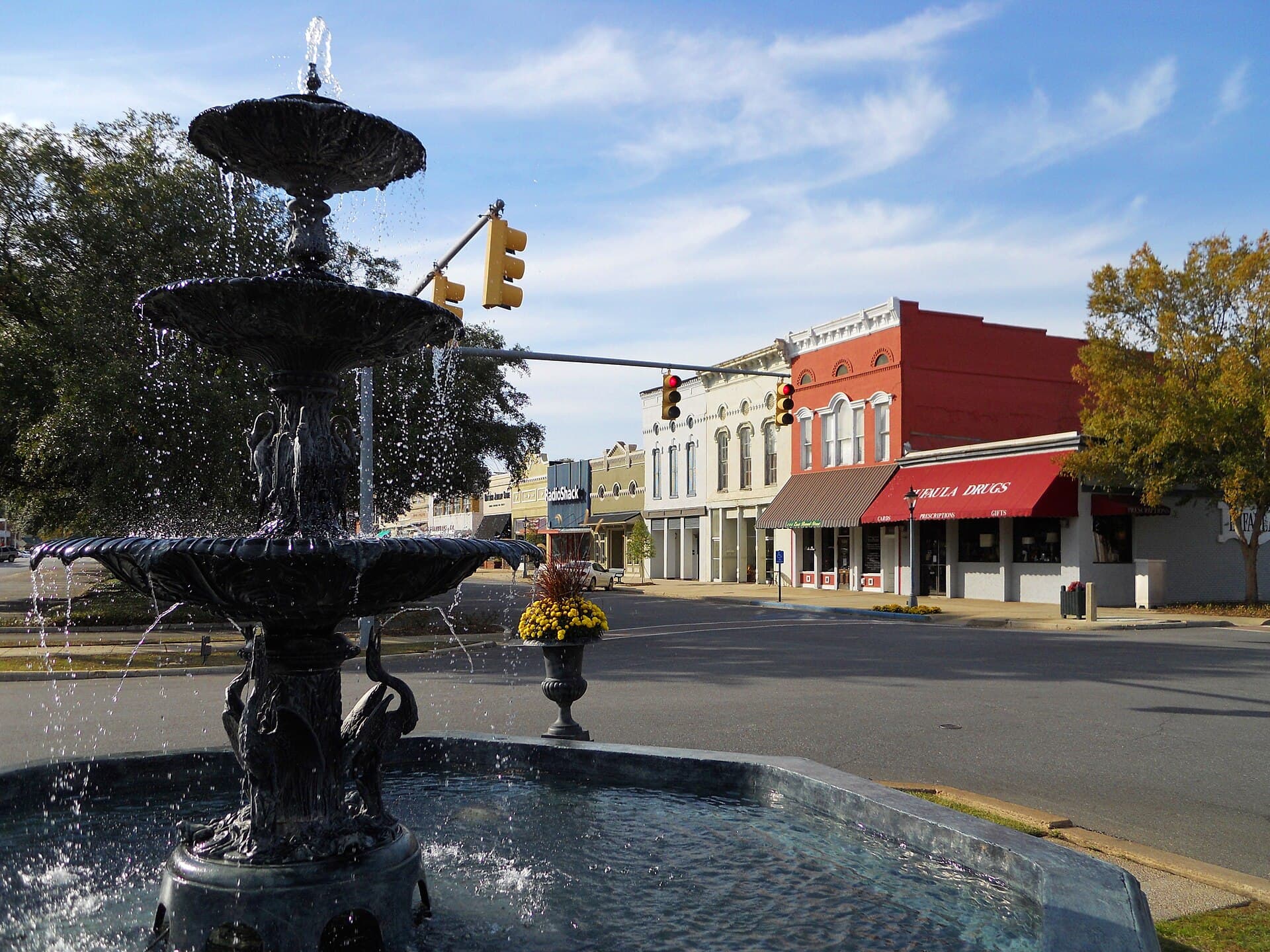 Rivers Langley; SaveRivers / CC BY-SA 3.0, via Wikimedia Commons
Tour de audio autoguiado de Eufaula — ruta GPS a pie, reproducción offline, narración en 32 idiomas.
“Donde la elegancia de antes de la guerra se encuentra con la belleza salvaje del río Chattahoochee.”
No las postales. Las historias que ni los locales conocen — al oído, justo donde ocurrieron.
Hay un árbol en Eufaula que, según la leyenda local, posee su propia escritura de propiedad.
La ornamentada fuente que adorna el centro de Eufaula encierra una sorprendente historia sobre su nombre y orígenes.
A poca distancia en coche de Eufaula, una lápida en particular relata una historia bastante directa, aunque sombría, sobre los hábitos del difunto.
Descubre todos los secretos de Eufaula
Cada dirección, cada revelación al completo — a tu oído, justo donde ocurrió.
Eliges tus paradas. Caminas. La voz te revela lo que los demás ignoran.

Tu tour de audioguía por Eufaula te espera — elige tus lugares, tu idioma y empieza al llegar.
ComprarEufaula, Alabama, es una ciudad donde el encanto sureño es palpable, ofreciendo un cautivador viaje a través de la historia y el esplendor natural. Situada a orillas del río Chattahoochee, esta pintoresca ciudad es celebrada por su arquitectura antebellum notablemente preservada, que contribuye a uno de los distritos históricos más extensos de Alabama.
Más allá de su grandeza arquitectónica, Eufaula es un paraíso para los amantes de la naturaleza, ostentando con orgullo el título de 'Capital Mundial de la Pesca de Bass' gracias al lago Eufaula, también conocido como lago Walter F. George. Ya sea que uno se sienta atraído por explorar grandes mansiones, disfrutar de deportes acuáticos o simplemente absorber la atmósfera serena, Eufaula presenta una experiencia distintiva y acogedora que encarna la esencia misma del Sur.
El área ahora conocida como Eufaula fue originalmente habitada por tres tribus Muscogee Creek, incluyendo los Eufaulas, ya en 1733. Los colonos blancos de Georgia, atraídos por la tierra fértil, comenzaron a establecer una presencia permanente alrededor de 1823, adoptando el nombre del pueblo Creek. El proyecto de la Carretera Federal de 1805 fomentó aún más el asentamiento blanco. Para la década de 1820, a pesar de ser parte del Territorio Indio Creek y supuestamente fuera de los límites, el asentamiento blanco ilegal era lo suficientemente significativo como para que los Creeks apelaran al gobierno federal para la protección de sus derechos de propiedad. Sin embargo, en 1832, los Creek cedieron sus derechos sobre la tierra en el Tratado de Cusseta, y muchos fueron reubicados por la fuerza hacia el oeste a lo largo del Sendero de las Lágrimas a lo que ahora es Eufaula, Oklahoma.
En 1833, el asentamiento fue renombrado Irwinton en honor al General William Irwin, quien estableció el primer muelle de vapor y oficina de correos, sentando las bases para el ascenso de la ciudad como centro comercial. Sin embargo, debido a la persistente confusión postal con Irwinton, Georgia, la ciudad recuperó su nombre original, Eufaula, en 1842 o 1843 y fue incorporada oficialmente en 1857. Eufaula prosperó como un punto de envío principal para el algodón, con familias adineradas construyendo magníficas casas de estilo neogriego, italianizante y victoriano. La ciudad se volvió políticamente influyente, con un grupo de secesionistas conocido como la 'Regencia de Eufaula' abogando por la causa sureña.
Durante la Guerra Civil, Eufaula sirvió como un bastión confederado. Crucialmente, a diferencia de muchas ciudades del Sur, la arquitectura histórica de Eufaula se salvó en gran medida de la destrucción. En abril de 1865, mientras las tropas de la Unión se acercaban, el alcalde Dr. C.J. Pope y otros ciudadanos prominentes negociaron con éxito con el General Benjamin H. Grierson, informándole de la rendición de Lee y persuadiéndolo de pasar por alto la ciudad. Este afortunado giro de los acontecimientos preservó la impresionante colección de casas antebellum que definen a Eufaula hoy.
La era de la Reconstrucción trajo cambios y desafíos significativos. En 1870, los votantes negros del condado de Barbour ayudaron a elegir a un candidato blanco, Elias Keils, que apoyaba la Reconstrucción. Sin embargo, este período estuvo marcado por la violencia, incluida la Masacre Electoral de Eufaula de 1874, donde una turba blanca atacó a votantes negros, resultando en muertes y heridos y llevando a una supresión generalizada del voto. Hoy, la economía de Eufaula se basa en la agricultura, la silvicultura y el turismo, con el procesamiento de aves de corral también desempeñando un papel importante. La ciudad sigue siendo un centro para la preservación histórica y la recreación, particularmente alrededor del río Chattahoochee.
La principal atracción de Eufaula es su arquitectura histórica, especialmente dentro del Distrito Histórico Seth Lore e Irwinton, uno de los más extensos de Alabama con más de 700 estructuras en el Registro Nacional de Lugares Históricos. Pasee por Eufaula Avenue, donde mansiones antebellum bordean la vía. Las casas clave para explorar incluyen la Mansión Shorter, una icónica residencia de estilo neogriego construida en 1884, ahora un museo que ofrece una visión de la vida de finales del siglo XIX y principios del XX. Fendall Hall, una casa de estilo italianizante de la década de 1860, es otra parada esencial, reconocida por sus vivaces pinturas murales y muebles antiguos.
Para los amantes del aire libre, el Lago Eufaula (Lago Walter F. George) ofrece 45,000 acres para pescar, pasear en bote y nadar, y es celebrado como la 'Capital Mundial de la Pesca de Bass'. El Refugio Nacional de Vida Silvestre de Eufaula, que abarca más de 11,000 acres, proporciona un santuario para observadores de aves y ofrece senderos para caminatas y torres de observación. El Parque Estatal Lakepoint, en el Lago Eufaula, presenta oportunidades adicionales para pescar, acampar y jugar al golf. Asegúrese de experimentar el Sendero Yoholo Micco, un camino pavimentado para caminar, correr y andar en bicicleta, que cruza el lago sobre un antiguo caballete de ferrocarril.
Descubra puntos de referencia locales únicos como El Árbol Que Se Posee a Sí Mismo y la Estatua de Leroy Brown. La Fuente de Broad Street, también conocida como Fuente MacMonnies, es una característica notable del centro.
Las épocas más agradables para visitar Eufaula son durante las estaciones de transición de primavera y otoño. Desde mediados de abril hasta finales de mayo, y nuevamente desde mediados de septiembre hasta finales de octubre, el clima es ideal para actividades de clima cálido y para explorar los sitios históricos de la ciudad. Durante estos períodos, las temperaturas promedio oscilan entre 66°F y 70°F (19°C y 21°C), con humedad moderada y abundante sol, creando condiciones cómodas para caminar y eventos al aire libre. Los veranos pueden ser intensamente calurosos y húmedos, con temperaturas altas que a menudo superan los 90°F (32°C), lo que hace que las actividades al aire libre sean menos cómodas. Los inviernos son suaves y relativamente secos, ofreciendo un clima agradable para hacer turismo, aunque enero suele ser el mes más nublado.
Eufaula se encuentra aproximadamente a 90 millas al sureste de Montgomery, Alabama, y es fácilmente accesible en coche a través de la U.S. Highway 431. Los aeropuertos principales más cercanos están en Montgomery, Alabama, y Columbus, Georgia. Si bien un fin de semana proporciona tiempo suficiente para experimentar las principales atracciones, aquellos con un profundo interés en la historia y la naturaleza podrían considerar un día o dos adicionales para una exploración exhaustiva. Al preparar su viaje, considere llevar capas para las visitas de primavera y otoño, ya que las temperaturas pueden fluctuar, y se recomienda calzado cómodo e impermeable, ya que la lluvia es posible durante todo el año. Los veranos exigen preparación para el calor y la humedad, con actividades que se programan mejor por las mañanas o las noches. Para pescar en el lago Eufaula, se requiere una licencia de pesca válida de Alabama o Georgia para pescadores entre 16 y 65 años. El Cuerpo de Ingenieros del Ejército de EE. UU. administra el lago Eufaula, con una oficina satélite ubicada en la ciudad.
Eufaula en coreano, en chino o en hebreo — y 29 idiomas más, cada parada narrada por una voz nativa. La mayor variedad de idiomas de cualquier audioguía autoguiada.
Disponible en: