Court Square Fountain
This seemingly innocuous fountain once marked a grim commerce.
Full story unlocks in the tour
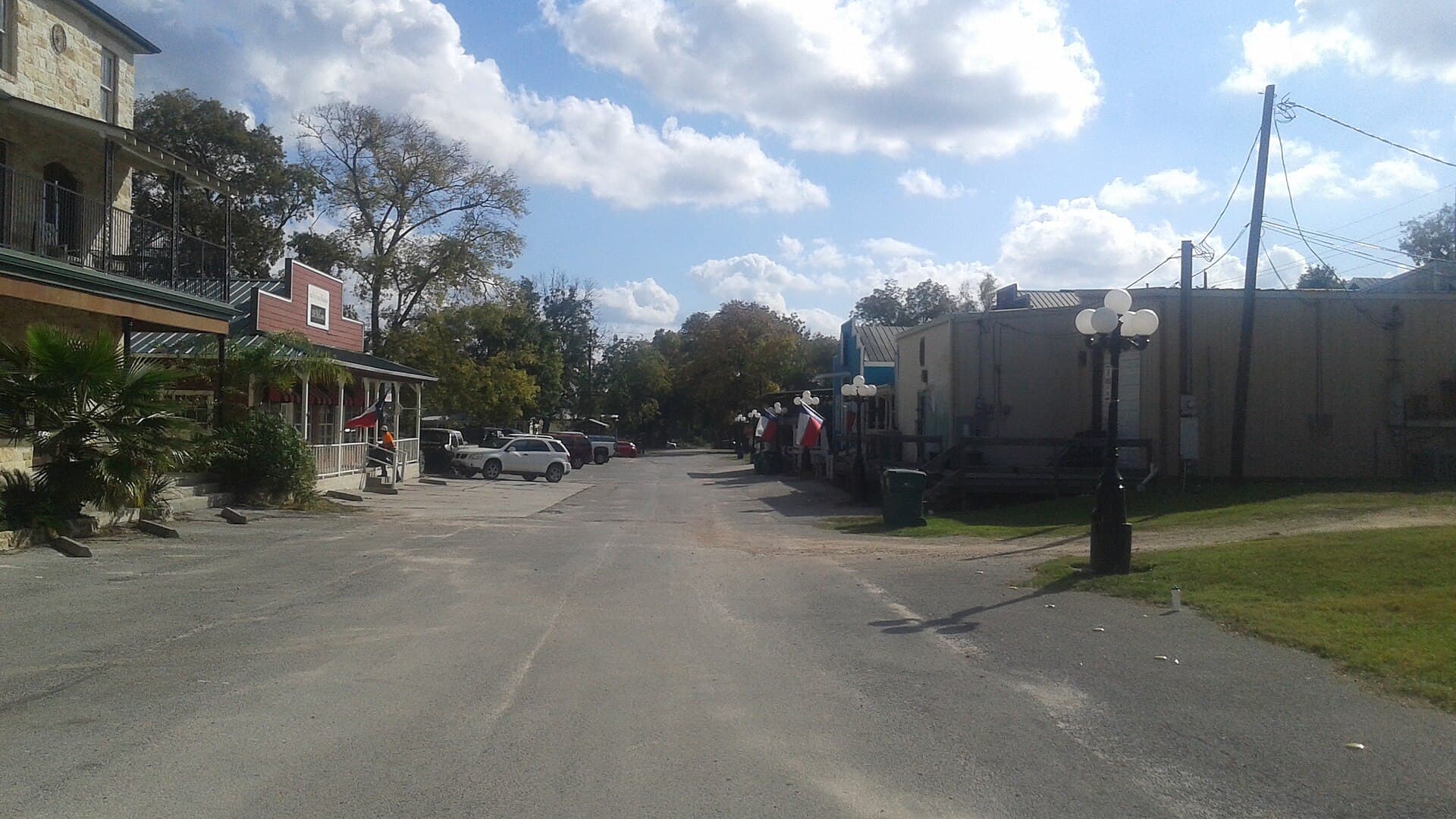 Stedil / CC BY-SA 4.0, via Wikimedia Commons
Self-guided audio walking tour of Montgomery — GPS route, offline playback, story-driven narration in 32 languages.
“Where history echoes and progress takes root.”
Not the postcards. The stories even locals don't know — whispered in your ear, right where they happened.
This seemingly innocuous fountain once marked a grim commerce.
The basement of this historic church holds a secret that fueled a movement.
Before it was a museum, this station witnessed a pivotal, violent moment in the fight for equality.
Discover every secret of Montgomery
Every address, every reveal in full — in your ear, right where it happened.
You pick your stops. You walk. The voice reveals what the others miss.


Your self-guided audio tour of Montgomery is ready — pick your landmarks, choose your language, and start the moment you arrive.
BuyLume has a built-in augmented-reality guide. Hold your phone up and its camera shows the street ahead of you, with a glowing arrow laid over the real view that always points to your next stop — no map to puzzle over, no wrong turns. Like everything in Lume, it works fully offline.
Montgomery, Alabama, is a city where pivotal moments in American history unfolded, particularly within the Civil Rights Movement. It is a place that invites reflection and understanding, offering visitors a direct connection to the struggles and triumphs that shaped the nation. Beyond its profound historical significance, Montgomery is also a lively Southern city with a singular charm, blending its storied past with contemporary life.
From the solemn memorials that honor civil rights pioneers to the animated downtown, Montgomery presents a compelling narrative. The city served as both the first capital of the Confederacy and a crucial battleground for voting rights, illustrating a complex and at times contradictory past. Exploring Montgomery means walking in the footsteps of figures like Dr. Martin Luther King Jr. and Rosa Parks, and gaining a deeper appreciation for the ongoing pursuit of justice and equality.
Montgomery was incorporated in 1819, formed by the merger of two towns along the Alabama River. Its early growth was tied to the cotton industry, with enslaved families establishing plantations in the region. Due to its strategic location and access to the Alabama River, Montgomery quickly became a central hub for cotton distribution.
In 1846, Montgomery became the capital of Alabama. The city's role in American history took a dramatic turn in 1861 when it was chosen as the first capital of the Confederate States of America, a position it held briefly before the capital moved to Richmond, Virginia. This period left an indelible mark, with the Alabama State Capitol Building serving as a prominent landmark from this era.
Decades later, Montgomery would become the epicenter of a different kind of struggle: the Civil Rights Movement. The city's public transit system, like many in the South, was subject to Jim Crow laws mandating racial segregation. African Americans, who constituted the majority of bus passengers, were forced to ride in the back and often had to surrender their seats to white individuals. This discriminatory practice set the stage for one of the most significant protests in American history.
The Montgomery Bus Boycott began on December 5, 1955, spurred by Rosa Parks' arrest for refusing to give up her seat to a white person. Led by the then 26-year-old Reverend Martin Luther King Jr., the boycott lasted 382 days, with African Americans refusing to ride the city's buses. This sustained act of nonviolent protest ultimately led to a federal ruling, Browder v. Gayle, which declared Alabama's bus segregation laws unconstitutional on December 20, 1956. The boycott not only desegregated Montgomery's buses but also propelled Dr. King to national prominence and galvanized the wider Civil Rights Movement.
Montgomery continued to be a focal point for civil rights activism. The city was the destination for the Selma to Montgomery voting rights marches in 1965, which culminated at the Alabama State Capitol Building. Today, Montgomery stands as a powerful testament to the fight for equality, with numerous museums and memorials dedicated to preserving and sharing this crucial history.
Montgomery offers a compelling array of sites that illuminate its profound historical significance. The Dexter Avenue King Memorial Baptist Church is a place of deep importance, not only for its architectural presence but as the pulpit from which Dr. Martin Luther King Jr. preached and organized the Montgomery Bus Boycott. Just a short walk away is the Rosa Parks Museum, which vividly recounts the story of Rosa Parks' courageous act and the subsequent boycott. The Civil Rights Memorial Center provides a powerful space for reflection, honoring those who died during the Movement. For a deeper dive into the legal battles, the Federal Courthouse of Judge Frank M. Johnson Jr. offers insight into a judge who made pivotal rulings in civil rights cases.
To understand the broader context of the era, the Freedom Rides Museum, housed in the former Greyhound bus station, tells the story of the brave individuals who challenged segregation on interstate buses. The Alabama State Capitol Building stands as a symbol of both Confederate history and the endpoint of the Selma to Montgomery marches. Beyond civil rights, the Montgomery Zoo offers family-friendly entertainment, and the city also hosts various festivals and outdoor activities throughout the year.
The best times to visit Montgomery for pleasant weather and outdoor activities are from mid-April to late May and again from mid-September to late October. During these spring and autumn months, temperatures are moderate, ranging from 18°C to 27°C (64°F to 81°F), making it comfortable for exploring historical sites and enjoying festivals. Summers, from June to August, are hot and muggy, with average daily high temperatures above 29°C (85°F) and frequent thunderstorms. Winters, from December to February, are mild with occasional cold spells.
Montgomery Regional Airport (MGM), also known as Dannelly Field, is located about 7 miles southwest of downtown. It offers domestic commercial flights with nonstop service to major hub cities like Atlanta (ATL) via Delta Air Lines, and Charlotte (CLT), Dallas-Fort Worth (DFW), and Washington, D.C. (DCA) via American Airlines. For domestic departures, it is recommended to arrive 90 minutes to 2 hours before your scheduled flight.
Within Montgomery, public transportation is provided by The M (Montgomery Area Transit System), which operates fixed-route buses and on-demand micro-transit services within city limits. The system has 14 bus routes and its primary transfer hub is the Intermodal Center. Taxis and rideshare services are also available for getting around the city. Downtown Montgomery offers approximately 2,500 parking spaces, and a parking app is available.
Montgomery in Korean, in Chinese or in Hebrew — and 29 more languages, every stop narrated by a native voice. The widest language range of any self-guided audio tour.
Available in: