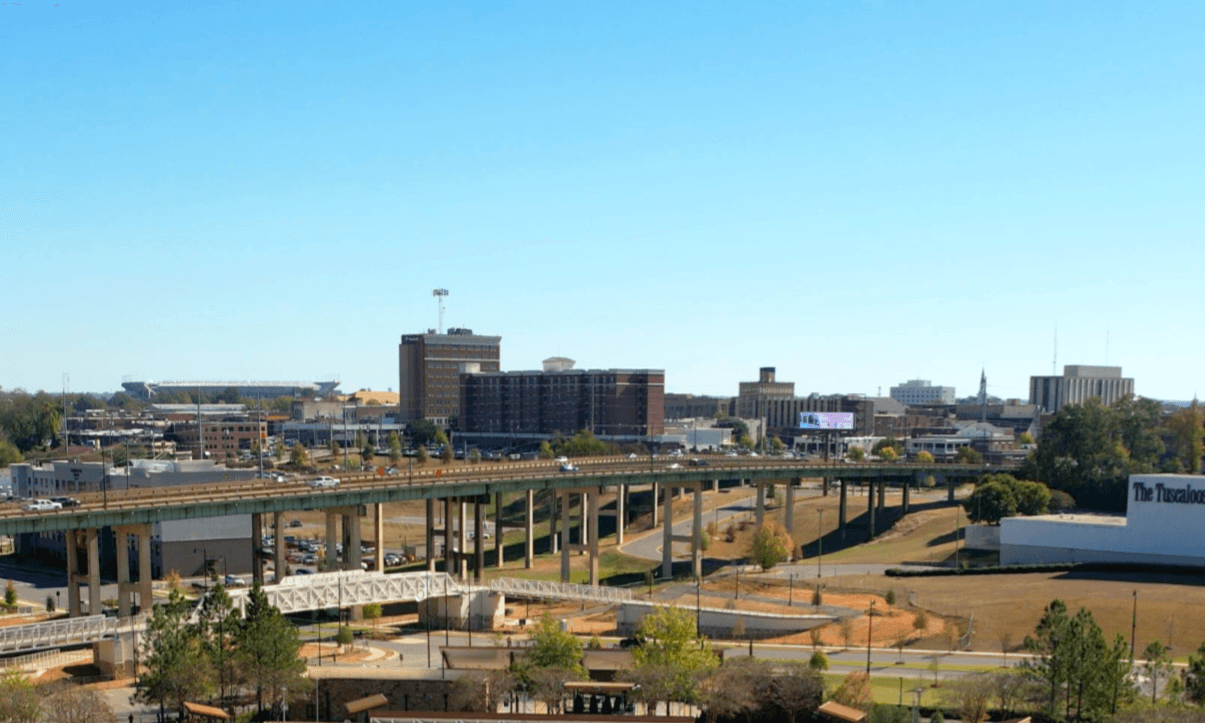
Tuscaloosa, United StatesRhYno12 / CC0, via Wikimedia Commons
US

Tuscaloosa

Self-guided audio walking tour of Tuscaloosa — GPS route, offline playback, story-driven narration in 32 languages.

Where the Black Warrior flows, stories unfold.

The secrets of Tuscaloosa

Tuscaloosa, as no one tells it.

Not the postcards. The stories even locals don't know — whispered in your ear, right where they happened.

3 secrets below. Many more wait inside the tour.
Capitol Park

Before Montgomery, Tuscaloosa held Alabama's aspirations, literally built into the ground.

Full story unlocks in the tour
Old Cove Road

Some roads carry more than just traffic; they carry echoes of the past.

Full story unlocks in the tour
Mellow Mushroom restaurant site

The spot where you enjoy pizza today once housed a very different kind of business.

Full story unlocks in the tour
The full tour

Discover every secret of Tuscaloosa

Every address, every reveal in full — in your ear, right where it happened.

Get the key to Tuscaloosa

You pick your stops. You walk. The voice reveals what the others miss.

Choose your time

How long do you have in Tuscaloosa?

Your self-guided audio tour of Tuscaloosa is ready — pick your landmarks, choose your language, and start the moment you arrive.

Buy
About Tuscaloosa

The story of Tuscaloosa

Tuscaloosa, Alabama, is a city where deep Southern roots intertwine with the energetic pulse of a major university town. Named after the legendary Choctaw chief Tuskaloosa, meaning 'Black Warrior,' the city shares its name with the river that flows through it, a waterway central to its unfolding history. While widely recognized as the home of the University of Alabama and its formidable football dynasty, Tuscaloosa offers more than just collegiate pride.

Beyond the roar of game day, visitors can explore a landscape alive with history, from ancient Native American sites to significant Civil Rights landmarks. The city's blend of cultural attractions, outdoor activities, and a welcoming atmosphere makes it a destination that appeals to history enthusiasts, nature lovers, and families alike.

History

From Ancient Roots to Modern City

The history of Tuscaloosa begins long before European settlement, along the banks of the Black Warrior River, which was home to Indigenous peoples, including the Choctaw and Creek nations. The city itself takes its name from Chief Tuskaloosa, a paramount chief who famously confronted Spanish explorer Hernando de Soto in 1540 during the Battle of Mabila. Early European settlers arrived in the early 19th century, drawn by the fertile land and strategic river access.

Tuscaloosa County was established in 1818, and the town was incorporated on December 13, 1819, just one day before Alabama achieved statehood. From 1826 to 1846, Tuscaloosa served as the capital of Alabama, a period that saw the city flourish as a political and educational center. The University of Alabama was founded in 1831, further cementing the city's identity as a hub of higher learning.

The Civil War brought significant disruption, including the burning of much of the university campus by Union troops in 1865, leading to decades of recovery. In the 1890s, improvements to navigation on the Black Warrior River, through a system of locks and dams, connected Tuscaloosa to the Gulf Coast seaport of Mobile, boosting its role as a busy river port.

The 20th and 21st centuries have seen Tuscaloosa evolve into a thriving community, blending industry, education, and heritage. The establishment of major manufacturing, such as the Mercedes-Benz plant in the 1990s, strengthened the economy. The city has also demonstrated remarkable resilience in the face of hardship, notably after the devastating tornado of April 27, 2011, showcasing the community's strong spirit.

What to see

Begin your exploration with a stroll along the Tuscaloosa Riverwalk, a paved trail offering views of the Black Warrior River, complete with benches, gazebos, and even a splash pad for children. For a deeper dive into the region's ancient past, visit Moundville Archaeological Park, which showcases the Mississippian people's civilization from over a thousand years ago through self-guided tours and museum artifacts.

The University of Alabama campus is a focal point, with its iconic Denny Chimes bell tower, which celebrates university achievements and plays songs throughout the day. History enthusiasts can also follow the Tuscaloosa Civil Rights Trail to learn about the city's significant role in the movement. For a unique cultural experience, consider the Kentuck Art Center, a local spot that supports emerging artists and is a part of the Kentuck Festival of the Arts. If you're looking for family-friendly activities, the Children's Hands-On Museum offers interactive exhibits for younger visitors.

When to visit

The most comfortable times to visit Tuscaloosa for warm-weather activities are from late April to early June and from early September to mid-October, when temperatures are mild and humidity is lower. Spring and fall also coincide with many local festivals and events, such as the Kentuck Art Festival and Oktoberfest. Summer offers fewer crowds and potentially better rates on accommodations, with opportunities for lake activities, though it can be muggy. Winters are generally mild, but occasional snowfall can lead to city-wide shutdowns.

Practical

Tuscaloosa is accessible by car via several major interstates. While the city itself is walkable in some areas, particularly downtown and around the university, a car is recommended for exploring wider attractions. Public transportation is available through the Tuscaloosa Transit Authority, which operates a trolley system. Accommodations range from hotels to rental properties, with rates potentially more affordable during the summer months when university crowds are smaller. Dining options are plentiful, offering a taste of Southern cuisine, including iconic barbecue joints. Be aware that during major university events, especially football games, the city can become very crowded, and prices for lodging and dining may increase.

Good to know
What is Tuscaloosa named after?
Tuscaloosa is named after Chief Tuskaloosa, a Choctaw chief whose name means 'Black Warrior.' The Black Warrior River, which flows through the city, also shares this namesake.
Was Tuscaloosa ever the capital of Alabama?
Yes, Tuscaloosa served as the capital of Alabama from 1826 to 1846 before the capital was moved to Montgomery.
What is the University of Alabama known for?
The University of Alabama is widely known for its strong academic programs and its highly successful athletic programs, particularly its football team.
What is the best time of year to visit Tuscaloosa?
The best times to visit Tuscaloosa are generally during the spring (late April to early June) and fall (early September to mid-October) for mild weather and various festivals.
Are there outdoor activities in Tuscaloosa?
Yes, Tuscaloosa offers several outdoor activities, including the Tuscaloosa Riverwalk for walking and biking, and nearby Lake Nicol for paddleboarding and kayaking.
What happened in Tuscaloosa in 2011?
In April 2011, Tuscaloosa was hit by a devastating tornado, one of the worst natural disasters in the United States in the past decade, which led to significant damage and a strong community response.
On the map
Tuscaloosa
€9.90
No booking · activate anytime · 12h to walk it
Get the key to Tuscaloosa