Cathédrale de Freiberg
Le grand orgue Silbermann de la cathédrale de Freiberg recèle un secret sur l'entêtement de son créateur.
L'histoire complète se débloque dans le tour
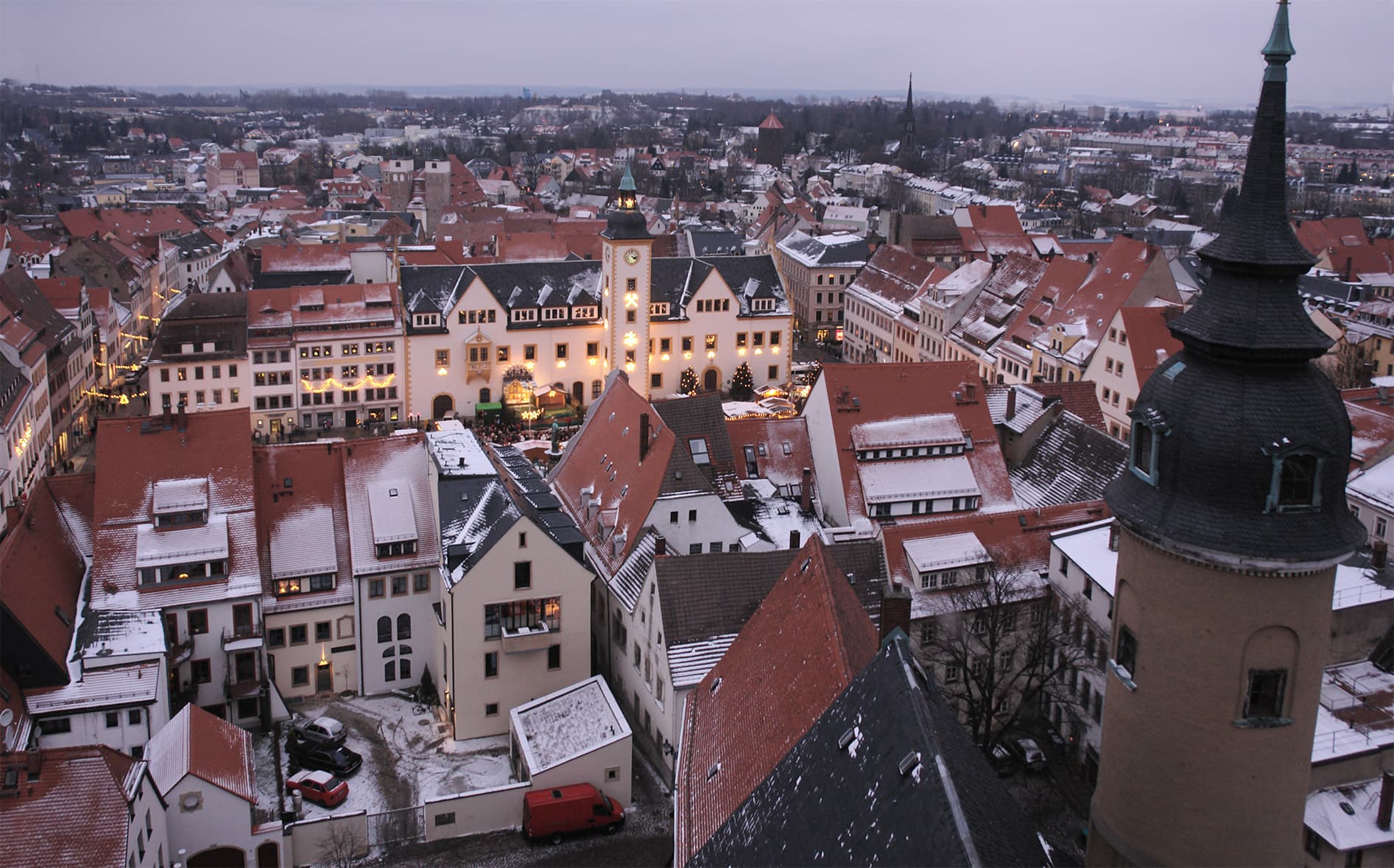 User:Kolossos / CC BY-SA 3.0, via Wikimedia Commons
Visite audio autoguidée de Freiberg — parcours GPS à pied, lecture hors ligne, narration en 32 langues.
“Là où l'argent coulait jadis, l'innovation scintille aujourd'hui.”
Pas les cartes postales. Les histoires que même les habitants ignorent — soufflées à l'oreille, là où elles se sont passées.
Le grand orgue Silbermann de la cathédrale de Freiberg recèle un secret sur l'entêtement de son créateur.
Ce château Renaissance, aujourd'hui un musée, a autrefois joué un rôle inattendu dans la santé des soldats napoléoniens.
La collection de minéraux de renommée mondiale présente un lien surprenant avec une marque de beauté bien connue.
Découvrez tous les secrets de Freiberg
Chaque adresse, chaque révélation en entier — dans ton oreille, là où elle s'est passée.
Tu choisis tes lieux. Tu marches. La voix te révèle ce que les autres ignorent.


Votre visite audioguidée de Freiberg vous attend — choisissez vos lieux, votre langue, et lancez-vous dès votre arrivée.
AcheterLume intègre un guide en réalité augmentée. Levez votre téléphone : sa caméra montre la rue devant vous, avec une flèche lumineuse posée sur l'image réelle qui pointe toujours vers votre prochain arrêt — aucune carte à déchiffrer, aucun mauvais virage. Comme tout dans Lume, ça fonctionne entièrement hors-ligne.
Freiberg, ville minière historique de Saxe, en Allemagne, est un lieu où des siècles d'extraction d'argent ont façonné son identité même. Fondée vers 1168 après une importante découverte d'argent, la ville est rapidement devenue un centre minier essentiel dans les Monts Métallifères (Erzgebirge). Son passé durable est palpable dans la vieille ville médiévale bien conservée, un site classé au patrimoine mondial de l'UNESCO, qui invite à l'exploration à travers ses ruelles étroites et ses façades historiques.
Au-delà de son charme historique, Freiberg est une ville tournée vers l'avenir. Elle abrite l'Université des Mines et de la Technologie de Freiberg, fondée en 1765 et reconnue comme la plus ancienne université de mines et de métallurgie au monde. Aujourd'hui, l'université et la ville elle-même sont à la pointe de la haute technologie, en particulier dans les industries des semi-conducteurs et de la technologie solaire, ce qui a valu à la région le surnom de « Silicon Saxony ». Avec une population d'environ 41 000 habitants, Freiberg offre un mélange unique de signification historique et d'innovation moderne.
L'histoire de Freiberg a véritablement commencé vers 1168 avec la découverte d'argent, déclenchant le premier « Berggeschrey » ou « ruée vers l'argent » dans les Monts Métallifères. Cet événement charnière a conduit à la fondation de la ville et à sa croissance rapide, devenant la ville la plus peuplée et un centre économique vital de la Marche de Misnie jusqu'au XVIe siècle. Le nom même de la ville, « Freiberg », dérive des vastes droits miniers accordés aux « mineurs libres » pendant cette période.
Le plan urbain médiéval, avec ses distinctes Oberstadt (ville haute) et Unterstadt (ville basse) centrées autour de leurs marchés respectifs, reflète ce développement précoce. Des monuments importants comme la cathédrale de Freiberg, initialement une basilique construite vers 1180, et les premières structures défensives de ce qui allait devenir le château de Freudenstein, ont émergé pendant cette ère prospère.
Le patrimoine minier de Freiberg s'est poursuivi pendant des siècles, avec la fondation de l'Université des Mines et de la Technologie de Freiberg en 1765 pour former des mineurs et des scientifiques qualifiés. Cette institution, la plus ancienne de son genre au niveau mondial, a joué un rôle crucial dans l'avancement de l'exploitation minière et de la métallurgie. Cependant, la ville a fait face à des défis, notamment de graves revers pendant la guerre de Trente Ans au XVIIe siècle et l'occupation française au début du XIXe siècle.
L'extraction d'argent a connu un déclin et a finalement été interrompue en 1913 en raison de la chute des prix, bien que les activités d'extraction de plomb, de zinc et d'étain aient repris avant la Seconde Guerre mondiale et se soient poursuivies jusqu'en 1969. Au milieu du XXe siècle, Freiberg a également abrité un sous-camp du camp de concentration de Flossenbürg pendant la Seconde Guerre mondiale, accueillant plus de 500 survivantes.
Depuis la réunification allemande, Freiberg s'est réinventée. Si son passé minier est honoré en tant que partie de la région minière des Monts Métallifères/Krušnohoří, classée au patrimoine mondial de l'UNESCO, la ville est devenue un pôle de haute technologie, en particulier dans les secteurs des semi-conducteurs et de la technologie solaire. L'Université des Mines et de la Technologie de Freiberg reste un acteur clé, se concentrant sur les technologies de ressources durables et contribuant à la croissance économique de la région.
Commencez votre exploration dans le centre historique de Freiberg, un site classé au patrimoine mondial de l'UNESCO. La Cathédrale Sainte-Marie de Freiberg (Dom St. Marien) est une destination incontournable, réputée pour son « Portail doré » de style roman tardif datant de 1230, orné de sculptures et de colonnes ouvragées. À l'intérieur, admirez les deux célèbres orgues Gottfried Silbermann, considérés comme parmi ses plus grandes œuvres. La cathédrale abrite également l'unique « Chaire aux Tulipes » et la « Chaire des Mineurs ».
Juste au nord du centre-ville se dresse le Château de Freudenstein (Schloss Freudenstein), un palais Renaissance construit sur les fondations d'une forteresse du XIIe siècle. Aujourd'hui, il abrite Terra Mineralia, l'une des plus grandes et des plus belles expositions de minéraux au monde, présentant plus de 3 500 minéraux, pierres précieuses et météorites scintillants venus du monde entier. Le château abrite également les vastes Archives Minières Saxones.
Plongez plus profondément dans l'héritage minier de la ville au Stadt- und Bergbaumuseum (Musée de la ville et des mines), l'un des plus anciens musées de Saxe, qui présente des expositions uniques sur des siècles d'extraction de minerai. Pour une expérience pratique, envisagez une visite à la Mine de recherche et d'enseignement « Reiche Zeche » exploitée par l'université, offrant un aperçu des environnements miniers réels.
La meilleure période pour visiter Freiberg pour les activités par temps chaud s'étend de fin juin à fin août, lorsque les températures maximales moyennes quotidiennes dépassent 18 °C (65 °F). Juillet est le mois le plus chaud, avec une moyenne maximale de 22 °C (72 °F). La ville connaît une saison plus humide de mai à décembre, juillet étant le mois avec le plus de jours pluvieux. Les hivers sont longs, froids et neigeux, de novembre à mars, janvier étant le mois le plus froid avec une moyenne minimale de -3 °C (27 °F).
Freiberg est facilement accessible, située en Saxe, en Allemagne, et reliée à Dresde par la ligne S3 du S-Bahn de Dresde. Le centre-ville est compact et agréable à parcourir à pied, de nombreuses attractions étant à proximité. Lors de la visite de la cathédrale de Freiberg, des visites guidées sont disponibles moyennant des frais. Pour Terra Mineralia, le musée est ouvert du mardi au dimanche, généralement à partir de 10h00, fermant à 17h00 en semaine et à 18h00 le week-end. Un parking est disponible, y compris des places pour personnes à mobilité réduite directement devant le château de Freudenstein. Des options de transport en commun, y compris des arrêts de bus, sont également disponibles près du château. Pensez à vous arrêter à l'office de tourisme sur la Schlossplatz pour des cartes et des informations supplémentaires à votre arrivée.
Freiberg en coréen, en chinois ou en hébreu — et dans 29 autres langues, chaque étape narrée par une voix native. La plus large gamme de langues de tous les audioguides autoguidés.
Disponible en :