Hôtel de Ville de Fürth
Le Rathaus de la ville présente une ressemblance frappante avec un célèbre monument italien.
L'histoire complète se débloque dans le tour
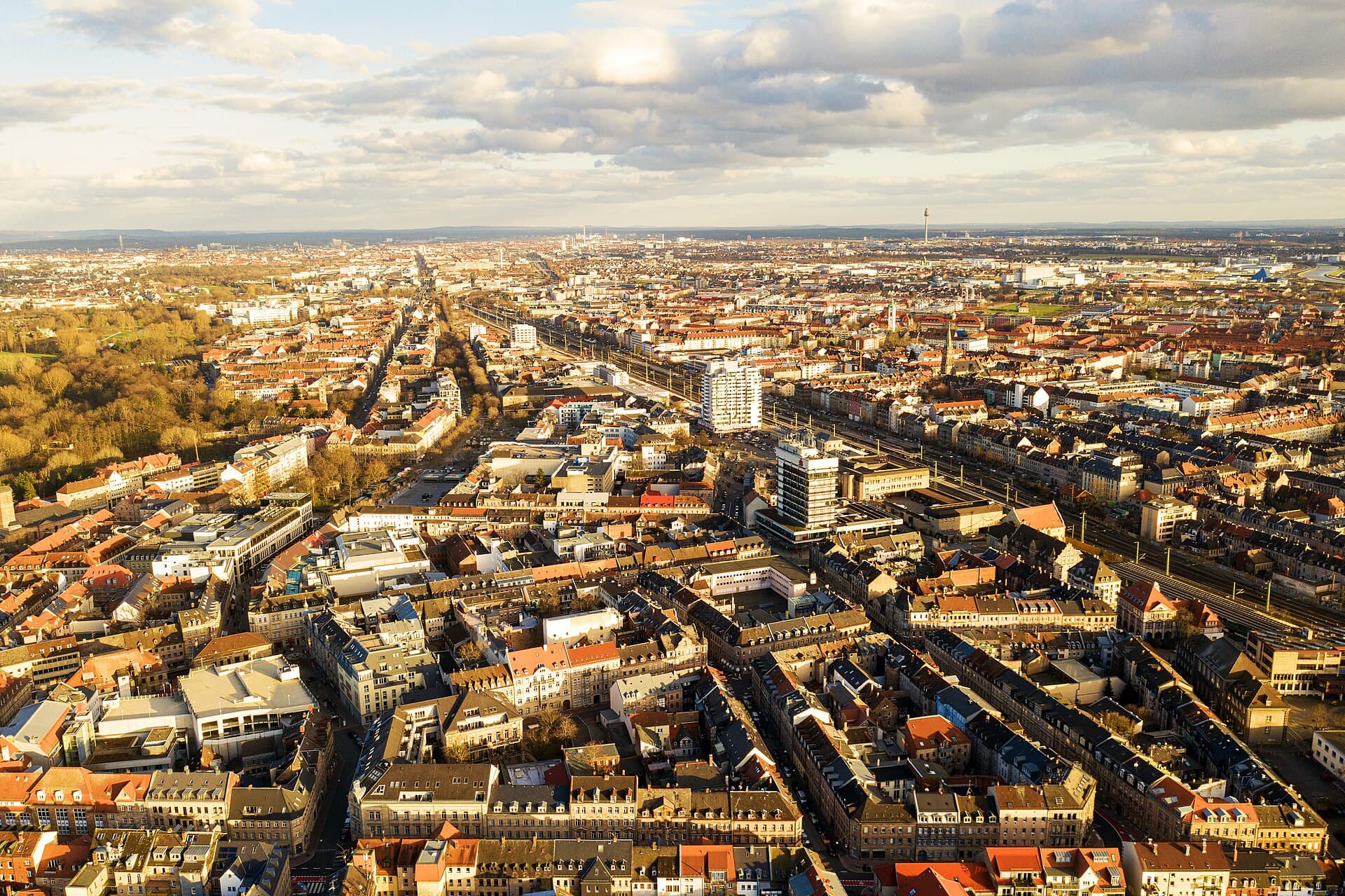 Kamran Salimi / CC BY-SA 3.0, via Wikimedia Commons
Visite audio autoguidée de Fürth — parcours GPS à pied, lecture hors ligne, narration en 32 langues.
“Là où les courants du temps traversent une ville à la grâce intemporelle.”
Pas les cartes postales. Les histoires que même les habitants ignorent — soufflées à l'oreille, là où elles se sont passées.
Le Rathaus de la ville présente une ressemblance frappante avec un célèbre monument italien.
Les habitants ont un nom tendre, presque poétique, pour leur chère étendue de verdure.
Au-delà de ses ruelles accueillantes, une caractéristique architecturale distinctive témoigne de la sagesse pratique de la ville.
Découvrez tous les secrets de Fürth
Chaque adresse, chaque révélation en entier — dans ton oreille, là où elle s'est passée.
Tu choisis tes lieux. Tu marches. La voix te révèle ce que les autres ignorent.


Votre visite audioguidée de Fürth vous attend — choisissez vos lieux, votre langue, et lancez-vous dès votre arrivée.
AcheterLume intègre un guide en réalité augmentée. Levez votre téléphone : sa caméra montre la rue devant vous, avec une flèche lumineuse posée sur l'image réelle qui pointe toujours vers votre prochain arrêt — aucune carte à déchiffrer, aucun mauvais virage. Comme tout dans Lume, ça fonctionne entièrement hors-ligne.
Fürth, une ville de Bavière, en Allemagne, est un lieu où des siècles d'expérience humaine s'entremêlent avec un présent animé. Située au confluent des rivières Rednitz et Pegnitz, qui convergent pour former la Regnitz, Fürth est souvent connue sous le nom de « Ville du trèfle », en référence à son blason. Bien que parfois dans l'ombre de sa voisine plus grande, Nuremberg, Fürth possède un caractère distinct et un riche héritage qui remonte à plus d'un millénaire, avec sa première documentation en 1007.
La ville abrite une remarquable concentration de bâtiments historiques, présentant des ensembles architecturaux bien conservés, des habitations en grès, des structures à colombages et de majestueux boulevards. Son dévouement à la tolérance et à la coexistence ouverte traverse son passé, particulièrement évident dans son important héritage juif, qui lui a valu autrefois la désignation de « Jérusalem franconienne ». Aujourd'hui, Fürth offre un mélange d'expériences culturelles, de sa scène de pubs animée à ses espaces verts et ses musées.
La situation stratégique de Fürth au confluent des rivières a joué un rôle essentiel dans sa croissance précoce en tant que poste de commerce. Cet avantage historique, combiné à sa préservation architecturale singulière et à un fort sentiment d'identité locale, fait de Fürth un voyage captivant pour ceux qui cherchent une compréhension plus profonde de la culture franconienne et de l'histoire allemande.
## Du gué fluvial à la Jérusalem franconienne Les origines de Fürth remontent à une implantation franque au milieu du VIIIe siècle, son nom dérivant probablement du mot allemand signifiant « gué », en référence à un passage peu profond de rivière. La première mention officielle de Fürth eut lieu le 1er novembre 1007, lorsque l'empereur Henri II céda sa propriété de Fürth au nouvel évêché de Bamberg.
Initialement dotée de privilèges de marché, Fürth les céda plus tard à Nuremberg sous Henri III, pour les récupérer en 1062. Pendant des siècles, la gouvernance de la ville fut un arrangement complexe, partagé par l'évêché de Bamberg, la principauté d'Ansbach et la ville de Nuremberg. Cette autorité partagée singulière est symbolisée par le trèfle dans le blason de Fürth.
Fürth devint un centre important de la vie juive en Allemagne du Sud, en particulier du XVIIe au début du XIXe siècle. Elle était connue sous le nom de « Jérusalem franconienne » en raison de sa culture juive florissante, de ses érudits éminents et de ses yeshivas, attirant des étudiants de toute l'Europe. La communauté juive établit des synagogues, un hôpital, un bain rituel (mikvé) et un cimetière vénéré, avec des tombes datant du XVIIe siècle. Le premier orphelinat juif d'Allemagne fut fondé à Fürth en 1763. Cependant, ce profond héritage subit des pertes dévastatrices pendant l'Holocauste, avec des synagogues détruites et de nombreux résidents juifs déportés.
En 1835, Fürth joua un rôle crucial dans l'histoire des transports allemands en étant l'une des extrémités de la première ligne de chemin de fer allemande, la Ludwigsbahn, qui la reliait à Nuremberg. Ce chemin de fer à vapeur annonça le début d'une nouvelle ère pour la région. Contrairement à de nombreuses villes allemandes, Fürth subit moins de dommages pendant la Seconde Guerre mondiale, permettant à de nombreux de ses bâtiments historiques, en particulier ceux des XIXe et début du XXe siècles, de rester intacts. Cette préservation contribue à la forte densité de monuments historiques par habitant à Fürth. Parmi les figures notables de Fürth figurent Ludwig Erhard, le « père du miracle économique allemand » et ancien chancelier, et Max Grundig, fondateur de l'entreprise d'électronique.
## Développement moderne Aujourd'hui, Fürth continue d'être une ville qui chérit son passé tout en embrassant le contemporain. L'ancien abattoir abrite désormais le Kulturforum Fürth, un centre culturel pour les concerts, le cabaret et l'art. La ville a également contribué à la technologie solaire, avec des centrales au sol alimentant le réseau en mégawatts d'électricité. Fürth fait partie d'une conurbation avec Nuremberg et Erlangen, de nombreux habitants faisant la navette entre les villes pour le travail et les études.
Fürth présente une collection de sites qui témoignent de son caractère unique. L'Hôtel de Ville de Fürth est un monument emblématique, sa tour s'inspirant du Palazzo Vecchio de Florence. Pour une fenêtre sur le passé de la ville, explorez le Musée Juif de Franconie, situé dans une maison familiale juive du XVIIe siècle, avec un mikvé et une soucca. Le musée raconte l'histoire de la culture juive franconienne, qui fit autrefois de Fürth un point focal religieux dans le sud de l'Allemagne.
Promenez-vous le long de la Gustavstraße dans la vieille ville, une rue reconnue pour son architecture variée, présentant des maisons de ville des XVIIIe et XIXe siècles, et un lieu prisé pour les cafés et les pubs. La Hornschuchpromenade et la Königswarterstraße forment un remarquable ensemble architectural de styles historiciste et Art nouveau, reflétant l'opulence de leurs anciens occupants. Le Parc Municipal de Fürth offre un sanctuaire verdoyant avec des roseraies, des fontaines et une scène en plein air, souvent appelé « l'amour secret de Fürth ». Ne manquez pas l'Église Saint-Michel, le plus ancien bâtiment de la ville et un repère de la vieille ville de Fürth. Pour un aperçu de la vie locale, visitez le Marché de Fürth, un centre animé pour les produits régionaux et un lieu pour s'imprégner de l'atmosphère de la ville.
Le temps le plus agréable à Fürth se manifeste généralement de mai à septembre, avec des températures confortables allant de 20°C à 25°C. Juillet est souvent le mois le plus chaud, avec des maximales moyennes d'environ 25°C. Cette période offre un équilibre favorable entre jours ensoleillés et pluvieux, ce qui en fait un excellent moment pour les activités de plein air et l'exploration. Pour ceux qui souhaitent éviter les foules et potentiellement trouver de meilleures offres, les saisons intermédiaires du printemps et du début de l'automne sont recommandées. L'hiver offre une expérience plus calme, bien qu'avec des températures plus froides.
Fürth est facilement accessible en voiture via l'A73. La ville bénéficie d'excellentes liaisons ferroviaires, avec des services directs de S-Bahn, Regionalbahn et Regional-Express, et même quelques services Intercity et InterCity Express. La première ligne de chemin de fer allemande reliait Fürth et Nuremberg en 1835. Pour les voyages depuis Nuremberg, la ligne de métro U1 offre une liaison pratique. L'aéroport le plus proche est Nuremberg (NUE).
Le Centre d'Information Touristique de Fürth, situé Bahnhofplatz 9, fournit des conseils personnalisés sur les sites, l'histoire de la ville, les excursions et les recommandations d'hôtels. Ils proposent également des détails sur les visites guidées de la ville et la Nürnberg Card + Fürth pour des réductions dans la région. Le centre est ouvert du lundi au vendredi de 9h à 17h et le samedi de 9h à 13h.
Fürth en coréen, en chinois ou en hébreu — et dans 29 autres langues, chaque étape narrée par une voix native. La plus large gamme de langues de tous les audioguides autoguidés.
Disponible en :