Elkano Restaurant
The Michelin-starred Elkano is renowned for its grilled turbot, but its culinary revolution began with a cut of fish once considered scraps.
Full story unlocks in the tour
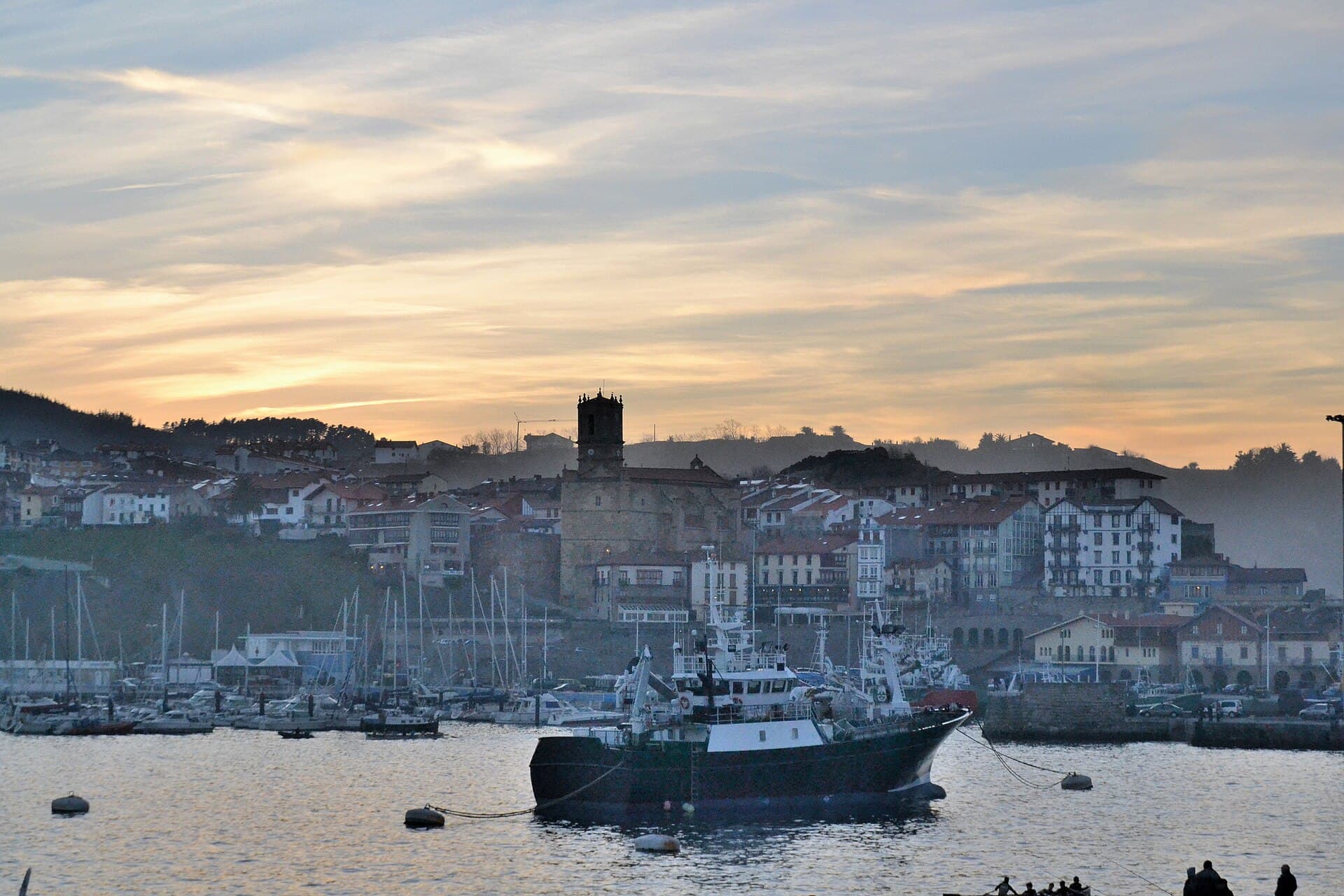 Euskalduna / CC BY 3.0, via Wikimedia Commons
Self-guided audio walking tour of Getaria — GPS route, offline playback, story-driven narration in 32 languages.
“Where the scent of the sea meets haute couture.”
Not the postcards. The stories even locals don't know — whispered in your ear, right where they happened.
The Michelin-starred Elkano is renowned for its grilled turbot, but its culinary revolution began with a cut of fish once considered scraps.
Beneath Getaria's Church of San Salvador lies a medieval passageway that served a surprising dual purpose.
The distinctive 'Mouse of Getaria' wasn't always connected to the mainland.
Discover every secret of Getaria
Every address, every reveal in full — in your ear, right where it happened.
You pick your stops. You walk. The voice reveals what the others miss.


Your self-guided audio tour of Getaria is ready — pick your landmarks, choose your language, and start the moment you arrive.
BuyLume has a built-in augmented-reality guide. Hold your phone up and its camera shows the street ahead of you, with a glowing arrow laid over the real view that always points to your next stop — no map to puzzle over, no wrong turns. Like everything in Lume, it works fully offline.
Along the Urola coast of Spain's Basque Country, Getaria unfolds as a fishing village where maritime tradition gracefully intertwines with cultural sophistication. Its historic quarter, with narrow, winding streets and traditional Basque homes, rests between the mainland and the distinctive Mount San Antón, affectionately known as the 'Mouse of Getaria' for its unique silhouette.
Getaria is celebrated as the birthplace of two remarkable figures: Juan Sebastián Elcano, the first to circumnavigate the globe, and Cristóbal Balenciaga, a revolutionary haute couture fashion designer. The town's active fishing port remains a central hub, influencing its acclaimed gastronomy, particularly its grilled fish, and the production of its crisp, lightly sparkling Txakoli white wine.
Beyond its historical and culinary allure, Getaria offers compelling coastal scenery, from inviting beaches to hills blanketed with vineyards. It is a place where the fresh scent of the sea mingles with the aroma of grilling seafood, inviting travelers to explore its deep heritage and natural beauty.
## From Roman Cannery to Medieval Port Getaria's origins extend into antiquity, with archaeological evidence suggesting its name, possibly derived from the Latin 'cetaria,' refers to a place for preserving fish, indicating Roman fish canneries once operated here. The town was formally established between 1180 and 1194 by King Sancho VI of Navarre, making it one of the oldest towns in the Gipuzkoa province. Its strategic coastal location meant that the expansion and control of Cantabrian ports were vital for the Kings of Navarre.
Following the Castilian conquest of Gipuzkoa around 1200, King Alfonso VIII of Castile reconfirmed Getaria's charter in 1209, granting it special privileges such as the right to cut timber for shipbuilding and exemption from tolls in Castile and León. Maritime activities were the primary source of income during the Middle Ages, with the port traditionally used for whaling. The town's coat of arms even features a whale, a testament to this historical industry. The last whale caught in nearby waters by local fishermen was brought to Getaria's port in 1878.
## Fortifications and Conflicts By the 15th century, the natural harbor formed by Mount San Antón was no longer sufficient for the growing maritime trade and fishing fleet. Construction of a more substantial dock began in the mid-15th century, funded by taxes on port trade granted by King John II. This expansion included a breakwater connecting San Antón to the mainland, transforming the island into a peninsula and making Getaria's port a significant refuge for war fleets. The town's defensive capabilities were further enhanced with fortifications, including a 16th-century fortified gate and a 17th-century construction to protect against French invasions.
Getaria faced significant destruction during various conflicts. In 1638, during the Thirty Years' War, a French fleet attacked the Spanish squadron in Getaria's bay, leaving the town in ruins, though the French landing was repelled. Later, during the Peninsular War, French troops occupied Getaria in 1811, causing considerable damage before their departure in 1813. The town was again largely destroyed during the Carlist Wars in 1835. Despite these challenges, Getaria consistently rebuilt, preserving its medieval layout of parallel streets and transversal cantons.
## Birthplace of Giants and Txakoli Getaria is famously the birthplace of two internationally recognized figures. Juan Sebastián Elcano, born in the late 15th century, achieved the first circumnavigation of the world as captain of the Nao Victoria. A monument honoring him stands in the town. Cristóbal Balenciaga, born in 1895, rose from the son of a fisherman and a seamstress to become one of the most influential haute couture designers of the 20th century. His legacy is celebrated at the Cristóbal Balenciaga Museum.
The town is also central to the history of Txakoli wine. While wine production in the Basque Country dates back to Roman times, Txakoli in its current form emerged in the 16th and 17th centuries. The Getariako Txakolina Designation of Origin was established in 1989, ensuring the quality and authenticity of this unique, lightly carbonated white wine, which is primarily made from the Hondarrabi Zuri grape variety grown on the steep, coastal vineyards.
Begin your exploration in Getaria's historic old town, a labyrinth of narrow, winding streets lined with traditional Basque houses. The main thoroughfare, Nagusia Kalea, offers restaurants and shops, but be sure to wander the parallel streets as well.
At the heart of the old town is the Gothic-style Church of San Salvador, notable for its inclined floor and a medieval passageway, the Katrapona, which runs beneath it, connecting the main street to the port. The church, a National Monument, showcases impressive architecture and historical significance.
No visit to Getaria is complete without acknowledging its two famous sons. The Monument to Juan Sebastián Elcano, a fort-like structure, honors the first circumnavigator of the globe. For fashion enthusiasts, the Cristóbal Balenciaga Museum, housed in a modern annex to the historic Aldamar Palace, displays a significant collection of his haute couture creations and offers insights into his life and work.
Walk along the harbor, an active hub where fishing boats bring in the day's catch, and the aroma of grilling fish fills the air from the outdoor grills of local restaurants. Consider a hike up Mount San Antón, known as the 'Mouse of Getaria,' for expansive views of the Basque coast, the town, and the surrounding vineyards. You can also relax on Malkorbe Beach or Gaztetape Beach. For a longer stroll, the pedestrian promenade connecting Getaria to the nearby town of Zarautz offers scenic coastal views.
The best time to visit Getaria for agreeable weather and outdoor activities is from late June to mid-September. During these months, temperatures are warm, averaging highs of 76°F (24°C) in August, and skies are clearer. Late spring (May to June) and early autumn (September to October) also offer pleasant weather with fewer crowds. While December can be chilly with temperatures ranging from 44-54°F (7-12°C), Getaria remains an appealing destination for its cultural and gastronomic offerings. Rainfall is highest in November and lowest in July. The region's weather can be changeable, with mist, sunshine, and clouds often appearing on the same day.
Getaria is approximately 30 kilometers west of San Sebastián and is accessible by car or bus. If driving, be aware that parking can be challenging, especially during local festivals. The town is small, making it easy to explore on foot. Many restaurants line the main street and the port, specializing in grilled fish. During peak season, it is advisable to book a table for lunch, particularly at popular spots like Elkano. The Cristóbal Balenciaga Museum is located at the top of the village, and a free lift is available to reach it. Consider visiting a local Txakoli winery for a tasting experience, as many are open to the public. The local Txakoli wine is a young, slightly sparkling white that pairs well with seafood.
Getaria in Korean, in Chinese or in Hebrew — and 29 more languages, every stop narrated by a native voice. The widest language range of any self-guided audio tour.
Available in: