Guarda Cathedral
Examine the exterior of Guarda's formidable cathedral closely, and you might discover some unexpected figures carved into the stone.
Full story unlocks in the tour
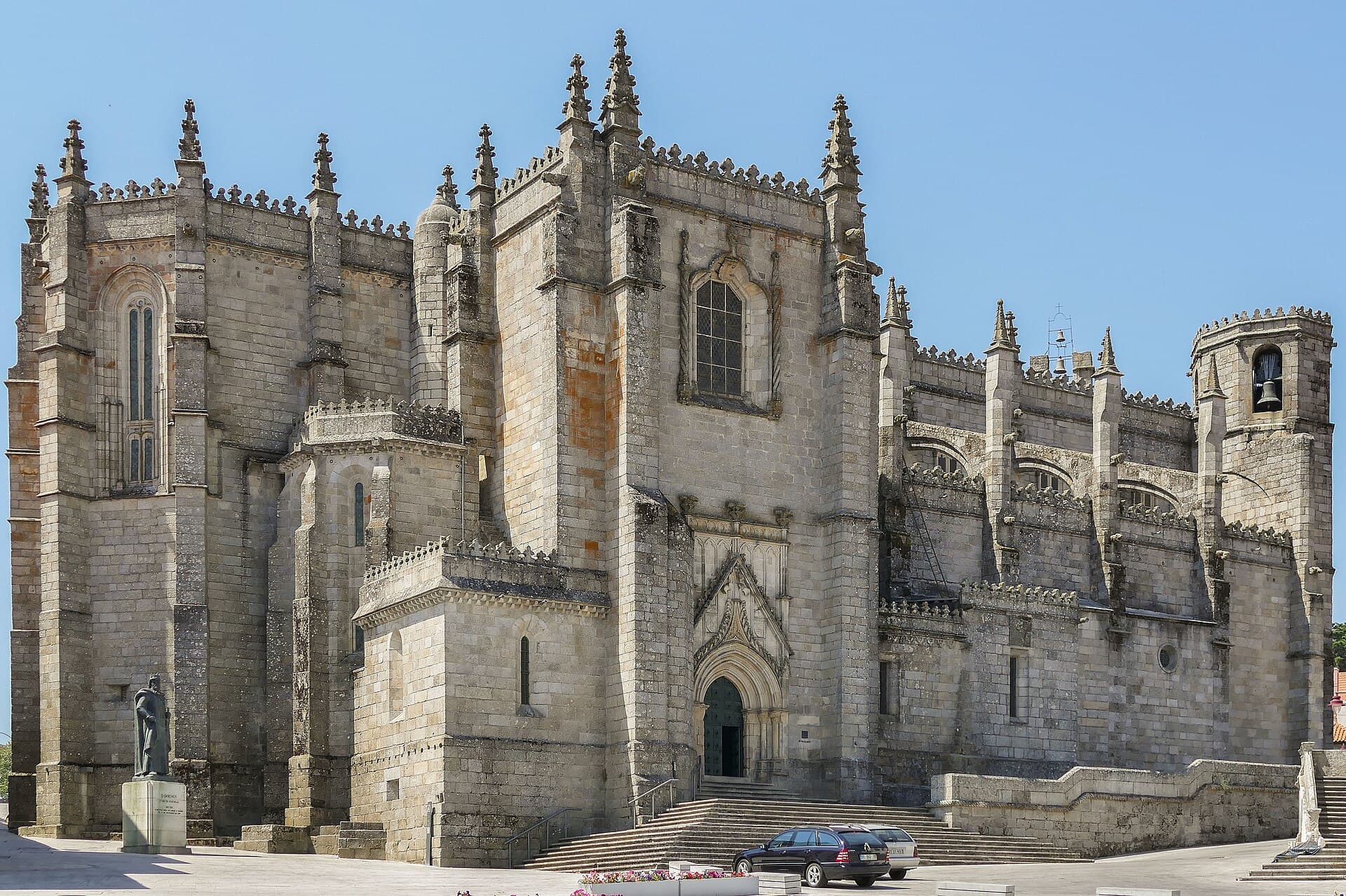 Heigeheige / CC BY-SA 4.0, via Wikimedia Commons
Self-guided audio walking tour of Guarda — GPS route, offline playback, story-driven narration in 32 languages.
“Where granite holds the memory of kings, guardians, and enduring faiths.”
Not the postcards. The stories even locals don't know — whispered in your ear, right where they happened.
Examine the exterior of Guarda's formidable cathedral closely, and you might discover some unexpected figures carved into the stone.
Wander through the narrow lanes of Guarda's old Jewish Quarter, and you may discern subtle symbols etched into the ancient stones, narrating a story of fortitude.
Just beyond the city walls, an unassuming Romanesque chapel safeguards a secret that predates its Christian origins.
Discover every secret of Guarda
Every address, every reveal in full — in your ear, right where it happened.
You pick your stops. You walk. The voice reveals what the others miss.
![Guarda — boats docked near seaside promenade]](/_next/image?url=https%3A%2F%2Fxkitrzghrapdsyyvojzr.supabase.co%2Fstorage%2Fv1%2Fobject%2Fpublic%2Flume-images%2Fcities%2Fguarda-pt-gallery-1.jpg&w=1920&q=75)


Your self-guided audio tour of Guarda is ready — pick your landmarks, choose your language, and start the moment you arrive.
BuyLume has a built-in augmented-reality guide. Hold your phone up and its camera shows the street ahead of you, with a glowing arrow laid over the real view that always points to your next stop — no map to puzzle over, no wrong turns. Like everything in Lume, it works fully offline.
Guarda, Portugal's highest city, stands as a granite sentinel in the heart of the Beiras e Serra da Estrela sub-region. At an elevation of 1,056 meters (3,465 feet), it offers crisp mountain air and expansive views, a stark contrast to the coastal warmth often associated with Portugal. Founded in 1199 by King Sancho I, its very name, meaning 'to guard,' speaks to its historical role as a crucial defensive outpost against invaders, a legacy etched into its formidable architecture and enduring spirit.
This historic city, with a population of approximately 42,000 residents, is a captivating blend of medieval character and rugged natural beauty. Its historic center, characterized by austere granite buildings, invites exploration, revealing layers of history from its Jewish heritage to its royal connections. Beyond the city walls, the dramatic landscapes of the Serra da Estrela mountain range, Portugal's highest, provide a striking backdrop and a space for outdoor enthusiasts.
## From Lusitanian Roots to Royal Stronghold Guarda's history stretches back to pre-Roman times, with evidence of early settlements and the presence of Lusitanian tribes in the region. These tribes, including the Igaeditani, Lancienses Oppidani, and Transcudani, formed a federation that resisted Romanization for two centuries. It's even argued that the ancestral Iron Age town of Castelos Velhos was located where Guarda now stands. The legendary Lusitanian warrior Viriathus, a hero of Portuguese history, may have been born in the nearby 'Herminios Mountains' (Serra da Estrela), and his assassination is believed to have occurred within the current municipality of Guarda.
King Sancho I officially founded Guarda in 1199, recognizing its strategic importance as a border defense against both Moorish invaders and later, the Spanish. This act also bestowed a bishopdom and the construction of the first cathedral. The city's defensive capabilities were further strengthened by subsequent monarchs, including Afonso II and Afonso III, with remnants of these medieval walls and towers still visible today.
Guarda has strong royal connections, serving as a temporary residence for kings throughout the centuries. King Dinis stayed here after his marriage, King Fernando sought its climate for his lung disease, and Afonso V held court in 1465. In the 16th century, King Manuel I renewed the city's charter, and Bishop Nuno de Noronha initiated significant ecclesiastical projects, including the Seminary and the Episcopal Palace, which now houses the Guarda Museum. The city's Jewish community also played a vital role in its development, particularly in crafts like leather tanning, and their presence can still be felt in the well-preserved Jewish Quarter.
The 19th century brought further transformation. After the Napoleonic Wars devastated border regions, Guarda became a district capital in 1835. While its remote location presented challenges, improvements in communication and infrastructure helped foster progress. Today, Guarda remains a city proud of its heritage, where granite buildings and medieval streets tell stories of a resilient past.
Begin your exploration in the Praça Luís de Camões, Guarda's central square, framed by historic granite houses and the imposing Sé Cathedral. This 'stone ship,' a blend of Gothic and Manueline styles, invites you to step inside to admire its soaring naves and the magnificent Renaissance altarpiece by João de Ruão. Do not miss the opportunity to ascend to the cathedral's rooftop for expansive views of the city and surrounding mountains.
From the square, delve into the Old Centre, a labyrinth of narrow, cobbled streets. Look for the remnants of Guarda's medieval defensive walls and its surviving gates, such as the Torre dos Ferreiros and Porta d'El Rei. Adjacent to the walls lies the Judiaria (Jewish Quarter), where you can still discern Hebrew inscriptions and the distinctive architecture of its medieval houses.
The Museu da Guarda, housed in the former Episcopal Palace, offers a chronological journey through the region's cultural history, with artifacts spanning from pre-Roman archaeology to 19th-century paintings. For a glimpse into the city's earliest defenses, visit the Torre de Menagem (Keep), the sole remaining part of the old castle, offering another vantage point over Guarda. Beyond the city center, the Romanesque Capela de Nossa Senhora do Mileu is one of Guarda's oldest religious monuments, with a mysterious past.
Those who appreciate nature should venture to the nearby Serra da Estrela Natural Park, Portugal's highest mountain range, offering striking landscapes, hiking trails, and even the country's only ski resort in winter. The recently opened Mondego Walkways, a 12 km path with suspension bridges within the UNESCO Estrela Geopark, provides an immersive experience in the region's natural splendor.
The best time to visit Guarda is during the shoulder seasons of spring (May-June) and autumn (September-October). During these months, temperatures are mild and pleasant, ideal for exploring the city and its natural surroundings, and the crowds are generally thinner.
Summer (July-August) can be warm, with daytime highs often exceeding 30°C (86°F), though the mountain air can offer some respite. Winter (December-February) is characterized by cooler temperatures, with average lows around 2-3°C (36-37°F) and the possibility of snow, especially in the nearby Serra da Estrela, making it suitable for winter sports enthusiasts.
Guarda is accessible by both train and bus. While the train station is about 3 km north of the city center, a connecting bus meets major trains. The bus station is more centrally located, approximately 400 meters southeast of the cathedral. If you plan to explore the surrounding villages and the Serra da Estrela, renting a car is highly recommended.
Within the historic center, comfortable walking shoes are essential as you'll navigate cobbled streets, which can become slippery in the rain. Guarda's altitude means it experiences more extreme weather than coastal areas, so pack layers, especially if visiting outside of peak summer.
For accommodation, options range from charming guesthouses in the main square to more modern hotels. The city is also known for its local products, so be sure to explore the shops around Praça Luís de Camões for regional handicrafts, cheese, and wine.
Guarda in Korean, in Chinese or in Hebrew — and 29 more languages, every stop narrated by a native voice. The widest language range of any self-guided audio tour.
Available in: