Hasanamba Temple
The primary deity of Hassan is said to be a smiling goddess, yet her temple opens for only a brief period each year. What transpires within its walls during the other 350-plus days?
Full story unlocks in the tour
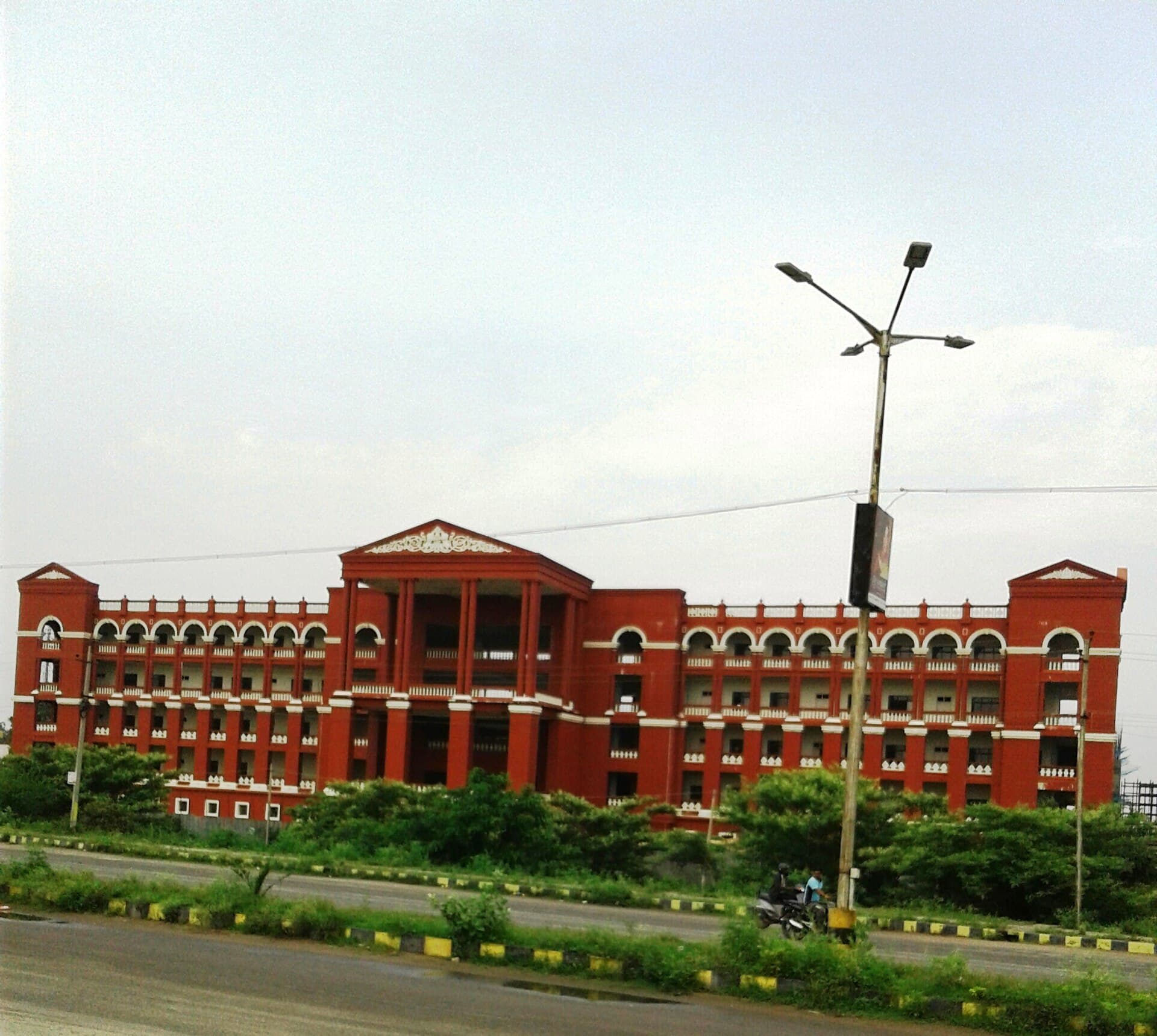 Prof tpms / CC BY-SA 4.0, via Wikimedia Commons
Self-guided audio walking tour of Hassan — GPS route, offline playback, story-driven narration in 32 languages.
“Where ancient stones hum with the echoes of empires and the grace of smiling goddesses.”
Not the postcards. The stories even locals don't know — whispered in your ear, right where they happened.
The primary deity of Hassan is said to be a smiling goddess, yet her temple opens for only a brief period each year. What transpires within its walls during the other 350-plus days?
A Gothic church near Hassan vanishes and reappears with the changing seasons. How does a structure become a 'floating church'?
A historic pond near Hassan features steps descending into clear water, with local lore connecting it to a protective tiger and celestial alignments.
Discover every secret of Hassan
Every address, every reveal in full — in your ear, right where it happened.
You pick your stops. You walk. The voice reveals what the others miss.


Your self-guided audio tour of Hassan is ready — pick your landmarks, choose your language, and start the moment you arrive.
BuyLume has a built-in augmented-reality guide. Hold your phone up and its camera shows the street ahead of you, with a glowing arrow laid over the real view that always points to your next stop — no map to puzzle over, no wrong turns. Like everything in Lume, it works fully offline.
Hassan, a city in the southwestern Indian state of Karnataka, serves as a captivating threshold to a bygone era of artistic brilliance and spiritual devotion. Named after the benevolent goddess Hasanamba, the city and its surrounding district are a trove of architectural wonders, primarily from the Hoysala Empire. Situated at an elevation of approximately 950 meters, Hassan offers a pleasant climate and a tranquil atmosphere, making it an ideal base for exploring the profound cultural heritage of the region.
Beyond its role as a historical center, Hassan is also a land of varied landscapes, from gently undulating plains that slope into the Western Ghats to sprawling coffee estates. This convergence of historical significance, natural splendor, and a lively local culture, where ancient traditions gracefully coexist with modern life, makes Hassan a compelling destination for history enthusiasts, spiritual seekers, and nature lovers alike.
The history of Hassan stretches over two millennia, with its earliest known connections tracing back to the mighty Mauryan Empire in the 3rd century BCE. During this period, Jainism arrived in the region with the sage Bhadrabahu and his disciple, Emperor Chandragupta Maurya, who is believed to have spent his final days at Shravanabelagola, underscoring the early and significant influence of Jainism in the area.
Following the Mauryans, the Western Ganga Dynasty of Talkad governed Hassan from 350 to 999 CE, establishing it as a pivotal region. Shravanabelagola, in particular, gained prominence as a religious center during this era. However, it was with the ascent of the Hoysala Empire in the 11th century that Hassan truly entered its golden age. The Hoysalas, originating from Angadi, made Hassan District the heartland of their empire, with Belur serving as their early capital and Halebidu (Dwarasamudra) as the later capital. For over three centuries, from 1000 to 1334 CE, the Hoysalas ruled large parts of South India, reaching their zenith under kings like Vishnuvardhana.
The Hoysala period left an enduring mark on Hassan, most notably through its distinctive temple architecture. These kings were prolific patrons of art and culture, commissioning magnificent temples characterized by intricate stone carvings that recount stories from Hindu mythology. After the decline of the Hoysala Empire, Hassan came under the control of the Vijayanagar kings, followed by the Adilshahis of Bijapur and the Mughal Empire. In the 17th and 18th centuries, it became a contested territory between the Keladi Nayakas of Shimoga and the Mysore Kingdom, eventually merging into the independent Mysore Kingdom. The British colonial period also added to the region's architectural diversity, exemplified by structures like the Gothic-style Shettihalli Rosary Church. Today, Hassan remains a lively testament to this layered history, a place where ancient traditions and architectural wonders continue to draw visitors.
Hassan and its environs are an expansive open-air museum of South Indian history and architecture. A crucial visit is the Hasanamba Temple, the city's namesake, known for its singular annual opening during Diwali. Nearby, the Shettihalli Rosary Church presents a hauntingly beautiful scene, especially during the monsoon when its Gothic ruins are partially immersed in the Hemavathi backwaters, earning it the moniker 'floating church.'
The district is known as the 'gateway to Hoysala architecture,' with the splendid Chennakesava Temple in Belur and the Hoysaleswara Temple in Halebidu standing as prime examples of this intricate style. These 12th-century temples are celebrated for their detailed carvings and sculptural brilliance. For a profound spiritual experience, Shravanabelagola is home to the colossal 58-foot monolithic statue of Lord Bahubali (Gommateshwara), a major Jain pilgrimage site.
Beyond these iconic sites, discover the less-frequented Mavanuru Malleswara Temple, or 'Windmill Temple,' offering peaceful views amidst windmills. The star-shaped Manjarabad Fort, constructed by Tipu Sultan, provides historical intrigue and expansive vistas of the Western Ghats. Do not overlook the Doddagaddavalli Lakshmi Devi Temple, considered the first Hoysala temple, and the twin temples of Nageshwara and Chennakesava in Mosale, believed to be prototypes for the grander Hoysala structures. For those who appreciate nature, Bisle Ghat offers rich biodiversity and striking landscapes.
The ideal time to visit Hassan is during the cooler, drier months from October to February. Temperatures during this peak season range from a pleasant 15°C to 28°C, perfect for exploring the many temples and natural attractions.
The monsoon season, from June to September, brings moderate to heavy rainfall, transforming the landscape into a verdant paradise. While some outdoor activities might be limited, it is a beautiful time to witness waterfalls at their fullest and enjoy the singular charm of the 'floating church.' Summers, from March to May, can be warm and dry, with temperatures reaching 30-38°C. However, this is when the Shettihalli Church is fully visible as the reservoir water recedes.
Hassan is well-connected by road and rail. Regular KSRTC buses and private coaches operate from major cities like Bangalore (180 km) and Mysore (50 km). Hassan Junction is a significant railway station with connections to Bangalore, Mysore, and Mangalore. The nearest airports are Mysore (115 km) and Bangalore (200 km), both offering taxi and bus services to Hassan.
Within Hassan, auto-rickshaws, taxis, and local KSRTC buses are readily available. For exploring the surrounding temples, securing a taxi for the day is recommended. Accommodation options span from budget hotels to luxury resorts. While Kannada is the primary language, Hindi, English, and Tamil are understood in tourist areas. Dress modestly when visiting temples, and remember to remove footwear before entering sanctums. Carrying cash is advisable for smaller establishments.
Hassan in Korean, in Chinese or in Hebrew — and 29 more languages, every stop narrated by a native voice. The widest language range of any self-guided audio tour.
Available in: