Fiume Nagara
I maestri di pesca con cormorani lungo il fiume Nagara detengono un titolo ereditario unico.
La storia completa si sblocca nel tour
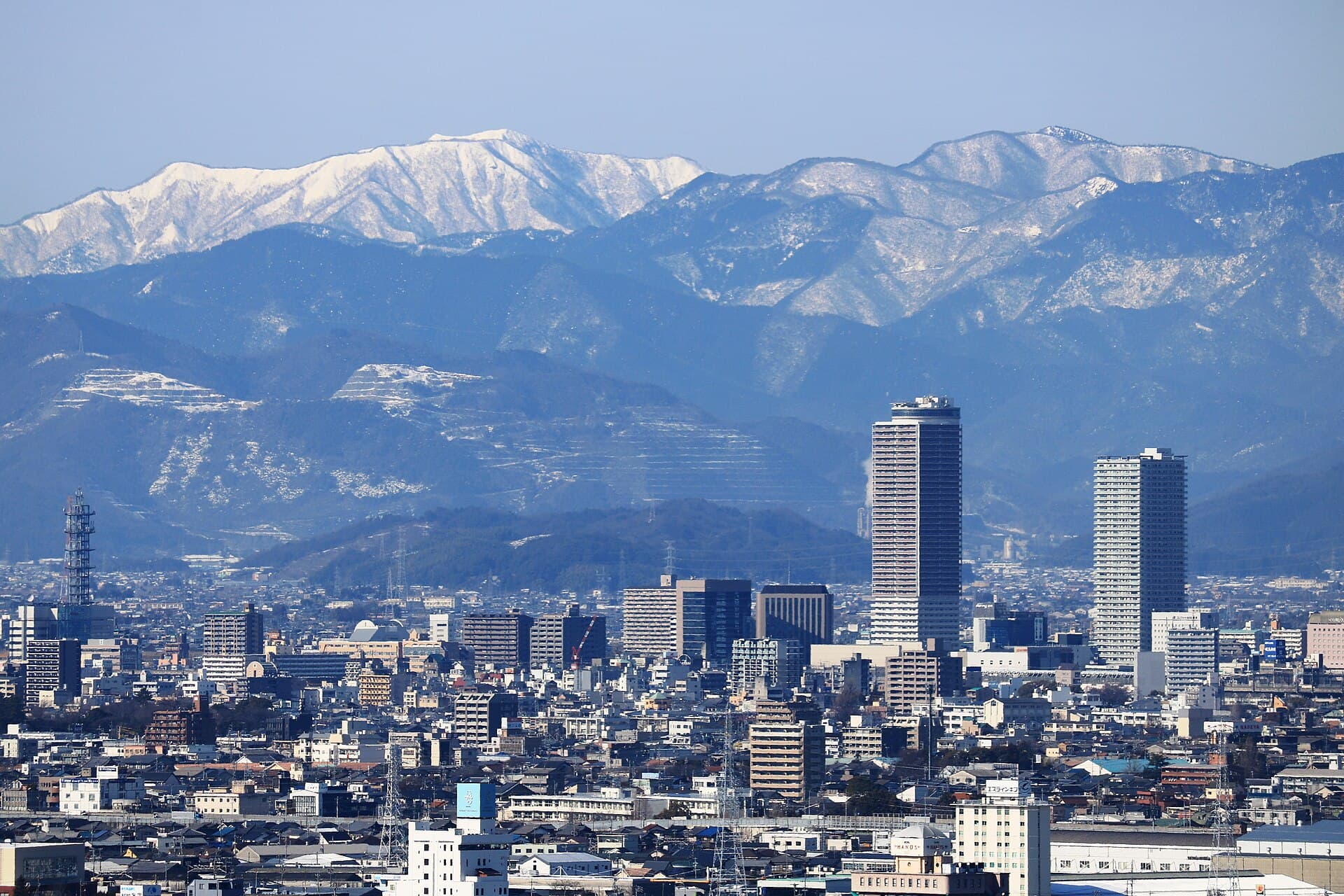 Alpsdake / CC BY-SA 4.0, via Wikimedia Commons
Tour audio autoguidato di Gifu — percorso GPS a piedi, riproduzione offline, narrazione coinvolgente in 32 lingue.
“Dove antiche tradizioni incontrano l'ambizione dei signori della guerra, Gifu chiama dal cuore del Giappone.”
Non le cartoline. Le storie che nemmeno i locali conoscono — sussurrate nel tuo orecchio, proprio dove sono accadute.
I maestri di pesca con cormorani lungo il fiume Nagara detengono un titolo ereditario unico.
A differenza di altri famosi Buddha giapponesi, il Grande Buddha di Gifu ha una sorprendente struttura interna.
L'ampio Parco di Gifu, alla base del Monte Kinka, era un tempo la lussuosa residenza di un signore della guerra.
Scopri ogni segreto di Gifu
Ogni indirizzo, ogni rivelazione completa — nel tuo orecchio, proprio dove è accaduta.
Scegli le tue tappe. Cammini. La voce rivela ciò che gli altri perdono.


Il tuo tour audio autoguidato di Gifu è pronto — scegli i tuoi punti di interesse, seleziona la tua lingua e inizia nel momento in cui arrivi.
AcquistaLume include una guida in realtà aumentata. Alza il telefono: la fotocamera mostra la strada davanti a te, con una freccia luminosa sovrapposta all'immagine reale che punta sempre verso la tua prossima tappa — nessuna mappa da decifrare, nessuna svolta sbagliata. Come tutto in Lume, funziona completamente offline.
Gifu City, the capital of Gifu Prefecture, occupies a strategically significant position in the south-central part of Japan's Honshu island. Its location has historically made it a pivotal point for those seeking to unify the nation. Today, Gifu offers a blend of deep natural beauty, traditional culture, and historical intrigue, making it an appealing destination for travelers looking to explore beyond Japan's more crowded cities.
Surrounded by mountains and bisected by the Nagara River, Gifu is a place where ancient customs, like the 1,300-year-old tradition of cormorant fishing, continue to thrive. The city is also a gateway to other regional highlights, including the UNESCO World Heritage site of Shirakawa-go and the historic town of Takayama.
Gifu's historical significance stems from its central location in Japan, making it a crucial crossroads and a coveted territory for unification. The area, once part of the Mino Province, was controlled by the Toki clan for over 200 years. However, during the turbulent Sengoku period (15th to 17th century), Saitō Dōsan, a Toki vassal, rebelled and seized control in 1542, establishing Inabayama Castle atop Mount Inaba (now Mount Kinka).
In 1567, the renowned warlord Oda Nobunaga conquered Inabayama Castle, renaming it Gifu Castle and the surrounding area to Gifu. He adopted the red seal of "Tenka Fubu," signifying his ambition to unify Japan by military force, and made Gifu his primary base. Nobunaga transformed the castle into an impressive stronghold and used it to entertain distinguished guests. After Nobunaga, the castle was held by various lords before being abandoned and later rebuilt as Kano Castle during the Edo period.
In the middle of the Meiji period, Gifu was officially established as a city on July 1, 1889, with an initial population of 25,750 people. Just two years later, in October 1891, the devastating Mino-Owari earthquake, estimated at an 8.0 magnitude, struck the region. The earthquake and subsequent fires destroyed a significant portion of the city, causing 1,505 casualties. Despite this setback, Gifu continued to develop, becoming an industrial center in the 1930s and a hub for traditional industries such as Mino washi paper, Gifu lanterns, and Seki cutlery.
Gifu offers a range of experiences, from historic landmarks to unique cultural practices. Gifu Castle, crowning Mount Kinka, is a reconstructed fortress offering sweeping views of the city and the Nagara River. It houses a museum with samurai armor and historical artifacts. Visitors can reach the castle via a ropeway from Gifu Park or by hiking one of several trails. Gifu Park, at the base of Mount Kinka, is a significant historical site, believed to be the former residence of Oda Nobunaga. It features traditional Japanese gardens and the Gifu City Museum of History.
One of Gifu's most distinctive attractions is the traditional cormorant fishing (Ukai) on the Nagara River. This ancient practice, with a history spanning over 1,300 years, involves skilled fishermen using trained cormorants to catch ayu (sweetfish) at night under torchlight. Viewing boats offer a close-up experience of this unique spectacle, which runs from May 11 to October 15. The Nagaragawa Ukai Museum provides further insight into the history and techniques of cormorant fishing.
For a moment of quiet contemplation, visit Shōhō-ji Temple to see the Gifu Great Buddha. This impressive 13.7-meter-tall statue, completed in 1832, is one of Japan's three great Buddha statues and is notable for its unique construction using a ginkgo wood pillar, bamboo lattices, clay, Buddhist scriptures, lacquer, and gold leaf.
The ideal times to visit Gifu are late April to May and October to early November. During these shoulder seasons, temperatures are mild, and crowds are generally lighter. Late April to May offers comfortable sightseeing conditions and marks the beginning of the Nagara River cormorant fishing season. October to early November is perfect for experiencing lively autumn foliage around Gifu Castle and Mount Kinka. While summer (June to September) offers peak cormorant fishing viewings, Gifu City's basin can experience high temperatures and humidity.
Gifu is easily accessible by train. From Nagoya, a major hub, Gifu City is a 20-minute train ride on the JR Tokaido Line. The Chubu Centrair International Airport also offers convenient access to southern Gifu, with a Meitetsu Limited Express train reaching Gifu City in about an hour. Public transportation within Gifu includes a bus network that connects key attractions from JR Gifu Station. For exploring the wider Gifu Prefecture, particularly more rural areas, renting a car is highly recommended for greater flexibility.
Many smaller restaurants and shops in Gifu may only accept cash, so it's advisable to carry Japanese Yen. ATMs that accept foreign cards are readily available at 7-Eleven convenience stores. When visiting temples or traditional sites, it's customary to remove shoes before entering certain areas. Public restrooms are generally clean and plentiful, but carrying your own soap and a small towel is a good practice, as these may not always be provided in rural areas.
Gifu — coreano, cinese, ebraico e altre 29 lingue, ogni tappa narrata da una voce madrelingua. La più ampia scelta di lingue tra i tour audio autoguidati.
Disponibile in: