Kamouraska Quay
The sunsets here are legendary, drawing crowds nightly. Yet, there is a particular cadence to truly experiencing their magic.
Full story unlocks in the tour
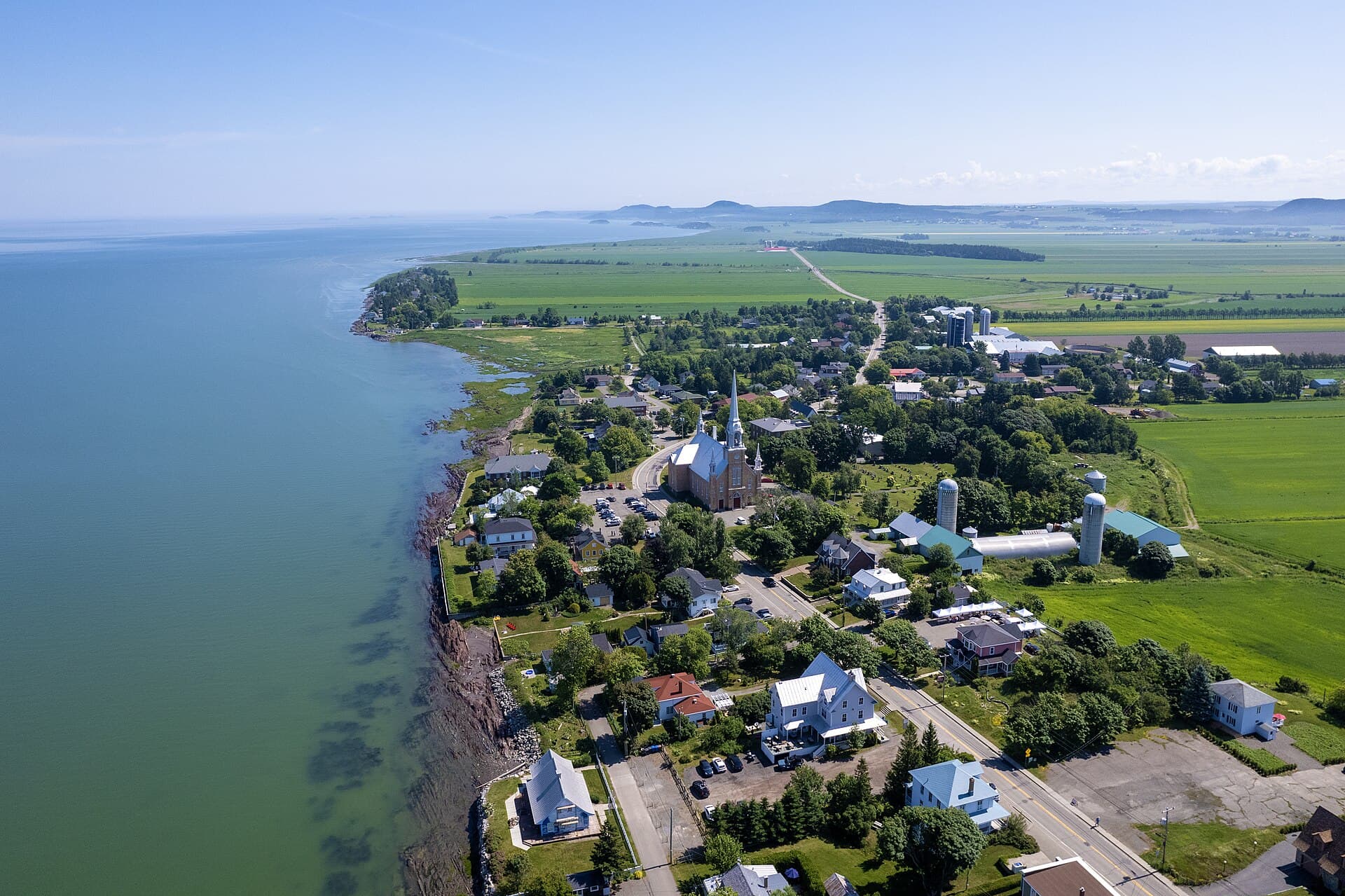 Gabriel Picard / CC BY-SA 4.0, via Wikimedia Commons
Self-guided audio walking tour of Kamouraska — GPS route, offline playback, story-driven narration in 32 languages.
“Where the St. Lawrence River meets timeless charm.”
Not the postcards. The stories even locals don't know — whispered in your ear, right where they happened.
The sunsets here are legendary, drawing crowds nightly. Yet, there is a particular cadence to truly experiencing their magic.
This regional museum, housed in a former convent, tells stories that extend beyond local history.
The name "Kamouraska" carries a poetic meaning, deeply rooted in its natural landscape.
Discover every secret of Kamouraska
Every address, every reveal in full — in your ear, right where it happened.
You pick your stops. You walk. The voice reveals what the others miss.


Your self-guided audio tour of Kamouraska is ready — pick your landmarks, choose your language, and start the moment you arrive.
BuyLume has a built-in augmented-reality guide. Hold your phone up and its camera shows the street ahead of you, with a glowing arrow laid over the real view that always points to your next stop — no map to puzzle over, no wrong turns. Like everything in Lume, it works fully offline.
Kamouraska, a picturesque village on the south shore of the Saint Lawrence River in Quebec, Canada, is celebrated for its unique coastal vistas and tranquil atmosphere. Its location, where the vast river estuary meets the Laurentian Mountains, creates a dramatic backdrop, especially as dusk settles.
Recognized as one of Quebec's most beautiful villages, Kamouraska offers a blend of natural splendor, historic architecture, and a thriving arts and culinary scene. The village's allure lies in its well-preserved traditional houses, art galleries, and local boutiques. It serves as a gateway to the Bas-Saint-Laurent region, attracting visitors with its serene landscapes and opportunities for outdoor activities along the St. Lawrence River.
The history of Kamouraska stretches back to 1674 when the seigneury of Kamouraska was granted to Olivier Morel de la Durantaye. French colonists began settling the area in the late 17th century, with the parish of Saint-Louis founded in 1714. By the 18th century, Kamouraska had grown to be one of the largest settlements on the South Shore of the St. Lawrence.
In the early 19th century, the seigneury was owned by the influential Taché family, which included Sir Étienne-Paschal Taché, a future prime minister of the Province of Canada. The region prospered through agriculture, earning the moniker "the granary of Lower Canada." A significant legal milestone occurred in 1849 with the establishment of the first superior court outside Québec City in Kamouraska. Incorporated as a village in 1858, Kamouraska became a prominent tourist destination in the 19th and early 20th centuries, drawing visitors to enjoy its natural beauty, saline air, and sea bathing.
While the arrival of the railway later shifted some commercial influence to towns like Saint-Pascal and Rivière-du-Loup, Kamouraska maintained its identity. The village's past is also intertwined with a notable literary work; Anne Hébert's novel Kamouraska recounts tragic events that occurred in the area in 1839. Today, the legacy of its builders continues to shape the region's identity, with its preserved architecture and flourishing agriculture and tourism sectors. The municipality of Kamouraska, as it exists today, was formed in 1987 through the merger of the village of Kamouraska and Saint-Louis-de-Kamouraska.
Kamouraska offers a variety of attractions that highlight its natural beauty, history, and artistic flair. The village is renowned for its unique coastal vistas, featuring imposing cabourons (monadnocks) and expansive agricultural panoramas. A walk along the shoreline provides views of eel fishing nets anchored on the foreshore and the Kamouraska archipelago.
For those interested in history and culture, the Musée régional de Kamouraska, housed in an old convent, offers insights into local history through artifacts and anecdotes. The Centre d'art de Kamouraska, located in the former courthouse, showcases the region's artistic talent. The village also presents numerous art galleries and craft boutiques.
Outdoor enthusiasts can explore walking trails along the coastal plain, such as those at Parc de l'Ancien-Quai (Old Wharf Park). Kayak and zodiac trips on the St. Lawrence River are popular, as are picnics on the beach. Do not miss the opportunity to witness the spectacular sunsets over the St. Lawrence River from the Kamouraska Quay, a cherished local experience. The region is also known for its local products, including eel, wild mushrooms, and glasswort, which can be sampled at local restaurants and the public market.
The ideal time to visit Kamouraska is during the summer months, from June to August, when temperatures are comfortable, averaging around 20°C to 22°C (68°F to 72°F). This period is perfect for outdoor activities like kayaking, hiking, and enjoying the beaches. September and October also offer pleasant visits, with mild temperatures (3°C to 11°C or 38°F to 51°F) and the added beauty of autumn foliage, fewer crowds, and opportunities to observe migratory birds. While winter is more rigorous, with temperatures ranging from -6°C to -14°C (21°F to 7°F), it presents a serene landscape for a tranquil stay.
Kamouraska is located approximately 125 km northeast of Québec City. The most convenient way to reach Kamouraska is by car, via Autoroute 20 (exits 439 or 443) or the scenic Route 132 which runs through the village along the river. Car rentals are available from Québec City, which is about 132 km away. While Kamouraska does not have its own airport, Québec City (YQB) is the most popular nearby airport, with flights from various airlines. Intercity bus services, such as Orléans Express, also serve the villages of Kamouraska along Route 132.
Once in Kamouraska, the village center is easily explored on foot. For venturing further to neighboring villages like Saint-Pascal or La Pocatière, a car is the most practical option. Bicycle rentals, including electric bikes, are also available for exploring the Route Verte and surrounding areas. Visitors should be aware that mosquitoes can be particularly aggressive in the salt marshes during humid summer conditions.
Kamouraska in Korean, in Chinese or in Hebrew — and 29 more languages, every stop narrated by a native voice. The widest language range of any self-guided audio tour.
Available in: