Charles Fort
Beyond its grand ramparts and sea views, Charles Fort holds a chilling tale of a heartbroken bride.
Full story unlocks in the tour
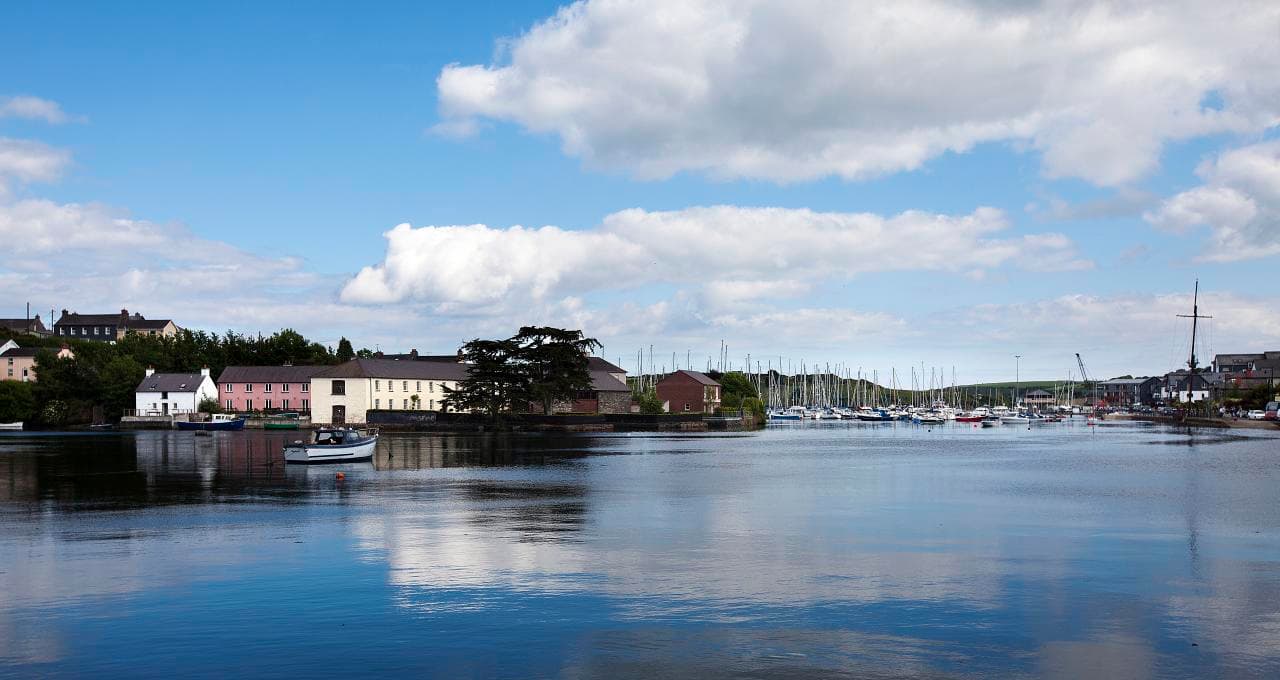 Christopher Michel / CC BY 2.0, via Wikimedia Commons
Self-guided audio walking tour of Kinsale — GPS route, offline playback, story-driven narration in 32 languages.
“Where Atlantic breezes carry the scent of salt and ancient stories.”
Not the postcards. The stories even locals don't know — whispered in your ear, right where they happened.
Beyond its grand ramparts and sea views, Charles Fort holds a chilling tale of a heartbroken bride.
Kinsale is known as Ireland's 'Gourmet Capital,' yet this culinary standing was not always assured.
The calm waters of Kinsale Harbour conceal a surprising detail about the town's very foundation.
Discover every secret of Kinsale
Every address, every reveal in full — in your ear, right where it happened.
You pick your stops. You walk. The voice reveals what the others miss.


Your self-guided audio tour of Kinsale is ready — pick your landmarks, choose your language, and start the moment you arrive.
BuyLume has a built-in augmented-reality guide. Hold your phone up and its camera shows the street ahead of you, with a glowing arrow laid over the real view that always points to your next stop — no map to puzzle over, no wrong turns. Like everything in Lume, it works fully offline.
Kinsale, a historic port and fishing town in County Cork, Ireland, offers a captivating blend of vivid colors, deep history, and a celebrated culinary landscape. Situated at the mouth of the River Bandon where it meets the Atlantic Ocean, Kinsale is often considered the starting point of the Wild Atlantic Way, a scenic coastal route stretching along Ireland's west coast. Its narrow, winding streets are lined with brightly painted shops, galleries, and historic buildings, creating a picturesque setting that draws both Irish and international visitors.
Beyond its aesthetic appeal, Kinsale is known as the 'Gourmet Capital of Ireland,' a title earned through its dedication to fresh, local ingredients and a diverse range of eateries. The town's maritime heritage is evident in its active harbor, filled with fishing vessels and sailboats, and its strategic location has played a central role in significant historical events. This combination of natural beauty, historical depth, and culinary excellence makes Kinsale a compelling destination for those seeking an authentic Irish experience.
Kinsale's origins trace back to the medieval era, serving as an active trading port. The Anglo-Normans, recognizing the strategic advantages of its sheltered harbor, fertile land, and abundant fisheries, established control in the 13th century, displacing local Irish inhabitants and creating a walled town on the shoreline. They forged trade links across England and Europe, becoming prominent in the wine trade. By 1333, Kinsale had already received its royal charter from King Edward III, solidifying its status as a thriving port.
One of the most defining moments in Irish history, the Battle of Kinsale in 1601, unfolded here. This decisive conflict, part of the Nine Years' War, saw Spanish forces land in Kinsale to support Irish rebel leaders Hugh O'Neill and Hugh Roe O'Donnell against English rule. The English, under Lord Deputy Mountjoy, besieged the Spanish in Kinsale, while the Irish armies marched south to relieve their allies. The battle, fought on Christmas Eve morning, resulted in a defeat for the Irish and Spanish, effectively marking a turning point in Irish history and leading to the decline of the old Gaelic way of life. The English victory prompted the construction of James Fort and later Charles Fort at the mouth of the harbor to prevent future landings.
For over 300 years following the battle, Kinsale remained an important garrison town and naval base, leaving a legacy of Georgian and Victorian architecture. Ships were built here using timber from surrounding oak forests during the 17th and 18th centuries. However, the town's economy declined in the early 20th century, leading to derelict buildings. The transformation of Kinsale into a charming and prosperous town began in the 1960s, driven by foresight and civic determination. A key element was the establishment of the 'Good Food Circle' in 1976, a collaboration among local restaurants that propelled Kinsale to international recognition as the 'Gourmet Capital of Ireland.'
Begin your exploration with a walk through Kinsale's colorful town center, where narrow streets host a variety of local boutiques, artisan shops, and galleries. The Kinsale Museum, housed in the 17th-century courthouse, offers insights into local history, including the inquest into the sinking of the RMS Lusitania.
For historical fortifications, visit Charles Fort, a well-preserved 17th-century star-shaped fort offering wide views of Kinsale Harbour. The Scilly Walk provides a scenic path to the fort. Across the water, James Fort, an older 17th-century pentagonal bastion fort, offers another glimpse into Kinsale's defensive past and equally grand views. While Desmond Castle is currently closed for 2024, its exterior is still visible, and it once served as a custom house, arsenal, and prison.
Beyond the town, consider a drive to the Old Head of Kinsale, a narrow peninsula with dramatic cliffs and a 17th-century lighthouse. The Lusitania Museum & Old Head Signal Tower commemorates the lives lost in the 1915 shipwreck. For a different perspective, take a Kinsale Harbour Cruise to see the forts and coastline from the water.
The best time to visit Kinsale for pleasant weather and outdoor activities is during the late spring to early autumn months, from May to September. July and August are the warmest months, with average temperatures between 14-16°C (57-61°F), though they can be busy due to peak tourism. May and June are generally the sunniest months. The shoulder seasons of late spring and early autumn offer milder weather and fewer crowds. Autumn is particularly appealing with events like the Kinsale Gourmet Food Festival in October.
Kinsale is approximately 25-29 km (15-18 miles) south of Cork City. The closest airport is Cork Airport, and while there's no train station in Kinsale, Cork City has regular train connections to Dublin. Many visitors arrive at Dublin Airport and drive, which takes about 3.5-4 hours. While some buses connect rural Ireland, a car is recommended for exploring West Cork and the surrounding areas.
Kinsale is a very walkable town, with the town center, marina, and most restaurants easily accessible on foot. Charles Fort is about 3 km from the town center and can be reached via the scenic Scilly Walk, by car, or a short taxi ride. Parking can be limited during the busy summer months, so arriving early is advisable. Due to Kinsale's popularity, especially for its dining, it's recommended to book accommodations and sought-after restaurants in advance, particularly during summer.
Kinsale in Korean, in Chinese or in Hebrew — and 29 more languages, every stop narrated by a native voice. The widest language range of any self-guided audio tour.
Available in: