Pigeon Island (Güvercinada)
The iconic symbol of Kuşadası, Pigeon Island, wasn't always connected to the mainland.
Full story unlocks in the tour
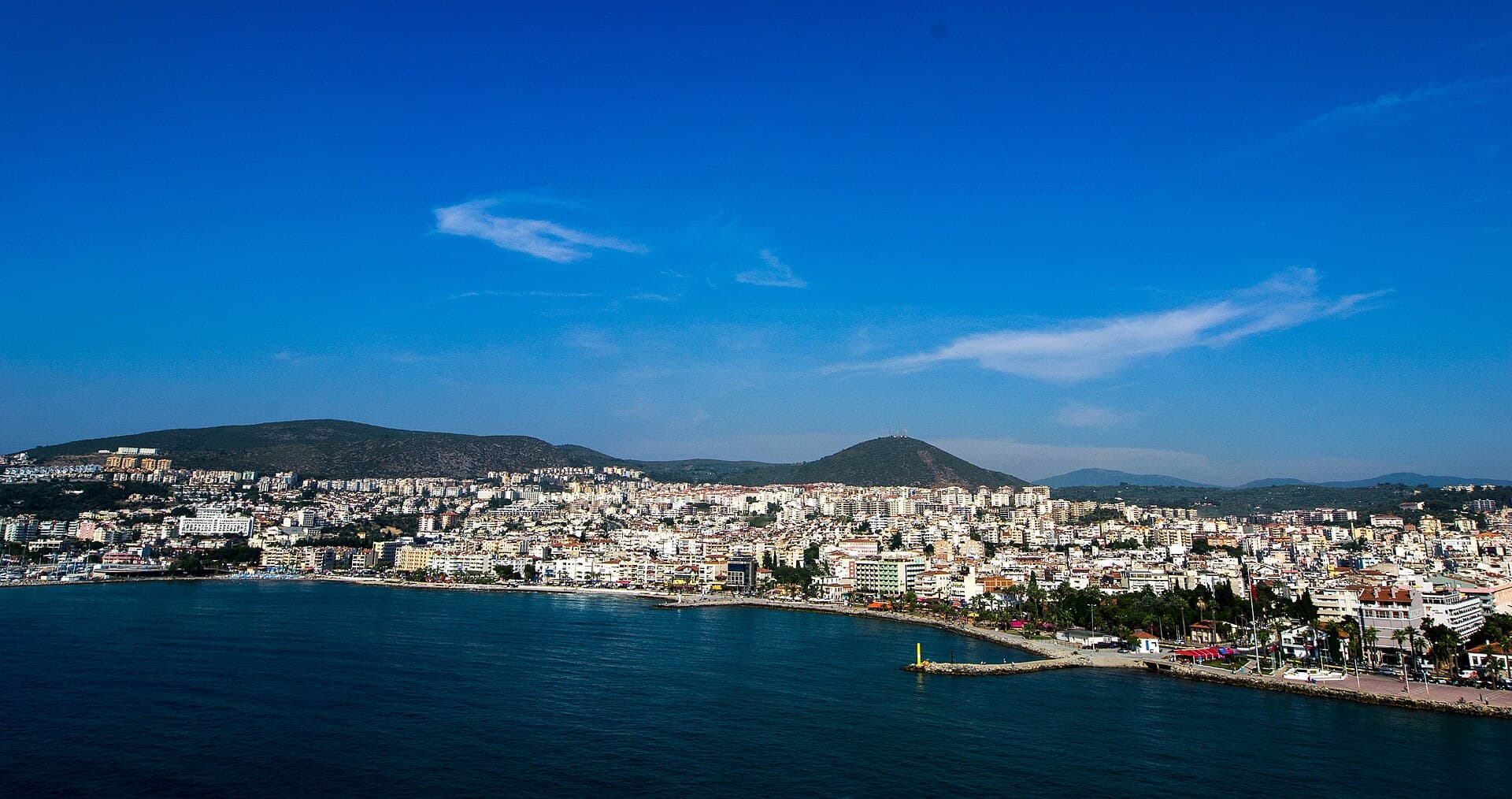 jpitha / CC BY-SA 2.0, via Wikimedia Commons
Self-guided audio walking tour of Kuşadası — GPS route, offline playback, story-driven narration in 32 languages.
“Where ancient echoes meet Aegean breezes, a port city unfolding its stories by the sea.”
Not the postcards. The stories even locals don't know — whispered in your ear, right where they happened.
The iconic symbol of Kuşadası, Pigeon Island, wasn't always connected to the mainland.
This imposing 17th-century caravanserai, a testament to Kuşadası's Silk Road past, has a surprising modern use.
The name 'Kuşadası' literally translates to 'Bird Island,' but the town itself isn't an island.
Discover every secret of Kuşadası
Every address, every reveal in full — in your ear, right where it happened.
You pick your stops. You walk. The voice reveals what the others miss.


Your self-guided audio tour of Kuşadası is ready — pick your landmarks, choose your language, and start the moment you arrive.
BuyKuşadası, meaning 'Bird Island' in Turkish, is a lively port city on Turkey's Aegean coast, where ancient narratives intertwine with modern seaside pleasures. This popular destination serves as a gateway to some of Turkey's most significant historical sites, while also offering Blue Flag beaches, a dynamic atmosphere, and a rich culinary landscape. From its active marina, welcoming cruise ships from around the world, to the captivating Pigeon Island, Kuşadası presents a diverse array of experiences for every traveler.
The city's strategic location has made it a crucial trade hub for millennia, drawing various civilizations and leaving behind a fascinating blend of cultural influences. Today, Kuşadası is not just a transit point but a destination in itself, inviting visitors to explore its historical landmarks, savor Aegean gastronomy, and absorb the Mediterranean sun. Whether you seek historical depths, sun-drenched shores, or culinary adventures, Kuşadası offers a memorable Turkish experience.
The history of Kuşadası extends back to the 3rd millennium BC, with early settlements like Neopolis, thought to have been founded by the Ionians at Yılancı Burnu. The region was successively governed by the Lelegians, Aeolians, and Ionians, thriving as a key port due to its closeness to prominent Ionian cities. Its strategic importance continued through the periods of Alexander the Great and the Romans.
During the Byzantine era, Pigeon Island (Güvercinada) served as a significant military base, undergoing a major renovation in 1834. The island's fortress played a crucial role in defending against pirate attacks in the Aegean Sea, earning it the designation 'Pirate Castle.' The name Kuşadası itself, meaning 'Bird Island,' is believed to derive from this iconic island.
Kuşadası became part of the Seljuk Empire and later, in 1413, came under Ottoman rule with the invasion of Sultan Mehmet Çelebi. The city's advantageous position at the end of important trade routes, including a branch of the Silk Road, positively influenced its development as a trading center. A testament to this commercial activity is the Öküz Mehmed Pasha Caravanserai, built between 1615 and 1618 by the Grand Vizier Öküz Mehmed Pasha. This fortress-like structure served as a customs house and a vital resting stop for merchants and their goods traveling between the East and the West. Today, the caravanserai has been renovated and functions as a hotel, preserving its historical integrity while adapting to modern use.
Kuşadası's transformation into a major tourist hub began in the 1960s, rapidly growing to become one of Turkey's most important tourism centers, particularly for cruise ship visitors.
Begin your exploration at Pigeon Island (Güvercinada), the iconic symbol of Kuşadası. Connected to the mainland by a causeway, the island features a Byzantine-Ottoman fortress, often called the 'Pirate Castle,' which once protected the coast from marauders. Enjoy sweeping views, a leisurely stroll, and discover the protected tülüşah plant within the castle walls.
Next, visit the Öküz Mehmed Pasha Caravanserai, a magnificent 17th-century Ottoman structure near the port. This historical inn, once a vital stop on trade routes, now operates as a hotel and hosts cultural events, offering a glimpse into the city's commercial past.
For a taste of local life, wander through the Kaleiçi Mosque area and the active bazaars, where you can find local goods and immerse yourself in the lively atmosphere. Make time to relax at Ladies Beach, a popular spot for sunbathing and swimming.
Beyond the city center, Kuşadası serves as an excellent base for exploring ancient wonders. The most renowned is the Ancient City of Ephesus, a UNESCO World Heritage site and one of the best-preserved Greco-Roman ruins in the world, just a short drive away. Other significant nearby archaeological sites include Priene, Miletus, and Didyma, offering further insights into ancient Greek and Roman civilizations. For a unique natural attraction, consider a trip to the Cave of Zeus, surrounded by local legends.
Kuşadası experiences a hot-summer Mediterranean climate, marked by very warm, dry summers and mild, rainy winters. The best time to visit for sun-seekers and beach activities is between June and September, when temperatures typically range from 28°C to 33°C, with minimal rainfall. July is usually the warmest month, with an average daily maximum of 32°C. For those interested in exploring historical sites and enjoying milder weather, spring (April to June) and fall (September to October) offer warm but not excessively hot temperatures, ideal for sightseeing. The sea is also pleasant for swimming from June to October. Winters (December to February) are cooler and rainier, making them less suitable for outdoor activities.
The official currency in Kuşadası, and throughout Turkey, is the Turkish Lira (TRY). While some tourist-oriented businesses may accept Euros or US Dollars, it is advisable to use Turkish Lira for better rates and for transactions with smaller local vendors, street food, and public transport. ATMs are available, and currency exchange offices can be found, particularly near the port.
Turkish is the official language, but English is widely spoken in tourist areas, hotels, restaurants, and by tour guides. Learning a few basic Turkish phrases can enhance your experience and is often appreciated by locals.
Getting around Kuşadası is convenient. Shared minibuses, known as dolmuş, are a popular and affordable way to navigate the town and reach nearby areas like Ephesus and Selçuk. Taxis are readily available, though it is recommended to confirm the price or ensure the meter is used, especially for longer journeys. Car rental is an option for those wishing to explore the wider region independently. For arrivals, İzmir's Adnan Menderes Airport (ADB) is the nearest airport, with shuttle services and car rental options to Kuşadası.
Kuşadası in Korean, in Chinese or in Hebrew — and 29 more languages, every stop narrated by a native voice. The widest language range of any self-guided audio tour.
Available in: