The Library of Pergamon
Pergamon's library was once second only to Alexandria's, but its vast collection of scrolls vanished.
Full story unlocks in the tour
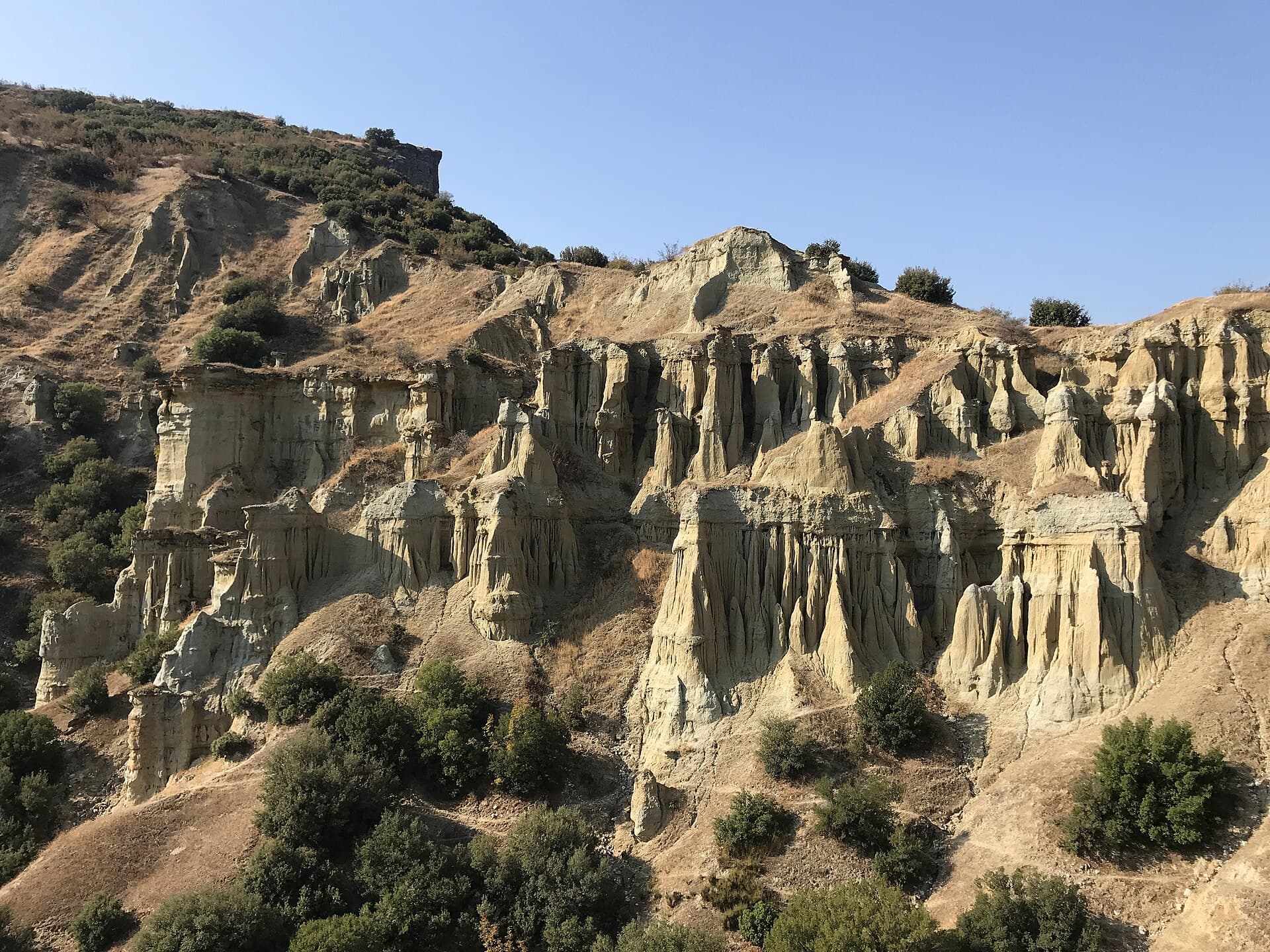 BSRF / cc by-sa 4.0, via Wikimedia Commons
Self-guided audio walking tour of Pergamon — GPS route, offline playback, story-driven narration in 32 languages.
“Where ancient ambition touched the sky.”
Not the postcards. The stories even locals don't know — whispered in your ear, right where they happened.
Pergamon's library was once second only to Alexandria's, but its vast collection of scrolls vanished.
This monumental altar, once considered a wonder of the ancient world, is no longer in Pergamon.
This immense Roman temple, dedicated to Egyptian gods, was built over a flowing river.
Discover every secret of Pergamon
Every address, every reveal in full — in your ear, right where it happened.
You pick your stops. You walk. The voice reveals what the others miss.


Your self-guided audio tour of Pergamon is ready — pick your landmarks, choose your language, and start the moment you arrive.
BuyLume has a built-in augmented-reality guide. Hold your phone up and its camera shows the street ahead of you, with a glowing arrow laid over the real view that always points to your next stop — no map to puzzle over, no wrong turns. Like everything in Lume, it works fully offline.
Pergamon, now known as Bergama, Turkey, was a powerful ancient Greek city that rose to prominence during the Hellenistic period (281–133 BCE) under the Attalid dynasty. This UNESCO World Heritage site, set upon a dramatic hilltop, offers expansive views of the surrounding plains and stands as a testament to ancient ingenuity and ambition.
Once a major cultural, political, and intellectual center, Pergamon rivaled cities like Alexandria, Athens, and Rome. Its strategic location provided both defense and a commanding perspective over fertile lands. Today, the ruins invite visitors to explore a layered history, from its early Greek foundations to its flourishing Roman era.
## From Attalid Kingdom to Roman Province Pergamon's recorded history dates back to the early 4th century BCE, though archaeological evidence suggests habitation in the Kaikos valley from prehistoric times. The city gained significant political influence under the Attalid dynasty, especially after Attalos I defeated Celtic tribes in Anatolia around 241 BCE, securing the region. Under King Eumenes II (197–159 BCE), Pergamon became a prosperous and developing city with a population exceeding 200,000 people. During this Hellenistic golden age, grand palaces, temples, and theaters were constructed, and the city was fortified with extensive walls and towers.
In 133 BCE, Attalus III bequeathed the Kingdom of Pergamon to the Roman Republic. It continued to flourish as a provincial capital, maintaining its importance as a leading city in Western Anatolia. The city saw further Roman additions, including the monumental Red Basilica and the Trajaneum. However, its prosperity gradually waned over the centuries that followed, and by the rise of the Ottoman Empire, Pergamon had become a shadow of its former self.
## Rediscovery and Modern Preservation For centuries, the ancient ruins were used as a quarry for building materials by local inhabitants who knew the area as Bergama. The scientific excavation of Pergamon began in the 1870s under German engineer Carl Humann, with funding from the newly unified German nation-state. These excavations brought to light sensational finds, including the remnants of the Great Altar of Zeus. Today, Pergamon is recognized as a UNESCO World Heritage Site, drawing visitors worldwide to explore its well-preserved ruins.
The Acropolis of Pergamon, rising dramatically above the modern town of Bergama, is where the city's most significant structures once stood. The Hellenistic Theater is a marvel of ancient engineering, carved into the hillside with a seating capacity of 10,000 and one of the steepest gradients in the ancient world. From its upper rows, the views over the Caicus plain are expansive.
Further up, the foundations of the Temple of Trajan (Trajaneum), a white marble Roman structure dedicated to Emperor Trajan and Zeus Philios, mark the highest point of the acropolis. Nearby are the remains of the Library of Pergamon, once housing an estimated 200,000 scrolls and rivaling the Library of Alexandria. Although the Pergamon Altar is now in Berlin, its original location on the acropolis can still be imagined.
Below the Acropolis, the Asclepieion was an ancient healing center dedicated to Asclepius, the god of medicine. It featured sacred springs and Roman medical treatments. In the lower city, the monumental Red Basilica (Kızıl Avlu) is a massive Roman temple, likely dedicated to Egyptian gods like Serapis and Isis, and later converted into a Christian church. Its impressive red brick walls and unique construction over the Selinus River make it a distinctive site.
The best times to visit Pergamon are during spring (April–May/June) and autumn (September–October). During these months, the weather is mild and comfortable for exploring the extensive archaeological sites and enjoying the hilltop views. Summers (July and August) can be very hot, with limited shade on the Acropolis, making early morning visits preferable. Winter visits are quieter but can be rainy.
Pergamon is located near the modern town of Bergama in western Turkey, approximately 100 kilometers north of Izmir. From Izmir, you can reach Bergama by car in about 1.5 to 2 hours, or by regular bus services from the Izmir bus station, which takes around two hours. A private guided tour is also a convenient option. Once in Bergama, a modern cable car provides accessible transport to the Acropolis.
Separate tickets are required for the Acropolis, Asclepion, and Red Basilica. The sites are generally open from 8:30 AM to 7:00 PM from April to October, and 8:30 AM to 5:00 PM from November to March. Plan for at least two days to explore the Acropolis, Asclepion, Red Basilica, and the Bergama Museum thoroughly, though a half-day is sufficient for a relaxed visit to the main sites. Comfortable, sturdy walking shoes are essential due to the steep and uneven terrain, and sun protection is advisable.
Pergamon in Korean, in Chinese or in Hebrew — and 29 more languages, every stop narrated by a native voice. The widest language range of any self-guided audio tour.
Available in: