La Cumbrecita Cemetery
The village's quiet cemetery holds a surprising connection to a pioneering figure in medicine and spiritualism.
Full story unlocks in the tour
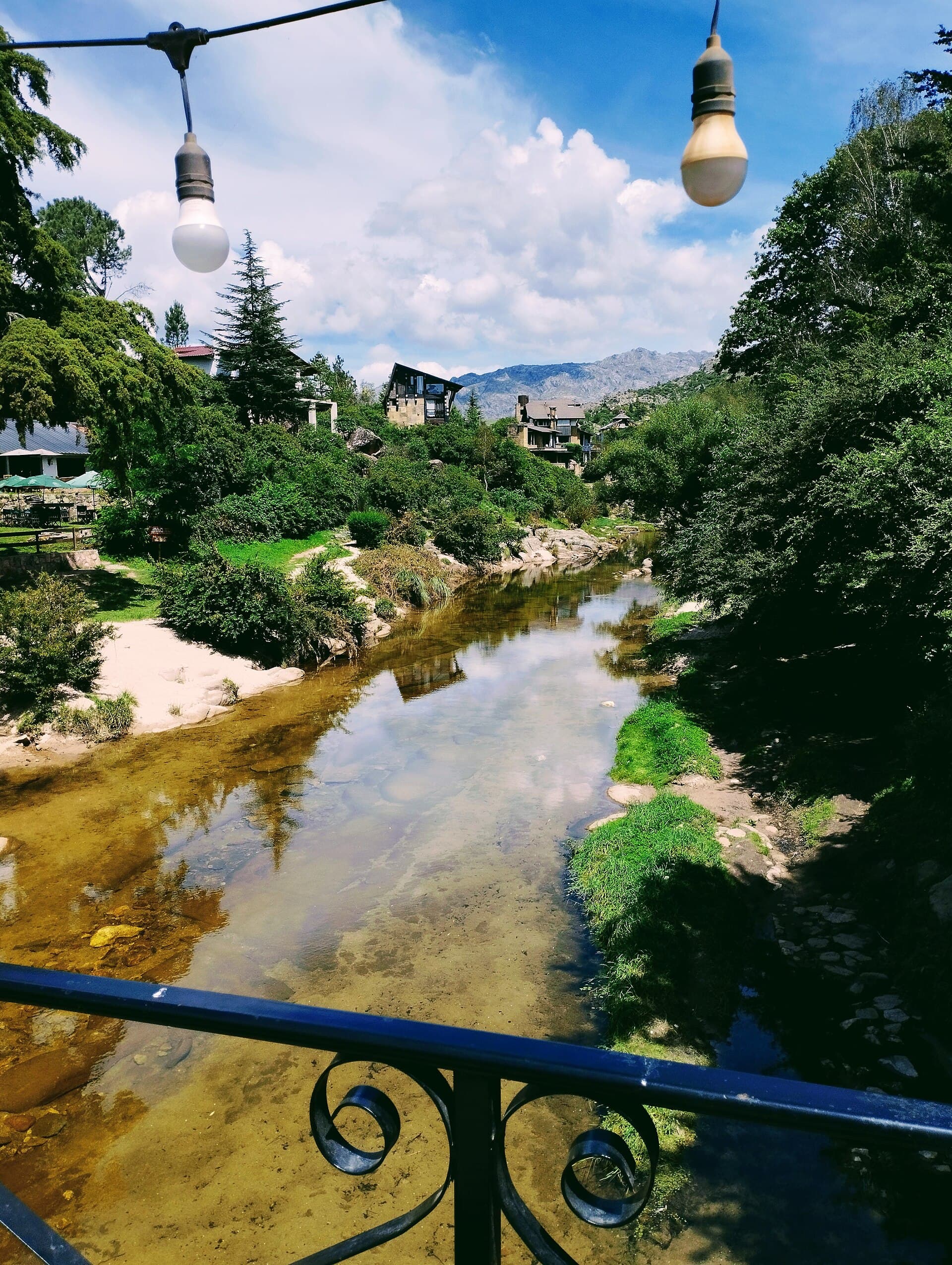 Calella79 / CC0, via Wikimedia Commons
Self-guided audio walking tour of La Cumbrecita — GPS route, offline playback, story-driven narration in 32 languages.
“An Alpine reverie woven into the heart of Argentina.”
Not the postcards. The stories even locals don't know — whispered in your ear, right where they happened.
The village's quiet cemetery holds a surprising connection to a pioneering figure in medicine and spiritualism.
This establishment serves more than goulash; it is a living archive of the village's origins.
Beneath the tranquil current of the Río del Medio lies a pioneering feat of engineering for a mountain town.
Discover every secret of La Cumbrecita
Every address, every reveal in full — in your ear, right where it happened.
You pick your stops. You walk. The voice reveals what the others miss.


Your self-guided audio tour of La Cumbrecita is ready — pick your landmarks, choose your language, and start the moment you arrive.
BuyLume has a built-in augmented-reality guide. Hold your phone up and its camera shows the street ahead of you, with a glowing arrow laid over the real view that always points to your next stop — no map to puzzle over, no wrong turns. Like everything in Lume, it works fully offline.
La Cumbrecita, a small, car-free village in Argentina's Córdoba Province, offers a distinct Central European ambiance amidst the Sierras Grandes mountains. At an elevation of 1,450 meters (4,757 feet) above sea level, it stands as Argentina's only pedestrian-only town. The village's architecture, with its wood-beamed cottages and German-influenced signage, evokes an Alpine setting, a striking contrast to the surrounding Argentine landscape.
Visitors leave their vehicles at the entrance and explore the village on foot, immersing themselves in a tranquil environment where the sounds of nature replace the hum of traffic. This commitment to a pedestrian-only experience, formalized in 1996, underscores La Cumbrecita's dedication to eco-tourism and preserving its natural beauty. The village's unique character, blending German cultural traditions with Argentine elements, makes it a popular destination for those seeking a peaceful retreat and outdoor activities.
La Cumbrecita is more than just a picturesque town; it is a protected natural reserve within the Pampa de Achala Water Reserve, safeguarding the area's environment and biodiversity. With a permanent population of around 1,000 residents, the community strives for a nearly self-sustaining model, incorporating solar energy, water recycling, and composting to minimize its ecological footprint.
The story of La Cumbrecita begins in 1934 when Dr. Helmut Cabjolsky, a civil engineer from Berlin who had moved to Buenos Aires with his family in 1932, acquired 500 hectares of undeveloped land in the Calamuchita Valley. Cabjolsky envisioned a personal retreat, a harmonious escape from urban life, inspired by Central European alpine styles. He, along with his wife Hedwig and their children, and Hedwig's brothers, Enrique and Federico Behrend, began the arduous task of transforming the treeless terrain into a habitable area. The Behrend brothers, arriving from Europe in the same year, were instrumental in surveying and constructing the initial access roads, living in tents as they worked.
Their efforts focused on creating a self-sustaining community reminiscent of Alpine villages, with an emphasis on environmental restoration. They planted pine and spruce trees, cultivating a forest that now lends the village its distinct European feel, an oasis amidst the more pampa-like surrounding mountains. The first adobe cabin, an eight-room structure built in 1935, served as the family's summer residence and later became the foundation for the La Cumbrecita Hotel, which opened in 1937, marking the beginning of tourism in the area.
Following World War II, La Cumbrecita saw an influx of German, Swiss, French, and Austrian immigrants, many of whom were exiles seeking refuge. This wave of newcomers contributed to the village's growth and further solidified its Central European character, evident in its architecture and cultural traditions. In 1966, La Cumbrecita was formalized as a hamlet and designated a protected natural area, emphasizing its commitment to environmental preservation. A significant policy shift occurred in 1996 when the village became Argentina's first pedestrian-only settlement, restricting vehicle access to safeguard its ecosystems and serene atmosphere. Today, La Cumbrecita maintains its unique appeal, a testament to the vision of its founders and the subsequent generations who have nurtured its distinct identity.
La Cumbrecita's pedestrian-only design invites exploration on foot, with paths winding through alpine-style architecture and natural landscapes. The village center offers a variety of German-influenced restaurants and tea houses where you can savor dishes like goulash with spätzle, German sausages, and homemade cakes, alongside Argentine specialties such as chivito and raspberry empanadas. Edelweiss Cafe is a popular spot for coffee or hot chocolate.
Outdoor enthusiasts will find numerous trails for hiking and trekking. The Cascada Grande is a notable waterfall, and a slightly more challenging hike leads to Cascada Escondida. The Río del Medio, which flows through the town, offers tranquil spots with smooth stones for resting or dipping your feet in the water. For a more strenuous climb, Cerro Wank provides expansive views of the Calamuchita Valley and opportunities to spot vultures, condors, and falcons. Natural swimming spots like La Olla, a deep pool formed by a waterfall, and the serene Duck Lake and Trout Lake are ideal for relaxation. The Ecumenical Chapel and Chess Plaza are also points of interest within the village.
The most pleasant times to visit La Cumbrecita are during spring (September to November) and autumn (March to May). During these months, the weather is mild, with temperatures typically ranging between 20°C and 24°C (68°F and 75°F), making it ideal for outdoor activities and exploring the natural trails. While there can be some rainfall during these periods, the conditions are generally favorable. Summer (December to February) brings warmer temperatures and is suitable for river bathing and enjoying verdant landscapes, though it also sees heavy rainfall. Winter (June to August) is cold and dry, with a chance of snow, which can give the village an irresistible European feel, but be prepared for lower temperatures.
La Cumbrecita is located about 118 km (73 miles) from Córdoba city and approximately 35-40 km (22-25 miles) from Villa General Belgrano. The nearest airport is in Córdoba city. From Córdoba, you can take a bus to Villa General Belgrano (approximately 1 hour 45 minutes) and then a local bus (Pajaro Blanco) to La Cumbrecita (about 1 hour). Alternatively, you can rent a car in Córdoba, but remember that La Cumbrecita is a pedestrian-only village, so you'll need to park outside. Parking typically incurs a fee.
There are no chain stores, gas stations, or ATMs in La Cumbrecita, so it's advisable to carry cash and ensure your vehicle has sufficient fuel before arriving. The village offers a range of hotels, lodges, and cabins, many designed in an alpine style. Siesta is observed, with many shops and restaurants closing from approximately 1:30 PM to 5:00 PM, though some establishments like Bar Suizo may offer coffee and snacks during this time. It is recommended to stay 2 to 5 days to fully experience the area.
La Cumbrecita in Korean, in Chinese or in Hebrew — and 29 more languages, every stop narrated by a native voice. The widest language range of any self-guided audio tour.
Available in: