The Loue River
The river that flows through Lods is more than just a waterway; it's a living canvas that once held a surprising secret about local artists.
Full story unlocks in the tour
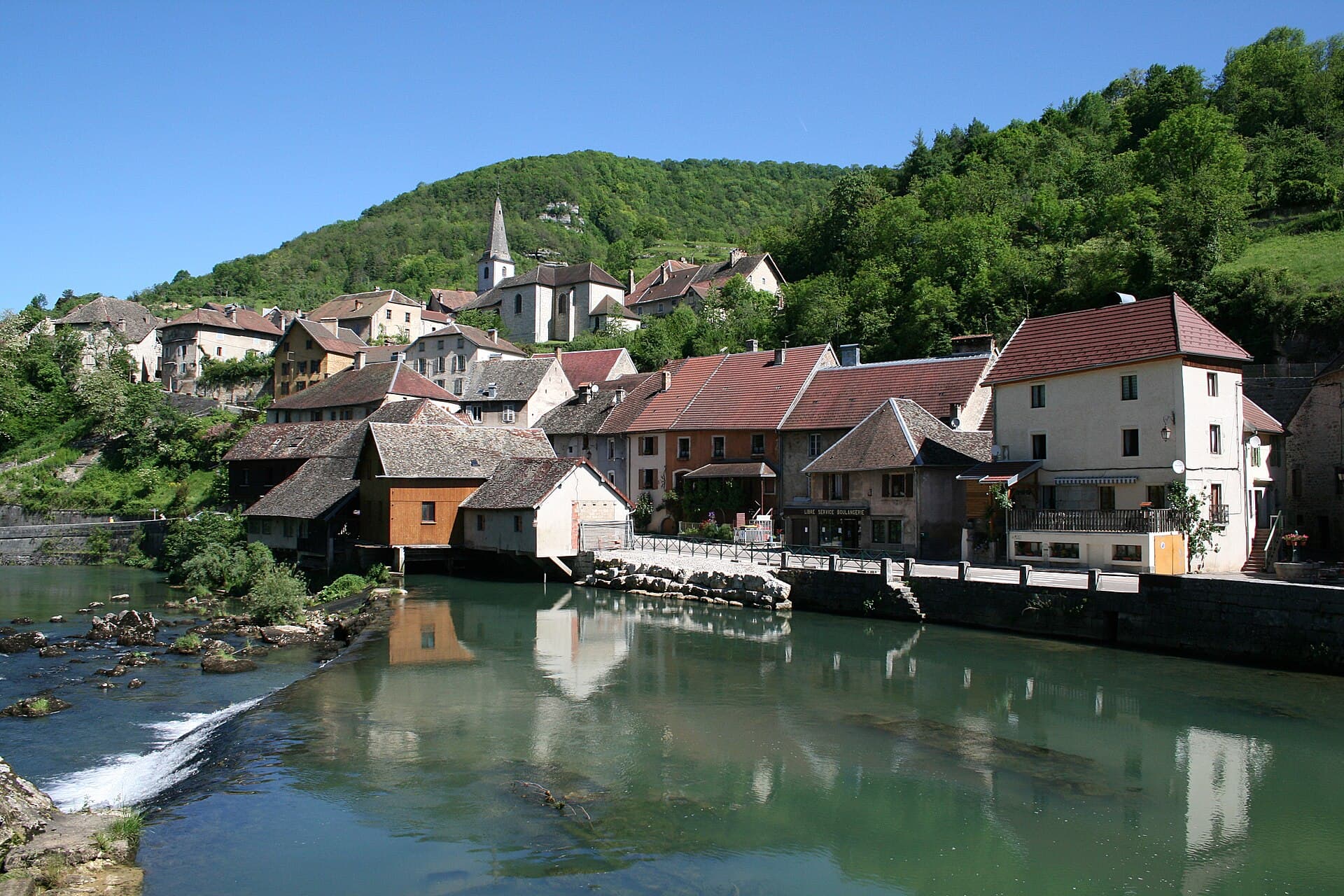 Jean-Pol GRANDMONT / CC BY-SA 3.0, via Wikimedia Commons
Self-guided audio walking tour of Lods — GPS route, offline playback, story-driven narration in 32 languages.
“Where the Loue River carves stories into stone and time slows to a ripple.”
Not the postcards. The stories even locals don't know — whispered in your ear, right where they happened.
The river that flows through Lods is more than just a waterway; it's a living canvas that once held a surprising secret about local artists.
Observe the old winegrowers' houses in Lods, and you'll find subtle details that hint at a historical division within the community.
The remnants of a 16th-century bridge in Lods recount a tale of nature's raw power, leaving behind a poignant reminder.
Discover every secret of Lods
Every address, every reveal in full — in your ear, right where it happened.
You pick your stops. You walk. The voice reveals what the others miss.


Your self-guided audio tour of Lods is ready — pick your landmarks, choose your language, and start the moment you arrive.
BuyLume has a built-in augmented-reality guide. Hold your phone up and its camera shows the street ahead of you, with a glowing arrow laid over the real view that always points to your next stop — no map to puzzle over, no wrong turns. Like everything in Lume, it works fully offline.
Lods, a village in eastern France, holds official recognition as one of "The Most Beautiful Villages of France" and a "Petite Cité Comtoise de Caractère." Situated in the Doubs department of the Bourgogne-Franche-Comté region, Lods lies within the Loue Valley, approximately 40 kilometers from Besançon.
The village is shaped by the Loue River, which flows through it in a series of small, picturesque waterfalls. These cascades are even illuminated during the summer months, creating a captivating evening scene. Lods' allure stems from its old stone houses, many constructed between the 16th and 17th centuries, which line its narrow, winding streets.
The history of Lods is deeply intertwined with the Loue River and the surrounding Jura Mountains. The village was first documented in 1189, though archaeological findings suggest human occupation as early as the 5th century. Its early economy was primarily shaped by two industries: viticulture and iron forges.
For centuries, Lods was a significant wine-producing area. The hillsides were covered with vineyards, and many of the village's historic houses, with their generous porches, were built over cellars designed for winemaking. This viticultural heritage is still celebrated today in the Vineyard and Wine Museum, which displays tools and implements from the valley's winemakers.
Later, iron forges along the Loue River became a vital part of Lods' economy. The river's powerful flow provided the necessary energy for these operations, including wire-drawing mills and hardware factories that emerged in the second half of the 18th century. The remains of these forges, such as a restored mill and an 18th-century forge, can still be observed along the riverbanks.
The arrival of the railroad brought external competition, leading to the decline of both the vineyards (exacerbated by the phylloxera infestation) and the forges. Despite these economic shifts, Lods has carefully preserved its architectural and industrial heritage. The 14th-century Château of Lods, once a fortified house controlling the salt route, is now a listed Historic Monument. The village's dedication to preserving its past has earned it recognition as a "City of Character" and one of France's most beautiful villages.
Wander through Lods' narrow streets to encounter a collection of 16th and 17th-century winegrowers' houses, many featuring unique architectural details like ornate windows and engraved stones. The village center also offers a main square to explore.
Along the Loue River, observe the picturesque waterfalls that flow through the village. You can also see the arch of the old 16th-century bridge and remnants of the 19th-century forges, including a former edge tool workshop now housing the Hôtel des Voyageurs. The 18th-century Church of Saint-Théodule, situated in the higher part of the village, provides views of the surrounding countryside.
For a deeper understanding of local history, visit the Vineyard and Wine Museum, housed in an old 18th-century winegrower's house. The museum offers insight into the valley's winemaking traditions through its collection of tools. An ethnological trail guides visitors to various sites that tell the story of the village's vineyards and forge industry.
Beyond the village, the Loue Valley offers natural grandeur. Explore the Source de la Loue, a cave with a 150-meter high rock wall from which the river emerges, a location favored by painter Gustave Courbet. Another natural marvel is the Source du Pontet, a cave featuring a powerful waterfall and unique limestone tuff formations.
The months of June, July, August, and September are recommended for visiting Lods. During this period, average temperatures range from a comfortable 21°C to 26°C, with pleasant, sunny weather. The waterfalls in the village center are also illuminated at night during the summer months, adding to the allure. While May offers pleasant temperatures, it is one of the rainier months.
Lods is situated approximately 40 kilometers southeast of Besançon in the Doubs department. The village is accessible by car, and while small, it offers a tranquil escape. For accommodations, Lods has two hotels and a campground. Outdoor activities in the area include fishing, canoeing, and hiking along the Loue River and its valley. The village also offers unique activities like a "cistes" treasure hunt with concealed boxes and riddles, and regular drawing and watercolor workshops. A guided tour of the village's scenic streets is also available.
Lods in Korean, in Chinese or in Hebrew — and 29 more languages, every stop narrated by a native voice. The widest language range of any self-guided audio tour.
Available in: