M-185
There's a state highway in the U.S. where cars are strictly forbidden.
Full story unlocks in the tour
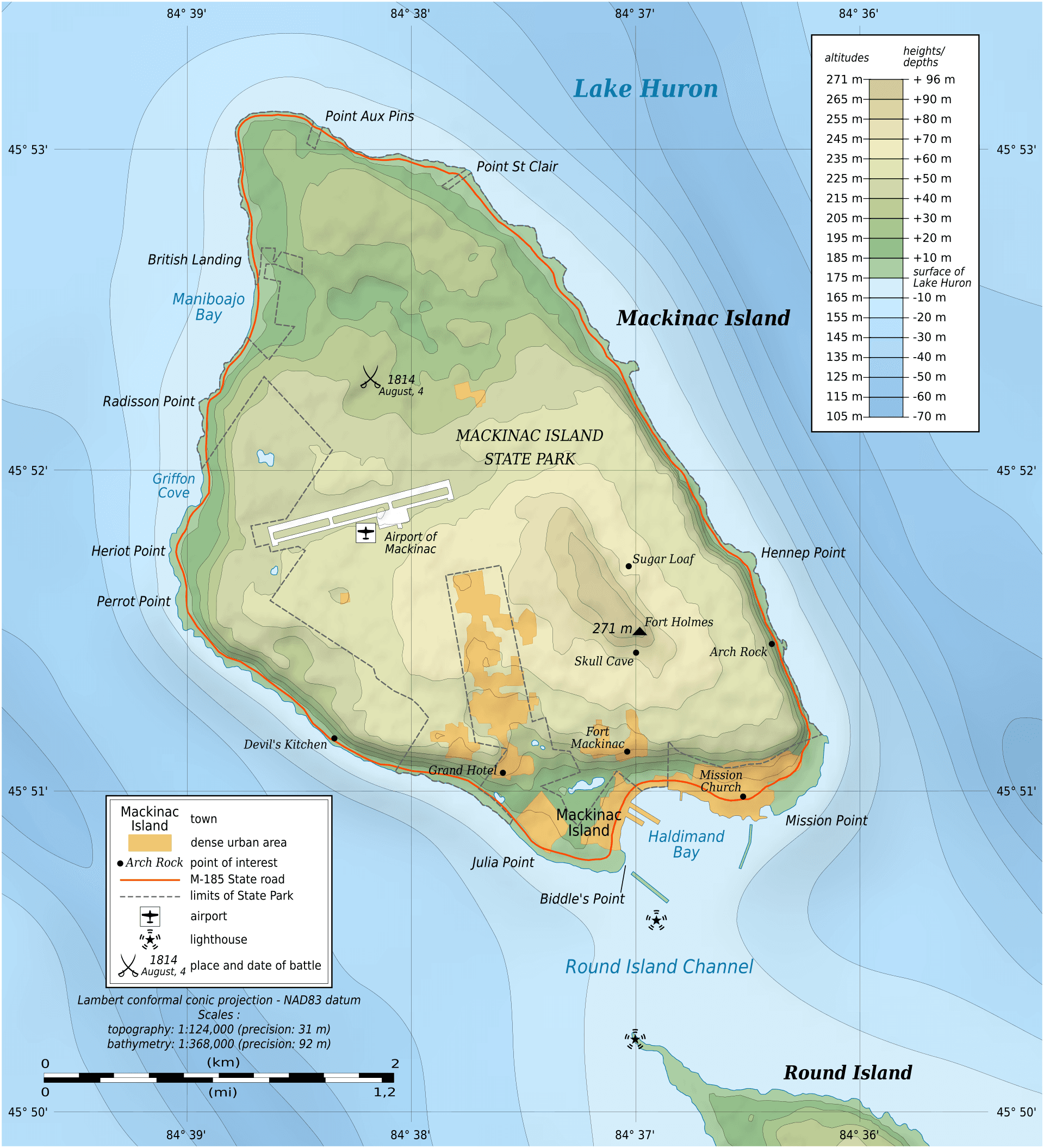 Eric Gaba (Sting - fr:Sting) / CC BY-SA 3.0, via Wikimedia Commons
Self-guided audio walking tour of Mackinac Island — GPS route, offline playback, story-driven narration in 32 languages.
“Where time slows to the rhythm of hooves and lake breezes.”
Not the postcards. The stories even locals don't know — whispered in your ear, right where they happened.
There's a state highway in the U.S. where cars are strictly forbidden.
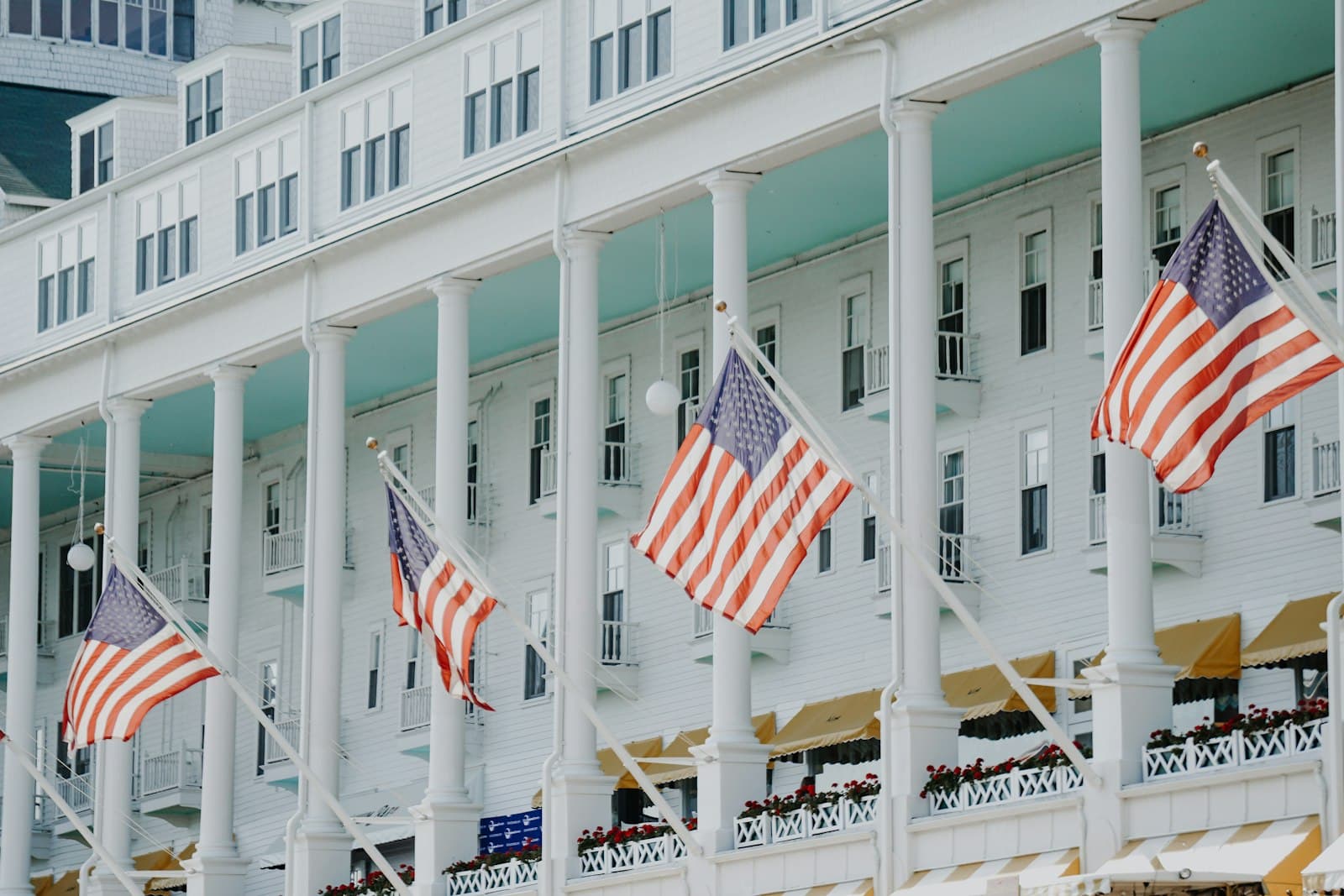
The Grand Hotel's iconic porch holds a surprising world record.
The island's celebrated fudge has a unique origin story tied to its particular climate.
Discover every secret of Mackinac Island
Every address, every reveal in full — in your ear, right where it happened.
You pick your stops. You walk. The voice reveals what the others miss.

Your self-guided audio tour of Mackinac Island is ready — pick your landmarks, choose your language, and start the moment you arrive.
BuyLume has a built-in augmented-reality guide. Hold your phone up and its camera shows the street ahead of you, with a glowing arrow laid over the real view that always points to your next stop — no map to puzzle over, no wrong turns. Like everything in Lume, it works fully offline.
Mackinac Island, a small landmass in Lake Huron situated between Michigan's Upper and Lower Peninsulas, offers a distinct escape from modern life. Measuring just 3.5 square miles, the island is recognized for its prohibition of automobiles, a policy in place since 1898. This car-free environment means that the primary modes of transport are horse-drawn carriages, bicycles, and walking, cultivating an atmosphere that feels like a journey to an earlier era.
The island's allure extends beyond its unique transportation. Guests are met with Victorian architecture, significant historical locations, and the pervasive aroma of fudge. With approximately 80% of the island preserved as Mackinac Island State Park, there's a strong emphasis on natural splendor and outdoor pursuits. From exploring historical forts to cycling along the picturesque M-185, Mackinac Island provides a tranquil and evocative experience.
Long before European exploration, Mackinac Island held profound spiritual significance for various Native American tribes, including the Anishinaabek (Odawa, Ojibway, and Potawatomi). They knew it as "Michilimackinac," meaning "Place of the Great Turtle," a name inspired by the island's form and its mythical role as the dwelling place of Gitche Manitou, the Great Spirit. The island served as sacred burial grounds, a gathering site for fishing and trapping, and a vital hub for birchbark canoe trade routes.
European presence began in the early 17th century with French explorers and Jesuit missionaries who recognized the island's strategic location for the fur trade. Control of the island, and the profitable fur trade centered there, shifted repeatedly between France, Britain, and the United States over two centuries. Mackinac Island played a significant role in the War of 1812, becoming a site of conflict where British forces captured Fort Mackinac without a struggle.
In 1875, Mackinac Island was designated as the second National Park in the United States, acknowledging its cultural and natural importance. The Victorian era transformed the island into a popular summer retreat, with affluent families constructing elaborate homes and grand hotels. This period cemented the island's architectural character, which remains a defining feature today.
The most distinctive aspect of Mackinac Island's history is the prohibition of automobiles. In 1898, following the arrival of noisy "horseless carriages" that startled horses and threatened public safety, local carriage operators successfully petitioned the Village Council to prohibit them. The ban, enacted on July 6, 1898, has remained in effect, with rare exceptions for emergency and service vehicles. This decision, radical at the time, has become a cornerstone of Mackinac Island's identity, preserving its tranquil atmosphere and unique character. The car-free policy has also fostered a strong association with fudge, as confectioners in the late 19th century capitalized on the walkable streets and tourist foot traffic to create a signature island treat.
Mackinac Island offers a variety of sights and activities that lean into its distinct, car-free character. A favored activity is cycling the 8.2-mile M-185, the only state highway in the U.S. where motor vehicles are forbidden, offering expansive views of Lake Huron. Bicycles are readily available for rent across the island.
Fort Mackinac, an 18th-century military outpost, is a central historical attraction where visitors can explore period exhibits and observe reenactments by costumed interpreters. The island also features other natural landmarks within Mackinac Island State Park, such as Arch Rock and Fort Holmes.
For a taste of island tradition, a horse-drawn carriage tour provides a leisurely way to see many points of interest, including Victorian homes and the Surrey Hills Carriage Museum. Downtown Mackinac Island is a lively area with shops, restaurants, and numerous fudge shops where visitors can observe fudge being made on marble slabs. The Grand Hotel, with its celebrated long porch, is another significant landmark worth visiting.
The main tourist season on Mackinac Island runs from late April through late October. During this period, businesses are fully operational, and ferries run frequently. The busiest season is from late June through August, offering the warmest weather, abundant daylight, and a full array of outdoor activities and events, though it also brings larger crowds and higher prices. For fewer crowds and potentially lower lodging rates, consider visiting during the shoulder seasons of May, early June, September, or early October, when the weather is still pleasant and the island's natural beauty, like spring blooms or fall foliage, is prominent.
Access to Mackinac Island is exclusively by ferry, typically from Mackinaw City or St. Ignace on the mainland. Ferries operate seasonally, generally from April through late October, with limited winter service depending on ice conditions. Parking is available at the mainland ferry docks for a daily or overnight fee. The ferry ride itself takes approximately 15 to 20 minutes. Once on the island, transportation is by foot, bicycle, or horse-drawn carriage. Horse-drawn taxis are available, and while credit cards may be accepted for booking, cash tips for drivers are customary. Bicycle rentals are widely available, or you can bring your own bike on the ferry for a fee. The island is relatively small, with the perimeter road being 8.2 miles, making it easily walkable or bikeable.
Mackinac Island in Korean, in Chinese or in Hebrew — and 29 more languages, every stop narrated by a native voice. The widest language range of any self-guided audio tour.
Available in: