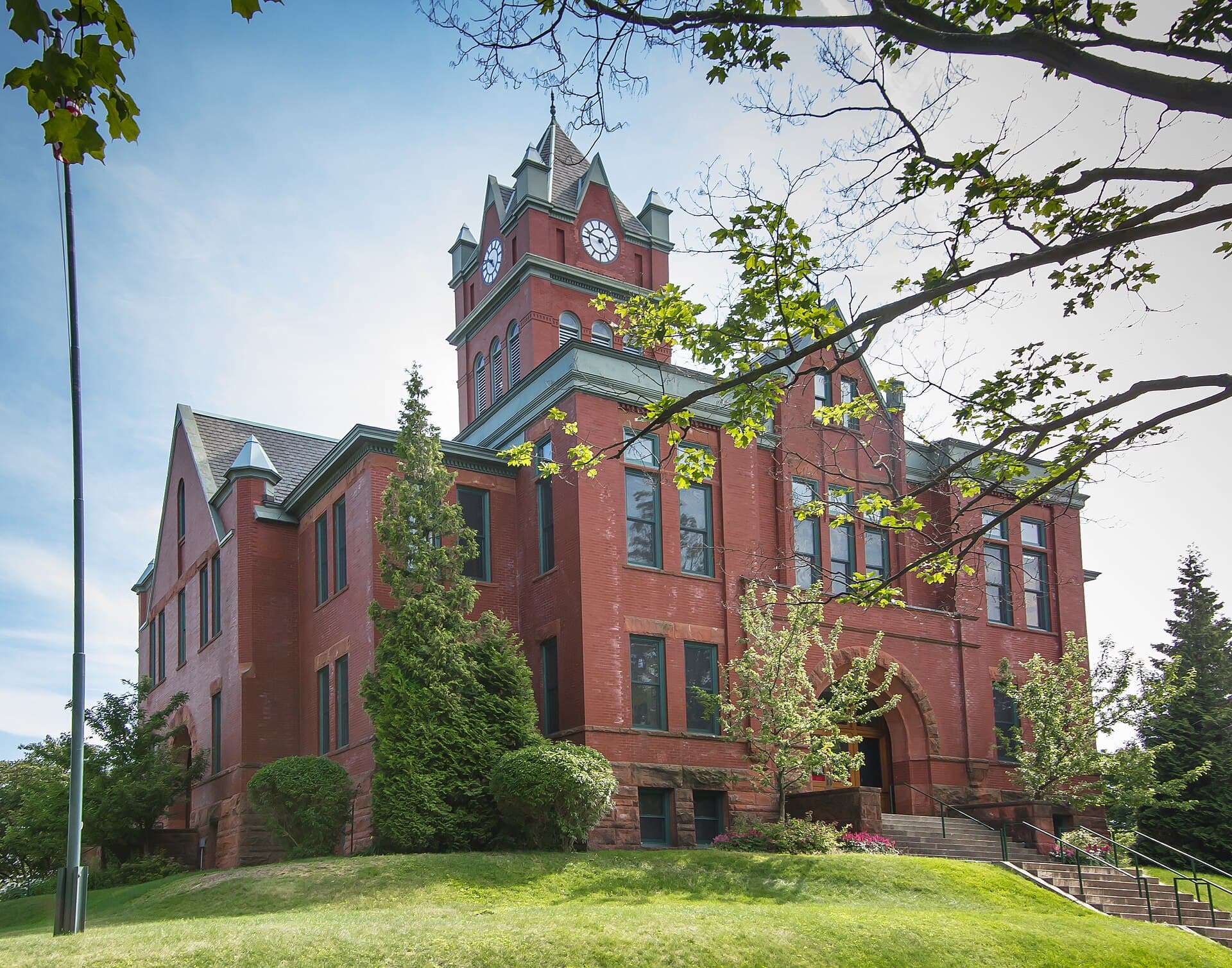
The sprawling, gothic-style buildings of this popular retail and residential complex hold a secret about their original purpose and a unique approach to mental health.
rossograph / CC BY-SA 4.0, via Wikimedia CommonsTraverse City
Self-guided audio walking tour of Traverse City — GPS route, offline playback, story-driven narration in 32 languages.
“Where freshwater coastlines meet cherry orchards and unexpected histories.”
Traverse City, as no one tells it.
Not the postcards. The stories even locals don't know — whispered in your ear, right where they happened.
Walk the downtown streets in winter, and you might notice something unusual about the sidewalks, even on the coldest days.
Just off Cass Road, there's a relic of Traverse City's "Cherry Capital" claim that's far larger than any pie you've ever seen.
Discover every secret of Traverse City
Every address, every reveal in full — in your ear, right where it happened.
You pick your stops. You walk. The voice reveals what the others miss.


How long do you have in Traverse City?
Your self-guided audio tour of Traverse City is ready — pick your landmarks, choose your language, and start the moment you arrive.
BuyThe story of Traverse City
Traverse City, Michigan, rests at the head of the East and West arms of Grand Traverse Bay, a 32-mile-long inlet of Lake Michigan. Known as the "Cherry Capital of the World," the area surrounding Grand Traverse Bay is a major hub for cherry production, hosting the annual National Cherry Festival which draws approximately 500,000 visitors. Beyond its celebrated cherries, Traverse City is recognized for its burgeoning wine industry, with two American Viticultural Areas adjacent to the city.
This northern Michigan city offers a blend of natural splendor, outdoor activities, and a flourishing cultural landscape. From the towering sand dunes of Sleeping Bear Dunes National Lakeshore to the serene waters of Grand Traverse Bay, opportunities for exploration abound. The city's downtown area is a lively center with shops, restaurants, and a distinct small-town appeal. Traverse City balances its relaxed, natural setting with a dynamic food and arts scene, making it a compelling destination for those seeking both tranquility and activity.
Situated on the 45th parallel, halfway between the Equator and the North Pole, Traverse City benefits from a surprisingly moderate climate due to the tempering effects of Lake Michigan. This unique geographical position contributes to the region's ability to cultivate delicate fruit crops like cherries and grapes, further enhancing its appeal as a diverse and engaging place to visit.
From French Crossings to Lumber Boomtown
The history of Traverse City begins long before European settlement, with the Ojibwe and Ottawa tribes inhabiting the area for centuries. The name "Grand Traverse Bay" itself was coined by 18th-century French voyageurs who referred to their "long crossing" (la grande traverse) across the mouth of the bay. The region was initially French territory, then part of the Kingdom of Great Britain, before being ceded to the United States in 1783 as part of the Northwest Territory.
Modern Traverse City began to take shape in 1847 when Harry Boardman and his son, Horace, purchased land at the mouth of the Boardman River and established the area's first sawmill. Four years later, Perry Hannah, often called the founding father of Traverse City, acquired the operation and expanded it with his partner, Albert T. Lay. The increased investment in the mill attracted more settlers, and in 1852, the sawmill town was officially named Traverse City. The lumber industry prospered, particularly in the 1880s, with Traverse City providing timber to help rebuild Chicago after its Great Fire in 1871.
Agricultural Shift and Modern Growth
By the turn of the 20th century, the lumber industry began to wane, and the local economy shifted towards manufacturing and agriculture, with potatoes, apples, and cherries becoming significant crops. The National Cherry Festival, which started in the 1920s, significantly boosted Traverse City's recognition. The city was incorporated as a village in 1881, leading to major commercial growth. The extension of rail lines in the 1890s further connected Traverse City, primarily serving lumber companies initially.
Architecturally, Traverse City developed with a mix of styles in the late 19th century, featuring Victorian Queen Anne, Italianate, and Neo-classical homes, alongside more modest Victorian structures. In the early 20th century, Arts and Crafts style buildings also emerged. Following World War II, the city experienced renewed growth, expanding beyond its downtown core. Today, Traverse City's population was 15,678 at the 2020 census, though the four-county metropolitan area has a larger population of 153,448 residents.
Traverse City offers a diverse range of sights, from natural wonders to historic landmarks and engaging urban spaces. A primary draw is the Sleeping Bear Dunes National Lakeshore, a short drive west of the city, known for its massive sand dunes, scenic drives, and views of Lake Michigan. Visitors can hike trails like Empire Bluffs or attempt the Dune Climb for expansive vistas.
Within Traverse City, the Village at Grand Traverse Commons is a unique destination. This redeveloped former state psychiatric hospital features gothic architecture and now houses restaurants, shops, galleries, and condominiums, surrounded by extensive parkland and trails. The Boardman River meanders through the city, offering opportunities for paddling and features boardwalks along its banks. For a taste of local produce and culture, the Sara Hardy Farmer's Market operates twice weekly from spring through autumn in downtown Traverse City.
The Old Mission Peninsula is a scenic drive through cherry orchards and vineyards, leading to the Mission Point Lighthouse at its tip, offering views of Grand Traverse Bay. The area is also celebrated for its burgeoning wine scene, with numerous wineries on both the Old Mission and Leelanau Peninsulas offering tastings. For beach access, Clinch Park Beach is a popular spot directly in downtown Traverse City, providing clear waters and sandy shores on Grand Traverse Bay.
Traverse City offers distinct experiences across its four seasons. The most popular time to visit is during July and August, when the weather is ideal for water activities on Grand Traverse Bay, and the city is lively with events like the National Cherry Festival. Booking accommodations well in advance is essential for summer visits.
Spring, particularly May, brings blooming cherry orchards and fewer crowds, making it a beautiful time for scenic drives and enjoying the fresh air. Autumn is visually striking, with vivid fall foliage peaking around October. This season is perfect for scenic drives, harvest festivals, and wine tours as vineyards reach their peak harvest. While winters are cold with significant snowfall (averaging 120 inches), they offer opportunities for snow sports and holiday events.
Traverse City is in the Eastern Time Zone (EST), observing Eastern Daylight Time from April to October. Michigan's sales tax rate is 6 percent, with food and prescription drugs being exempt. A 5-percent lodging assessment applies to overnight room rentals. The legal drinking and smoking age in Michigan is 21. Taverns cease serving alcohol at 2 a.m. and must close by 2:30 a.m.
Cherry Capital Airport (TVC) offers direct flights to several major cities, with major carriers like Delta, United, and American serving the airport. Once in Traverse City, taxis and rideshares like Uber are available for getting around, with taxi rates typically starting around $2.40 for the first mile. Many of the city's beaches and trails are accessible, with Mobi-mats providing pathways to popular beaches. Emergency assistance is available by calling 911.
- What is Traverse City known for?
- Traverse City is primarily known as the "Cherry Capital of the World" due to its extensive cherry production and the annual National Cherry Festival. It is also recognized for its growing wine industry and the natural splendor of Grand Traverse Bay and the nearby Sleeping Bear Dunes National Lakeshore.
- When is the National Cherry Festival held?
- The National Cherry Festival typically takes place in early July each year.
- Are there beaches in Traverse City?
- Yes, Traverse City has several beaches, including Clinch Park Beach, which is located directly downtown on Grand Traverse Bay and offers clear waters and sandy shores.
- Can you go wine tasting in Traverse City?
- Yes, Traverse City is a prominent wine region with numerous wineries on the Old Mission and Leelanau Peninsulas, offering tours and tasting rooms.
- What is The Village at Grand Traverse Commons?
- The Village at Grand Traverse Commons is a redeveloped historic site that was formerly the Northern Michigan Asylum. It now houses shops, restaurants, galleries, offices, and residences.
- Is Sleeping Bear Dunes National Lakeshore close to Traverse City?
- Yes, Sleeping Bear Dunes National Lakeshore is a short drive from Traverse City, approximately 40 minutes away, and is a major attraction for its sand dunes and Lake Michigan views.