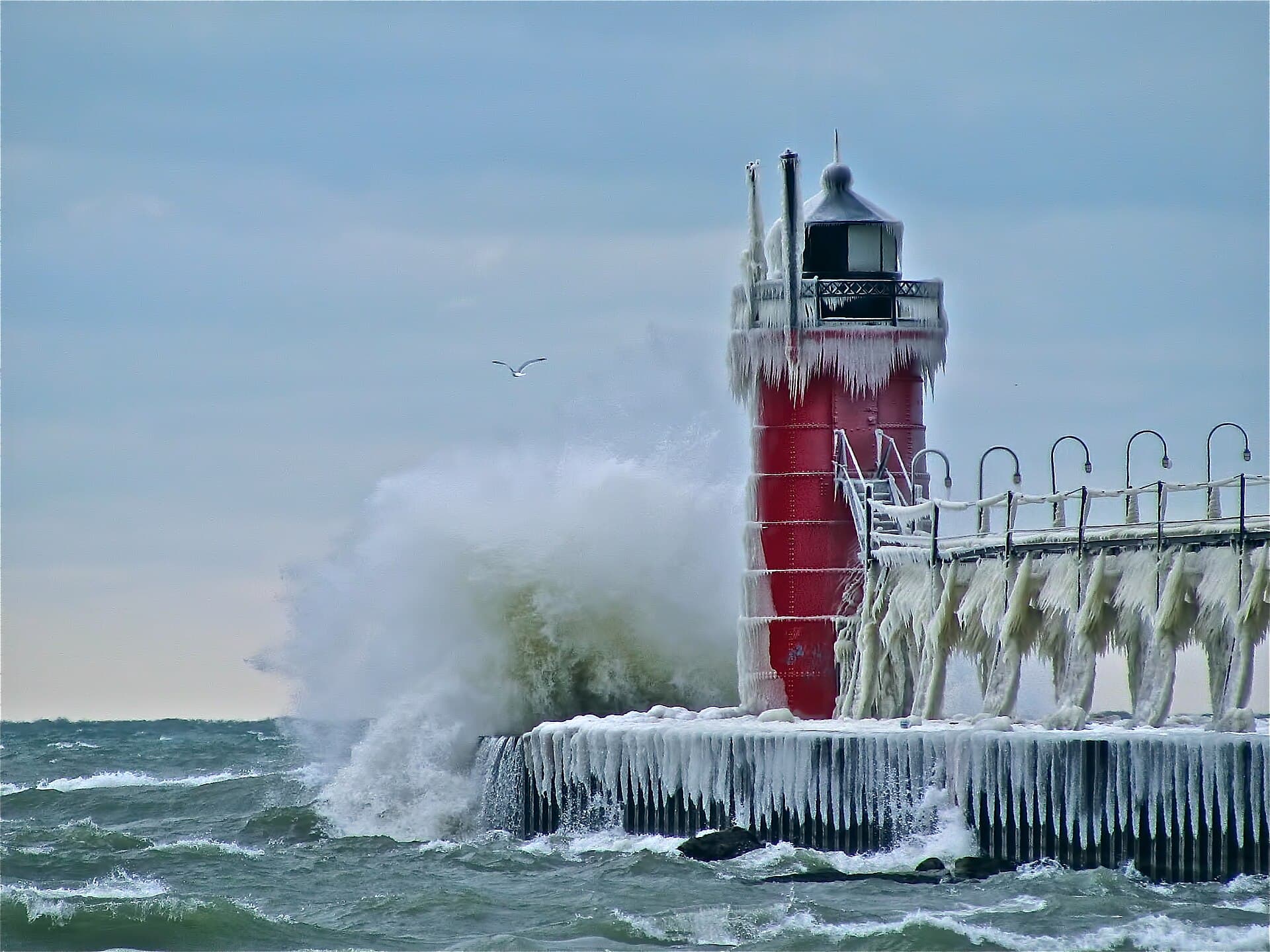
Faro de South Haven
El distintivo faro rojo al final del muelle de South Haven es un punto de referencia reconocible, pero su forma actual no es su diseño original.
La historia completa se desbloquea en el tour
 Nanamac47 / CC BY-SA 3.0, via Wikimedia Commons
Tour de audio autoguiado de South Haven — ruta GPS a pie, reproducción offline, narración en 32 idiomas.
“Donde los atardeceres del lago Michigan encienden el cielo y los campos de arándanos se extienden hasta el horizonte.”
No las postales. Las historias que ni los locales conocen — al oído, justo donde ocurrieron.
El distintivo faro rojo al final del muelle de South Haven es un punto de referencia reconocible, pero su forma actual no es su diseño original.
El puerto de South Haven no es una marina típica y cerrada; en cambio, presenta una vía fluvial única que serpentea por la ciudad.
El primer hotel de South Haven desempeñó un papel inesperadamente central en la población temprana de la ciudad.
Descubre todos los secretos de South Haven
Cada dirección, cada revelación al completo — a tu oído, justo donde ocurrió.
Eliges tus paradas. Caminas. La voz te revela lo que los demás ignoran.
Tu tour de audioguía por South Haven te espera — elige tus lugares, tu idioma y empieza al llegar.
ComprarSouth Haven, Michigan, es una acogedora ciudad junto al lago, situada en la orilla este del lago Michigan, donde el río Black se encuentra con el extenso Gran Lago. Esta ciudad portuaria ha sido durante mucho tiempo un destino favorito, atrayendo a visitantes con sus amplias playas de arena, su histórico faro y un animado centro transitable a pie. Es un lugar donde el ritmo de la vida está marcado por el agua, ofreciendo desde días activos de verano llenos de deportes acuáticos y festivales hasta paseos más tranquilos y contemplativos por el muelle en las temporadas intermedias.
Reconocida por sus impresionantes atardeceres, una cualidad reconocida por los habitantes nativos americanos originales de la zona que la llamaron 'Ni-Ko-Nong' (hermosos atardeceres), South Haven ofrece una mezcla de esplendor natural y hospitalidad de pueblo pequeño. Ya sea que estés explorando la historia marítima en el Museo Marítimo de Michigan, andando en bicicleta por senderos panorámicos o saboreando los celebrados arándanos de la región, South Haven ofrece una escapada memorable.
El área de South Haven fue originalmente habitada por las tribus nativas americanas Ottawa, Miami y Potawatomi, quienes llamaron a la tierra 'Ni-Ko-Nong', que significa 'hermosos atardeceres'. Estas tribus prosperaron con los abundantes recursos naturales, comerciando corteza de abedul y jarabe de arce con los primeros colonos europeos.
El primer europeo en vislumbrar un asentamiento aquí fue el juez J.R. Monroe, a quien se le concedió una patente de tierras por 65 acres a lo largo del lago Michigan en 1833. Construyó la primera casa, una cabaña doble de troncos, en la desembocadura del río Black. Sin embargo, Monroe y su familia se mudaron más tarde, y no fue hasta la década de 1850 que los colonos permanentes establecieron una granja.
South Haven fue oficialmente trazada como un pueblo en 1852, y su economía temprana fue impulsada principalmente por la industria maderera. Aserraderos surgieron a lo largo del río Black, y madera selecta fue enviada a través del lago Michigan a ciudades en crecimiento como Chicago y Milwaukee. Esta nueva industria facilitó la construcción de hoteles, escuelas, hogares, tiendas y curtidurías.
A medida que la industria maderera disminuyó, la tierra despejada creó oportunidades para los fruticultores. El suelo fértil y el clima favorable de la región resultaron ideales para el cultivo de duraznos, manzanas y especialmente arándanos, lo que llevó a South Haven a ser coronada como la 'Capital Mundial del Arándano' en 1969. Los primeros huertos comerciales de duraznos se plantaron alrededor de 1850, con operaciones comerciales a gran escala comenzando en 1859.
La llegada del ferrocarril en la década de 1860 impulsó aún más el crecimiento de South Haven, transformándola en un importante puerto de envío y pasajeros. A finales del siglo XIX y principios del XX, South Haven se convirtió en un destino turístico de verano favorito, a veces referido como 'Los Catskills del Medio Oeste'. Este período vio una afluencia de visitantes que buscaban un respiro del calor del verano, lo que llevó al desarrollo de numerosos hoteles y complejos turísticos. South Haven se incorporó como ciudad en 1902.
A lo largo del siglo XX, South Haven continuó evolucionando, manteniendo su atractivo como destino junto al lago. Hoy en día, es conocida por su animada escena artística, sitios históricos como el Museo Marítimo de Michigan y una amplia gama de oportunidades recreativas. La dedicación de la ciudad a preservar su patrimonio es evidente en iniciativas como la Asociación Histórica de South Haven, que da vida a la historia a través de exposiciones y eventos. South Haven ostenta con orgullo la designación de 'Pure Michigan Trail Town', destacando su extensa red de senderos panorámicos.
South Haven ofrece una variada gama de atracciones, muchas de ellas centradas en su frente marítimo y su profunda historia. Una visita al distintivo Faro de South Haven, que se alza al final del Muelle Sur, es esencial para disfrutar de las clásicas vistas del lago Michigan y observar el atardecer. Puedes caminar por el muelle y sentir el rocío de las olas, una experiencia verdaderamente vigorizante.
Adéntrate en el pasado marítimo de la zona en el Museo Marítimo de Michigan, que cuenta con exposiciones interactivas y ofrece excursiones en velero en una réplica de un gran velero, el Friends Good Will. Para aquellos que prefieren la exploración terrestre, el Sendero Kal-Haven, un lecho ferroviario convertido de 33.5 millas, ofrece excelentes oportunidades para practicar senderismo y ciclismo, conectando South Haven con Kalamazoo. Otro refugio natural es la Reserva del Río Black, que ofrece senderos boscosos a lo largo del río, a menudo menos concurridos que las playas principales.
La zona céntrica, transitable a pie, está llena de tiendas independientes y diversas opciones gastronómicas. No pierdas la oportunidad de probar el helado local, una querida tradición de South Haven. Para una experiencia de playa más tranquila, considera Dyckman Beach o Newcome Beach, ambas favoritas locales. La Escuela Hartman de la Asociación Histórica de South Haven ofrece una visión de la vida diaria del siglo XIX. Y para probar la abundancia local, explora el Makers Trail, que incluye bodegas locales como Cogdal Vineyards.
La mejor época para visitar South Haven para actividades de clima cálido es de mediados de junio a principios de septiembre, cuando las temperaturas máximas diarias promedio superan los 21°C (71°F). Julio es el mes más cálido, con una máxima promedio de 27°C (80°F). Este período ofrece largos días de playa, aguas cálidas del lago y un ambiente animado en la ciudad. Sin embargo, South Haven alberga eventos durante todo el año. La 'temporada puente' entre finales de agosto y octubre trae un aire ligeramente más fresco, huertos cargados de frutas y un calendario de festivales repleto, a menudo con menos multitudes que en pleno verano. El invierno ofrece eventos como el Festival Ice Breaker en febrero, con esculturas de hielo y concursos de chili. La primavera trae un clima templado, naturaleza floreciente y menos multitudes, lo que la hace ideal para retiros tranquilos y aventuras al aire libre antes de la prisa del verano.
South Haven es fácilmente transitable a pie, especialmente su centro y las zonas de playa, con la mayoría de las atracciones, restaurantes y tiendas a una distancia cómoda a pie. Para el alojamiento, es recomendable reservar habitaciones de hotel con antelación, especialmente durante la temporada turística activa. La ciudad ofrece una variedad de opciones de alojamiento, incluyendo propiedades frente al mar, cabañas y casas unifamiliares.
Si estás considerando un alquiler a corto plazo, ten en cuenta que las regulaciones varían dependiendo de si la propiedad se encuentra dentro de la Ciudad de South Haven o del Municipio de South Haven Charter. La ciudad tiene un sistema de licencias de dos clases, con la Clase II para uso personal limitado (seis períodos de alquiler o 28 días al año) y la Clase I para alquileres más activos (alquileres ilimitados con límites operativos específicos). El Municipio tiene reglas diferentes, que requieren estancias de al menos tres noches y no más de 27 noches, con solo un período de alquiler que comienza por semana calendario. Ambas jurisdicciones requieren seguro de responsabilidad civil.
South Haven es fácilmente accesible en coche, con conexiones a través de la I-196 y las carreteras cercanas a ciudades como Kalamazoo y Grand Rapids.
South Haven en coreano, en chino o en hebreo — y 29 idiomas más, cada parada narrada por una voz nativa. La mayor variedad de idiomas de cualquier audioguía autoguiada.
Disponible en: