The Mozhaysk Kremlin grounds
Beneath the soil of the ancient Kremlin, a layer of ash speaks volumes.
Full story unlocks in the tour
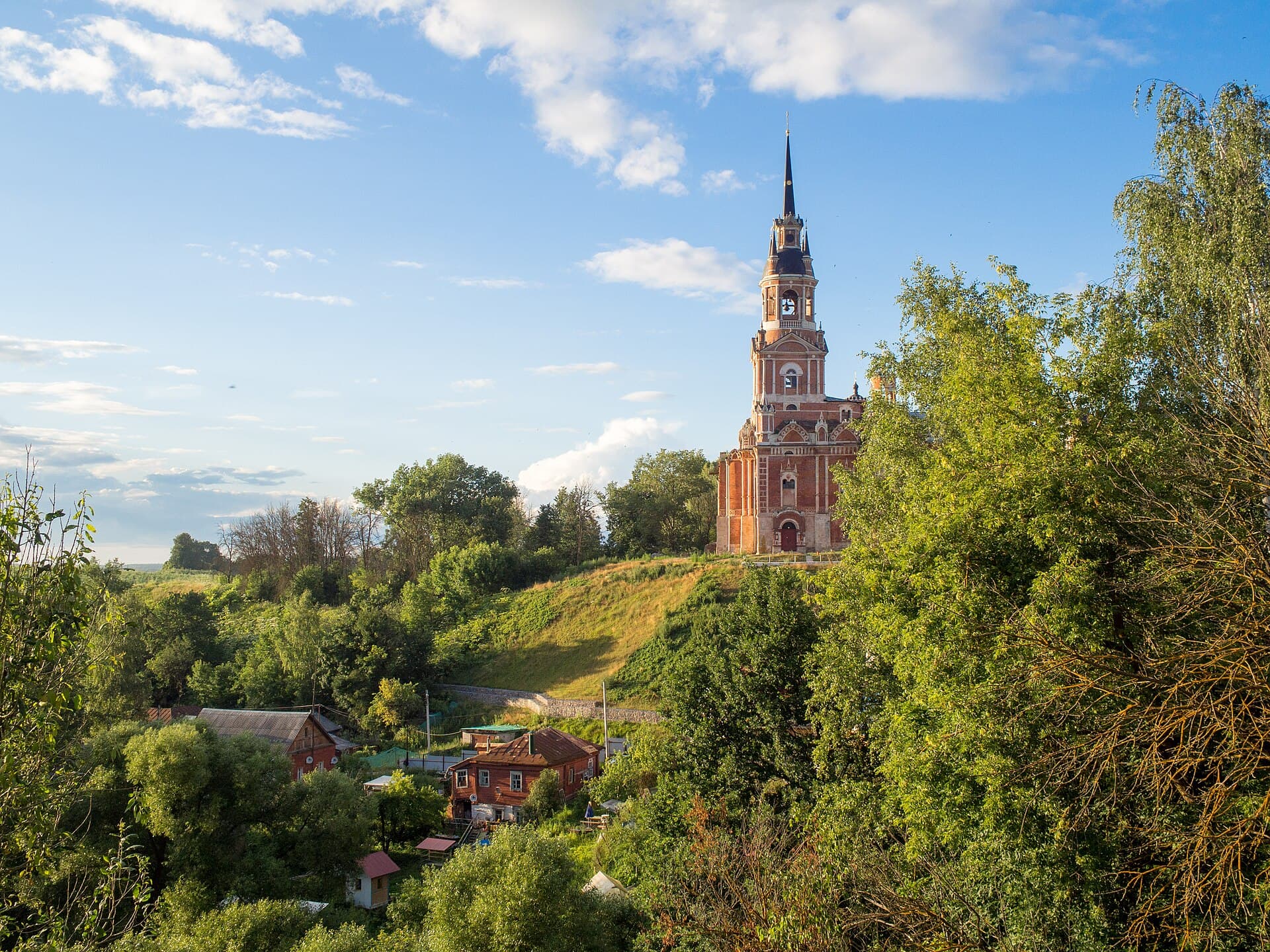 kishjar? / CC BY 2.0, via Wikimedia Commons
Self-guided audio walking tour of Mozhaysk — GPS route, offline playback, story-driven narration in 32 languages.
“Where history's echoes meet the quiet flow of the Moskva.”
Not the postcards. The stories even locals don't know — whispered in your ear, right where they happened.
Beneath the soil of the ancient Kremlin, a layer of ash speaks volumes.
The monastery's founder, a revered figure, left behind more than just stone and prayer.
The river that flows through Mozhaysk once carried a different kind of cargo, connecting distant worlds.
Discover every secret of Mozhaysk
Every address, every reveal in full — in your ear, right where it happened.
You pick your stops. You walk. The voice reveals what the others miss.


Your self-guided audio tour of Mozhaysk is ready — pick your landmarks, choose your language, and start the moment you arrive.
BuyLume has a built-in augmented-reality guide. Hold your phone up and its camera shows the street ahead of you, with a glowing arrow laid over the real view that always points to your next stop — no map to puzzle over, no wrong turns. Like everything in Lume, it works fully offline.
West of Moscow, where the Moskva River begins its meandering journey, lies Mozhaysk. This ancient city, with roots stretching back to the 13th century, offers a quiet contemplation of Russia's enduring spirit. It is a place where the weight of centuries settles gently on the landscape, inviting visitors to slow their pace and observe the persistent rhythms of life.
The city's identity is inextricably linked to its strategic position, a crossroads that has witnessed pivotal moments in Russian history. From its early days as a fortified outpost guarding the western approaches to Moscow, through periods of conflict and reconstruction, Mozhaysk has stood as a silent sentinel. Today, its modest appearance belies a profound depth, a canvas upon which the stories of princes, peasants, and soldiers have been painted across generations.
Mozhaysk provides a serene counterpoint to the bustle of larger cities. Here, the air feels different, carrying the faint scent of pine and damp earth, a reminder of the surrounding forests and the river's steady flow. It is a destination for those who seek genuine encounters with the past, not through grand spectacles, but through the quiet observation of enduring structures and the echoes of lives lived.
## Early Foundations and Fortifications Mozhaysk first appears in chronicles in 1231, a time when the region was part of the Principality of Chernigov. Its strategic location on the western frontier of the Moscow principality quickly made it a vital defensive point. Early fortifications were likely wooden, designed to protect against incursions from the west. The city's position on the Moskva River also made it a significant trade hub, connecting Moscow with other cities and territories.
## The Era of Moscow's Expansion As Moscow grew in power, Mozhaysk became an increasingly important outpost. It was frequently contested, changing hands between various principalities before finally becoming a permanent part of the Grand Duchy of Moscow in the late 14th century. During this period, the city's defenses were strengthened, culminating in the construction of a stone Kremlin in the 16th century. This fortress played a crucial role in protecting Moscow from Polish-Lithuanian incursions, particularly during the Time of Troubles in the early 17th century.
## The Napoleonic Wars and Beyond The early 19th century brought Mozhaysk into the global spotlight during Napoleon's invasion of Russia. The Battle of Borodino, one of the largest and bloodiest battles of the Napoleonic Wars, took place just 12 kilometers west of the city in September 1812. Though not directly involved in the fighting, Mozhaysk served as a strategic point for both Russian and French forces, enduring significant damage and occupation. The city's proximity to this monumental conflict forever etched its name into military history.
## From Imperial Russia to the Soviet Era Following the Napoleonic Wars, Mozhaysk gradually rebuilt. It remained a regional center, its economy driven by agriculture and local crafts. During the Soviet era, the city saw industrial development and played a role in the defense of Moscow during World War II, again experiencing destruction and subsequent reconstruction. The legacy of its past, particularly the Borodino Battle, was preserved and commemorated, solidifying its place as a site of national memory.
## Modern Mozhaysk Today, Mozhaysk is a quieter city, its historical significance drawing visitors who wish to explore its ancient sites and reflect on its pivotal role in Russian history. The Luzhetsky Monastery, the remnants of the Kremlin, and the nearby Borodino field stand as enduring markers of a complex and compelling past. The city continues to evolve, balancing its historical identity with the demands of contemporary life.
Begin your exploration at the Mozhaysk Kremlin grounds, where the imposing Cathedral of St. Nicholas stands. While the original Kremlin walls are largely gone, the cathedral, with its distinct pseudo-Gothic elements, offers a compelling architectural presence and a sense of the city's ancient core. The views from this elevation across the Moskva River valley are expansive and serene.
A short distance away, the Luzhetsky Monastery of the Nativity of the Theotokos provides a tranquil retreat. Founded in the 15th century by Saint Ferapont, the monastery complex includes several churches, a bell tower, and monastic cells. Its whitewashed walls and golden domes create a striking silhouette against the sky, inviting quiet contemplation.
No visit to Mozhaysk is complete without venturing to the Borodino Field State Museum-Preserve, located just a few kilometers west. This vast historical park commemorates the monumental Battle of Borodino. Explore the numerous monuments, redoubts, and memorials scattered across the field, each marking a significant point in the 1812 conflict. The main museum offers comprehensive exhibits, providing context to the battle's scale and human cost. The panorama museum, housed in a separate building, provides an immersive experience of the battle's intensity.
The most agreeable time to visit Mozhaysk is during the late spring (May-June) or early autumn (September). These months offer mild temperatures, comfortable for exploring the outdoor sites like the Borodino Field. The foliage during autumn can be particularly beautiful. Summers (July-August) are warm and generally pleasant, though can be crowded, especially around Borodino. Winters (November-April) are cold and snowy, which can lend a stark beauty to the landscape but make outdoor exploration more challenging.
Mozhaysk is accessible by suburban train (elektrichka) from Moscow's Belorussky railway station, with the journey typically taking around 1.5 to 2 hours. Buses also connect Mozhaysk with Moscow and nearby towns. Once in Mozhaysk, the city center and the Luzhetsky Monastery are walkable. Taxis are available for reaching the Borodino Field, which is a short drive away. Basic amenities, including local eateries and shops, are available in the city. While Russian is the primary language, some staff in tourist-oriented establishments may have limited English proficiency. It is advisable to carry some cash, as not all smaller establishments may accept card payments.
Mozhaysk in Korean, in Chinese or in Hebrew — and 29 more languages, every stop narrated by a native voice. The widest language range of any self-guided audio tour.
Available in: