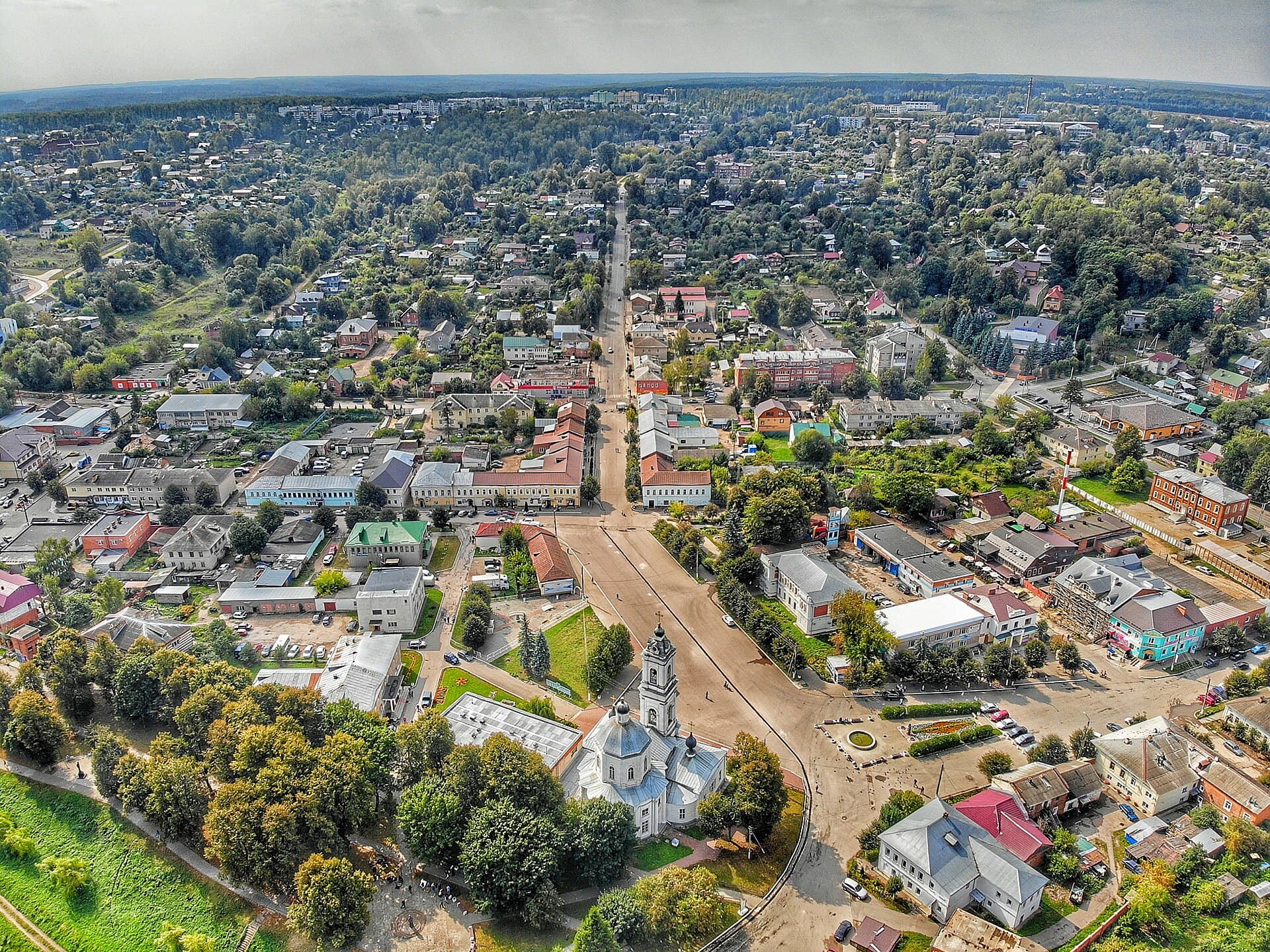
Tarusa is known as a haven for artists and writers, but one celebrated poetess made a specific, poignant request about her final resting place that you can still visit today, even though her body isn't there.
LenskiyS / CC BY-SA 4.0, via Wikimedia CommonsTarusa
Self-guided audio walking tour of Tarusa — GPS route, offline playback, story-driven narration in 32 languages.
“Where the Oka River flows, and muses still linger.”
Tarusa, as no one tells it.
Not the postcards. The stories even locals don't know — whispered in your ear, right where they happened.
During the Soviet era, certain intellectuals and dissidents found themselves exiled from major cities like Moscow, yet many chose to settle in Tarusa. Why this seemingly quiet town?
This small town holds an impressive art collection, but it's not just local artists who are featured. One of Russia's most renowned landscape painters has a strong connection to the area, influencing its artistic legacy.
Discover every secret of Tarusa
Every address, every reveal in full — in your ear, right where it happened.
You pick your stops. You walk. The voice reveals what the others miss.

How long do you have in Tarusa?
Your self-guided audio tour of Tarusa is ready — pick your landmarks, choose your language, and start the moment you arrive.
BuyPoint your phone, follow the arrow, never get lost
Lume has a built-in augmented-reality guide. Hold your phone up and its camera shows the street ahead of you, with a glowing arrow laid over the real view that always points to your next stop — no map to puzzle over, no wrong turns. Like everything in Lume, it works fully offline.
The story of Tarusa
Tarusa, a small town on the left bank of the Oka River in Russia's Kaluga Oblast, offers a tranquil escape from the bustling pace of modern life. With a population of just under 10,000, it maintains a charming, intimate atmosphere, often described as a preserved picture of the 19th century. Its scenic landscapes, characterized by hilly riverbanks and serene natural beauty, have drawn artists, writers, and musicians for centuries, earning it the moniker "City of Muses" or "Russian Montmartre."
Visitors to Tarusa can immerse themselves in a deep cultural heritage, exploring historical architecture, art galleries, and museums dedicated to the celebrated figures who found inspiration here. The town's connection to literary giants like Marina Tsvetaeva and Konstantin Paustovsky is deeply woven into its identity, with their former homes now inviting museums. Tarusa provides a unique opportunity to experience a quieter, more contemplative side of Russian culture, where leisurely strolls along the Oka embankment and explorations of historic streets reveal a timeless allure.
From Principality to Artistic Haven
Tarusa's history stretches back to 1246, when it was first mentioned in chronicles as the capital of one of the Upper Oka Principalities. Its strategic location on the high left bank of the Oka River, at its confluence with the Tarusa River, provided natural protection and made it an important defensive outpost. For centuries, it served as a crucial link in the "Coastal Service" system, a defensive line safeguarding the Muscovite state from southern raids by groups like the Crimean Tatars and Nogai Horde.
Throughout the medieval period, Tarusa's allegiance shifted between Moscow and Lithuania, experiencing periods of devastation during conflicts. In 1392, Grand Prince Vasily I annexed the Tarusa Principality to Moscow, integrating it into the unified system of Russian lands. However, it wasn't until the late 15th century, after the Great Stand on the Ugra River in 1480, that the Kaluga lands, including Tarusa, definitively became part of Russia. As state borders moved further south, Tarusa's military significance waned, and it began its transformation from a fortress town into a quiet provincial settlement.
The 18th century brought a new chapter with Peter I's administrative reforms, assigning Tarusa to the Moscow Governorate in 1708. Empress Catherine II granted it official district town status in 1776, and a general development plan was adopted in 1779 after a major fire, establishing its characteristic block-based layout. By the late 19th century, Tarusa's scenic landscapes began attracting creative individuals, laying the foundation for its reputation as an artistic hub. Artist Vasily Polenov settled nearby in 1892, and the Tsvetaev family began spending their summers here, profoundly shaping the town's cultural identity.
The 20th century saw Tarusa become a refuge for many dissidents and intellectuals during the Soviet era, often due to the "101st kilometer rule" that forced them to live a certain distance from Moscow. This influx of creative minds further cemented its status as a cultural sanctuary. In 1961, Konstantin Paustovsky championed the publication of the literary almanac "Tarusa Pages," a rare uncensored work that was later declared ideologically harmful. Today, Tarusa remains a cherished historical settlement of federal significance, preserving its unique blend of history, nature, and artistic spirit.
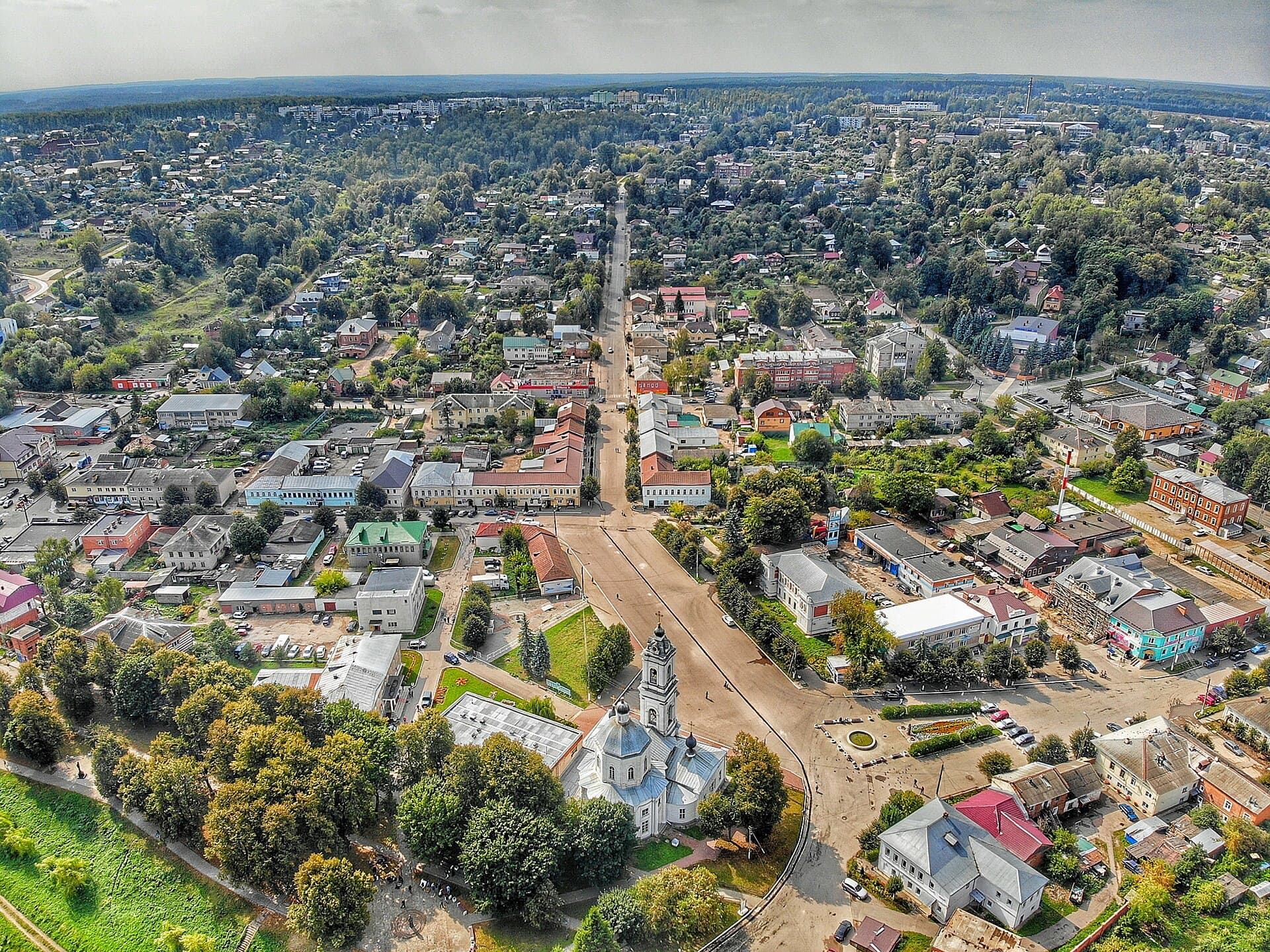
Tarusa's compact size makes it ideal for exploration on foot, with many attractions within easy walking distance. Begin your journey at the Oka River Embankment, offering serene views and pleasant strolls, especially at sunset. Here, you'll find the poignant Cenotaph of Marina Tsvetaeva, a stone commemorating the poet's wish to be buried in Tarusa.
Dominating Lenin Square is the Cathedral of Peter and Paul, an 18th-century edifice with a history of restoration. Adjacent to it is the Tarusa Art Gallery, a branch of the Kaluga Regional Museum of Art, showcasing works by notable Russian artists. A short distance away, on Resurrection Mountain, stands the Church of the Resurrection of Christ, the oldest stone building in Tarusa, dating back to the 17th century. Nearby, the Igumnov ravine holds a Holy Spring and the Bogolyubov Chapel.
Delve into the town's literary connections by visiting the Tsvetaev Family Museum, where you can learn about Marina Tsvetaeva's childhood summers, and the House-Museum of Konstantin Paustovsky, dedicated to the writer who brought Tarusa national fame. You'll also encounter monuments to Marina Tsvetaeva, Konstantin Paustovsky, and Bella Akhmadulina throughout the town. In the summer, consider a boat trip from the pier across the Oka to the Polenovo Estate, the former home of artist Vasily Polenov.
The best time to visit Tarusa for general outdoor tourist activities is from late June to mid-August, with a peak in the last week of July. During these summer months, daytime temperatures often exceed +20°C (68°F), reaching an average of +22–23°C (72-73°F), creating comfortable conditions for exploring. Spring (April-May) and early autumn (September-October) offer more moderate weather, with pleasant warmth in September. While precipitation is fairly even throughout the year, July can be slightly wetter, so an umbrella is always a good idea.
Tarusa is located on the left bank of the Oka River, approximately 76 kilometers (47 miles) northeast of Kaluga, the administrative center of the oblast, and about 140 kilometers from Moscow. The easiest way to explore Tarusa itself is on foot, as public transport within the town is not well-developed. For travel to surrounding areas or Kaluga, local buses are available.
To reach Tarusa from Moscow, you can take a bus, which takes approximately 2 hours and 30 minutes, or a combination of taxi and train, taking around 2 hours and 43 minutes. Driving from Moscow takes about 1 hour and 50 minutes. The local currency is the Russian Ruble (RUB), and credit cards are widely accepted in larger establishments, but it's advisable to carry cash for smaller shops and museums.
Accommodation options in Tarusa include hotels like the Tarusa Hotel and Gallery Art Hotel, as well as various apartments and holiday homes. It's recommended to book in advance, especially during peak season. While generally considered safe, standard travel precautions are always advised.
- What is Tarusa known for?
- Tarusa is widely known as a "City of Muses" or "Russian Montmartre" due to its long-standing appeal to artists, writers, and musicians, including Marina Tsvetaeva, Konstantin Paustovsky, and Vasily Polenov. It's also recognized for its tranquil provincial atmosphere and historical significance.
- How far is Tarusa from Moscow?
- Tarusa is located approximately 140 kilometers (87 miles) from Moscow. Travel by bus takes about 2.5 hours, and by car, it's roughly a 1 hour and 50 minute drive.
- What currency is used in Tarusa?
- The official currency used in Tarusa, as in all of Russia, is the Russian Ruble (RUB).
- Are there any literary connections in Tarusa?
- Yes, Tarusa has strong literary connections. It was a beloved place for poet Marina Tsvetaeva and her family, and writer Konstantin Paustovsky lived there. The town also played a significant role in Soviet dissident literature with the publication of "Tarusa Pages."
- What kind of climate does Tarusa have?
- Tarusa experiences a humid continental climate with four distinct seasons. Summers are warm and pleasant, with average daytime temperatures in July and August often exceeding +20°C (68°F). Winters are generally cold, with temperatures typically below freezing.
- Is it possible to visit the Polenovo Estate from Tarusa?
- Yes, in the summer season, small ships operate daily from the Tarusa pier, offering trips across the Oka River to the Polenovo Estate, the former home of the renowned artist Vasily Polenov.
Tarusa in your own language — all 32· 32
Tarusa in Korean, in Chinese or in Hebrew — and 29 more languages, every stop narrated by a native voice. The widest language range of any self-guided audio tour.
Available in:
- English
- FrenchFrançais
- SpanishEspañol
- GermanDeutsch
- ItalianItaliano
- PortuguesePortuguês
- DutchNederlands
- PolishPolski
- SwedishSvenska
- DanishDansk
- NorwegianNorsk
- FinnishSuomi
- RussianРусский
- UkrainianУкраїнська
- TurkishTürkçe
- CzechČeština
- HungarianMagyar
- RomanianRomână
- BulgarianБългарски
- GreekΕλληνικά
- Japanese日本語
- Korean한국어
- Chinese中文
- Arabicالعربية
- Hebrewעברית
- Hindiहिन्दी
- Thaiไทย
- VietnameseTiếng Việt
- IndonesianBahasa Indonesia
- MalayBahasa Melayu
- CatalanCatalà
- BasqueEuskara