Cemitério Santa Izabel
The striking 'Byzantine Cemetery' of Mucugê, with its white mausoleums carved into a rocky mountainside, holds a secret born not from grand design, but from a devastating event.
Full story unlocks in the tour
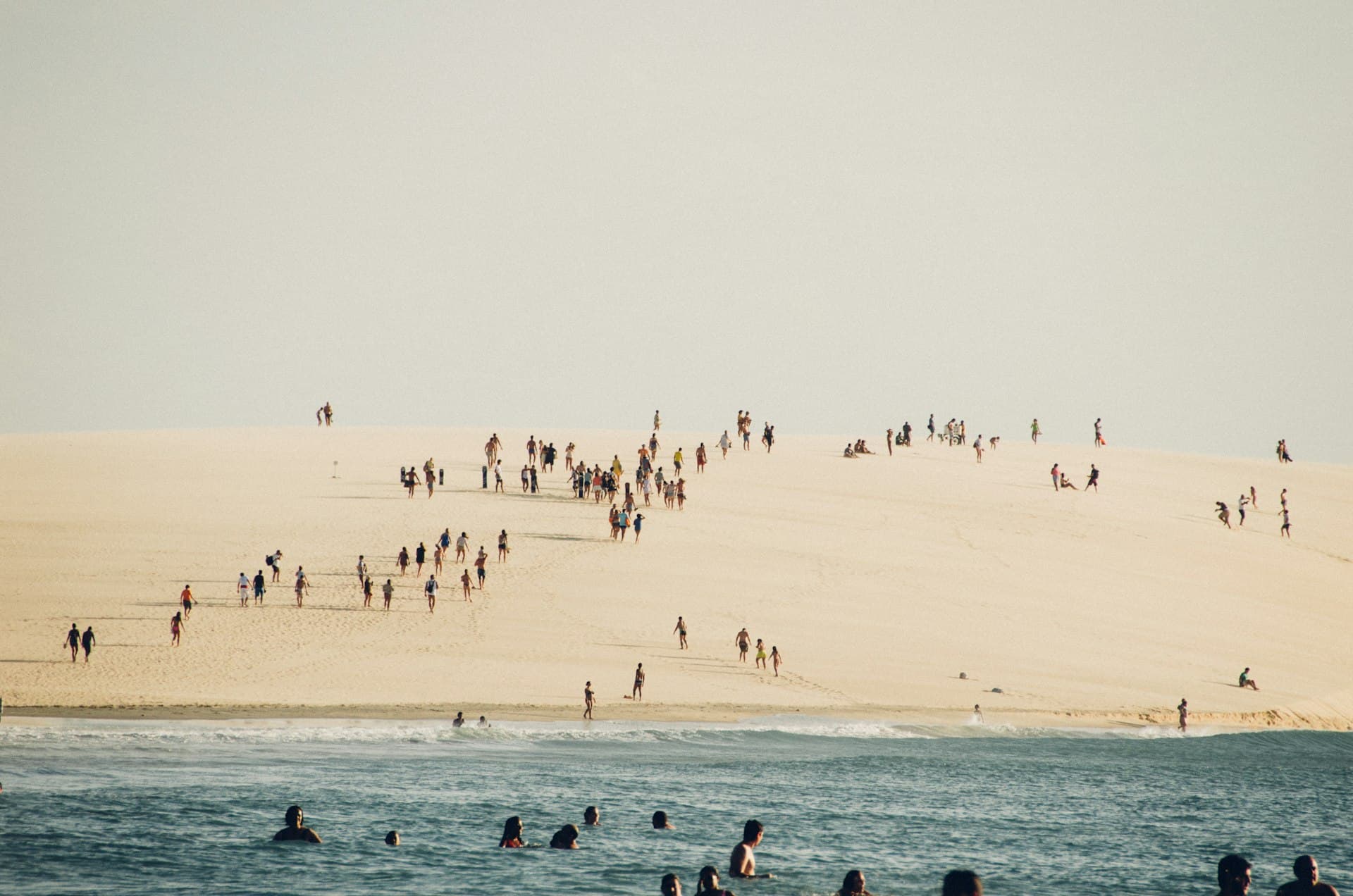 Photo of Jericoacoara, via Wikimedia Commons
Self-guided audio walking tour of Mucugê — GPS route, offline playback, story-driven narration in 32 languages.
“Where diamond history meets the wild heart of Bahia.”
Not the postcards. The stories even locals don't know — whispered in your ear, right where they happened.
The striking 'Byzantine Cemetery' of Mucugê, with its white mausoleums carved into a rocky mountainside, holds a secret born not from grand design, but from a devastating event.
The discovery that ignited the diamond rush in Bahia wasn't the result of meticulous prospecting, but a simple, everyday act.
Unlike the seafood-rich flavors often associated with coastal Bahia, the traditional dishes of Mucugê tell a story of sustenance and survival in the mountains.
Discover every secret of Mucugê
Every address, every reveal in full — in your ear, right where it happened.
You pick your stops. You walk. The voice reveals what the others miss.


Your self-guided audio tour of Mucugê is ready — pick your landmarks, choose your language, and start the moment you arrive.
BuyLume has a built-in augmented-reality guide. Hold your phone up and its camera shows the street ahead of you, with a glowing arrow laid over the real view that always points to your next stop — no map to puzzle over, no wrong turns. Like everything in Lume, it works fully offline.
Mucugê, a captivating town in the Chapada Diamantina mountains of Bahia, offers a unique blend of natural splendor and historical intrigue. As one of the region's oldest settlements, its identity is deeply rooted in the 19th-century diamond boom, a period that profoundly shaped its culture and urban landscape. With a population of approximately 10,000, Mucugê maintains a peaceful, small-town atmosphere, providing a serene escape for travelers.
The town serves as a gateway for exploring the diverse landscapes of the Chapada Diamantina, known for its dramatic cliffs, verdant forests, and cascading waterfalls. Its ancient streets are lined with well-preserved colonial mansions and colorful facades, reflecting the wealth and architectural heritage of its past. Mucugê functions as a living museum, where the legacy of the diamond era intertwines with the raw beauty of Brazil's diverse ecosystems.
The history of Mucugê is intrinsically linked to the diamond cycle in Bahia, beginning with the discovery of valuable stones in the Cumbuca River in 1844. This event sparked an immediate influx of prospectors and adventurers, rapidly transforming the uninhabited area into a flourishing settlement. Initially named Vila de Santa Isabel do Paraguaçu, the settlement quickly gained city status by 1847 due to its rapid population growth and newfound wealth.
Diamond mining became the primary engine of Mucugê's development, establishing it as the first major mining center in this part of Brazil. During its prime, the city flourished as a key trading hub, facilitating the flow of goods from the state capital and the export of precious stones. The prosperity of this era is still visible in Mucugê's urban layout, characterized by well-preserved colonial architecture, including beautiful mansions (sobrados) built in the Portuguese colonial style. These structures are now protected as historical heritage.
Beyond its architectural charm, Mucugê's early history is marked by the construction of the unique Santa Izabel Cemetery in the 1850s. This distinctive cemetery, with its Byzantine and Neo-Gothic style mausoleums built into the rocky mountainside, was a response to a cholera epidemic in 1855. By the end of the 19th century, the discovery of diamond deposits in South Africa led to an economic decline in Mucugê, which paradoxically helped preserve its historic center. Today, the town has reinvented itself through tourism, agribusiness, and cultural preservation, offering visitors a glimpse into its storied past and dynamic present.
Begin your exploration at the Santa Izabel Cemetery, often called the 'Byzantine Cemetery,' for its striking white mausoleums built directly into the rocky mountainside. This iconic landmark offers a singular and picturesque experience. Delve into the region's past at the Museu do Garimpo (Diamond Museum), which preserves the memory of the diamond rush through a collection of tools, weapons, and daily items used by prospectors.
For nature enthusiasts, the Sempre-Viva Municipal Park is a cherished destination. This protected area is dedicated to preserving local flora, including the famous 'everlasting flowers,' and features accessible trails leading to refreshing waterfalls like Cachoeira do Tiburtino and Cachoeira da Piabinha. For a more adventurous trek, the trail to Cachoeira das Andorinhas offers expansive views and a serene atmosphere. Wander through the town's ancient streets to admire the well-preserved 19th-century colonial buildings and colorful facades.
Mucugê experiences a mild tropical climate year-round, influenced by its altitude, which prevents extreme heat. The warmest period is from October to March, with daytime temperatures around 26-27°C, though this is also the rainier season, especially from January to April. For hikers, the dry season from May to October is ideal, offering safer and more comfortable trail conditions with less rainfall. Even during the 'driest' months, some precipitation is common, so a raincoat is always a good idea. Nights can be cool, particularly from June to August, with temperatures dropping to 14-15°C.
Mucugê is small enough to explore its historic center comfortably on foot; public transport within the town is not available. To reach distant waterfalls and the Sempre-Viva Municipal Park, a vehicle is necessary. Given the uneven ancient streets and rocky trails, sturdy trekking boots and comfortable walking shoes are essential. Dress in layers, as days are light and breathable, but evenings can be surprisingly cool due to the elevation. Consider hiring a local guide for safety and deeper insight, especially for exploring waterfalls and viewpoints. While Portuguese is the primary language, some English may be spoken in tourist-oriented areas. Be prepared for limited mobile signal in remote areas surrounding the town.
Mucugê in Korean, in Chinese or in Hebrew — and 29 more languages, every stop narrated by a native voice. The widest language range of any self-guided audio tour.
Available in: