Die Corbeille
Die Corbeille, Neftas grünes Herz, ist ein geologisches Wunderwerk, das einst eine außergewöhnliche Fülle natürlicher Quellen besaß.
Die ganze Geschichte wird in der Tour freigeschaltet
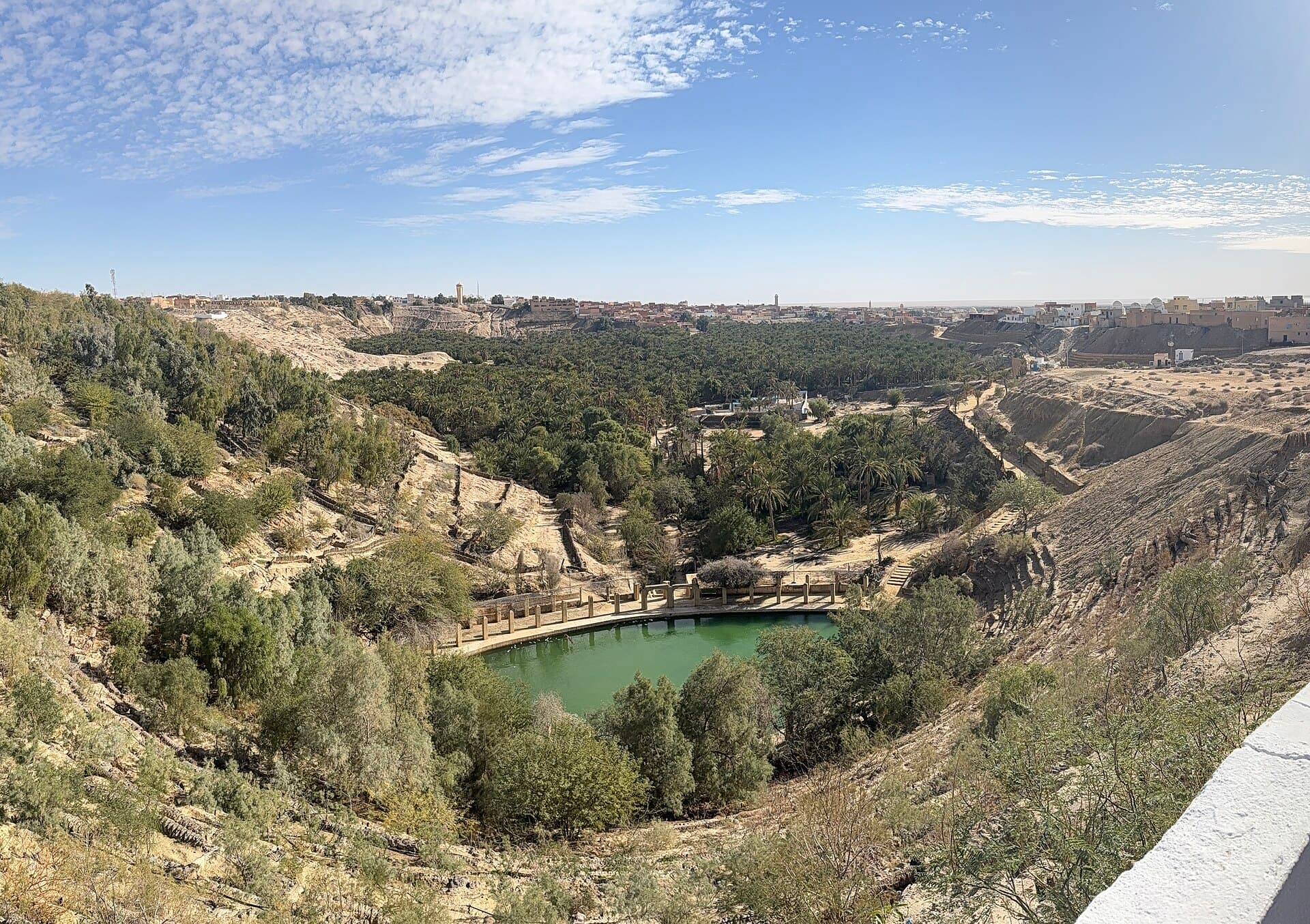 Rawen Ab / CC BY-SA 4.0, via Wikimedia Commons
Selbstgeführte Audio-Walking-Tour durch Nefta — GPS-Route, Offline-Wiedergabe, erzählerische Narration in 32 Sprachen.
“Wo die Wüste alte Sufi-Hingabe und filmische Erzählungen atmet.”
Nicht die Postkarten. Die Geschichten, die selbst Einheimische nicht kennen – dir ins Ohr geflüstert, genau dort, wo sie geschahen.
Die Corbeille, Neftas grünes Herz, ist ein geologisches Wunderwerk, das einst eine außergewöhnliche Fülle natürlicher Quellen besaß.
Etwas außerhalb von Nefta wurde eine ganze Stadt in der Wüste für eine weit, weit entfernte Galaxie errichtet, und sie steht noch immer.
Der berühmte „Iglu“-Eingang zu Luke Skywalkers Kindheitshaus auf Tatooine hat einen geheimen Zwilling.
Entdecke jedes Geheimnis von Nefta
Jede Adresse, jede Enthüllung vollständig – in deinem Ohr, genau dort, wo es geschah.
Du wählst deine Stationen. Du gehst. Die Stimme enthüllt, was andere übersehen.

Deine selbstgeführte Audio-Tour durch Nefta ist bereit – wähle deine Sehenswürdigkeiten, deine Sprache und starte, sobald du ankommst.
KaufenLume enthält einen integrierten Augmented-Reality-Guide. Halten Sie Ihr Handy hoch: Die Kamera zeigt die Straße vor Ihnen, mit einem leuchtenden Pfeil über dem echten Bild, der immer auf Ihren nächsten Stopp zeigt — keine Karte zum Rätseln, keine falschen Abzweigungen. Wie alles bei Lume funktioniert es komplett offline.
Nefta, oft als „Perle des Jerid“ bezeichnet, ist eine Oasenstadt im südwestlichen Tunesien, nahe der algerischen Grenze gelegen. Sie liegt nördlich des weitläufigen Chott el Djerid, eines Salzsees, der für seine Phosphatvorkommen bekannt ist. Diese Wüstenoase, gespeist von unterirdischen Quellen und Aquiferen, diente historisch als wichtiger Knotenpunkt auf transsaharischen Handelsrouten und förderte seit römischer Zeit Landwirtschaft und kulturellen Austausch.
Mit ihrer unverwechselbaren Architektur, die goldfarbene Ziegelfassaden aufweist, die so gestaltet sind, dass sie Gebäude vor der intensiven Sonne schützen, bietet Nefta einen Einblick in traditionelles Saharan-Oasendesign. Die Stadt ist ein bedeutendes landwirtschaftliches Zentrum im Gouvernement Tozeur und berühmt für ihre ausgedehnten Dattelpalmenhaine, die Sorten für die lokale Küche und die Herstellung von Palmenwein liefern. Neftas ruhige Atmosphäre und die Mischung aus beständiger Geschichte und natürlicher Schönheit schaffen ein unvergessliches Reiseerlebnis.
## Antike Ursprünge und römische Präsenz Die Ursprünge Neftas werden auf Hirten aus dem Königreich Napata zurückgeführt. Die Römer, die die Stadt als Nepte oder Aggarsel Nepte kannten, errichteten Festungen in der Oase, um sich gegen Einfälle von WüstenNomaden zu verteidigen. Während der byzantinischen Ära fungierte Nefta zusammen mit Tozeur als Bischofssitz, was auf seine regionale Bedeutung hinweist.
## Entstehung eines islamischen und sufistischen Zentrums Mitte des 7. Jahrhunderts wurde Nefta von den Arabern erobert und nahm trotz anfänglichen Widerstands den Islam an. Eine christliche Gemeinde existierte noch 1194. In den folgenden Jahrhunderten entwickelte sich Nefta zu einem wichtigen Rastplatz für Karawanen und wurde zeitweise zu einem der wichtigsten Handelszentren Tunesiens. Sein Niedergang begann im 15. Jahrhundert aufgrund zunehmender nomadischer Überfälle und einer allgemeinen Reduzierung des Karawanenhandels.
Nefta hat eine tiefe religiöse Bedeutung und wird von vielen Sufis als spirituelles Zuhause des Sufismus, einer mystischen Strömung des Islam, angesehen. Die Stadt ist ein Pilgerzentrum, das das ganze Jahr über Besucher anzieht. Sie beherbergt über 24 Moscheen und mehr als 100 Marabouts (Gräber von Sufi-Heiligen), die besonders im Viertel El Bayadha und den umliegenden Oasen konzentriert sind. Diese Marabouts, die für ihre Heiligkeit verehrt und zahlreichen Wundern zugeschrieben werden, ziehen weiterhin Pilger aus dem gesamten südlichen Tunesien und Algerien an. Diese tiefe Verehrung spiegelt die anhaltende Vitalität des Sufismus wider, einer Bewegung, die im 12. Jahrhundert um den Sufi Abu Madian entstand. Nefta wird aufgrund seines Status als bedeutendes sufistisches Bollwerk manchmal als „Kairouan des Südens“ bezeichnet.
## Moderne Wiederbelebung und filmische Anerkennung Nefta erlebte mit der Ankunft der Franzosen im Jahr 1881 eine Erneuerung. In den letzten Jahrzehnten erlangten die Salzebenen in der Nähe von Nefta internationale Anerkennung als Drehort für die Star Wars-Filme. Die Stadt beherbergte das Set für Luke Skywalkers Haus und den Weltraumbahnhof Mos Espa und festigte damit ihren Platz in der Popkultur.
Beginnen Sie Ihre Erkundung bei der Corbeille von Nefta, einer korbförmigen Oase, die von Quellen gespeist wird und einen starken Kontrast zwischen üppigem Grün und der Wüstenkulisse bietet. Von der Terrasse des alten Restaurants aus können Sie einen weiten Blick über die Corbeille genießen. Schlendern Sie durch die Altstadt-Medina, die sich durch ihre goldfarbenen Ziegelfassaden und zahlreichen Moscheen auszeichnet, darunter die beeindruckende Sidi M'Khareg. Während viele Moscheen während der Gebetszeiten nicht zugänglich sind, kann ein lokaler Führer bei Besuchen einiger islamischer Stätten helfen. In der Medina finden Sie auch Frauen, die traditionelle Kelims (Wollteppiche) weben.
Für Star Wars-Enthusiasten ist eine Reise zum Mos Espa Filmset und zum Lars Homestead (Außenansicht von Luke Skywalkers Haus) eine lohnende Erfahrung. Diese ikonischen Orte sind von Nefta aus leicht zu erreichen. Ein weiterer bemerkenswerter Ort ist Ong Jemal, eine Felsformation, die einem Kamelhals ähnelt und ebenfalls als Star Wars-Drehort diente. Erkunden Sie die weitläufige Palmen-Oase, eine ruhige Zuflucht, in der Dattelpalmen hoch wachsen, und erwägen Sie einen Wüsten-Spaziergang oder einen Kamelritt, um die weiten Sandlandschaften und Sonnenuntergänge zu erleben. Das Dar Chrait Museum bietet mit seinen Exponaten traditioneller Artefakte und archäologischer Funde Einblicke in die Geschichte und Kultur von Nefta.
Die angenehmste Zeit für einen Besuch in Nefta sind die kühleren Monate von Oktober bis April. In dieser Zeit sind die Temperaturen für die Erkundung der Oase und der umliegenden Wüstenlandschaften angenehmer, was sie ideal für Outdoor-Aktivitäten und Sightseeing macht. Frühling (März bis Mai) und Herbst (September bis November) bieten mildes und angenehmes Wetter. Sommer (Juni bis August) sind intensiv heiß und trocken, mit täglichen Höchsttemperaturen, die oft 94°F (34°C) übersteigen, was sie für ausgedehnte Erkundungen im Freien weniger geeignet macht.
Nefta ist etwa 20 km von Tozeur entfernt. Sie erreichen Nefta von Tunis aus mit dem Auto über die Autobahn nach Gabes und dann über Nationalstraßen durch Gafsa, Metlaoui, Dguache und Tozeur. Alternativ dauert eine Zugfahrt von Tunis nach Tozeur etwa 9 Stunden, gefolgt von einem Bus von Gabes nach Nefta. Sammeltaxis, bekannt als Louages, sind ebenfalls von Tunis nach Tozeur (6-7 Stunden) und dann von Tozeur nach Nefta verfügbar.
Innerhalb Neftas ist das Gehen üblich, um das Stadtzentrum zu erkunden. Taxis stehen für längere Strecken zur Verfügung. Es ist ratsam, lokales Bargeld in kleinen Scheinen mitzuführen, da Märkte und Straßenverkäufer oft nur Bargeld akzeptieren. Das Erlernen einiger grundlegender arabischer Sätze kann Ihre Interaktionen erheblich bereichern. Bei der Unterkunft reichen die Optionen von traditionellen Gästehäusern wie der Villa Dar Zargouni, die Suiten und einen Swimmingpool mit Blick auf die Oase bietet, bis hin zu Hotels im nahegelegenen Tozeur.
Nefta — Koreanisch, Chinesisch, Hebräisch und 29 weitere Sprachen, jede Station von einer muttersprachlichen Stimme erzählt. Die größte Sprachauswahl aller selbstgeführten Audiotouren.
Verfügbar auf: