New Haven Green
This public park holds a secret beneath its manicured lawns.
Full story unlocks in the tour
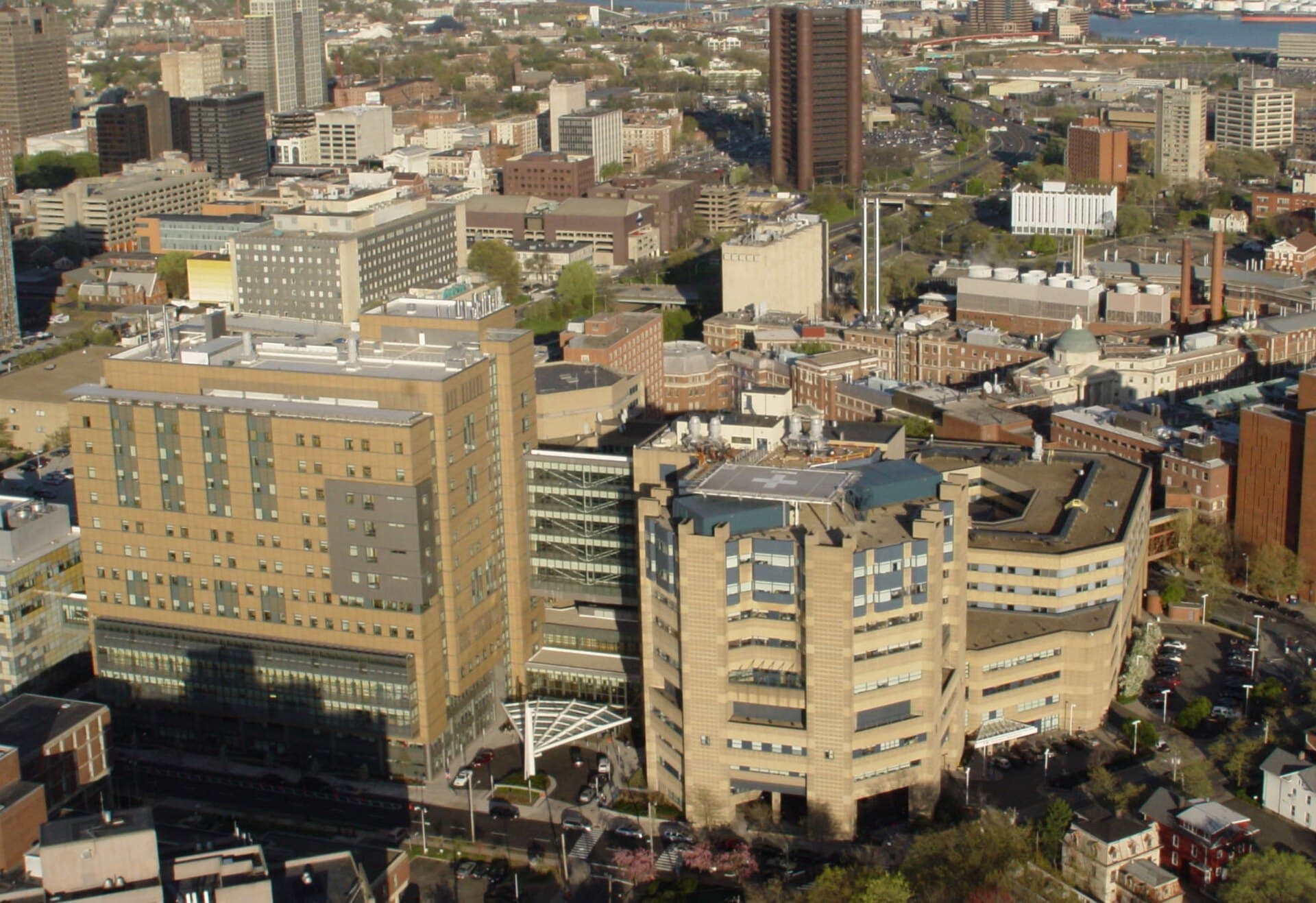 YNHHEditor / CC BY-SA 3.0, via Wikimedia Commons
Self-guided audio walking tour of New Haven — GPS route, offline playback, story-driven narration in 32 languages.
“Where enduring streetscapes meet modern ingenuity and legendary pizza.”
Not the postcards. The stories even locals don't know — whispered in your ear, right where they happened.
This public park holds a secret beneath its manicured lawns.
The hamburger, a global icon, has a surprising origin story tied to a small New Haven eatery.
This striking building at Yale University appears to have no windows, a design choice that serves a crucial purpose.
Discover every secret of New Haven
Every address, every reveal in full — in your ear, right where it happened.
You pick your stops. You walk. The voice reveals what the others miss.


Your self-guided audio tour of New Haven is ready — pick your landmarks, choose your language, and start the moment you arrive.
BuyLume has a built-in augmented-reality guide. Hold your phone up and its camera shows the street ahead of you, with a glowing arrow laid over the real view that always points to your next stop — no map to puzzle over, no wrong turns. Like everything in Lume, it works fully offline.
New Haven, Connecticut, is a city where centuries of history intertwine with a dynamic cultural scene and a reputation for culinary innovation. As the second-largest city in Connecticut and home to Yale University, it offers a distinct blend of academic gravitas and urban energy. From its meticulously planned colonial origins to its embrace of modern architecture, New Haven presents a compelling narrative for any curious traveler.
The city's identity is deeply shaped by its intellectual institutions, particularly Yale, which contributes significantly to its museums, theaters, and overall cultural vibrancy. Beyond the university, New Haven is a hub for diverse cuisine, notably its unique 'apizza' style, and offers a lively downtown area with shops, festivals, and a palpable sense of community.
New Haven's story began in 1638 when English Puritans, led by John Davenport and Theophilus Eaton, established a settlement seeking religious freedom. Just a year later, the city became one of the first planned cities in America, laid out in a distinctive three-by-three grid known as the 'Nine Square Plan.' At the heart of this design was the New Haven Green, a 16-acre common block that remains a central feature of downtown today.
Initially known as Quinnipiac, after the Native American inhabitants, the settlement was renamed New Haven in 1640, likely after Newhaven, England. In 1643, it joined with nearby towns to form the New Haven Colony. However, in 1665, the New Haven colony reluctantly merged with the more liberal Connecticut Colony, based in Hartford. New Haven served as co-capital with Hartford from 1701 until 1875. The city played an active role in the American Revolution, serving as a military supply depot, though it was sacked by loyalist forces in 1779.
New Haven earned its enduring nickname, 'The Elm City,' due to America's first public tree planting program, initiated in 1790 by James Hillhouse, who began planting elm trees. The 18th and 19th centuries saw significant industrialization, with New Haven becoming a focal point for innovation. Notable inventions originating here include the cotton gin, the steamboat, the corkscrew, and even the lollipop. The city also became an important center for abolitionist sentiment during the American Civil War.
Yale University, founded in 1701 and relocated to New Haven in 1716, has been a cornerstone of the city's identity and development. In the post-World War II era, New Haven transformed into a nationally recognized laboratory for Modernist architecture and urban planning. Under the leadership of Mayor Richard C. Lee and Yale President A. Whitney Griswold, the city embraced bold architectural experiments, recruiting premier architects like Paul Rudolph and Eero Saarinen, who used New Haven as a real-time laboratory. This period resulted in numerous landmark buildings that contribute to New Haven's unique architectural landscape, where colonial layouts coexist with striking 20th-century modernism.
A visit to New Haven often begins at the historic New Haven Green, a 16-acre public park that has been central to the city since its founding in 1638. It's surrounded by three historic churches: Center Church, Trinity Episcopal Church, and United Church. Explore the Yale University Art Gallery and the Yale Peabody Museum of Natural History, both offering extensive collections, with the latter housing a famous 67-foot brontosaurus fossil. Do not miss the distinctive architecture of the Beinecke Rare Book & Manuscript Library and Ingalls Rink, often called the 'Yale Whale.'
For a taste of New Haven's culinary fame, head to Wooster Street in Little Italy, the birthplace of New Haven-style 'apizza.' Iconic pizzerias like Frank Pepe Pizzeria Napoletana, Sally's Apizza, and Modern Apizza continue a beloved tradition. For scenic views, hike to the top of East Rock Park to the Soldiers and Sailors Monument, offering panoramas of the city and Long Island Sound. Lighthouse Point Park provides another opportunity for coastal enjoyment. The Shubert Theatre is a historic venue for performances, and the Knights of Columbus Museum offers insight into the organization's history.
New Haven experiences four distinct seasons. For warm-weather activities and comfortable conditions, the best time to visit is from May through September. July and August offer the warmest temperatures, with highs reaching 28°C (82°F), ideal for enjoying beaches and outdoor activities, though humidity is a factor. The shoulder seasons of late spring (May-early June) and early autumn (mid-September-October) provide pleasant temperatures and fewer crowds. October is particularly appealing for colorful fall foliage. Winters are cold with moderate snowfall from December to March, and hotel rates are typically lower.
New Haven is easily accessible by train, with Metro-North Railroad offering service to New York City in under two hours from Union Station. Shoreline East and Amtrak also serve the city. Locally, CT Transit operates 24 bus routes originating from the New Haven Green. Major roadways include Interstates 95 and 91. While downtown New Haven is walkable, ride-sharing services are readily available. Tweed New Haven Airport (HVN) offers regional air travel, connecting to Philadelphia for wider destinations. The city's cost of living is higher than the national average, though housing costs can be reasonable. The downtown area offers a mix of office spaces, shopping, restaurants, and cultural venues.
New Haven in Korean, in Chinese or in Hebrew — and 29 more languages, every stop narrated by a native voice. The widest language range of any self-guided audio tour.
Available in: