Fort Saybrook
The very first European child born in Connecticut arrived not in a peaceful settlement, but within the walls of a contested fort.
Full story unlocks in the tour
 Juliejules / CC BY 3.0, via Wikimedia Commons
Self-guided audio walking tour of Old Saybrook — GPS route, offline playback, story-driven narration in 32 languages.
“Where the Connecticut River meets the Sound, the past echoes with maritime tales and quiet discoveries.”
Not the postcards. The stories even locals don't know — whispered in your ear, right where they happened.
The very first European child born in Connecticut arrived not in a peaceful settlement, but within the walls of a contested fort.
A seemingly ordinary colonial house once served as a bustling hub for sailors and a point of entry for international trade.
The first beacon at Lynde Point was so poorly received by mariners that they demanded it be entirely rebuilt, not just improved.
Discover every secret of Old Saybrook
Every address, every reveal in full — in your ear, right where it happened.
You pick your stops. You walk. The voice reveals what the others miss.

Your self-guided audio tour of Old Saybrook is ready — pick your landmarks, choose your language, and start the moment you arrive.
BuyOld Saybrook, Connecticut, sits at the strategic mouth of the Connecticut River where it flows into Long Island Sound. This coastal town, with its invigorating salty air and expansive views, offers a blend of historical significance and small-town character. It's a place where the echoes of colonial beginnings mingle with the rhythm of contemporary life, making it a compelling destination for those seeking both relaxation and a connection to early American history.
The town's identity is deeply intertwined with its maritime heritage, evident in its more than 100 homes designated as historically significant and its long-standing tradition as a center for coastal trade. From tranquil beaches and nature trails to inviting Main Street shops and dining, Old Saybrook provides a diverse array of experiences. Whether you're drawn to its historic sites, natural beauty, or community events, Old Saybrook invites you to explore its unique story.
Before European arrival, the peaceful Algonquin Nehantic Indians inhabited the area now known as Old Saybrook, with a village at Saybrook Point. Around 1590, the Nehantic and other peaceful Algonquin tribes in the Connecticut River Valley were conquered by the more warlike Pequots. The first European to explore the Connecticut River was Adrian Block in 1614, sent by the Dutch West India Company to map and claim the eastern coast of "New Netherlands." The Dutch initially established trading posts, including one at Saybrook Point, primarily for the fur trade.
In 1631, the Earl of Warwick signed the Warwick Patent, a unique deed conveying a vast tract of New England land to 15 lords and gentlemen, including Viscount Saye & Sele and Lord Brooke, in whose honor the future colony would be named. Fearing permanent Dutch occupation, the English commissioned John Winthrop Jr. as the first Governor of the Connecticut territory in 1635. Winthrop dispatched a small vessel with 20 men to seize control of Saybrook Point, arriving on November 24, 1635, and quickly establishing a defensive position with cannons.
Lieutenant Lion Gardiner was hired to build a fort and lay out a town. He arrived in March 1636 with supplies and 12 men to construct what became Fort Saybrook, the earliest fortified settlement in New England. The fort became a critical military outpost and the site of the most prolonged fighting during the Pequot War from September 1636 to March 1637. It was within these besieged walls that the first European child in Connecticut, David Gardiner, was born in April 1636. The original fort was destroyed by fire in 1647, and its earthworks were eventually demolished in 1870 to make way for the Valley Railroad.
The Saybrook Colony initially struggled as many investors remained in England during the English Civil War. In 1644, Colonel George Fenwick, acting as an agent for the patentees, sold the colony to the more robust Connecticut Colony. Saybrook's strategic location at the river's mouth fostered its growth as an important center for coastal trade and trans-shipment from river boats to ocean-going ships. The 18th and 19th centuries saw the construction of numerous warehouses and wharves along North Cove, and many houses in the area were built by sea captains and ship owners engaged in trade with the West Indies, Europe, Africa, and South America.
Over time, outlying parishes separated from Saybrook, forming the present-day towns of Lyme, Old Lyme, Westbrook, Chester, Essex, and Deep River. Old Saybrook itself was created as a separate town from Saybrook in 1852 and further partitioned in 1854 when the northern part became Essex. Notably, Old Saybrook was the original site of the Collegiate School of Connecticut, chartered in 1701, which later moved to New Haven and became Yale University.
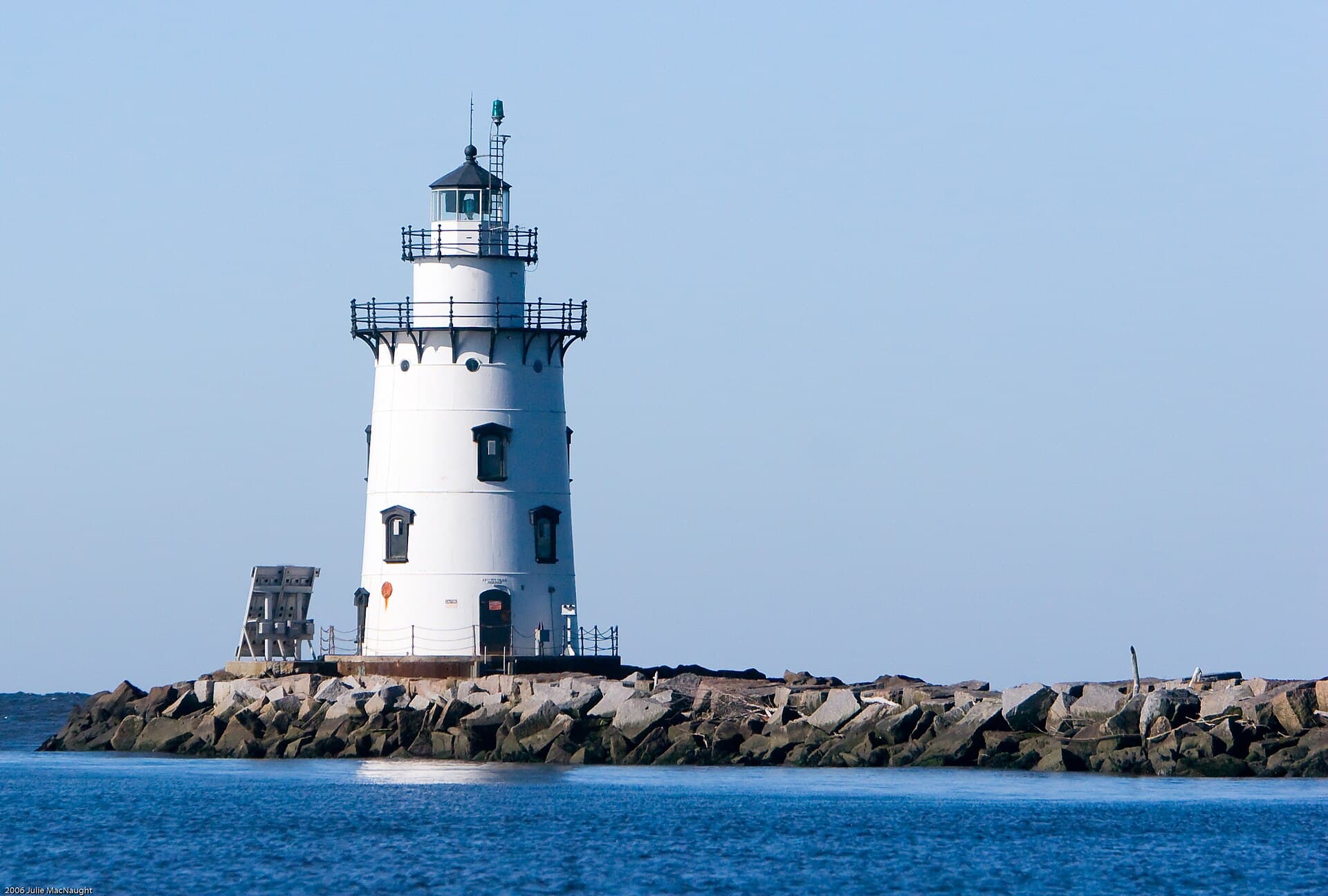
Old Saybrook offers a variety of sights, blending its enduring history with coastal beauty. Begin at Fort Saybrook Monument Park, where interpretive signs detail the site of the original 1635 fort and its role in the Pequot War. From Saybrook Point, you can enjoy views of the two iconic lighthouses: the Lynde Point Lighthouse (also known as the Inner Light), a striking 1838 brownstone tower, and the Saybrook Breakwater Lighthouse (the Outer Light), a distinctive sparkplug-style cast-iron structure from 1886. While both are private residences and not open to the public, they are best viewed from the shore or by boat.
Stroll along Main Street for unique shopping and dining opportunities. Visit the General William Hart House, headquarters of the Old Saybrook Historical Society, which offers insights into the town's past and features heritage gardens. The Black Horse Tavern, a historic 1712 building, stands as one of Connecticut's few remaining early 18th-century houses, now a private residence but notable for its architectural integrity and history as an inn and customs house. For outdoor enthusiasts, explore Harvey's Beach or Old Saybrook Town Beach for sun and sand, or take to the water with kayaking and paddleboarding. The town also hosts a summer concert series on the Town Green and a Christmas Stroll during the holidays.
The best time to visit Old Saybrook for warm-weather activities is from mid-June to mid-September. During these months, temperatures are pleasant, with average daily highs above 72°F (22°C), and skies are clearer, particularly in September. While summers are warm and humid, the fall offers beautiful New England autumn foliage, making it another appealing time for a visit, especially for scenic drives and outdoor exploration. Winters are cold and snowy, and spring can be rainy, though still offers opportunities for exploring the town's history.
Old Saybrook is easily accessible by car via I-95. The town is pedestrian-friendly, especially along Main Street and Saybrook Point. Public transportation options within the town are limited, so a car is recommended for exploring the wider area. Accommodations range from luxury resorts like Saybrook Point Resort & Marina to various other lodging options. The town offers a range of dining experiences, from casual eateries to upscale restaurants. For more in-depth historical information, the Old Saybrook Historical Society, located at the General William Hart House, and its Frank Stevenson Archives Building are valuable resources, though appointments may be needed for certain visits.
Old Saybrook in Korean, in Chinese or in Hebrew — and 29 more languages, every stop narrated by a native voice. The widest language range of any self-guided audio tour.
Available in: