Fort Trumbull State Park
The robust stone construction of Fort Trumbull, a grand 19th-century military installation, incorporates an unexpected architectural flourish that speaks to a broader cultural fascination.
Full story unlocks in the tour
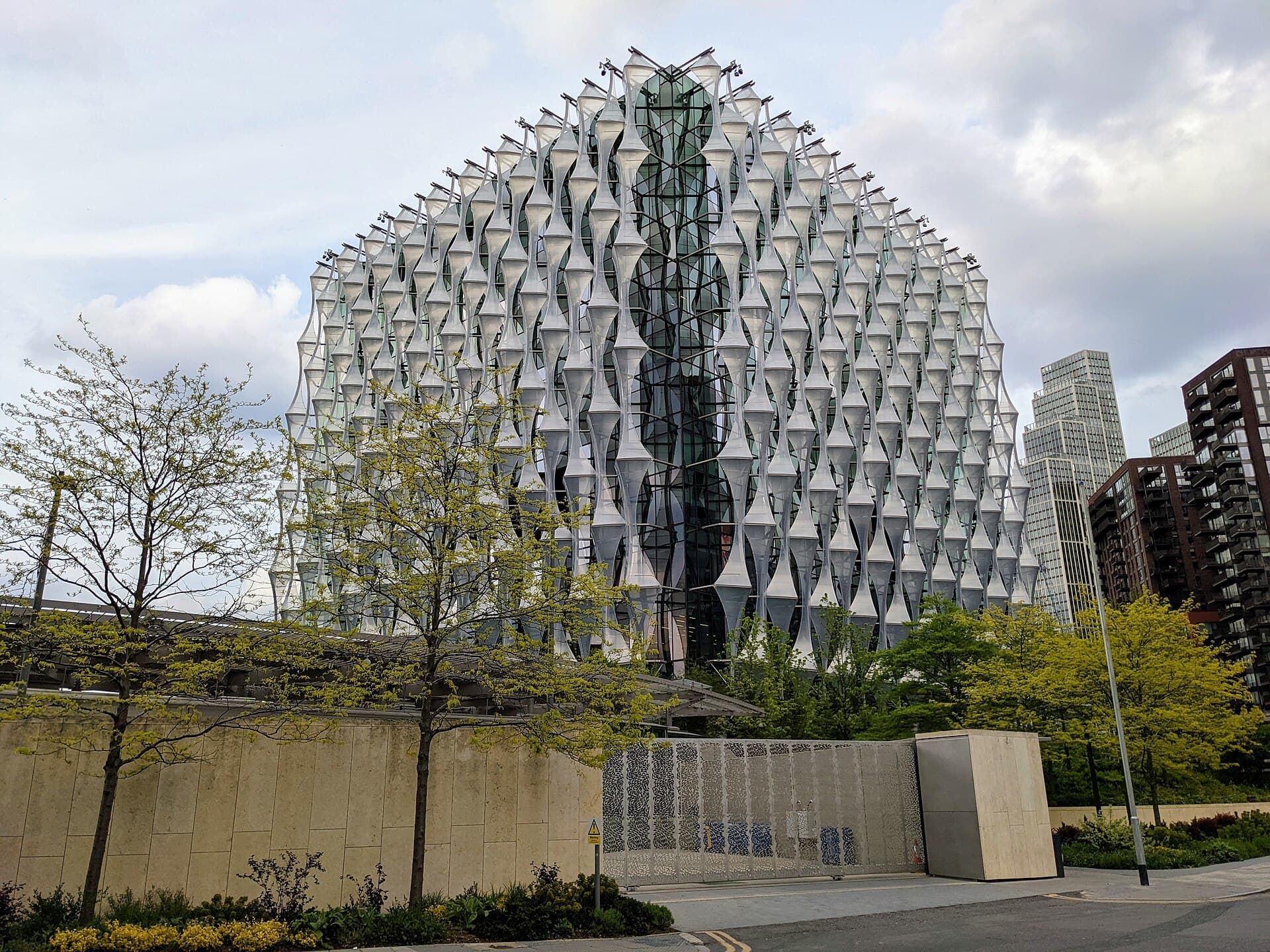 The wub / CC BY-SA 4.0, via Wikimedia Commons
Self-guided audio walking tour of New London — GPS route, offline playback, story-driven narration in 32 languages.
“Where the Thames meets Long Island Sound, a city shaped by ocean currents and artistic currents.”
Not the postcards. The stories even locals don't know — whispered in your ear, right where they happened.
The robust stone construction of Fort Trumbull, a grand 19th-century military installation, incorporates an unexpected architectural flourish that speaks to a broader cultural fascination.
This enduring lighthouse, the most venerable and tallest on Long Island Sound, offers a singular vista of other guiding lights.
A lively arts venue in New London stands upon a foundation literally resurrected from the embers of a significant historical conflagration.
Discover every secret of New London
Every address, every reveal in full — in your ear, right where it happened.
You pick your stops. You walk. The voice reveals what the others miss.

Your self-guided audio tour of New London is ready — pick your landmarks, choose your language, and start the moment you arrive.
BuyLume has a built-in augmented-reality guide. Hold your phone up and its camera shows the street ahead of you, with a glowing arrow laid over the real view that always points to your next stop — no map to puzzle over, no wrong turns. Like everything in Lume, it works fully offline.
New London, Connecticut, a seaport city where the Thames River flows into Long Island Sound, offers a compelling blend of maritime heritage and cultural vitality. Established in 1646 by John Winthrop, Jr., the city was originally recognized as Nameaug by the Pequot Indians, a designation meaning “good fishing place.” Its deep, wide harbor has sculpted its identity and commerce for centuries, providing a natural breakwater and sheltered waters.
Once the second-largest whaling port in the world, New London’s prosperity from this era financed much of its distinctive 19th-century architecture. Today, it serves as home to the United States Coast Guard Academy, Connecticut College, and Mitchell College, contributing to a diverse and dynamic community. The city’s waterfront remains a focal point, inviting exploration of historic sites, enjoyment of scenic views, and participation in local events.
New London’s modest size belies a wealth of experiences, from historic districts displaying various architectural styles to public spaces and cultural institutions. Whether drawn to its seafaring past, its artistic present, or its educational institutions, New London extends an invitation to discover its many facets.
## From Pequot Lands to Whaling Capital New London’s narrative commences with the Pequot people, who named the area Nameaug, recognizing its abundance for fishing. In 1646, John Winthrop, Jr. established the first English settlement, initially referred to as Pequot Plantation before its official naming as New London in 1658, after London, England. Its natural deep-water harbor swiftly established it as a significant commercial hub, with shipbuilding commencing as early as 1651. Trade with the West Indies and other colonies flourished, exchanging local goods for sugar, molasses, and rum.
During the American Revolutionary War, New London’s strategic harbor played a crucial role, with privateers capturing numerous British ships. However, this prominence also rendered it a target. In 1781, Benedict Arnold, a notorious traitor, led British forces in an assault that resulted in the burning of much of the city, including wharves, vessels, and over a hundred residences and businesses. The city required decades to recover from this devastating event.
By the 1830s, New London had ascended to become a global whaling center. By the mid-19th century, it was the second-largest whaling port globally, exceeded only by New Bedford and Nantucket, Massachusetts. The whaling industry fueled immense prosperity, generating over a million dollars in whale oil and bone in 1850 alone. This affluence funded the construction of many of the city’s distinctive buildings, including its downtown, finest homes, and public institutions. New London vessels established records, including the longest whaling voyage, spanning eleven years from 1858 to 1869 aboard the Nile, and the first American steam whaler, the Pioneer, which sailed in 1866. The industry’s decline began with the emergence of petroleum and gas, diminishing the demand for whale oil, and evolving attitudes toward animal welfare. The final whaling voyage from New London concluded in 1909.
## A Literary and Military Legacy New London holds a significant place in American literature as the boyhood summer residence of Nobel Prize-winning playwright Eugene O’Neill. His family’s Monte Cristo Cottage, now a National Historic Landmark and museum, served as the backdrop for two of his most acclaimed autobiographical plays, Long Day’s Journey Into Night and Ah, Wilderness! O’Neill’s connection to the sea and the city profoundly influenced his work, with many plays set on ships or in seaports.
New London is also a prominent military center, home to the United States Coast Guard Academy, established in 1876. The Academy educates future Coast Guard officers and is one of the smallest U.S. federal service academies. Fort Trumbull, a substantial granite fort erected between 1839 and 1852, possesses a long military history, serving various roles for the Army, Coast Guard, and Navy since colonial times. It famously trained over 15,000 Merchant Marine officers during World War II.
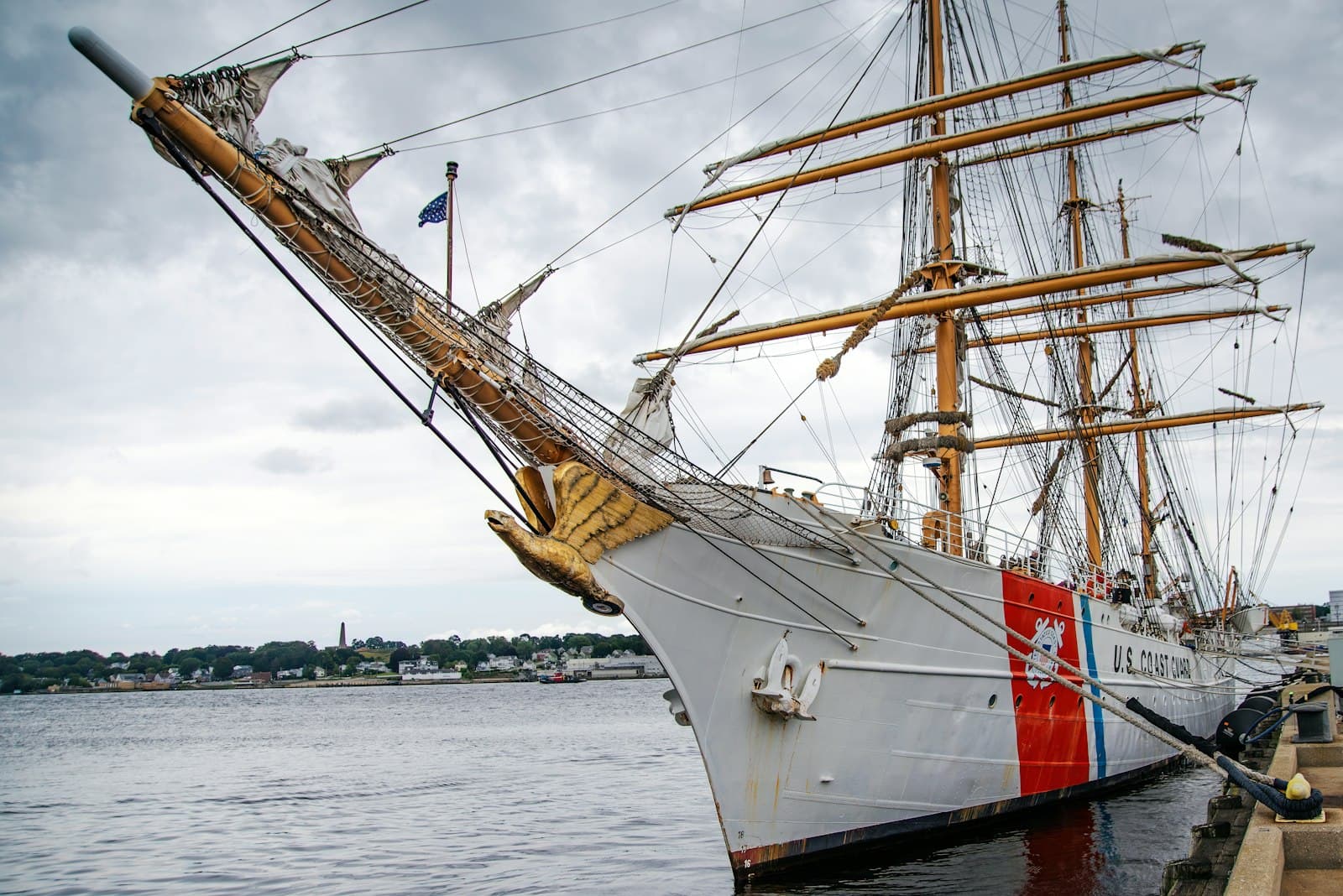
Begin your exploration at Fort Trumbull State Park, a 19th-century granite fort offering interactive exhibits, restored living quarters, and expansive views of the Thames River and Long Island Sound. You can even explore a mock 1950s-era research lab within the fort. A short distance away, the United States Coast Guard Academy welcomes visitors to its campus, where you can learn about the nation’s maritime service. The Academy is home to the tall ship Eagle, often open for tours when in port.
Delve into New London’s literary past at the Monte Cristo Cottage, the boyhood summer home of playwright Eugene O’Neill. This National Historic Landmark is preserved as a museum, furnished to reflect the setting of his famous plays. For a different kind of artistic experience, visit Hygienic Art, a landmark building housing a gallery, arts cooperative, and outdoor event stage. The New London Harbor Light, the oldest and tallest lighthouse on Long Island Sound, offers tours for a unique perspective on the harbor.
Wander through the Historic Waterfront District to admire a variety of architectural styles, from colonial to early 20th century, including notable buildings like the 1833 Custom House and Union Station. The district reflects the city’s commercial growth and maritime heritage. For outdoor enjoyment, Ocean Beach Park provides a sandy expanse, a boardwalk, and family-friendly amenities. You can also take a high-speed ferry from downtown New London to Block Island for a day trip.
The most agreeable time to visit New London for warm-weather activities extends from mid-June to mid-September. July generally brings the warmest temperatures, with an average high of 79°F, while January is the coldest, with an average low of 24°F. For pleasant conditions and fewer crowds, consider early September, when the water remains inviting. Autumn, from September to November, presents spectacular foliage and quieter streets, with the Connecticut College Arboretum being particularly lively in October. The clearer part of the year in New London typically spans from late June to early November, with September often being the clearest month.
New London is readily accessible, benefiting from its convenient location near I-95, Amtrak’s New London Union Station, and the Cross Sound Ferry Terminal, offering connections to New York City and Boston. The city provides a range of lodging options, including hotels and guesthouses. For those visiting the Coast Guard Academy, Munro Hall offers on-campus guest housing. Public transportation within New London is available. When exploring historic sites like Fort Trumbull, comfortable walking shoes are recommended. Many attractions, including Fort Trumbull State Park, have specific operating hours and admission fees, so it’s advisable to verify these in advance. Pets are generally permitted on state park grounds but may have restrictions in historic site interiors.
New London in Korean, in Chinese or in Hebrew — and 29 more languages, every stop narrated by a native voice. The widest language range of any self-guided audio tour.
Available in: