The Literary and Philosophical Society (The Lit & Phil)
You might think Thomas Edison was the first to illuminate a public space with an electric light bulb. But Newcastle has a brighter claim.
Full story unlocks in the tour
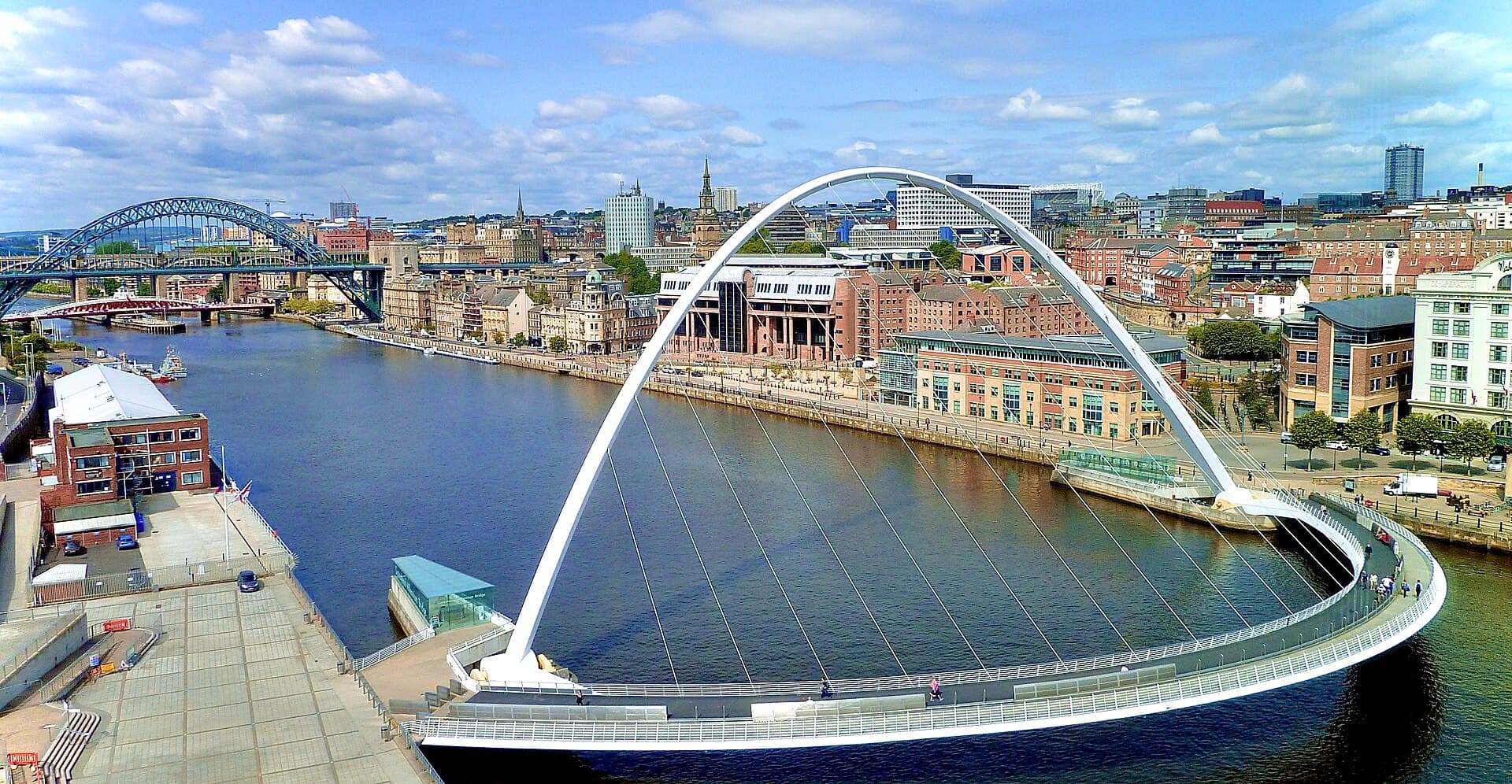 JimmyGuano / CC BY-SA 4.0, via Wikimedia Commons
Self-guided audio walking tour of Newcastle upon Tyne — GPS route, offline playback, story-driven narration in 32 languages.
“Beyond the bridges, a city of unexpected ingenuity and subterranean stories.”
Not the postcards. The stories even locals don't know — whispered in your ear, right where they happened.
You might think Thomas Edison was the first to illuminate a public space with an electric light bulb. But Newcastle has a brighter claim.
Beneath Newcastle's bustling streets lies a passage that once hummed with a surprising form of transport.
One of Britain's most beloved high street retailers has a surprising connection to a stall in Newcastle's historic market.
Discover every secret of Newcastle upon Tyne
Every address, every reveal in full — in your ear, right where it happened.
You pick your stops. You walk. The voice reveals what the others miss.


Your self-guided audio tour of Newcastle upon Tyne is ready — pick your landmarks, choose your language, and start the moment you arrive.
BuyLume has a built-in augmented-reality guide. Hold your phone up and its camera shows the street ahead of you, with a glowing arrow laid over the real view that always points to your next stop — no map to puzzle over, no wrong turns. Like everything in Lume, it works fully offline.
Newcastle upon Tyne, often simply called Newcastle, is an energetic city in northeast England, celebrated for its striking architecture, passionate sports culture, and lively nightlife. Situated on the north bank of the River Tyne, the city's residents, known as Geordies, are renowned for their gregarious spirit and distinctive dialect. The cityscape is a captivating blend of historic charm and modern innovation, making it a compelling destination for explorers.
Exploring Newcastle on foot is a rewarding experience, with its distinct neighborhoods revealing layers of history and contemporary life. Grainger Town, the historic city center, showcases elegant classical architecture, while the Quayside offers stylish bars and superb river views. From Roman roots to industrial prowess, Newcastle has consistently shaped Britain's landscape, yet it holds a treasure trove of lesser-known facts and surprising stories waiting to be uncovered.
The city is also a hub for arts and culture, with numerous museums, galleries, and performance venues. Whether you're drawn to its industrial heritage, its spirited atmosphere, or its unexpected innovations, Newcastle upon Tyne promises a journey filled with discovery and genuine Geordie hospitality.
The history of Newcastle upon Tyne stretches back nearly 2,000 years, beginning as a Roman settlement named Pons Aelius in 122 AD. This fort was strategically built on Hadrian's Wall, the northern frontier of the Roman Empire, with sections of the wall and turrets still visible today. Following the Roman departure in 410 AD, the settlement was renamed Monkchester and became part of the Anglo-Saxon Kingdom of Northumbria.
The city gained its current name under Norman rule in 1080, when William the Conqueror's eldest son, Robert Curthose, ordered the construction of a new wooden castle to fortify the area and secure its position as a vital crossing point on the River Tyne. This 'New Castle' gave the burgeoning town its lasting identity. Throughout the Middle Ages, Newcastle served as England's northern fortress, with a 25-foot-high stone wall erected in the 13th and 14th centuries to defend against Scottish invasions. The town flourished as a leader in the wool trade and was favored by royals, receiving its own mayor in 1216 and becoming a county town in 1400.
Newcastle's industrial expansion truly took off during the 16th century when a royal act in 1530 decreed that all coal exports in the North East had to be shipped from Newcastle quayside, cementing its role in the coal trade. The Industrial Revolution (1750-1850) saw heavy industry thrive, with the city becoming a key center for shipbuilding and steam train manufacturing. This era also brought significant innovations, including the invention of the steam turbine and the Davy lamp. The population boomed, and Newcastle was granted city status in 1882. By the end of the 1900s, coal mining had ceased, and the city transitioned to a service-based economy, playing a crucial role in servicing Britain's offshore oil and gas fields, as well as banking and finance. Today, Newcastle continues to evolve as a major retail, commercial, and cultural hub.
Begin your exploration in Grainger Town, the historic city center, renowned for its elegant classical architecture. Here you'll find Grey's Monument, a prominent landmark, and the beautiful Central Arcade. Do not overlook the bustling Grainger Market, a lively Victorian market hall.
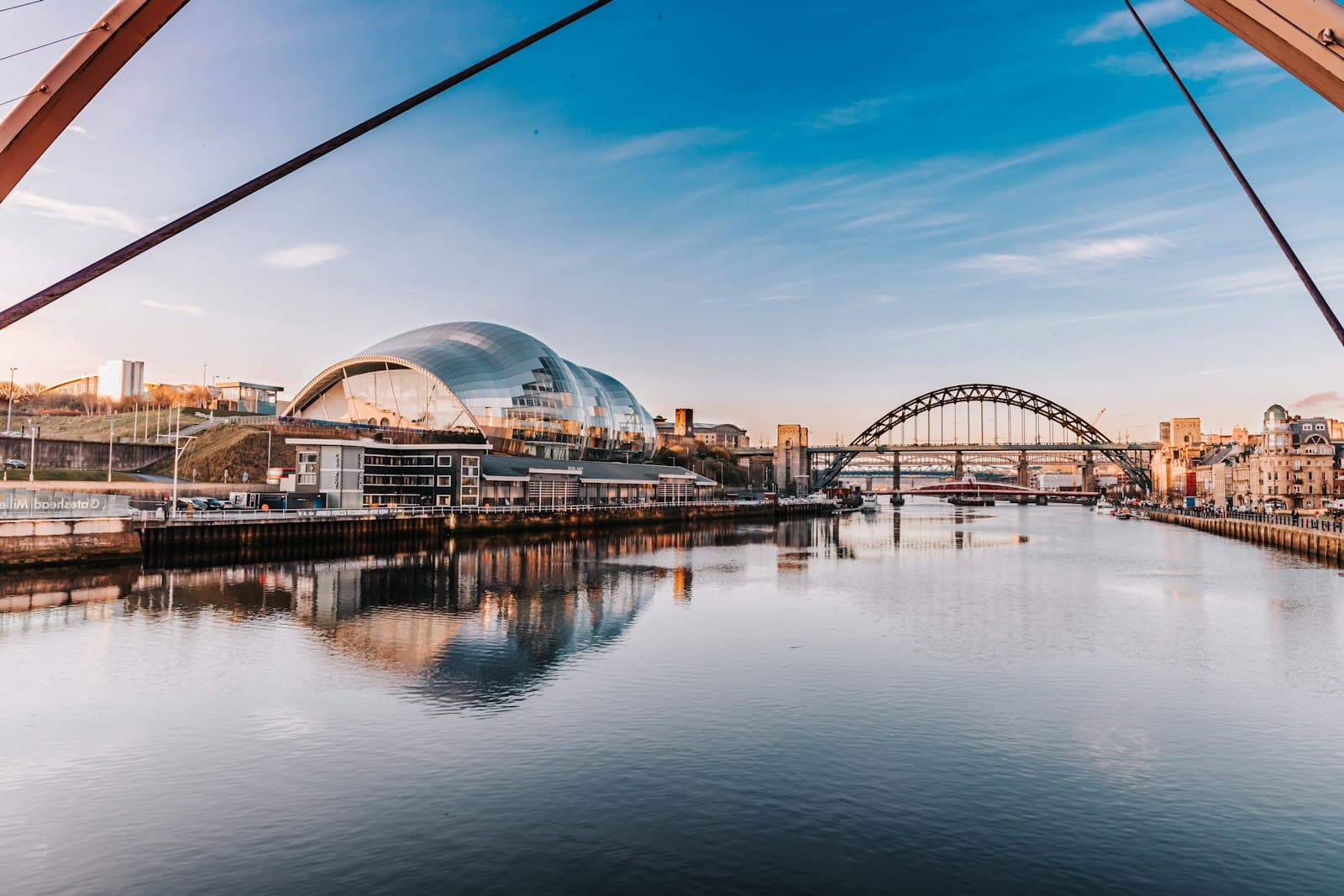
A short stroll leads to Chinatown, offering a blend of British and Asian influences with its array of restaurants, teahouses, and spice shops. Head south to the Quayside, famous for its dramatic bridges, including the iconic Tyne Bridge and the tilting Gateshead Millennium Bridge. The Quayside is perfect for a leisurely walk, offering river views and a lively atmosphere, especially during the Sunday market.
Delve into history at Newcastle Castle Keep, one of England's finest examples of a Norman-era fortress, which gave the city its name. Explore the subterranean Victoria Tunnel, an underground wagonway with a fascinating past. For art enthusiasts, the Laing Art Gallery and BALTIC Centre for Contemporary Art (across the Millennium Bridge in Gateshead) offer diverse exhibitions. Sports fans can take a stadium tour of St. James' Park, home to Newcastle United Football Club. For a unique cultural experience, visit the Ouseburn Valley, an industrial area transformed into a creative quarter with independent shops, cafes, and live music venues.
The best time to visit Newcastle upon Tyne is during the milder months, from April to June or September to October. During these shoulder seasons, the weather is generally pleasant, and you can avoid the peak summer crowds and higher prices. Summer, from June to August, offers the mildest temperatures, typically between 18-20°C (64-68°F), and long daylight hours, making it ideal for outdoor activities and enjoying the Quayside evenings. However, be prepared for the occasional 'haar,' a cold North Sea fog that can roll in quickly. While winters are cold and dark, the Christmas market around Grey's Monument can make December a charming, albeit chilly, option. Pack layers regardless of the season, as the weather can be unpredictable.
Newcastle upon Tyne is well-connected and easy to navigate. By Air: Newcastle International Airport (NCL) is less than 7 miles from the city center and served by several airlines. The Airport Metro station provides easy access to the city center and wider Tyneside region. By Train: Newcastle Central Station is centrally located and within walking distance of many hotels and attractions, offering national rail connections. By Bus: A comprehensive network of bus services, operated by companies like Arriva, Go North East, and Stagecoach, covers the city and surrounding areas. The QuayLink buses are particularly useful for exploring the Quayside. By Metro: The Tyne and Wear Metro system is an efficient way to get around Newcastle and Gateshead, with over 60 stops connecting the city center, airport, coast, and suburbs. Tickets can be purchased at any Metro station, with DaySaver options available. By Car: Major roads like the A167, A1058, and A1 connect to Newcastle, and various centrally located car parks make driving an option, though exploring the city center on foot or by public transport is often more convenient. Taxi ranks are also readily available.
Newcastle upon Tyne in Korean, in Chinese or in Hebrew — and 29 more languages, every stop narrated by a native voice. The widest language range of any self-guided audio tour.
Available in: