Mercado da Ribeira
This lively market, now a center for local art and food, carries a quieter, more solemn narrative beneath its animated surface.
Full story unlocks in the tour
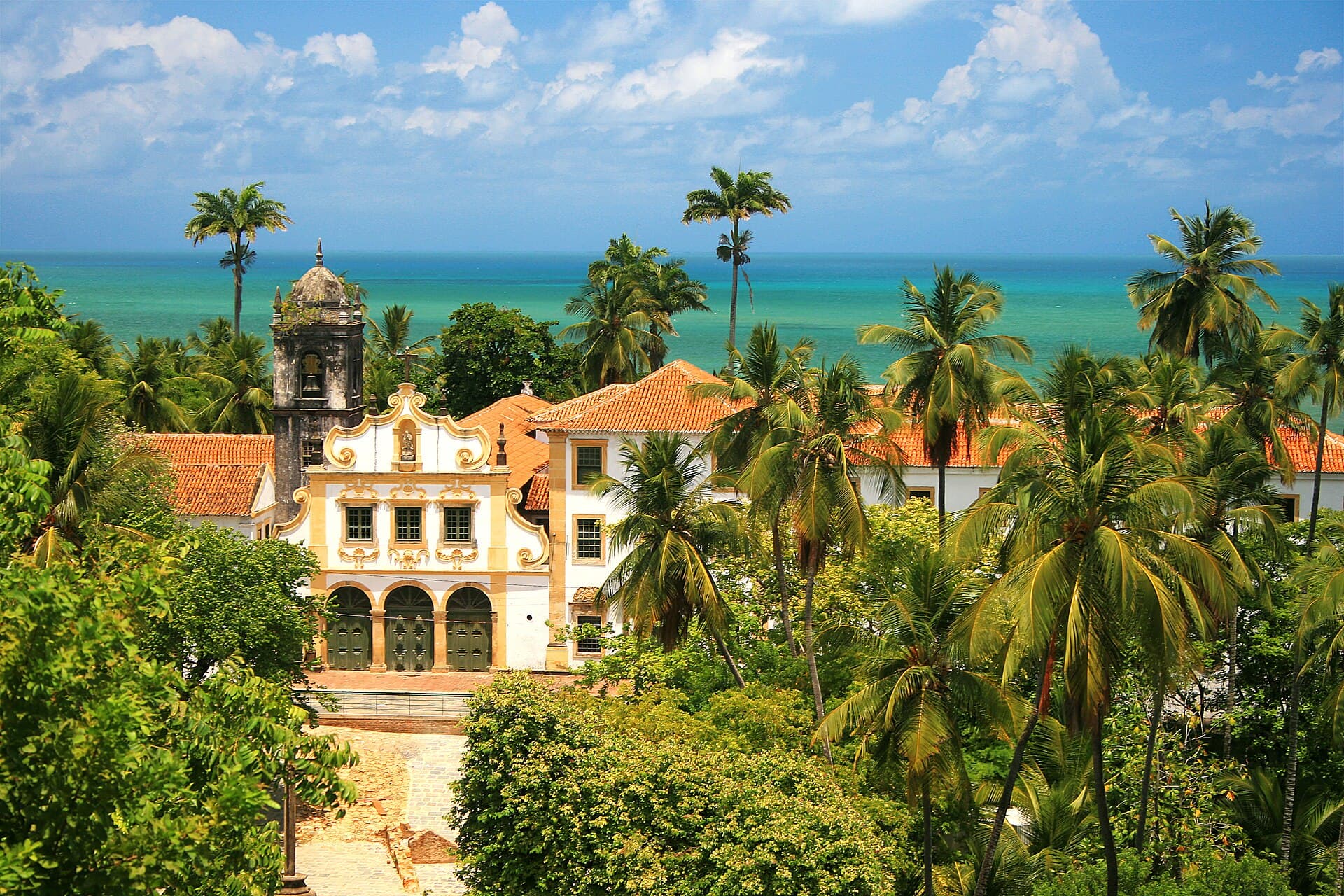 Valdiney Pimenta / CC BY 2.0, via Wikimedia Commons
Self-guided audio walking tour of Olinda — GPS route, offline playback, story-driven narration in 32 languages.
“Where colonial elegance meets an artistic heart.”
Not the postcards. The stories even locals don't know — whispered in your ear, right where they happened.
This lively market, now a center for local art and food, carries a quieter, more solemn narrative beneath its animated surface.
A verdant square before an imposing church, this location commemorates a pivotal moment in Brazilian history, its name hinting at a deeper, personal struggle.
Beyond the exuberant street celebrations and towering puppets, Olinda's Carnival includes a profound and moving tribute that often escapes the notice of revelers.
Discover every secret of Olinda
Every address, every reveal in full — in your ear, right where it happened.
You pick your stops. You walk. The voice reveals what the others miss.


Your self-guided audio tour of Olinda is ready — pick your landmarks, choose your language, and start the moment you arrive.
BuyLume has a built-in augmented-reality guide. Hold your phone up and its camera shows the street ahead of you, with a glowing arrow laid over the real view that always points to your next stop — no map to puzzle over, no wrong turns. Like everything in Lume, it works fully offline.
Olinda, a historic city along Brazil's northeastern Atlantic coast, presents a vivid array of colors and cultural expressions. Its name, a shortened form of the Portuguese 'Ó, linda!' meaning 'Oh, beautiful!', perfectly captures the essence of this captivating place. Recognized as a UNESCO World Heritage site in 1982, Olinda is celebrated for its remarkably preserved colonial architecture, characterized by steep, uneven streets, brightly painted homes, and Baroque churches. The city's artistic spirit is evident, with numerous ateliers, galleries, and workshops lining its winding paths.
Beyond a mere collection of historic structures, Olinda pulses with a singular energy, particularly during its renowned Carnival. Unlike the more formalized parades of other Brazilian cities, Olinda's Carnival is an open street celebration, welcoming all to join, where traditional frevo and maracatu rhythms fill the air, and towering puppets dance among the crowds. Even outside of Carnival season, the city maintains a lively atmosphere with cultural events, handicraft fairs, and a developing culinary scene. Positioned on a series of hills, Olinda affords sweeping views of the Atlantic Ocean and the neighboring modern skyline of Recife, creating a striking interplay between the old and the new.
Olinda's narrative began in 1535 with its establishment by Portuguese nobleman Duarte Coelho Pereira. Just two years later, in 1537, it was granted town status and became the colonial capital of the Pernambuco captaincy. The city's strategic placement on a high hill offered natural defenses and commanding views of the harbor, vital for overseeing the territory and its burgeoning sugar industry. By the late 16th and early 17th centuries, Olinda stood as Brazil's most affluent city, flourishing from the international demand for sugar. This prosperity led to the construction of many opulent mansions, monasteries, and Baroque churches, solidifying its role as a significant economic, religious, and cultural hub.
However, Olinda's golden era was abruptly interrupted in 1630 when Dutch invaders, seeking control of the lucrative sugar trade, ransacked and burned the city. The Dutch then established their base in what is now Recife, a decision that would forever alter Olinda's course. Although the Portuguese regained control in 1654 and reconstruction commenced, Olinda never fully reclaimed its former economic and political dominance, yielding its leadership to Recife. Despite this shift, Olinda continued to evolve, becoming an Episcopal See in 1656 and an important center for arts and letters in the 18th century. The city's enduring architectural legacy, with its 17th-century dwellings and 18th-century tiled houses, reflects this rich blend of Portuguese and Brazilian influences. In 1982, its historic center earned recognition as a UNESCO World Heritage site, acknowledging its exceptional landscape, urban design, and architecture as a testament to the prosperity of the sugar economy.
Commence your exploration at the Alto da Sé, Olinda's highest point, offering expansive views of the city's red-tiled roofs, church spires, and the distant Recife skyline and Atlantic Ocean. Here, you can visit the Catedral da Sé, a 16th-century cathedral, and savor local tapioca from the street vendors.
Descend the steep, uneven streets to uncover a wealth of colonial-era churches and monasteries. The Convento de São Francisco, Brazil's oldest Franciscan convent, is notable for its Portuguese tile panels. Nearby, the Mosteiro de São Bento displays a magnificent gold-leafed altar, and on Sunday mornings, you might hear Gregorian chanting. The Igreja do Carmo, located in the lower part of the city, features a grand jacaranda-wood altar. For art enthusiasts, the Museu de Arte Contemporânea, housed in a former Inquisition building, exhibits works by local contemporary artists. Do not overlook the Casa dos Bonecos Gigantes de Olinda museum, which showcases the traditional giant carnival dolls central to the city's celebrated festivities.
Olinda experiences a tropical climate with fairly consistent temperatures throughout the year, typically ranging from 27°C to 31°C (81-88°F). The most favorable time to visit for pleasant weather and fewer crowds is during the dry season, from August to January. This period offers clear skies and comfortable conditions for exploring the city's streets and enjoying the beaches. While Carnival (typically in February or March) provides a spectacular experience with lively street celebrations and cultural events, it is also the busiest and most expensive time, necessitating accommodation bookings well in advance.
Olinda is best explored on foot due to its steep, uneven streets. Wear comfortable shoes suitable for walking on irregular surfaces. While most attractions are open daily, churches typically close for lunch between noon and 2 PM. Sundays and Mondays tend to be quieter, with more activity on Fridays and Saturdays. Buses from nearby Recife will drop you at Praça do Carmo, a central point for beginning your exploration. For local information, the tourist information center at Largo do Amparo on Rua do Bonsucesso 183 is open daily from 9 AM to 6 PM. Olinda also serves as a center for artists, with many ateliers and shops offering unique local handicrafts and artwork.
Olinda in Korean, in Chinese or in Hebrew — and 29 more languages, every stop narrated by a native voice. The widest language range of any self-guided audio tour.
Available in: