Orange's Name
The city's name does not refer to the citrus fruit, which struggles in this climate.
Full story unlocks in the tour
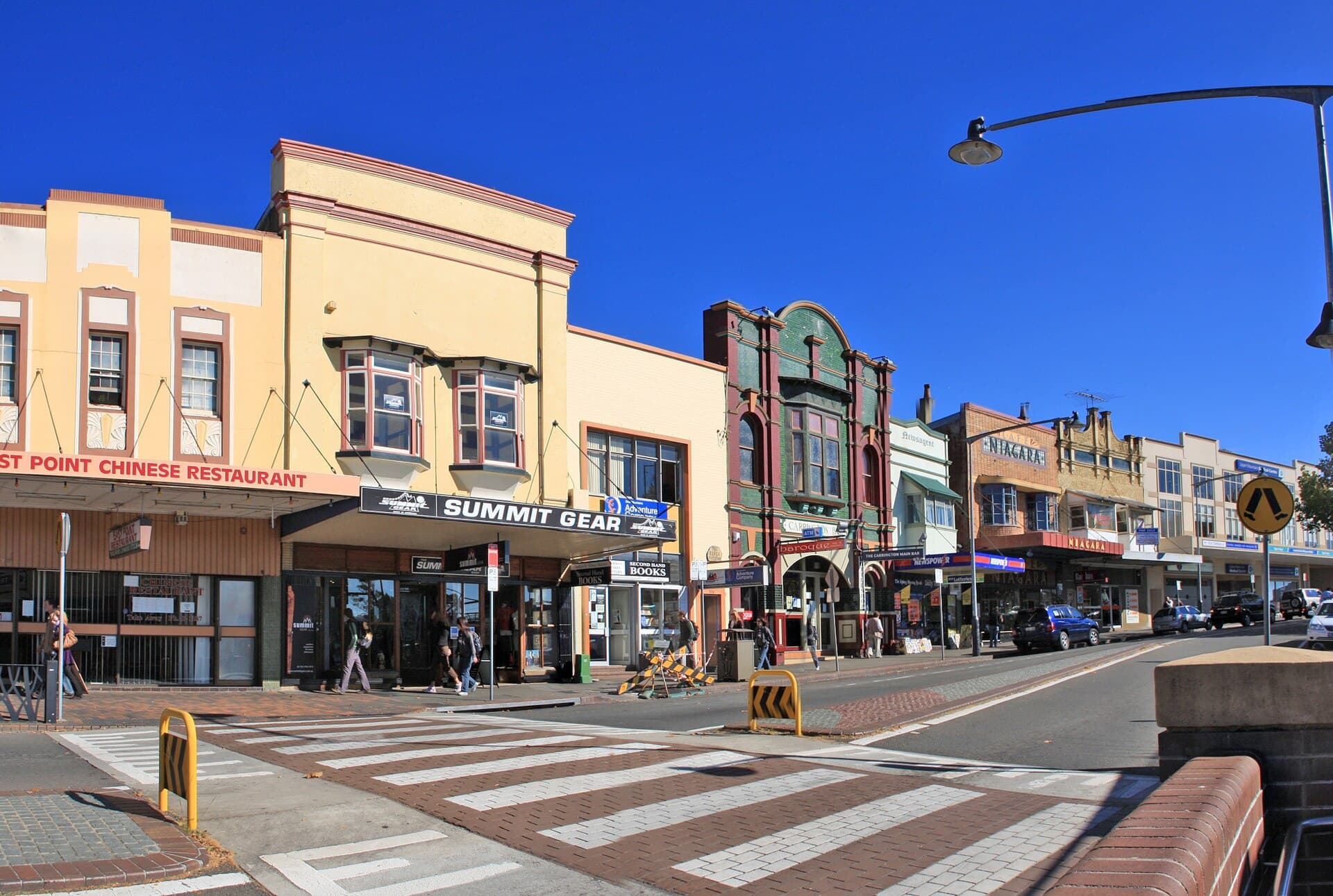 Photo of Katoomba, via Wikimedia Commons
Self-guided audio walking tour of Orange — GPS route, offline playback, story-driven narration in 32 languages.
“Where ancient volcanic earth yields cool-climate wines and echoes of Australia's first gold rush.”
Not the postcards. The stories even locals don't know — whispered in your ear, right where they happened.
The city's name does not refer to the citrus fruit, which struggles in this climate.
The city rests at the base of an ancient volcano, a landmark of deep significance to the region's First Peoples.
Orange played a central role in Australia's initial major gold discovery, transforming a quiet settlement.
Discover every secret of Orange
Every address, every reveal in full — in your ear, right where it happened.
You pick your stops. You walk. The voice reveals what the others miss.


Your self-guided audio tour of Orange is ready — pick your landmarks, choose your language, and start the moment you arrive.
BuyOrange, affectionately known as 'Australia's Colour City,' functions as a regional heart in New South Wales, approximately 254 kilometers west of Sydney. Situated at an elevation exceeding 860 meters, at the foot of the ancient, extinct Mount Canobolas, the city enjoys a distinct cool temperate climate, setting it apart from many other Australian destinations. This particular environment, coupled with fertile volcanic soils, has fostered a thriving agricultural landscape celebrated for its premium produce, cool-climate wines, and an evolving culinary scene.
The city presents an engaging blend of urban refinement and rural allure, evident in its elegant streetscapes, historic architecture, and meticulously kept parks and gardens. Orange invites those seeking a singular travel experience, from exploring its acclaimed wineries and gourmet dining establishments to immersing oneself in its enduring narrative and natural splendor.
The story of Orange is profoundly rooted in the ancient lands of the Wiradjuri people, who have inhabited this region of New South Wales for thousands of years. European exploration commenced in the 1820s, with Captain Percy Simpson establishing a convict settlement in 1822, initially named 'Blackman's Swamp' after guide James Blackman. The name 'Orange' first appeared on maps in 1829, likely a tribute by Major Thomas Mitchell to Prince William of Orange, his comrade from the Peninsular War.
The village was officially proclaimed and named Orange in 1846. However, it was the discovery of payable gold at nearby Ophir in April 1851 that truly reshaped the nascent settlement. This event ignited Australia's first significant gold rush, swiftly transforming Orange into a bustling trading post for the thousands of prospectors converging on the area. The population of Orange, a mere 28 in 1851, grew steadily, reaching 1,456 by 1871.
As the gold rush subsided, Orange's economic focus shifted towards agriculture, a transition aided by its fertile volcanic soils and cool climate. By the late 19th century, it had earned a reputation as a 'Garden City,' excelling in wheat production before pivoting to horticulture, particularly apples, pears, and cherries. The arrival of the railway from Sydney in 1877 provided a vital impetus, enabling the efficient export of agricultural produce and further solidifying Orange's role as a key agrarian center.
Orange was proclaimed a municipality in 1860 and officially became a city in 1946, when its population exceeded 15,000. The mid-20th century saw a period of industrialization, including the establishment of appliance manufacturing plants. The 1980s marked the advent of commercial viticulture, which has since brought the region international recognition for its cool-climate wines. Today, Orange continues to flourish, balancing its enduring historical legacy with a dynamic cultural environment and a growing population.
Orange presents a diverse array of attractions, blending its natural beauty with cultural and culinary experiences. Begin at the Orange Cultural Precinct, home to the Orange Regional Museum and Art Gallery, displaying local history and contemporary Australian art. Stroll through Cook Park, a meticulously preserved Victorian-era park featuring a conservatory of begonias and historic elements. Do not miss the Orange Botanic Gardens, a 17-hectare expanse showcasing native and exotic plant collections.
For sweeping panoramic views, drive to Towac Pinnacle Lookout on Mount Canobolas, an ancient extinct volcano. Nearby, Lake Canobolas offers recreational pursuits and scenic walking paths. Explore the distinctive limestone formations of Borenore Caves Reserve, including the Arch Cave. The region is celebrated for its cool-climate wineries, with over 30 cellar doors offering tastings and tours. Consider visiting Philip Shaw Wines or Printhie Wines for acclaimed selections. For a taste of local produce, visit Hillside Harvest for fruit picking or explore the Orange Farmers Market.
Orange experiences four distinct seasons, each offering its own appeal. Autumn (March to May) is widely considered the most favored time to visit, with brilliant golden and red foliage, harvest festivals, and the celebrated F.O.O.D Week in April. Spring (September to November) brings blooming gardens, new wines, and the Orange Wine Festival in October. Winter (June to August) is ideal for truffle season, intimate cellar door experiences by the fire, and more accessible accommodation prices. Summer (December to February) offers warm days, cool evenings, and opportunities to explore vineyards and Lake Canobolas.
Orange is approximately a 3.5-hour drive west of Sydney, traversing the picturesque Blue Mountains. Direct flights are also available from Sydney to Orange Springhill Airport (OAG), situated 11 km from the city center. Once in Orange, having a car is advisable for exploring the surrounding wineries, farm gates, and natural attractions. Taxis and hire cars are available, and some accessible options exist. Accommodation prices range from approximately $173 per night for a 3-star hotel to $264 for a 5-star experience. Booking in advance, particularly during peak festival periods like F.O.O.D Week (April) and the Orange Wine Festival (October), is recommended.
Orange in Korean, in Chinese or in Hebrew — and 29 more languages, every stop narrated by a native voice. The widest language range of any self-guided audio tour.
Available in: