Cárcel de Maitland
La prisión que operó continuamente por más tiempo en Australia guarda más que un pasado sombrío.
La historia completa se desbloquea en el tour
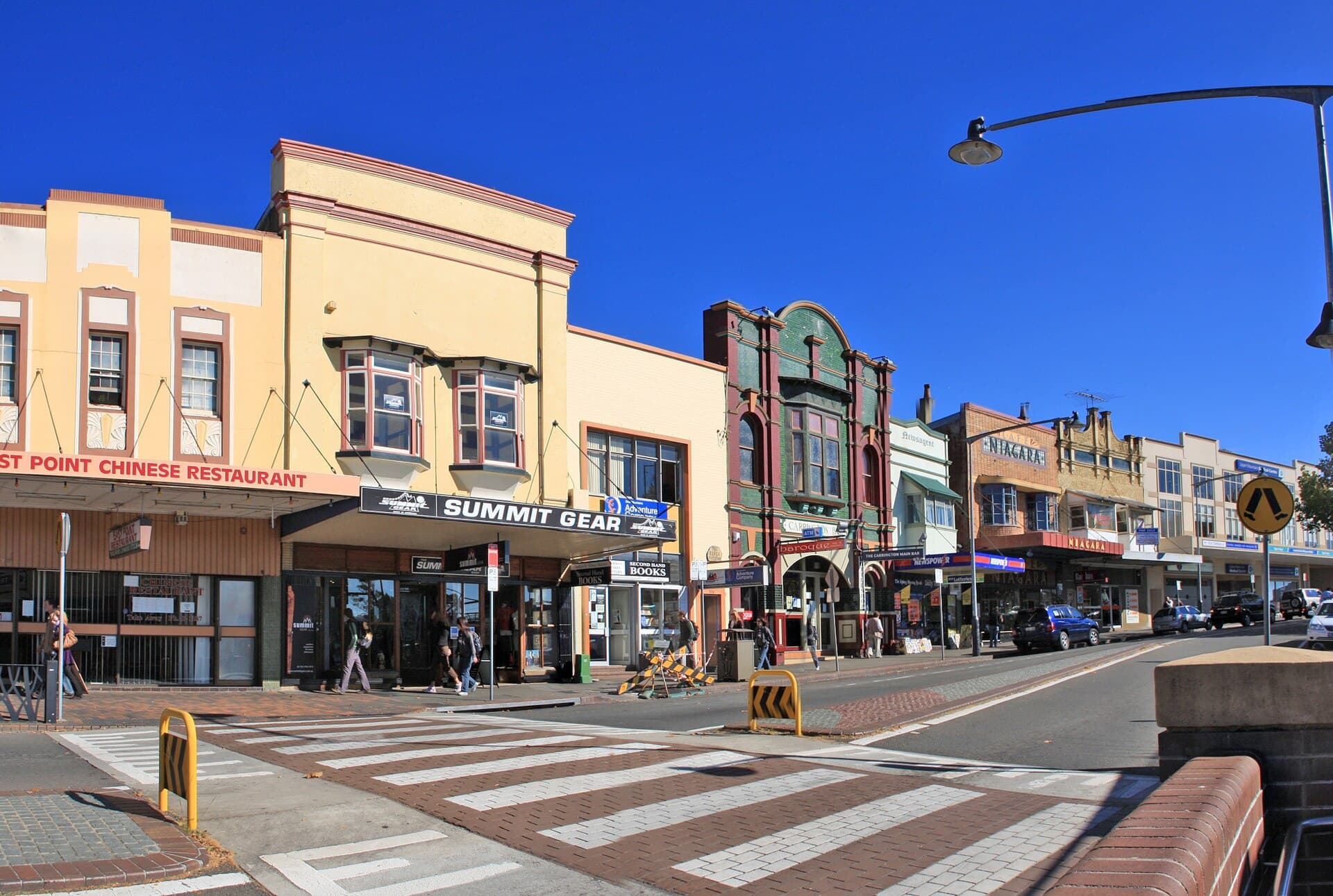 Photo of Katoomba, via Wikimedia Commons
Tour de audio autoguiado de Maitland — ruta GPS a pie, reproducción offline, narración en 32 idiomas.
“Donde la elegancia colonial se encuentra con el encanto del Valle de Hunter.”
No las postales. Las historias que ni los locales conocen — al oído, justo donde ocurrieron.
La prisión que operó continuamente por más tiempo en Australia guarda más que un pasado sombrío.
Esta gran casa victoriana posee una gemela secreta al lado, construida por socios de negocios.
El río que forjó la identidad de Maitland una vez proporcionó una inesperada abundancia después de que sus aguas subieran.
Descubre todos los secretos de Maitland
Cada dirección, cada revelación al completo — a tu oído, justo donde ocurrió.
Eliges tus paradas. Caminas. La voz te revela lo que los demás ignoran.

Tu tour de audioguía por Maitland te espera — elige tus lugares, tu idioma y empieza al llegar.
ComprarLume incluye una guía de realidad aumentada. Levanta el móvil y su cámara muestra la calle que tienes delante, con una flecha luminosa sobre la imagen real que siempre apunta a tu próxima parada — sin mapas que descifrar, sin giros equivocados. Como todo en Lume, funciona completamente sin conexión.
Maitland, una ciudad en el Valle de Hunter de Nueva Gales del Sur, Australia, presenta una mezcla de profundidad histórica y atractivo contemporáneo. Situada a orillas del río Hunter, aproximadamente a 166 kilómetros al norte de Sídney, sirve como puerta de entrada a la aclamada región vinícola del Valle de Hunter. La identidad de la ciudad está profundamente entrelazada con el río, que durante milenios sostuvo al pueblo Wonnarua, los custodios tradicionales de esta tierra. El asentamiento europeo comenzó alrededor de 1818, inicialmente como Wallis Plains, un campamento de tala de convictos, antes de evolucionar hacia un importante centro regional.
Las calles de Maitland revelan su pasado, con muchos edificios de estilo colonial y arquitectura cuidadosamente preservada que invitan a la exploración. La ciudad equilibra la serenidad de su entorno natural con un dinámico paisaje cultural, que incluye galerías de arte, acogedores cafés y un calendario de eventos. Ya sea que le atraiga su patrimonio, su floreciente escena gastronómica o su papel como base para explorar los viñedos circundantes, Maitland ofrece una experiencia inmersiva en el corazón de Nueva Gales del Sur.
La tierra ahora conocida como Maitland posee una profunda historia indígena, que abarca miles de años. El pueblo Wonnarua, como propietarios tradicionales, se refería a la zona como Bo-un, nombrada así por una especie de ave. Sus historias del Tiempo del Sueño relatan que el gran espíritu Baiame creó las colinas, valles, bosques y ríos del Valle de Hunter. Los sitios arqueológicos en la zona, incluyendo trampas para peces, surcos de molienda y árboles marcados, dan testimonio de su conexión duradera con la tierra.
La presencia europea comenzó alrededor de 1816 con partidas de tala de cedro del asentamiento de convictos de Newcastle. El gobernador Lachlan Macquarie visitó en 1818, otorgando el nombre de Wallis Plains en honor al Capitán James Wallis, entonces comandante de la colonia penal de Newcastle. Para 1819, a los granjeros convictos se les permitió seleccionar tierras, siendo Molly Morgan una figura temprana notable. Las primeras estructuras gubernamentales británicas, incluyendo una cabaña y cuarteles, se erigieron en 1821, seguidas por un muelle en 1823.
En 1829, el agrimensor asistente George Boyle White trazó oficialmente un municipio en el sitio de Wallis Plains, nombrándolo Maitland, posiblemente en honor a Frederick Lewis Maitland. Debido al crecimiento de la población, Maitland se dividió en 1835 en West Maitland (el asentamiento original de Wallis Plains) y East Maitland. La cercana ciudad de Morpeth se desarrolló simultáneamente, sirviendo como cabecera de navegación para barcos más grandes, con mercancías transbordadas río arriba a West Maitland en embarcaciones más pequeñas. La posición central de Maitland y su proximidad al puerto de Morpeth la establecieron rápidamente como un nexo de transporte y comercio.
La llegada del ferrocarril desde Newcastle en la década de 1850, junto con el creciente aterramiento del río, condujo finalmente al declive del tráfico fluvial tradicional. Los municipios de West y East Maitland se fusionaron en 1944, y el nombre de West Maitland volvió oficialmente a Maitland en 1949. La ciudad tiene una historia bien documentada de inundaciones del río Hunter, con más de 200 inundaciones desde el asentamiento europeo. La inundación más grave registrada ocurrió en febrero de 1955, recordada como "La Inundación de Maitland", que causó daños catastróficos y pérdida de vidas, y fue el primer desastre natural australiano en ser transmitido internacionalmente.
Maitland presenta una diversa gama de atracciones, mezclando historia, arte y esplendor natural. Una visita a la Cárcel de Maitland es esencial, ofreciendo audioguías autoguiadas que profundizan en sus 150 años de historia como prisión de máxima seguridad, incluyendo narrativas de criminales infames e intentos de fuga. Para una inmersión más profunda en el patrimonio de la ciudad, explore Grossmann House, una casa de la época victoriana meticulosamente restaurada que una vez sirvió como Maitland Girls High School. Su gemela idéntica, Brough House, se encuentra a su lado, ofreciendo un vistazo a las vidas de los prósperos comerciantes del siglo XIX.
La Galería de Arte Regional de Maitland (MRAG), ubicada en un edificio de estilo gótico federativo, exhibe una variedad de exposiciones itinerantes y su importante colección de arte australiano contemporáneo. Para aquellos interesados en el patrimonio industrial, las impresionantes Walka Water Works del siglo XIX son un lugar favorito para picnics y observación de aves, hogar de unas 140 especies de aves. No pierda la oportunidad de ver las Big UGG Boots en la fábrica de piel de oveja de Mortels, donde también podrá aprender sobre la industria de la piel de oveja y cómo se fabrican estas icónicas botas. El Río Hunter en sí ofrece senderos escénicos para caminar y andar en bicicleta, particularmente detrás de The Levee, ofreciendo vistas tranquilas y una conexión con el alma de la ciudad.
Maitland experimenta un clima subtropical húmedo con veranos cálidos e inviernos suaves a frescos. La época más agradable para visitar para actividades de clima cálido es desde principios de diciembre hasta finales de marzo, siendo enero el mes más caluroso, con un promedio de 29.4°C (85°F) durante el día. Para temperaturas más suaves, considere visitar durante la primavera (septiembre a noviembre) o el otoño (marzo a mayo), cuando las condiciones son agradables para la exploración. Aunque las lluvias ocurren durante todo el año, principios de otoño, particularmente marzo, puede ser el período más húmedo, mientras que finales de invierno y primavera (agosto-septiembre) tienden a ser más secos.
Maitland se encuentra aproximadamente a dos horas en coche al norte de Sídney y a 50 minutos en coche de Newcastle. Los servicios de tren regulares conectan Maitland con Sídney (alrededor de 2.5-3.5 horas) y Newcastle (alrededor de 40 minutos). Nueve estaciones de tren sirven a Maitland a lo largo de la Línea Hunter. Varios servicios de autobús operan dentro de Maitland y conectan con las áreas circundantes, incluyendo Hunter Valley Buses y Rover Coaches. Para aquellos con opciones de transporte limitadas, Maitland Community Transport ofrece servicios puerta a puerta dentro de Maitland y Newcastle.
El centro de la ciudad, particularmente el área de The Levee y High Street, se considera seguro para caminar. Sin embargo, el transporte público puede ser poco frecuente por la noche, por lo que se recomienda descargar aplicaciones de taxi o viajes compartidos si planea salir hasta tarde. La mayoría de los establecimientos cierran a medianoche o a la 1:00 AM. El Servicio de Información Turística de Maitland, ubicado dentro de la Galería de Arte Regional de Maitland, brinda asistencia con atracciones locales, eventos y alojamiento. Hay estacionamiento gratuito disponible detrás de la galería y en otras ubicaciones, con opciones de estacionamiento temporal y nocturno para vehículos recreativos.
Maitland en coreano, en chino o en hebreo — y 29 idiomas más, cada parada narrada por una voz nativa. La mayor variedad de idiomas de cualquier audioguía autoguiada.
Disponible en: