La commune végétalienne originelle de Penedo
Les colons finlandais de Penedo adhéraient à un code de conduite strict, qui incluait l'interdiction des produits animaux, de l'alcool, du café et du tabac.
L'histoire complète se débloque dans le tour
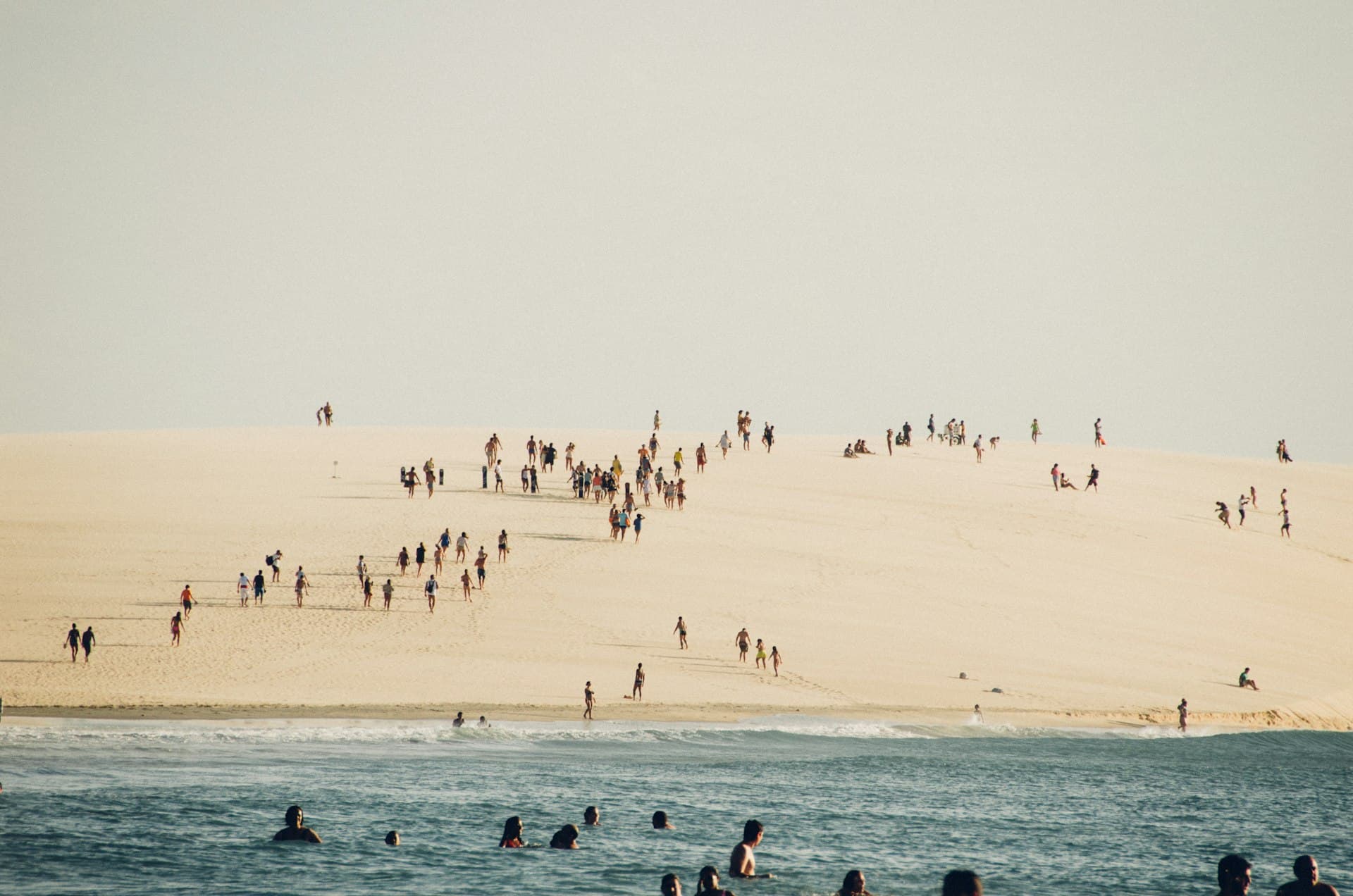 Photo of Jericoacoara, via Wikimedia Commons
Visite audio autoguidée de Penedo — parcours GPS à pied, lecture hors ligne, narration en 32 langues.
“Là où le calme scandinave rencontre la chaleur brésilienne.”
Pas les cartes postales. Les histoires que même les habitants ignorent — soufflées à l'oreille, là où elles se sont passées.
Les colons finlandais de Penedo adhéraient à un code de conduite strict, qui incluait l'interdiction des produits animaux, de l'alcool, du café et du tabac.
Les colons finlandais ont introduit une tradition qui a d'abord fait sourciller leurs voisins brésiliens.
Bien que conçu pour évoquer la Finlande, certaines décorations pourraient vous surprendre par leurs origines inattendues.
Découvrez tous les secrets de Penedo
Chaque adresse, chaque révélation en entier — dans ton oreille, là où elle s'est passée.
Tu choisis tes lieux. Tu marches. La voix te révèle ce que les autres ignorent.

Votre visite audioguidée de Penedo vous attend — choisissez vos lieux, votre langue, et lancez-vous dès votre arrivée.
AcheterLume intègre un guide en réalité augmentée. Levez votre téléphone : sa caméra montre la rue devant vous, avec une flèche lumineuse posée sur l'image réelle qui pointe toujours vers votre prochain arrêt — aucune carte à déchiffrer, aucun mauvais virage. Comme tout dans Lume, ça fonctionne entièrement hors-ligne.
Penedo, un district de la municipalité d'Itatiaia dans l'État de Rio de Janeiro, au Brésil, offre une fusion singulière de caractère scandinave et de splendeur naturelle brésilienne. Fondée en 1929 par un groupe d'immigrants finlandais aspirant à créer une commune végétalienne utopique sous les tropiques, Penedo est depuis devenue une destination touristique prisée. C'est un endroit où l'on peut trouver des danses folkloriques finlandaises et des biscuits de Noël au milieu d'un paysage tropical verdoyant.
Positionnée entre les villes importantes de Rio de Janeiro et São Paulo, Penedo offre un répit serein de la vie urbaine. La ville se distingue par son architecture de style suisse, avec de charmants chalets en bois ornés de fleurs colorées, créant une ambiance rappelant un village européen. Au-delà de son patrimoine culturel distinctif, Penedo sert également de porte d'entrée vers des attractions naturelles remarquables, y compris de nombreuses cascades et la proximité du Parc national d'Itatiaia.
Bien que les idéaux utopiques originels des colons finlandais se soient largement transformés, leur héritage persiste dans l'identité unique de Penedo. Aujourd'hui, elle attire principalement les touristes brésiliens qui la visitent les week-ends et les jours fériés, cherchant un avant-goût de la Finlande au cœur du Brésil, ainsi que des opportunités d'activités de plein air et un rythme de vie tranquille.
Le récit de Penedo commence dans les années 1920 avec Toivo Uuskallio, un paysagiste et visionnaire finlandais. Inspiré par le désir d'établir une colonie sous les tropiques, Uuskallio croyait que les humains n'étaient pas faits pour les climats froids. Il envisageait une commune sans argent ni véhicules, où les habitants adopteraient un régime végétalien, s'habilleraient légèrement et pratiqueraient même le nudisme.
Par des publicités dans les journaux et des prospectus, Uuskallio a recruté des colons potentiels, qui devaient répondre à 28 questions sur leurs antécédents, leurs opinions sur le végétarisme et leur position sur l'alcool et le tabac. Certains ont même travaillé comme forestiers au Canada pour accumuler des fonds pour l'entreprise. En 1927, Uuskallio a entrepris une expédition de reconnaissance au Brésil, et le 28 janvier 1929, lui et son épouse, Margaret Elizabeth Uuskallio (Liisa), ont acquis la Fazenda Penedo. Cette vaste ancienne plantation de café et ranch d'élevage de 3 500 hectares, située à environ 200 kilomètres de Rio de Janeiro, est devenue le site de leur nouvelle demeure. Entre 1928 et 1929, 159 Finlandais, principalement des hommes de la classe moyenne des villes du sud de la Finlande qui soutenaient le végétarisme, se sont installés à Penedo.
Les premières années de la colonie de Penedo furent semées d'embûches. Les colons découvrirent que des années de culture du café avaient épuisé le sol de ses nutriments, et des fourmis saúva voraces ravageaient leurs récoltes. La chaleur tropicale intense s'avéra également exigeante pour les Finlandais, et les réglementations initiales strictes, y compris l'interdiction des produits animaux, du café, du thé, de l'alcool et du tabac, furent difficiles à respecter. La plupart des premiers arrivants retournèrent en Finlande en moins d'un an, ne laissant qu'un groupe permanent d'environ 50 individus. L'expérience utopique fit face à la ruine financière en 1942, exacerbée par un marché des agrumes en déclin et la Seconde Guerre mondiale.
Pour subsister, la communauté a dû s'adapter. La philosophie végétalienne stricte a progressivement cédé la place à l'introduction de l'élevage de volailles, de porcs et de produits laitiers. Le tourisme est apparu comme une alternative, Liisa Uuskallio étant la pionnière de l'utilisation de la spacieuse Casa Grande, la ferme principale, pour accueillir des hôtes. Les coutumes distinctives des habitants aux cheveux clairs, leurs saunas et leurs danses de polka, mazurka et tango, ont commencé à attirer les visiteurs. Le Clube Finlândia, créé en 1943, est devenu un point central pour les événements culturels et la collaboration. Au fil du temps, Penedo s'est transformé d'un collectif agricole en un centre commercial, embrassant son héritage finlandais pour attirer les touristes désireux de goûter à la Finlande au Brésil.
Penedo offre une combinaison de beauté naturelle et d'expériences culturelles. Un bon point de départ est le Pico do Penedinho (Petit Pic de Penedo), qui offre des vues imprenables sur la vallée de Penedo et des parties du Parc national d'Itatiaia. L'accès à ce pic privé nécessite un ticket d'autorisation, disponible à la Casa do Chocolate.
Pour ceux qui recherchent la nature, la région est célèbre pour ses cascades. La Cachoeira de Deus (Cascade de Dieu) est un endroit populaire où les visiteurs peuvent nager dans des eaux claires et profiter d'un massage naturel sous les chutes. D'autres cascades notables incluent la Cascade de Rio Palmital et la Cascade du Voile de la Mariée.
Le quartier touristique de la Pequena Finlândia (Petite Finlande) est une attraction majeure, avec des bâtiments conçus pour ressembler à des maisons traditionnelles en bois finlandaises. Ici, vous trouverez des boutiques de souvenirs et même une Maison du Père Noël. Le Musée finlandais de Dona Eva, situé au sein du Clube Finlândia, expose des œuvres d'art et des pièces culturelles finlandaises anciennes et modernes. Les samedis soirs, le Clube Finlândia organise des danses finlandaises traditionnelles mêlées de rythmes brésiliens, ouvertes à tous.
Penedo bénéficie d'un climat généralement doux, ce qui en fait une destination propice aux visites tout au long de l'année. La saison touristique la plus chargée a généralement lieu pendant l'été brésilien, de décembre à février, lorsque le temps est chaud et idéal pour les activités de plein air. Pour une expérience plus sereine avec des températures agréables et moins de foules, envisagez de visiter pendant les saisons intermédiaires du printemps (septembre à novembre) ou de l'automne (mars à mai). Alors que les étés sont longs, chauds et partiellement nuageux, les hivers sont brefs, humides, principalement clairs et chauds. Mars est le mois le plus chaud, et juillet est le plus frais. Les événements saisonniers peuvent également ajouter une couche supplémentaire de plaisir à votre visite.
Penedo est située dans l'État de Rio de Janeiro, à environ 200 kilomètres de la ville de Rio de Janeiro. Si vous conduisez depuis Rio, prenez l'Avenida Brasil puis la BR 116 Via Dutra (Interstate) en direction de São Paulo sur environ 165 km, puis prenez la sortie pour Penedo. L'autoroute est bien entretenue, mais soyez attentif aux limitations de vitesse et aux radars. Le trajet depuis Rio prend environ 2 heures et 40 minutes en bus, tandis que depuis São Paulo, il faut environ 4 heures et 15 minutes pour Resende, la ville la plus proche. De Resende, des bus locaux relient Penedo.
Bien que les transports en commun soient disponibles, avoir une voiture peut améliorer la commodité pour explorer les environs et les attractions. Penedo est mieux explorée à pied pour apprécier son architecture distinctive et ses vues panoramiques. La cuisine locale offre une gamme variée, y compris des plats brésiliens traditionnels, ainsi que des influences finlandaises, allemandes et scandinaves. La truite est une spécialité locale courante, préparée de diverses manières avec des sauces et des pâtes.
Penedo en coréen, en chinois ou en hébreu — et dans 29 autres langues, chaque étape narrée par une voix native. La plus large gamme de langues de tous les audioguides autoguidés.
Disponible en :