The Château de Pesmes
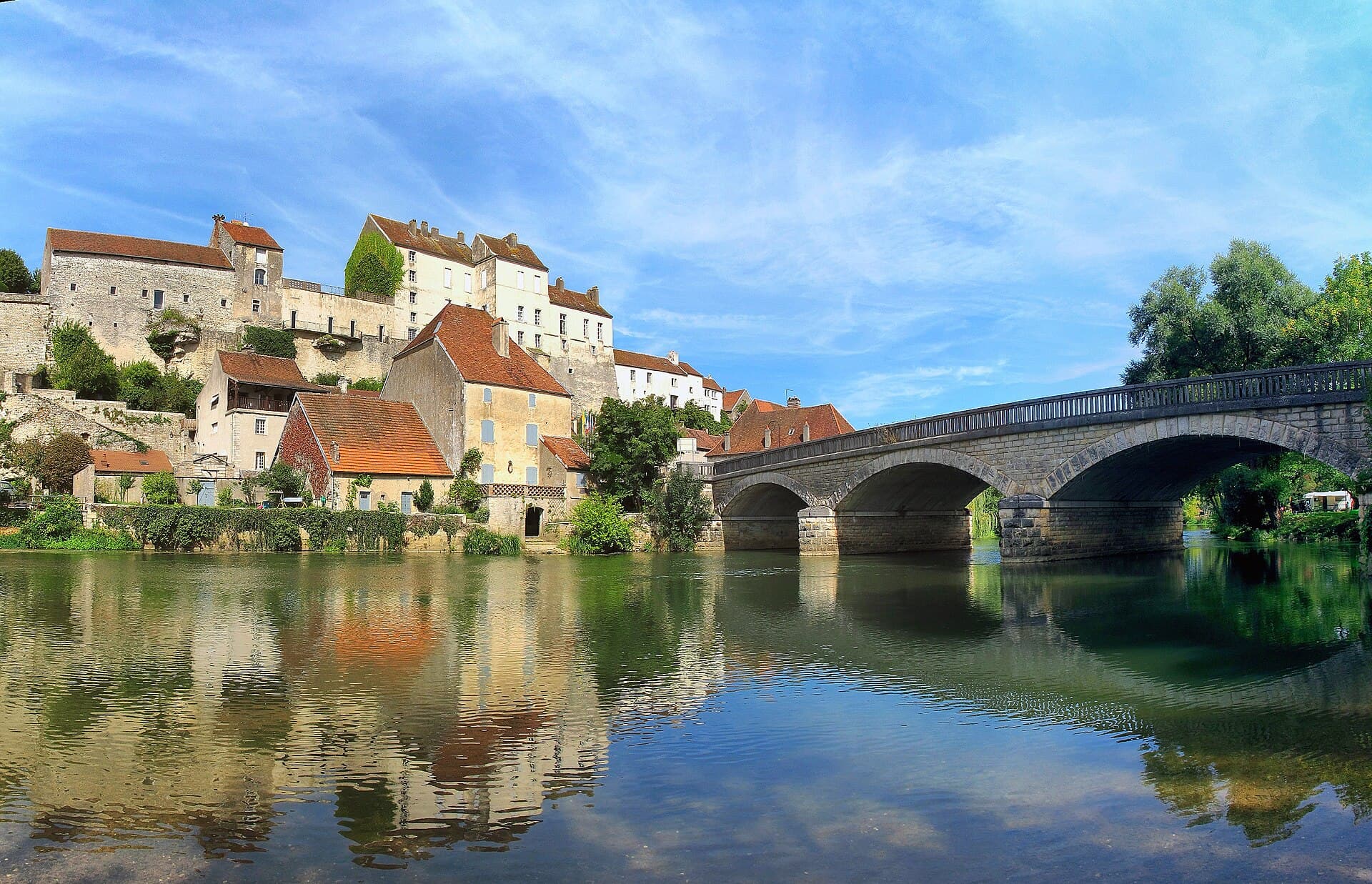
The formidable castle standing today is a mere echo of its former grandeur, yet it conceals a dramatic truth about its very survival.
Full story unlocks in the tour
 JGS25 / CC BY-SA 3.0, via Wikimedia Commons
Self-guided audio walking tour of Pesmes — GPS route, offline playback, story-driven narration in 32 languages.
“Where ancient stones recount forgotten duchies and quiet riverside allure.”
Not the postcards. The stories even locals don't know — whispered in your ear, right where they happened.
The formidable castle standing today is a mere echo of its former grandeur, yet it conceals a dramatic truth about its very survival.
The tranquil Ognon River, flowing serenely past Pesmes, possesses a surprising, indirect link to one of France's major urban centers.
The distinct bell tower of the Church of Saint-Hilaire, with its brightly glazed tiles, did not always possess such vivid color.
Discover every secret of Pesmes
Every address, every reveal in full — in your ear, right where it happened.
You pick your stops. You walk. The voice reveals what the others miss.
Your self-guided audio tour of Pesmes is ready — pick your landmarks, choose your language, and start the moment you arrive.
BuyLume has a built-in augmented-reality guide. Hold your phone up and its camera shows the street ahead of you, with a glowing arrow laid over the real view that always points to your next stop — no map to puzzle over, no wrong turns. Like everything in Lume, it works fully offline.
Pesmes, a village in the Haute-Saône department of Bourgogne-Franche-Comté, offers a captivating journey into medieval France. Recognized as one of "Les Plus Beaux Villages de France" (The Most Beautiful Villages of France), a "Cité de Caractère," and a "Station Verte," it presents a fusion of historical architecture and natural splendor. The village is situated on a rocky outcrop overlooking the calm Ognon River, providing evocative views of its fortifications, towers, and the remnants of its castle.
Exploring Pesmes means wandering through paved streets lined with stone houses, half-timbered buildings, and Renaissance facades that narrate centuries of existence. The village's strategic location on the route between Gray and Dole contributed to its turbulent past, yet it has remarkably preserved its enduring heritage. From the medieval ramparts, visitors can absorb sweeping views of the Ognon valley and the surrounding countryside.
The story of Pesmes extends back to the Gallo-Roman period, with evidence of early dwellings discovered near the riverbanks and roads beneath the current village. However, written accounts of Pesmes only emerge from the 11th century, when a fortress was established on a rocky outcrop, strategically positioned to command the passage of the Ognon River and the main road between Gray and Dole.
Throughout the medieval era, Pesmes was a place of frequent conflict and shifting allegiances. It was part of the Holy Roman Empire, the Duchy of Burgundy, and the Burgundian Netherlands, enduring numerous sieges, conflagrations, and reconstructions. French troops often besieged and plundered the fortress, which served as a crucial defensive point. The village finally became part of the Kingdom of France in 1678 with the Treaty of Nijmegen.
While winemaking was once the primary industry, the discovery of iron ore deposits in the 1660s transformed Pesmes into a flourishing center for iron forging. The forges, initially a weapons factory, expanded considerably and continued operation until almost the end of the 20th century, eventually producing garden tools. This industrial past is now preserved in the Musée des Forges.
Amidst its tumultuous history, Pesmes saw the construction and modification of significant architectural landmarks. The 12th-century Church of Saint-Hilaire, primarily Romanesque, received Gothic additions and an 18th-century bell tower with a distinctively colored roof after a fire. Grand townhouses like the Maison Royale, Maison Grandvelle, and Hôtel Mairot appeared, displaying Renaissance facades and intricate stone carvings. The remains of the medieval castle, though largely ruined, still offer a glimpse into its 10th-century origins and strategic importance during conflicts like the Hundred Years' War.
Begin your exploration at the Château de Pesmes, where remnants of the 10th-century fortress and 18th-century pavilions offer a glimpse into its storied past. While the interior of the main residence isn't generally open, you can visit the Great Hall during specific periods for expansive views. Wander along the medieval ramparts for sweeping vistas of the Ognon River and the surrounding valley.
Stroll through the village's narrow, paved streets to discover architectural treasures such as the Church of Saint-Hilaire. This 12th-century Romanesque church features an 18th-century bell tower adorned with colorful glazed tiles and houses 16th-century statues and a painted triptych attributed to a student of Michelangelo. Seek out the Maison Royale, a restored 15th-century fortified house, and other grand townhouses like the Hôtel Mairot and Château Rouillaud, displaying Renaissance facades. The Musée des Forges, housed in the former forge workshops, details Pesmes' industrial heritage from its beginnings as a weapons factory in 1660. For a peaceful escape, cross the stone bridge to Île de la Sauvageonne, a tranquil island on the Ognon River, ideal for walking or picnicking.
The optimal time to visit Pesmes for comfortable outdoor activities is from mid-June to mid-September, when the weather is warm and pleasant. July offers the clearest skies and is perfect for enjoying the village's outdoor appeal. Summer also brings various festivals, concerts, and exhibitions, adding to the village's lively atmosphere. For those who appreciate brilliant foliage, the latter half of October presents the countryside in lively autumn colors.
Pesmes is a small village that is easy to explore on foot. Guided tours are available, offering insights into local anecdotes and the history of its significant families and strategic crossroads position. The Maison Royale, a private historic monument, offers visits by appointment from May 1 to October 30. The Musée des Forges is open from April to October. For those arriving by car, Pesmes is located approximately 25 kilometers north of Dole and west of Besançon. The village is also accessible from Lyon, about 2.5 hours away.
Accommodation options include bed and breakfasts, with the Maison Royale offering rooms from May to October. Restaurants are available within the village. Outdoor activities along the Ognon River include fishing, hiking, cycling, and canoeing or kayaking from the nautical base.
Pesmes in Korean, in Chinese or in Hebrew — and 29 more languages, every stop narrated by a native voice. The widest language range of any self-guided audio tour.
Available in: