Hieu Waterfall
Beneath a cascading waterfall, a unique phenomenon awaits those brave enough to dip their toes in.
Full story unlocks in the tour
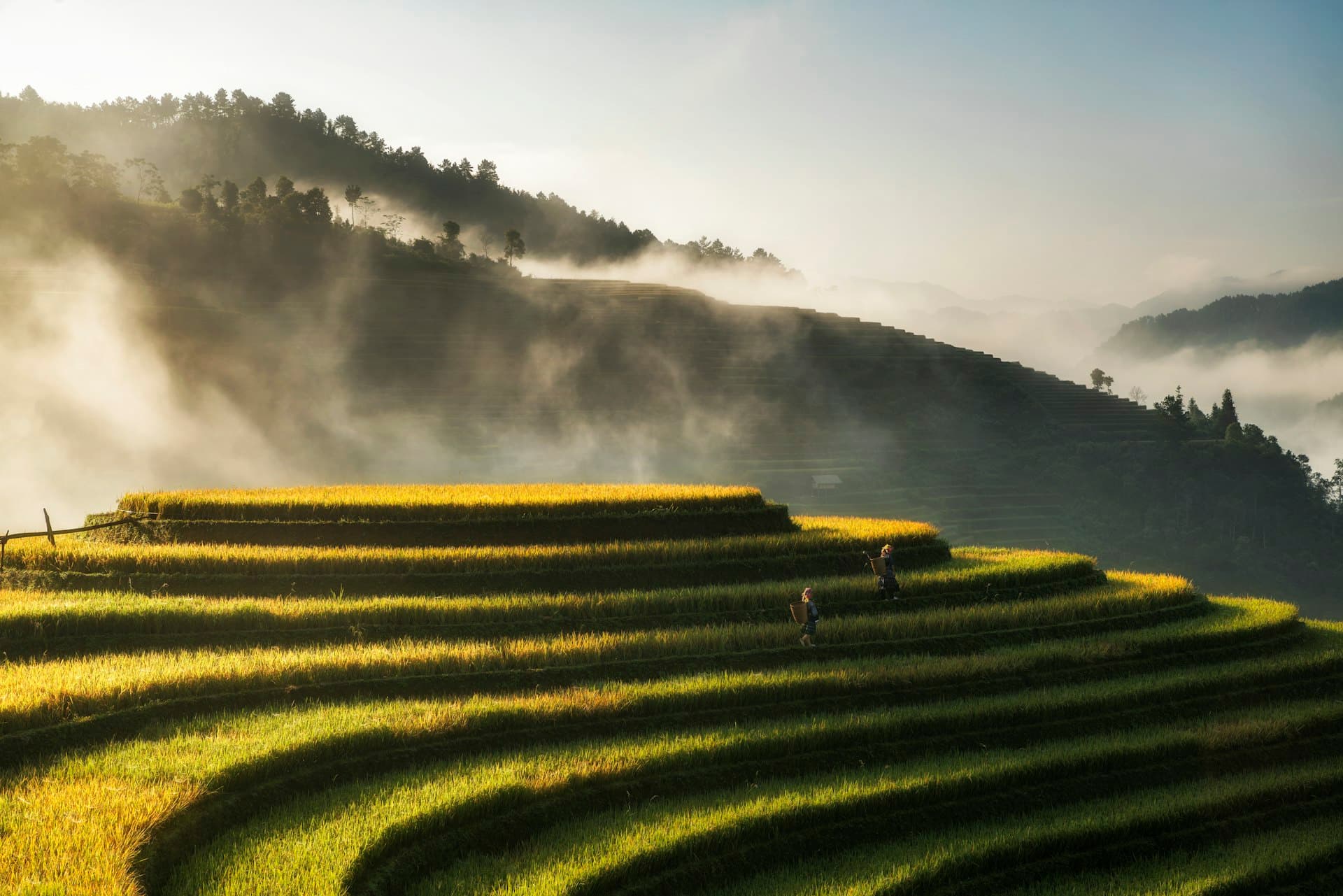 Photo of Sa Pa, via Wikimedia Commons
Self-guided audio walking tour of Pù Luông — GPS route, offline playback, story-driven narration in 32 languages.
“Where ancient waterwheels turn and rice terraces breathe.”
Not the postcards. The stories even locals don't know — whispered in your ear, right where they happened.
Beneath a cascading waterfall, a unique phenomenon awaits those brave enough to dip their toes in.
Deep within a quiet village lies a cave that hums with thousands of tiny, winged residents.
In this village, the rhythm of life is literally powered by water, in a way you might not expect.
Discover every secret of Pù Luông
Every address, every reveal in full — in your ear, right where it happened.
You pick your stops. You walk. The voice reveals what the others miss.


Your self-guided audio tour of Pù Luông is ready — pick your landmarks, choose your language, and start the moment you arrive.
BuyPù Luông Nature Reserve, located in Thanh Hóa Province, is a sanctuary of poetic beauty in northern Vietnam, roughly 160-180 km southwest of Hanoi. Established in 1999, this protected area spans over 17,600 hectares, encompassing a dramatic landscape of limestone mountains, verdant tropical forests, and expansive terraced rice fields. It's a region where the rhythm of life is dictated by nature and agricultural cycles, offering a profound contrast to the bustling cities.
Pù Luông provides an authentic escape for those seeking to immerse themselves in rural Vietnamese culture and pristine natural environments. The area is predominantly home to the Black Thai and Muong ethnic communities, who have cultivated this landscape for centuries, maintaining traditional ways of life that visitors can experience firsthand through homestays and village visits. Unlike more commercialized destinations, Pù Luông emphasizes slow travel, offering a chance to connect with local traditions and the serene beauty of a living cultural landscape.
The history of Pù Luông is deeply intertwined with the ethnic communities who have called this valley home for centuries. The region was established as Pù Luông Nature Reserve in 1999, primarily to protect its rich biodiversity, which includes extensive primary tropical forests and diverse ecosystems on karst terrain. However, human influence here predates the reserve by a long stretch, with the Black Thai ethnic community having migrated to the area hundreds of years ago, traversing the Cham River on bamboo boats.
These communities, primarily the Thai and Muong peoples, have meticulously shaped the landscape through generations of subsistence farming. Their expertise in wet rice cultivation is evident in the iconic terraced fields that cascade down the mountainsides, a testament to their enduring agricultural heritage. Traditional practices, such as the use of giant bamboo water wheels for irrigation, are still very much alive, demonstrating a harmonious relationship between human activity and the natural environment.
In recent years, Pù Luông has seen a rise in responsible tourism, which has begun to play a significant role in the local economy. This shift has provided new income-generating opportunities for local families, allowing younger generations to remain in their communities and care for their elders, rather than migrating to larger cities for work. This economic boost also encourages the continued cultivation of fields to supply local restaurants and hotels, creating a virtuous cycle that helps preserve traditional farming methods and cultural practices. The development of community-based tourism, with local families running homestays and offering cultural experiences, ensures that the benefits of tourism directly support the preservation of Pù Luông's unique cultural landscape.
Pù Luông offers a range of experiences that immerse you in its natural beauty and local culture. The rice terraces are undoubtedly the heart of the reserve, changing colors with the seasons from lively green to golden yellow. Villages like Don, Lan Trong, and Kho Muong offer some of the most compelling vistas, best explored on foot.
A visit to Hieu Waterfall is a rewarding experience, where you can swim in its natural, cool pools even during warmer months. The waterfall is located within a family property, offering a unique setting. Do not overlook the giant bamboo water wheels along the Cham River, a fascinating example of traditional irrigation still in use today.
For a glimpse into local life, explore the ethnic Thai villages. Many communities, like Don and Pu Bin, offer homestays where you can experience traditional stilt houses and learn about local customs, including traditional weaving demonstrations in places like Pu Bin Village. The Kho Muong Bat Cave provides a dramatic natural experience with its extraordinary stalactite formations and thousands of roosting bats. For a truly authentic cultural immersion, consider visiting Lung Cao Village, which remains largely untouched by tourism. Finally, a trip to Pho Doan Market offers a chance to discover local products and handicrafts.
The best times to visit Pù Luông are during its two rice harvest seasons: late May to early June, when the young rice fields are a lively green, and September to October, when the terraces turn a glorious golden yellow. These periods offer spectacular scenery and pleasant weather. For trekking, the dry season from October to April provides cool, dry mountain trails. While summer (May to August) can be hot with temperatures reaching 38°C during the day, cooler air often descends into the valleys at night. Winter (November to January) is cooler and dry, ideal for trekking, though mornings and nights can be foggy and chilly.
Pù Luông is approximately 160-180 km southwest of Hanoi, taking around 4 to 5 hours by car or limousine van. Private car rentals are available, or you can opt for shared limousine buses that depart from Hanoi's Old Quarter. While there are no direct public buses from Hanoi, you can take a bus to Mai Chau and then a taxi to Pù Luông. Renting a motorbike (VND 100,000 - VND 150,000 per day) offers flexibility for exploring the reserve, though some mountain roads can be challenging. Accommodation ranges from local homestays, offering authentic experiences, to eco-lodges and nature retreats, many with expansive views of the rice terraces. Booking your first night in advance is recommended, especially during peak season.
Pù Luông in Korean, in Chinese or in Hebrew — and 29 more languages, every stop narrated by a native voice. The widest language range of any self-guided audio tour.
Available in: