Pastos del Valle de Roncal
Los pastores del Valle de Roncal tienen un derecho legal centenario para pastorear sus ovejas en una región semi-desértica distante de Navarra.
La historia completa se desbloquea en el tour
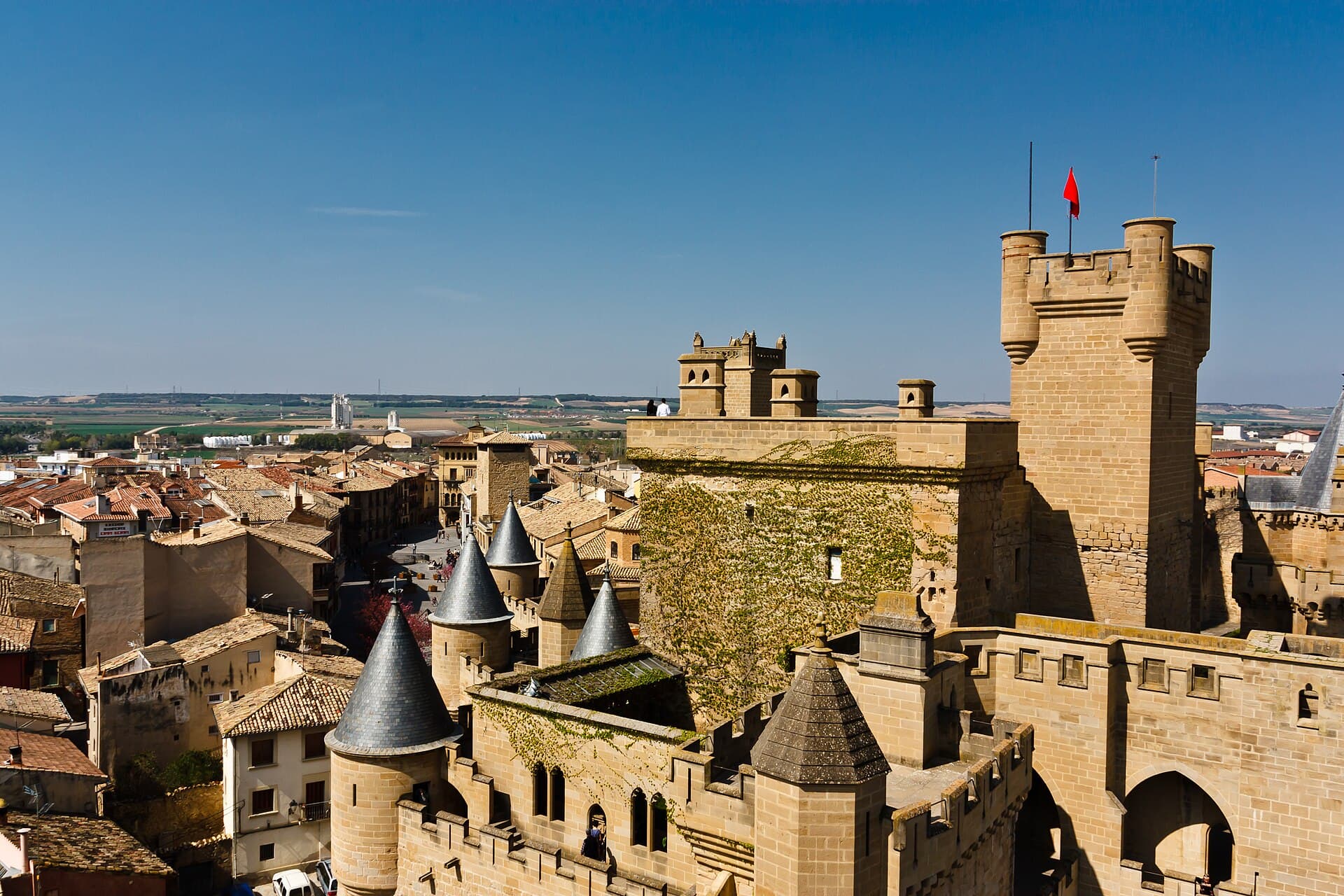 Photo of Olite, via Wikimedia Commons
Tour de audio autoguiado de Roncal — ruta GPS a pie, reproducción offline, narración en 32 idiomas.
“Donde convergen antiguas tradiciones y la belleza pirenaica.”
No las postales. Las historias que ni los locales conocen — al oído, justo donde ocurrieron.
Los pastores del Valle de Roncal tienen un derecho legal centenario para pastorear sus ovejas en una región semi-desértica distante de Navarra.
Un cantante de ópera de renombre mundial, nacido como humilde pastor en Roncal, tiene un mausoleo en el cementerio de su ciudad natal que una vez fue considerado para un escenario mucho más grandioso.
Los habitantes del Valle de Roncal históricamente ostentaron un estatus único, otorgándoles privilegios usualmente reservados para la élite.
Descubre todos los secretos de Roncal
Cada dirección, cada revelación al completo — a tu oído, justo donde ocurrió.
Eliges tus paradas. Caminas. La voz te revela lo que los demás ignoran.


Tu tour de audioguía por Roncal te espera — elige tus lugares, tu idioma y empieza al llegar.
ComprarLume incluye una guía de realidad aumentada. Levanta el móvil y su cámara muestra la calle que tienes delante, con una flecha luminosa sobre la imagen real que siempre apunta a tu próxima parada — sin mapas que descifrar, sin giros equivocados. Como todo en Lume, funciona completamente sin conexión.
Roncal (Erronkari en euskera) es un pueblo en la parte más oriental de los Pirineos navarros, situado en una ladera a ambos lados del río Esca. Sirve como capital del Valle de Roncal, una zona célebre por sus paisajes montañosos, tradiciones perdurables y el famoso queso Roncal. La arquitectura del pueblo presenta robustas casas de piedra, características de la construcción pirenaica, diseñadas para soportar inviernos rigurosos.
La vida en Roncal está profundamente conectada con su entorno natural y sus costumbres históricas. La economía del valle se ha basado durante mucho tiempo en el pastoreo trashumante y la silvicultura, con el queso Roncal ostentando una Denominación de Origen Protegida (DOP). El pueblo ofrece una visión de una forma de vida donde aún se observan prácticas ancestrales, como el movimiento estacional de las ovejas, contribuyendo a un fuerte sentido de identidad local y preservación cultural.
El Valle de Roncal tiene una historia que se remonta al Neolítico, con evidencia arqueológica de asentamientos tempranos. El nombre 'Raonkali' aparece en documentos ya en los siglos IX y XI. A partir del siglo X, las estructuras políticas, administrativas y judiciales de Roncal se desarrollaron en consonancia con el Reino de Navarra. Para el siglo XIV, se estableció como la Comunidad del Valle de Roncal, con su Junta General fortaleciendo la autonomía del distrito.
El siglo XV marcó un período significativo para los roncaleses, ya que el Rey Carlos II y más tarde Fernando el Católico confirmaron sus privilegios de nobleza. Estos derechos únicos fueron un testimonio de la valentía histórica del pueblo roncalés y su compromiso con la defensa de la Corona. Un privilegio notable otorgó a la gente de Roncal el estatus de nobleza —caballeros, hidalgos e infanzones— permitiéndoles usar el escudo del Valle de Roncal. Esto significaba que simplemente probar un apellido roncalés era suficiente para certificar la nobleza para las órdenes militares.
El siglo XVIII trajo un notable impulso económico a la zona a través de la explotación de la madera. Sin embargo, el valle también se convirtió en escenario de conflictos como la Guerra de la Convención y las Guerras Carlistas. En 1846, los siete municipios que componían el Valle de Roncal —Uztárroz, Isaba, Urzainqui, Roncal, Garde, Vidángoz y Burgui— se establecieron como entidades separadas, aunque la Junta General continuó gestionando los recursos naturales comunes como pastos y bosques.
Una de las tradiciones más duraderas de Roncal es la trashumancia, la migración estacional del ganado. Durante siglos, los pastores roncaleses han trasladado sus rebaños de ovejas Rasa-Aragonesa y Lacha desde los pastos de invierno en las Bardenas Reales, en el sur de Navarra, a los pastos de verano más altos del valle. Esta práctica asegura la producción de leche durante todo el año para el queso Roncal, que recibió la primera Denominación de Origen Protegida (D.O.) para un queso español en 1981. Los métodos tradicionales de elaboración del queso Roncal, a menudo considerados secretos familiares celosamente guardados, se han transmitido de generación en generación durante casi 3.000 años.
Pasea por las calles empedradas de Roncal, donde casas señoriales se alzan junto a edificios tradicionales. En el barrio del Castillo, visita la Ermita de Nuestra Señora del Castillo, una capilla del siglo XVI que ofrece amplias vistas del pueblo. La Iglesia de San Esteban, construida en el siglo XVI en un estilo de transición gótico-renacentista, es otro punto arquitectónico destacado.
Explora la Casa Gambra y la Casa López, ambas mansiones del siglo XVIII que muestran la arquitectura histórica de la región. El ayuntamiento, con sus soportales, también merece una visita. Para una comprensión más profunda del entorno local, detente en el Centro de Interpretación de la Naturaleza, que proporciona información sobre la flora y fauna del valle a través de paneles y audiovisuales.
Un sitio cultural significativo es la Casa-Museo Julián Gayarre, lugar de nacimiento del renombrado tenor de ópera del siglo XIX, ahora un museo que exhibe objetos y documentos de su vida. Su monumento-mausoleo, una obra de bronce de Mariano Benlliure exhibida en la Exposición de París de 1900, se encuentra en el cementerio del pueblo.
Más allá del pueblo, el Valle de Roncal ofrece numerosas rutas para caminar y hacer senderismo, como la Foz de Burgui y el Camino de Zemeto. El valle también es conocido por sus lavaderos públicos tradicionales con pilones de piedra, que ofrecen una visión de la vida cotidiana y el pasado ganadero de la región.
La mejor época para visitar Roncal y el Valle de Roncal es generalmente a finales de primavera y principios de otoño, específicamente mayo, junio, septiembre y octubre. Durante estos meses, el clima suele ser templado, el paisaje es exuberante y las multitudes de verano han comenzado a disiparse. Si bien julio y agosto ofrecen las condiciones más cálidas y secas, también coinciden con precios más altos y más visitantes. El invierno trae abundantes nevadas, lo que hace que el valle sea adecuado para esquiar, pero el acceso y las actividades pueden ser más limitados. Los roncaleses celebran sus fiestas patronales en honor a la Virgen del Castillo el 15 de agosto.
Roncal se encuentra aproximadamente a 90 km al noreste de Pamplona. La forma más común de llegar a Roncal es en coche, tomando la A-21 hacia Jaca y luego saliendo por la NA-137. La carretera de montaña es pintoresca y se tarda aproximadamente 1 hora y 20 minutos desde Pamplona. Alternativamente, hay servicios de autobús disponibles desde Pamplona a Roncal, con un tiempo de viaje promedio de 1 hora y 25 minutos. Los autobuses circulan varias veces al día y los billetes se pueden comprar a proveedores como BlaBlaCar, Conda y Alsa.
Dentro de Roncal, el pueblo es compacto y se puede explorar fácilmente a pie. Para explorar el Valle de Roncal en general, un coche ofrece la mayor flexibilidad. El sitio web oficial de turismo de Navarra y el Valle de Roncal puede proporcionar más información sobre alojamientos, restaurantes y actividades. Tenga en cuenta que el clima en los Pirineos puede ser impredecible, incluso en verano, por lo que es aconsejable estar preparado para diversas condiciones meteorológicas.
Roncal en coreano, en chino o en hebreo — y 29 idiomas más, cada parada narrada por una voz nativa. La mayor variedad de idiomas de cualquier audioguía autoguiada.
Disponible en: